 Birch Bay
 Why Siding Fails Faster on Point Roberts Homes
Point Roberts sits on its own peninsula, surrounded on three sides by water and exposed to weather that most inland Whatcom County homes never see. Wind off the strait carries salt spray onto exterior walls year-round, driving rain finds every gap in aging siding, and the long, damp Pacific Northwest winter gives moss and algae months to establish themselves on north- and west-facing walls. None of this is unusual for a Pacific Northwest coastal community, but it does mean siding here ages differently than siding forty minutes inland.
Salt air is corrosive to exposed fasteners and hardware, and it accelerates the breakdown of coatings that aren't built to handle it. Combine that with near-constant moisture exposure and you get the two failure patterns we see most in this area: siding that looks fine from the street but is soft, delaminating, or rotting underneath, and siding that's visibly streaked, stained, or coated in moss because it never gets enough sun and airflow to fully dry out between storms.
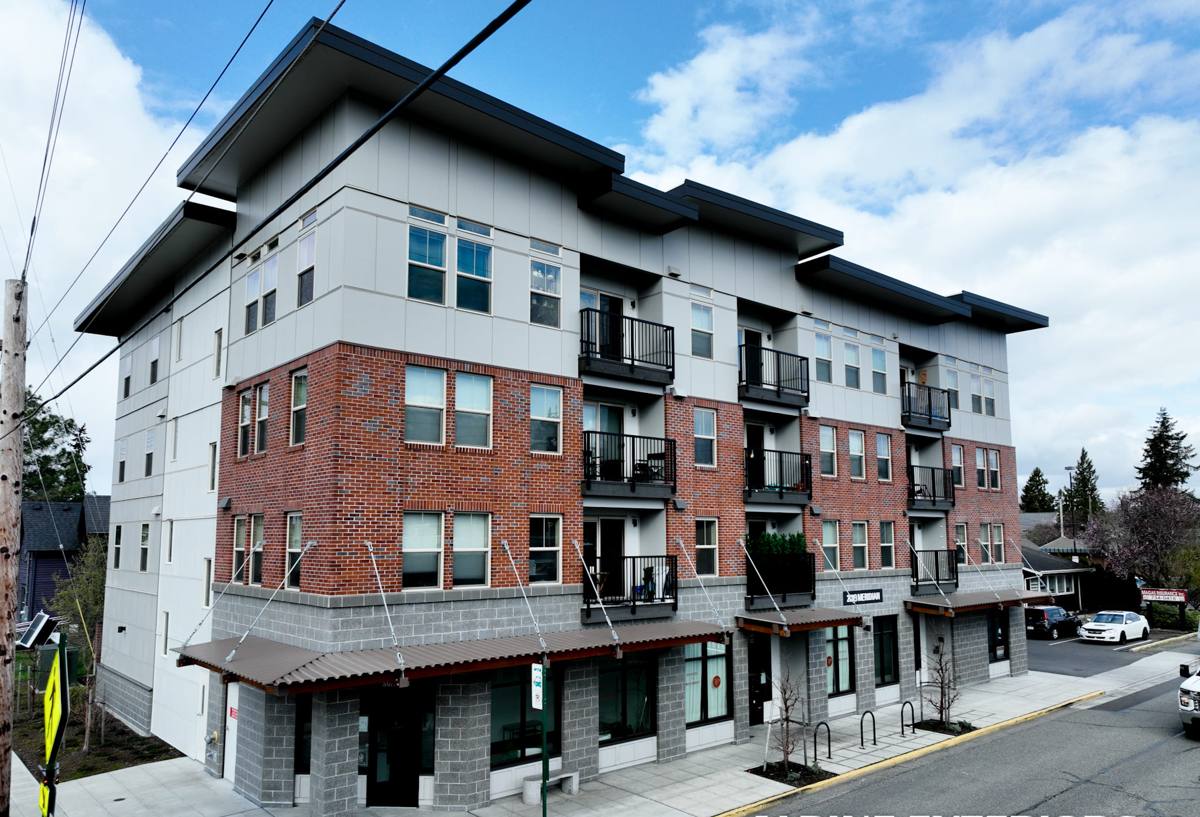
Signs a Point Roberts Home Needs Siding Replacement, Not Just Repair
Not every siding problem calls for a full replacement. But there's a point where patching becomes a temporary fix on a system that's already failing underneath. Homeowners in this area should watch for:
- Soft or spongy spots when you press on the siding, especially near the bottom courses and around windows
- Bubbling, peeling, or chalky paint that keeps coming back within a year or two of repainting
- Persistent moss or algae growth that returns quickly after cleaning, especially on shaded or north-facing walls
- Visible warping, cupping, or gaps between boards where the material has moved with repeated wet-dry cycles
- Rising interior humidity, musty smells near exterior walls, or peeling interior paint on the same wall as damaged siding
- Siding that's original to a home built more than 20-25 years ago, particularly wood-based products never upgraded
Any one of these can be isolated and repairable. Several at once, especially combined with soft sheathing underneath, usually means the water-resistive barrier has been compromised for a while and a full replacement is the honest recommendation.
What a Correct Siding Replacement Actually Involves
Replacing siding is not just pulling off old boards and nailing up new ones. In a climate like this one, the work that happens between tear-off and finish is what determines whether the new siding lasts 10 years or 40.
Tear-Off and Sheathing Inspection
Once the old siding is removed, we inspect the sheathing underneath for rot, soft spots, or prior water damage. This is often the first time anyone has actually seen the condition of the wall behind the siding. Any damaged sheathing gets replaced before anything else happens — installing new siding over compromised sheathing just hides the problem for a few more years.
Water-Resistive Barrier and Flashing
A new weather-resistive barrier goes on correctly lapped, with proper flashing at every window, door, and roofline penetration. This is the step that matters most for a home taking on driving rain from the water. Siding is the visible layer, but the barrier and flashing behind it are what actually keep water out of the wall assembly.
Installation to Manufacturer Spec
Correct fastener type, spacing, and placement, proper clearance from grade and roof lines, and correct joint treatment all affect how the siding performs over time — not just how it looks on installation day. Fiber cement siding installed with the wrong nails, too little clearance, or unsealed cut edges will fail well ahead of its expected lifespan, regardless of how good the product itself is.
Trim, Caulking, and Finish Details
The last stage is trim, corner treatment, and sealing transitions where water is most likely to intrude. This is detail work, and it's where a lot of corners get cut on lower-quality installations. It's also usually the difference between siding that looks sharp for two years and siding that still looks sharp after fifteen.
Why We Install Only James Hardie Fiber Cement
We get asked why we don't offer vinyl, LP SmartSide, or cedar as options. The honest answer is that we've standardized on one product because it's the one we're confident holding up to this specific climate without surprises down the road.
| Material | Behavior in Salt Air & Constant Moisture | Long-Term Consideration |
|---|---|---|
| Vinyl siding | Can warp or become brittle with temperature swings; seams allow moisture behind panels | Lower upfront cost, shorter realistic lifespan in exposed coastal locations |
| Cedar / primed spruce | Attractive but organic material; absorbs moisture and is a natural food source for moss and rot | Requires ongoing refinishing and vigilant maintenance to avoid decay |
| LP SmartSide | Engineered wood strand product; performance depends heavily on caulking and edge sealing being maintained | Vulnerable at cut edges and joints if maintenance lapses |
| James Hardie fiber cement | Non-combustible, dimensionally stable, engineered specifically for wet climate exposure (HZ5 line) | Factory-applied ColorPlus finish resists fading and doesn't require repainting on the same cycle |
Hardie's HZ5 product line is engineered specifically for climates like this one — wet, marine-influenced, and prone to moisture cycling. The fiber cement composition doesn't absorb water the way wood-based products do, and it's not a food source for the moss and algae that thrive on shaded coastal walls. The factory-applied ColorPlus finish is baked on under controlled conditions, which holds color and resists the chalking and peeling we see on field-painted siding a few years into its life on homes exposed to this kind of weather. Combined with a strong transferable warranty, it's the product we're comfortable putting our name behind here.
Why Local Experience in Point Roberts Matters
Point Roberts is geographically separate from the rest of Whatcom County — the peninsula is reached by crossing through Canada, which affects everything from material delivery scheduling to how a crew plans a multi-day project. A contractor unfamiliar with that logistics reality can end up with delays that have nothing to do with the actual siding work.
Beyond logistics, a crew that has worked this specific stretch of coastline understands which wall exposures take the worst of the wind-driven rain, where moss tends to establish first, and how to sequence a project around the wetter months so materials and open wall sections aren't sitting exposed longer than necessary. That's the kind of judgment that only comes from doing this work in this exact environment, not from a generic install checklist.
Our Process, Start to Finish
- Free on-site assessment — we walk the exterior, check for soft spots and moisture signs, and give you an honest read on repair versus replacement
- Written estimate — clear scope, product selection, and pricing, with no pressure to decide on the spot
- Scheduling around weather windows — we plan tear-off and open-wall stages for the driest stretches available
- Tear-off and sheathing inspection — any hidden damage gets identified and addressed before new siding goes on
- Barrier, flashing, and Hardie installation — installed to manufacturer spec, not shortcuts
- Final walkthrough — we go over the finished work with you before calling the job done
What Affects the Cost of a Siding Replacement
Every home is different, but the same factors tend to drive cost up or down on projects in this area:
| Cost Factor | Why It Matters |
|---|---|
| Extent of hidden sheathing damage | Rot found during tear-off adds repair scope that can't be quoted until walls are open |
| Home size and wall complexity | More corners, gables, and trim details mean more labor and cut waste |
| Siding profile and accessories | Lap width, trim style, and accent details affect material and labor cost |
| Access and site conditions | Tight lots, multi-story walls, or difficult staging areas add time |
| Current siding removal | Multiple existing layers or hazardous materials (e.g., old paint) can add disposal steps |
We'd rather give you a broad, honest range up front and firm numbers after we've actually seen the walls than quote a number over the phone that changes once we open things up.
After Replacement: Keeping Point Roberts Siding Looking Right
New siding still needs a little seasonal attention in this climate, even a low-maintenance product like Hardie fiber cement:
- Rinse salt residue and grime off exterior walls once or twice a year, especially on wind-exposed sides
- Keep gutters clear so overflow doesn't run down the siding face and feed moss growth
- Trim back vegetation and tree limbs that shade walls and slow drying time after rain
- Check caulking at trim and window transitions annually and touch up as needed
- Address any impact damage promptly rather than letting a small gap sit through a wet season
None of this is heavy maintenance — it's the kind of upkeep that protects the investment and keeps the factory finish looking the way it did on installation day.
Get a Free, No-Pressure Estimate
If your Point Roberts home is showing soft spots, persistent moss, or siding that's simply past its service life, we're happy to take a look and give you a straight answer about what it needs. Fill out the form below to schedule a free estimate — no pressure, just an honest assessment from a crew that knows this coastline.