 Birch Bay
 Why Point Roberts Is a Tough Place to Get Siding Wrong
Point Roberts sits on its own small peninsula, surrounded by water on three sides and exposed to weather that comes straight off the Strait of Georgia. Homes here take a steady diet of salt-laden air, wind-driven rain, and the kind of persistent dampness that Whatcom County's coastal communities are known for. Add in a moss season that can stretch for most of the year in shaded, north-facing spots, and you have a set of conditions that will find every weak point in a siding system — every gap in the flashing, every under-caulked seam, every cut edge that was never sealed.
This isn't a place where "good enough" siding holds up. Materials that perform fine in a drier inland climate can fail early here, and repairs that would be a minor inconvenience elsewhere become a bigger deal on a peninsula where getting a crew and materials on site takes extra planning. That's the lens we bring to every Point Roberts project: build it right the first time, because doing it twice is expensive in a way that's specific to this location.
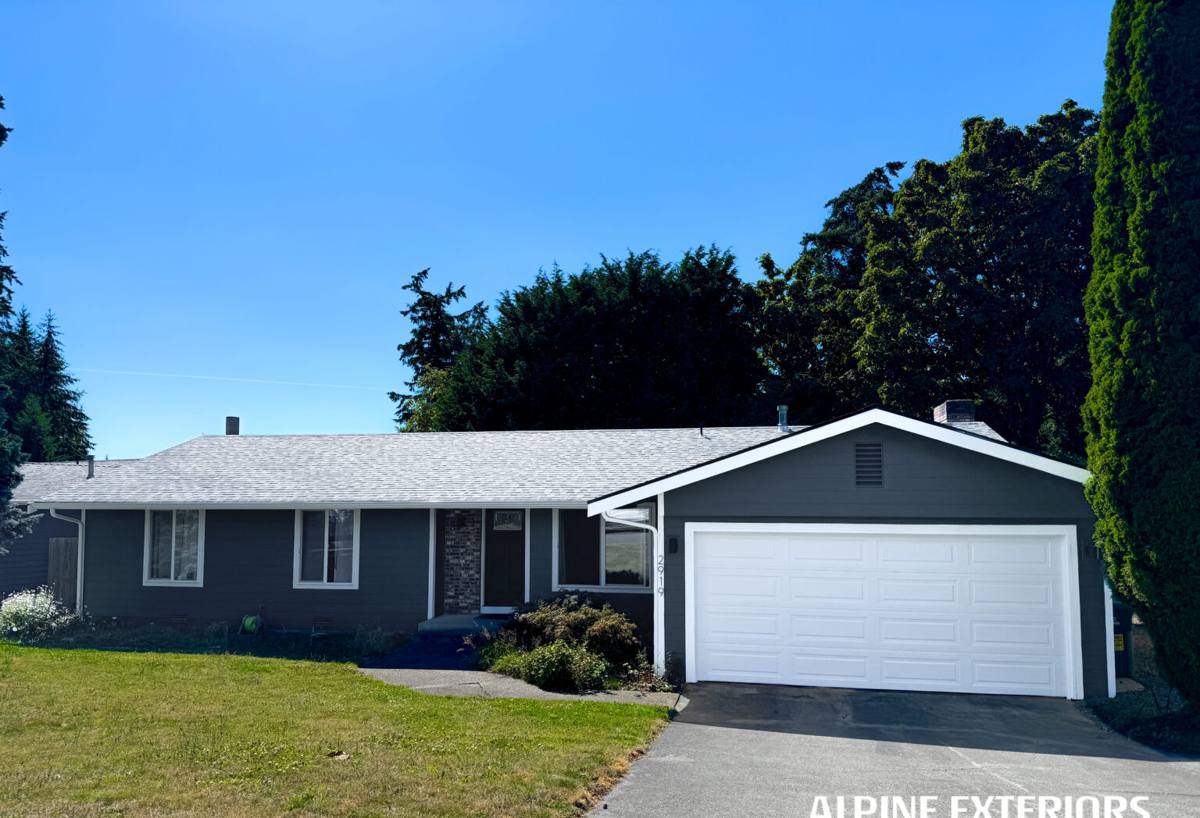
What Point Roberts Homes Actually Need From Their Siding
Given the local conditions, a siding system here has to handle a specific combination of stresses, not just look good on install day.
Moisture Management, Not Just Moisture Resistance
Driving rain off the water doesn't just wet the surface of a wall — it pushes moisture sideways into seams, laps, and penetrations. Siding that isn't designed and installed to shed that water, with proper drainage behind it, will eventually let moisture into the wall assembly. Once that happens, the damage is often hidden until it's serious.
Resistance to Salt Air Degradation
Salt air accelerates corrosion of fasteners and metal flashing, and it can degrade paint finishes and caulking faster than an inland environment would. Siding and trim need finishes and fastener specs that are matched to a marine-influenced climate, not a generic inland spec.
Real Resistance to Moss and Organic Growth
Constant dampness plus shade equals moss, algae, and mildew. Siding material that absorbs and holds moisture gives these organisms something to grow on and something to feed on. A siding material with low water absorption starves out that growth cycle instead of feeding it.
Why We Install James Hardie Fiber Cement — And Only Hardie
We standardized on James Hardie fiber cement siding for every home we side, including here in Point Roberts, and we don't install vinyl, LP SmartSide, primed spruce, cedar, or other fiber cement brands. That's a deliberate choice, not a sales preference. Hardie's fiber cement is non-combustible, dimensionally stable in wet-dry cycling, and factory-finished with their ColorPlus coating system, which is baked on and warrantied against fading and flaking in a way that field-applied paint isn't. For a climate that alternates between soaking rain and salt-air drying, that combination matters more than it does in milder inland markets.
Hardie also engineers specific product lines for different climate exposures — HZ5 and HZ10 formulations account for regional moisture and freeze-thaw conditions rather than using one blend everywhere. That climate-specific engineering, paired with a strong transferable warranty, is why we put it on homes instead of the alternatives. We go into more detail on those trade-offs on our general siding pages; here, the short version is that this is the material we trust to hold up on a Point Roberts wall.
What a Correct Installation Actually Involves
Fiber cement siding is only as good as the installation behind it. A rushed or under-detailed job can undercut even the best material, especially in a wet, salty climate. Here's what we treat as non-negotiable on every Point Roberts installation:
- A fully wrapped weather-resistant barrier behind the siding, lapped correctly with all seams sealed
- Properly flashed windows, doors, and any wall penetrations, installed before the siding goes on — not caulked over afterward
- Correct starter strip and clearances at the foundation so water sheds away from the framing
- Manufacturer-specified fastener type, spacing, and penetration depth to prevent splitting and premature corrosion
- Factory-cut edges kept exposed where possible, and any field cuts sealed per Hardie's installation instructions
- Proper gapping and caulking at butt joints and trim, sized for our climate's expansion and contraction range
- Rainscreen or drainage detailing where the wall assembly calls for it, so bulk water has somewhere to go
Skipping any one of these doesn't usually cause an immediate problem — it causes a problem in year three or four, after the caulk has worked or the moisture has found a path. That's exactly the kind of failure a coastal climate like Point Roberts' will expose faster than a drier one would.
Our Process for a Point Roberts Project
- On-site assessment. We walk the exterior, check existing siding and trim condition, look at moisture and moss patterns, and note anything that affects the scope — rot, prior water intrusion, or flashing that needs attention before new siding goes up.
- Written estimate and product selection. We go over Hardie plank profiles, textures, and ColorPlus color options suited to the home and the exposure it gets, and give you a clear, itemized quote.
- Prep and protection. Landscaping, walkways, and windows get protected, and any damaged sheathing or framing found during removal gets addressed before the new weather barrier goes on.
- Weather barrier and flashing. This is the step that determines how the wall performs for the next several decades — we don't shortcut it.
- Siding installation to spec. Fastening, gapping, and sealing per Hardie's published installation guidelines for our climate zone.
- Final walkthrough. We review the finished work with you, check trim and caulk lines, and confirm everything meets our standard before we call the job done.
What Drives Cost on a Point Roberts Siding Job
Every home is different, but the same handful of factors tend to move the price up or down. Being upfront about them helps you plan and compare quotes fairly.
| Factor | Why It Matters |
|---|---|
| Existing siding removal | Tear-off and disposal of old material adds labor, especially if hidden moisture damage is found underneath |
| Sheathing or framing repair | Coastal moisture exposure sometimes means rot repair is needed before new siding can go on |
| Home size and wall complexity | More corners, dormers, and trim details mean more cutting, flashing, and labor time |
| Siding profile and finish | Plank width, texture, and ColorPlus color selection affect material cost |
| Site access and logistics | Point Roberts' location means material delivery and crew scheduling need extra lead time built in |
| Trim and accessory work | Fascia, soffits, and window trim done at the same time can improve efficiency versus a separate project later |
Living With Fiber Cement Through Moss Season
One advantage of fiber cement over wood-based sidings is that it doesn't feed moss and mildew the way absorbent materials do — but that doesn't mean a Point Roberts home needs zero attention. Shaded north and west-facing walls, tree-covered lots, and areas with poor sun exposure still benefit from an occasional rinse-down and a visual check of caulk lines and trim, especially after the wetter months. Because ColorPlus finish is factory-applied and baked on, routine maintenance is mostly about keeping the surface clean and catching any physical damage — not repainting every few years like field-finished siding often requires.
Why Hiring a Crew That Already Works This Area Matters
Point Roberts' geography makes it a different kind of jobsite than a typical mainland Whatcom County property. Material deliveries, crew scheduling, and even weather windows need to account for the peninsula's location. A contractor who hasn't worked here before is learning those logistics on your project's timeline. A crew that already does business in Point Roberts and greater Birch Bay has already worked out how to keep a project moving without the delays that catch first-timers off guard.
Local experience also means familiarity with how this specific stretch of coastline behaves — which walls take the worst of the driving rain, where moss tends to establish first, and what level of detail the flashing and drainage plane really need to hold up. That's knowledge you don't get from a general specification sheet; it comes from having sided homes in this exact climate before.
Questions Worth Asking Any Contractor Before You Hire
- Have you installed siding in Point Roberts or the immediate Birch Bay area before?
- What weather barrier and flashing details do you use, specifically, for this climate?
- Can you walk me through your fastener spacing and gapping approach for fiber cement?
- What does your warranty cover, and is it backed by the manufacturer or just your labor?
- How do you handle material delivery and scheduling given the location?
Get a Straightforward Estimate
If your Point Roberts home is due for new siding, or you want a second opinion on a quote you've already received, we're happy to take a look and give you a clear, no-pressure estimate. Use the form below to get started.