 Birch Bay
 Point Roberts Decks Live in a Different Climate Than Most of Whatcom County
Point Roberts sits out on its own peninsula, surrounded on three sides by salt water, which means homes here take a steadier dose of salt-laden air than most properties elsewhere in Whatcom County. Add the Pacific Northwest's long wet season, wind-driven rain off Boundary Bay, and a moss season that can stretch from fall through spring, and you have an environment that's genuinely tougher on an outdoor deck than the regional average. A deck built to a generic spec sheet, without accounting for that combination, tends to show its age early — soft spots, corroded hardware, and a walking surface that stays slick and green far more of the year than it should.
Composite decking, installed and detailed correctly for this exact environment, holds up to that combination far better than dimensional lumber. But "composite" isn't a single product with one set of rules — how it's framed, fastened, and finished matters as much as the boards themselves. This page walks through what a Point Roberts composite deck actually needs, what a correct installation involves, and why local experience on this stretch of coast changes the outcome.
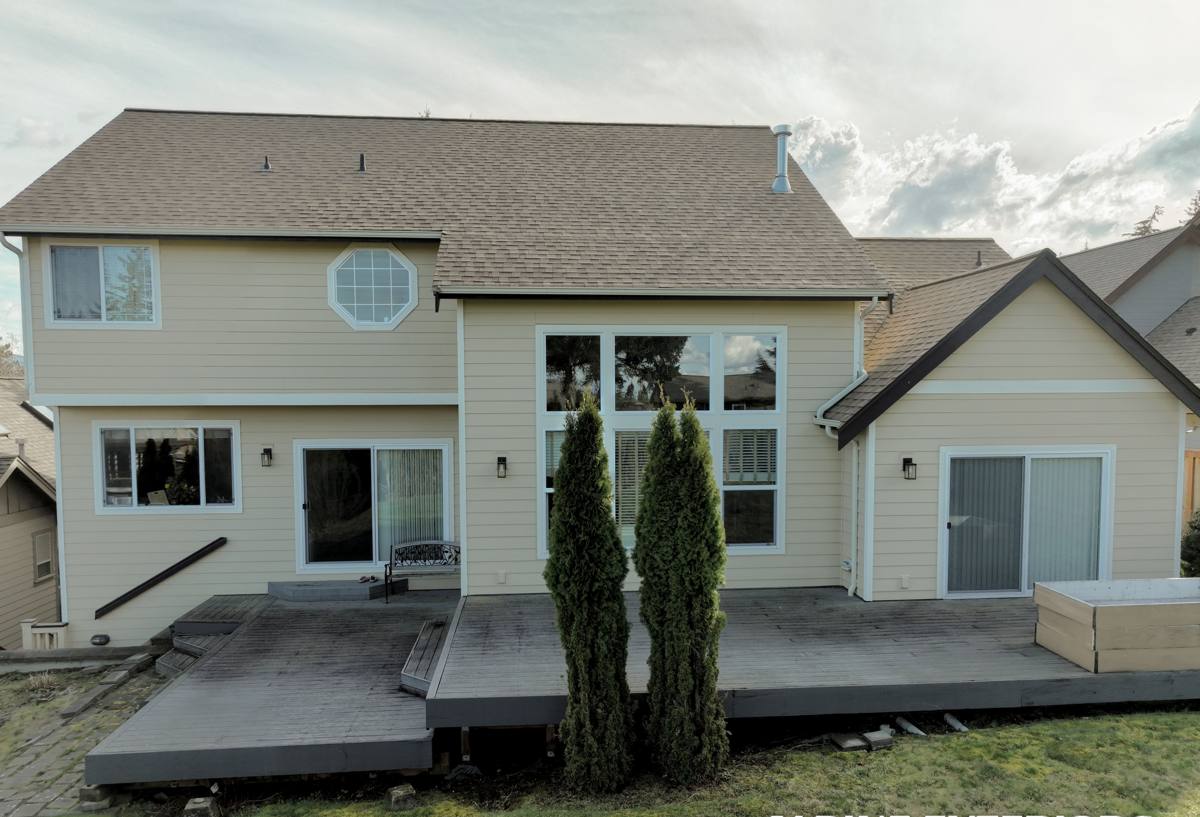
What Salt Air, Rain, and Moss Actually Do to a Deck
Salt Air and Metal Hardware
Salt in the air accelerates corrosion on anything metal — fasteners, joist hangers, post bases, and railing hardware. On a standard build using general-purpose exterior fasteners, that corrosion can start within a few seasons in a coastal exposure like this one, long before the decking itself shows any wear. Once a fastener starts to corrode, it weakens at exactly the point holding your deck boards or structure together, which is a structural issue, not just a cosmetic one.
Moisture in the Substructure
Wind-driven rain doesn't fall straight down — it gets pushed sideways into ledger connections, under rail posts, and into any gap where flashing was skipped or done as an afterthought. Composite deck boards themselves shed water well, but the framing underneath them is usually still wood, and that framing is where rot actually starts. A deck can look fine on the surface for years while the joists and ledger underneath are quietly failing, which is why substructure detailing matters more here than in a drier inland climate.
Moss and Algae on the Walking Surface
A long moss season means more months where a deck surface stays damp, shaded, and cool — exactly the conditions moss and algae need to establish. On some deck surfaces that translates into a slick, green film that's both unattractive and a genuine slip hazard, especially on stairs. Board texture, drainage gaps, and how much airflow the deck gets underneath all affect how fast that buildup happens and how easy it is to clean off.
Why Composite Decking Is the Right Call for This Environment
Wood decking can certainly be built well, but it asks a lot of ongoing maintenance to hold up in a salt-air, high-moisture climate — regular sealing, more frequent board replacement, and closer attention to fastener condition. Composite decking shifts that burden. The boards themselves don't absorb water the way wood does, don't need annual staining or sealing, and resist the surface splintering and cupping that salt-exposed wood decking is prone to over time.
That said, not all composite is equal, and this is where we set our own standard rather than making blanket claims about any particular manufacturer. Our professional standard is:
- Fully capped composite boards over uncapped or lightly capped products — a full polymer cap on all sides resists moisture intrusion and staining far better than a cap on the top face only.
- Manufacturer-rated coastal/marine fastener systems, matched to the board, rather than whatever generic deck screw is on the shelf.
- Documented warranty coverage that we can show you in writing before installation, not a verbal assurance.
We frame these as trade-offs, not verdicts: a lower-tier composite board or a generic fastener might install for less up front, but in this specific climate, the maintenance burden and premature wear risk usually cost more over the life of the deck than the upfront savings were worth.
What a Correct Composite Deck Build Involves Here
Ledger and Flashing Detail
Where the deck attaches to the house is the single most common failure point in coastal decks. A correct build uses proper flashing that sheds water away from the ledger board and the house's wall assembly, not just a bead of caulk. This is the detail that's hardest to inspect once the deck is finished, which is exactly why it needs to be done right the first time.
Structural Fasteners and Hardware
Every joist hanger, structural screw, and post base connector should be rated for coastal or marine exposure. This is a small cost difference at the framing stage and a significant difference in how long the structure underneath your decking lasts.
Ventilation and Drainage Under the Deck
Standing water and trapped moisture under a deck slow down drying after every rain event and feed both wood rot and moss growth. Correct joist spacing, a slight drainage slope, and keeping the underside of the deck clear of debris all matter more in a climate that doesn't get long dry stretches to catch up.
Board Selection and Gapping
Board spacing needs to account for composite's expansion and contraction with temperature and moisture, and for drainage — gaps that are too tight trap water and organic debris that feeds algae growth; gaps that are too wide feel uneven underfoot and catch heels and furniture legs.
Railing and Post Connections
Railing posts are another common point where water intrudes if base connections aren't properly flashed and sealed, and where corrosion-prone hardware fails first since posts take repeated lateral stress from people leaning on rails.
Decking Material Comparison for This Climate
| Factor | Pressure-Treated Wood | Uncapped/Basic Composite | Fully Capped Composite |
|---|---|---|---|
| Moisture absorption | High — swells, cups, splits over time | Moderate — can absorb at cut ends and lower face | Low — capped on all faces |
| Maintenance in salt air | Annual sealing/staining recommended | Periodic cleaning, some risk of staining | Routine cleaning only |
| Moss/algae resistance | Low — porous surface holds moisture | Moderate | Higher — smoother, less porous surface |
| Typical upfront cost | Lowest | Mid-range | Highest |
| Expected lifespan in this climate | Shorter without diligent upkeep | Moderate | Longest with proper installation |
This table reflects general material behavior, not a specific product's published specs — we'll walk through actual manufacturer data and warranty terms for the boards we recommend once we've seen your project.
Our Process for a Point Roberts Composite Deck
- On-site assessment. We look at your home's exposure — how much direct salt air and prevailing wind the deck location gets, existing drainage, and the condition of any structure already there.
- Structural evaluation. If this is a replacement or rebuild, we check ledger attachment, framing condition, and footings before quoting anything above them.
- Product walkthrough. We show you actual board samples and warranty documents so you're choosing based on what the manufacturer actually stands behind, not a sales pitch.
- Written estimate. Clear scope, materials, and pricing before any work starts — no verbal-only agreements.
- Installation. Framing and flashing first, inspected before boards go down, then decking, fascia, and railing installed to the standard outlined above.
- Final walkthrough. We go over the finished deck with you, including basic care guidance specific to your board choice and site conditions.
Why Hiring a Crew That Already Works Point Roberts Matters
Point Roberts is a bit of a logistical outlier — it's part of Whatcom County, but the practical realities of scheduling, permitting, and material delivery here are different from a typical mainland job site. A crew that hasn't worked this area before often underestimates travel and scheduling logistics, which shows up as delays or rushed work. We already build this into our planning because we've done projects out here before — permitting through Whatcom County, coordinating delivery timing, and scheduling crews around it isn't something we're figuring out for the first time on your project.
Local experience also means we've seen firsthand how salt air and moss actually affect decks in this specific area over multiple seasons, not just in theory. That's the difference between a contractor reciting general coastal-construction guidance and one who can point to what actually happens to a deck built here without the right details.
Living With Your Deck: Realistic Maintenance in This Climate
Composite decking cuts down on maintenance dramatically compared to wood, but "low-maintenance" isn't "no-maintenance," especially in a salt-air, high-moss climate. A realistic seasonal routine looks like this:
- Sweep debris (leaves, needles, moss spores) off the deck surface regularly, especially under trees or in shaded corners.
- Rinse with a garden hose and a mild soap solution a couple of times a year, or more often on shaded sections that stay damp longer.
- Avoid pressure washers on composite boards at close range or high pressure — it can damage the cap layer even though the board resists rot.
- Check railing post bases and visible fasteners annually for early signs of corrosion or loosening.
- Keep the area underneath the deck clear of stored debris that blocks airflow and traps moisture.
- Clear gutters and downspouts near the deck so runoff isn't dumping directly onto or under the decking.
Cost Factors to Expect
Every deck project is different, but the main cost drivers for a composite deck in this environment tend to be the same handful of variables:
| Cost Factor | Why It Moves the Price |
|---|---|
| Deck size and shape | More square footage and more corners/cuts mean more material and labor |
| Board tier chosen | Fully capped, marine-rated boards cost more upfront than basic composite |
| Substructure condition | Existing rot or undersized framing adds rebuild cost before decking goes on |
| Railing style | Composite or metal railing systems cost more than basic wood rail |
| Site access | Difficult access or elevated decks add labor time and equipment needs |
We don't publish flat pricing because these variables genuinely change the number — but we'll give you a clear, itemized written estimate before any work begins, so you know exactly what you're paying for and why.
Get a Straight Answer on Your Deck Project
If you're weighing a deck replacement or a new build in Point Roberts, we're happy to come take a look, tell you honestly what your site needs, and give you a written estimate with no pressure to commit on the spot. Fill out the form below and we'll get in touch to schedule a visit.