 Birch Bay
 Point Roberts Puts Ordinary Siding to the Test
Point Roberts sits on its own peninsula at the southern tip of the Tsawwassen headland, surrounded on three sides by water and cut off by land from the rest of Washington. That geography is part of what makes it a beautiful place to own a home — and part of what makes siding here work harder than it does almost anywhere else in Whatcom County. Homes face near-constant exposure to marine air off the Strait of Georgia and Boundary Bay, wind-driven rain with nothing to break it, and a damp, shaded moss season that can stretch for most of the year on north- and west-facing walls.
Ordinary siding materials weren't designed with this combination in mind. Salt air accelerates corrosion of fasteners and hardware, driving rain forces moisture into every seam and gap that isn't sealed correctly, and constant dampness feeds moss and algae that hold water against the wall long after a storm has passed. Over years, that combination is what causes swelling, delamination, paint failure, and rot in materials that aren't built to shed water and resist organic growth. This page focuses specifically on what a correctly installed James Hardie fiber cement system does for a Point Roberts home, and what it takes to get that installation right in this specific environment.
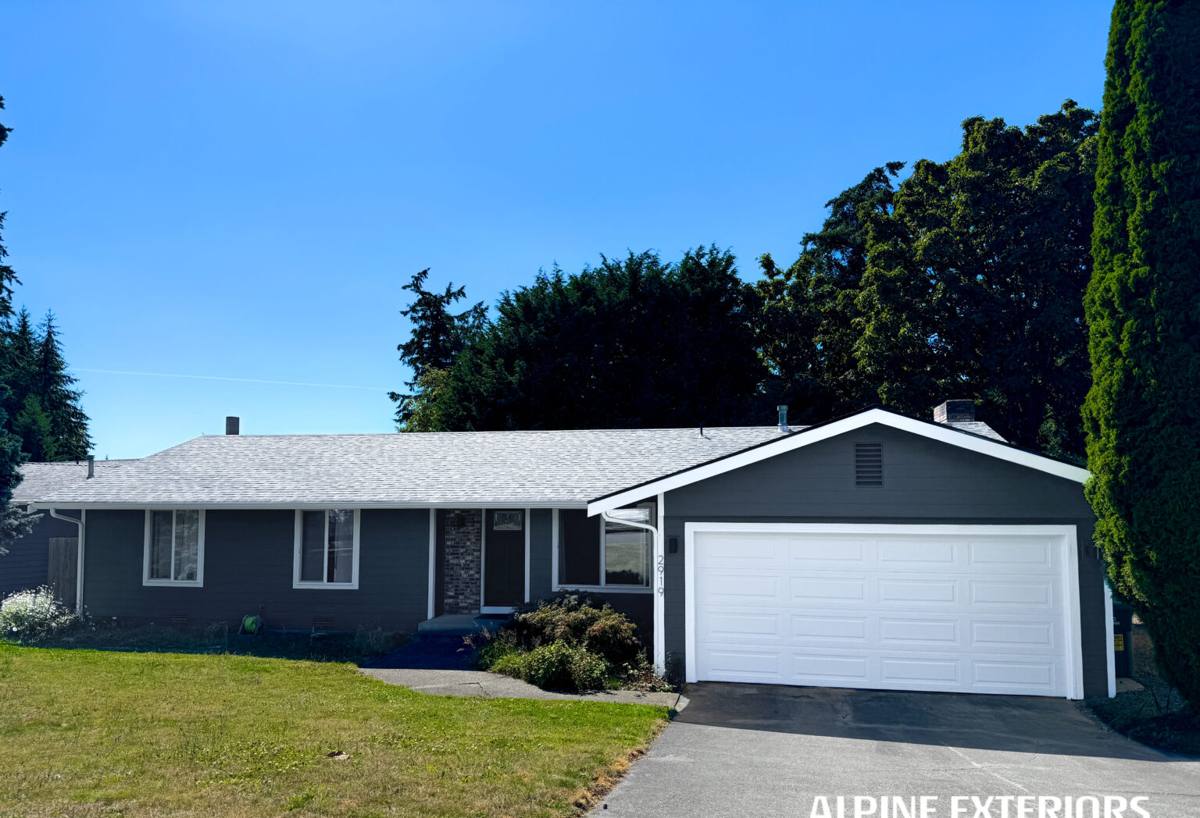
What Salt Air, Rain, and Moss Actually Do to a Wall Over Time
It helps to understand the mechanism, not just the symptom. Three separate stressors are working on Point Roberts siding at the same time, and they compound each other.
Salt-Laden Air
Airborne salt from the surrounding water settles on exterior surfaces and accelerates the corrosion of exposed metal — nail heads, flashing, hardware, and fastener points. Once corrosion starts at a fastener, water finds a path behind the siding through that same weak point.
Driving Rain
With open water exposure and few windbreaks, rain on Point Roberts often hits walls at an angle instead of falling straight down. That means water gets pushed sideways into laps, joints, and trim seams that would stay dry in a more sheltered location. Any siding product or installation detail that relies on gravity alone to shed water is going to underperform here.
Moss and Algae
Shaded, north-facing, and tree-adjacent walls stay damp longer between storms, which is exactly what moss and algae need to establish. Once organic growth takes hold on a wall, it holds moisture against the surface even during dry stretches, which is a slow, steady setup for coating failure and moisture intrusion behind materials that can't tolerate sustained dampness.
| Climate Stressor | What It Does Over Time | What a Correct Hardie Install Resists |
|---|---|---|
| Salt air | Corrodes exposed fasteners and metal trim, opening entry points for water | Non-combustible fiber cement panel with corrosion-resistant fastening per Hardie spec |
| Wind-driven rain | Pushes water sideways into laps, joints, and trim seams | Correct lap exposure, flashing, and joint treatment engineered to shed angled water |
| Extended moss season | Holds moisture against the wall surface, degrading coatings and feeding rot in susceptible materials | Factory-cured ColorPlus finish and a material that doesn't swell or feed fungal growth the way wood-based products can |
Why We Only Install James Hardie Fiber Cement
We don't install vinyl, LP SmartSide, Cemplank, Allura, primed spruce, or cedar siding, and in an environment like Point Roberts that standard matters more than in most places. Vinyl can warp and its seams are a weak point for wind-driven water intrusion. Engineered wood products and primed wood siding depend on an intact factory or field coating to keep moisture out — and once that coating is compromised by salt exposure, standing moisture, or moss, the wood substrate underneath is vulnerable to swelling and rot. Cedar is a beautiful, honest material, but it's also a maintenance commitment: regular refinishing, vigilance against moisture, and a shorter practical service life in a wet marine climate than most homeowners expect going in.
James Hardie fiber cement is not wood, and it's not plastic. It's cement, sand, and cellulose fiber, which means it doesn't feed moss and algae the way organic materials can, it holds paint and factory finish far more stably through wet-dry cycles, and it's non-combustible. It isn't magic — a poorly installed Hardie job can still leak — but the material itself starts from a much stronger baseline for a place like Point Roberts, and that's the honest reason we standardized on it rather than offering a menu of options.
The Right James Hardie System for This Location
James Hardie engineers its siding by climate zone, and homes in this part of Washington fall into the HZ5 product line, built specifically for wetter, harsher weather exposure rather than the HZ10 line used in dry, hot regions of the country. That distinction matters — it affects the formulation and moisture performance of the board itself, not just the color.
Product Options We Typically Discuss
- HardiePlank lap siding — the most common choice for Point Roberts homes, available in several exposure widths and textures, installed with attention to correct overlap for angled rain.
- HardiePanel vertical siding — often used on gable ends, accent walls, or paired with lap siding for a mixed look, with joints detailed to shed water rather than trap it.
- HardieTrim — fiber cement trim boards around windows, corners, and fascia so the whole exterior envelope, not just the field siding, resists the same conditions.
- ColorPlus factory finish — a baked-on finish applied under controlled conditions before the boards ever reach the site, which holds up to UV and salt exposure more consistently than field-applied paint and comes with its own finish warranty.
Color and texture choices are yours; the underlying system — HZ5 board, correct fastening, and factory finish — is what we hold constant because it's what performs in this climate.
What Correct Installation Actually Involves
James Hardie siding is only as good as the installation behind it. Most siding failures we're called to evaluate on marine-exposed homes trace back to installation shortcuts, not the material itself. In a driving-rain environment like Point Roberts, a few details matter more than usual.
Water Management Comes First
Correct house wrap or weather-resistive barrier, properly lapped and taped, goes on before a single piece of siding. Flashing over windows, doors, and any horizontal trim has to be installed so water is directed out and away from the wall assembly, not into it. This layer does the real waterproofing work — the siding is the second line of defense, not the only one.
Fastening and Clearances
Hardie specifies fastener type, spacing, and placement for a reason, and in a corrosive salt-air environment using the correct corrosion-resistant fasteners at the correct depth is what keeps rust from starting at the nail head. Manufacturer-specified clearance from grade, roof lines, and decks also keeps splashback and ponding water away from the bottom edge of the siding — a detail that's easy to skip and expensive to fix later.
Joints, Caulking, and Touch-Up
Butt joints and trim transitions need to be treated with the right sealant, applied correctly, not just caulked over as a finishing step. Any field cuts that expose the raw edge of a ColorPlus board need factory-matched touch-up so the cut edge doesn't become the first point of coating failure.
| Detail | Shortcut Approach | Correct Approach |
|---|---|---|
| Weather barrier | Stapled loosely, seams untaped | Properly lapped, taped, and integrated with flashing |
| Fasteners | Standard nails, inconsistent spacing | Manufacturer-specified corrosion-resistant fasteners at spec spacing |
| Cut edges | Left bare or unevenly touched up | Factory-matched touch-up on every exposed cut |
| Ground clearance | Siding installed close to grade or decking | Manufacturer clearance maintained to avoid splashback and standing moisture |
Our Process, Start to Finish
- On-site evaluation — we walk the exterior, check for existing moisture damage, moss buildup, and trouble spots specific to the home's orientation and exposure.
- Product and color selection — we go through HZ5 board options, textures, and ColorPlus colors so you know exactly what's going on the house.
- Tear-off and inspection — old siding comes off and we inspect the sheathing underneath for hidden rot or moisture damage before anything new goes up.
- Weather barrier and flashing — the water management layer goes in correctly, since this is what protects the wall long-term.
- Siding installation — installed to Hardie's fastening and clearance specifications, not shortcuts.
- Final detailing — joints sealed, cut edges touched up, trim finished cleanly.
- Walkthrough — we review the finished work with you before calling the job done.
Why It Matters That We Already Work in Point Roberts
Point Roberts is unusual to service for a simple reason: it's a U.S. exclave, reachable by land only by driving through Canada. That affects everything from how materials and crews get scheduled to how a job needs to be planned around border logistics. A crew unfamiliar with the area can turn a straightforward siding job into a scheduling headache — or worse, cut corners to avoid the extra trip. We've worked Point Roberts homes before, understand what it takes to get materials and crews there efficiently, and plan projects with that reality built in from the start rather than treating it as a surprise.
Beyond logistics, familiarity with the specific microclimate matters. A siding crew that mostly works drier, more sheltered inland areas doesn't always think about angled rain exposure or salt-driven fastener corrosion the same way a crew that regularly works this stretch of coastline does. That local pattern recognition — knowing which walls take the worst of the weather and detailing them accordingly — is part of what a correct installation depends on.
Maintenance: What to Expect After Installation
James Hardie siding is low-maintenance, not no-maintenance. In a marine environment, a little routine attention keeps it performing the way it's designed to.
- Rinse the exterior periodically to clear salt residue and organic buildup, especially on north- and west-facing walls.
- Keep gutters and downspouts clear so water isn't overflowing onto siding below.
- Trim back vegetation and tree cover where practical to reduce shaded, damp conditions that encourage moss.
- Have caulked joints and trim inspected periodically, since sealant is the part of the system most likely to need attention over time.
- Address any touch-up needs at cut edges or fastener points promptly rather than letting a small exposure sit through a wet season.
What to Ask Before You Hire
Whether you talk to us or another contractor, these are reasonable questions for any Point Roberts siding project:
- Have you installed siding on Point Roberts or similarly exposed coastal properties before?
- Which James Hardie climate zone product will you be using, and why?
- What's your plan for weather barrier and flashing before siding goes on?
- What fasteners will be used, and are they rated for corrosion resistance?
- How do you handle scheduling and material delivery given the location?
- What does your warranty cover — labor, product, or both — and for how long?
If you're weighing a siding replacement or repair on a Point Roberts home, we're happy to take a look and walk you through what we'd recommend for your specific exposure. Reach out for a free, no-pressure estimate using the form below.