 Birch Bay
 Why Point Roberts Needs Its Own Approach to Window Installation
Point Roberts sits on its own peninsula at the southern tip of the Tsawwassen finger, surrounded on three sides by the Strait of Georgia and Boundary Bay. That location is part of what makes it a great place to live, but it also means homes there take a beating that most inland Whatcom County properties never see. Salt-laden air off the water, wind-driven rain that comes in sideways during winter storms, and a moss season that seems to stretch longer every year all work against ordinary windows. A window installation that would hold up fine in a sheltered inland neighborhood can fail early here if it isn't specified and installed with this specific exposure in mind.
We've done window work throughout Whatcom County, and Point Roberts consistently ranks among the more demanding environments we deal with — not because the work itself is harder, but because the margin for error in materials and installation detail is smaller. Get the flashing, sealant, or frame material wrong and the consequences show up faster here than almost anywhere else in the region.
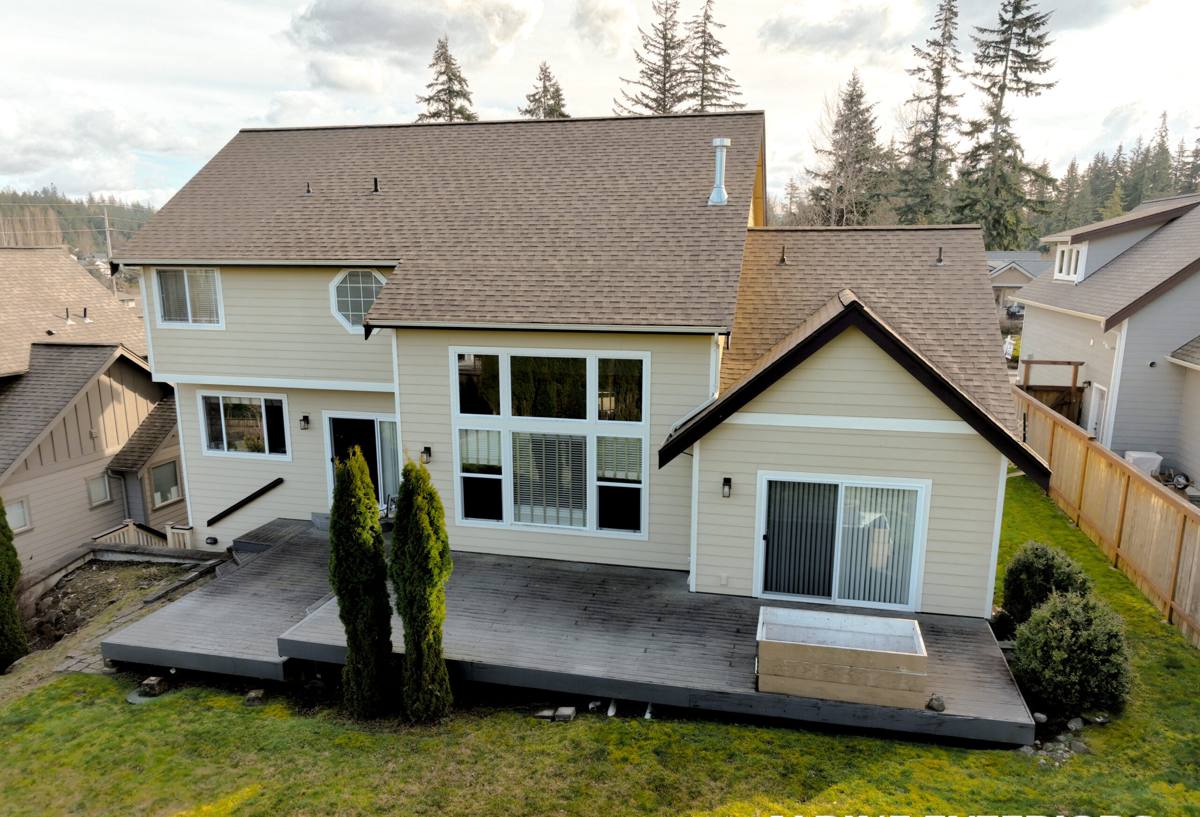
What Salt Air, Driving Rain, and Moss Actually Do to a Window
It helps to understand the specific mechanisms at work, because they point directly to what a correct installation has to guard against.
Salt Air
Airborne salt is corrosive to exposed metal hardware — hinges, locks, cranks, and screws — and it accelerates the breakdown of certain sealants and finishes faster than plain moisture alone. Aluminum-clad and vinyl products vary a lot in how well their hardware and coatings resist this, and cheaper hardware packages are often the first thing to show pitting or stiffness in a marine-exposed home.
Driving Rain
Rain that falls straight down is a minor concern for a window. Rain that's being pushed horizontally by wind off open water is a different problem — it gets forced up under sills and into any gap in the flashing or sealant line that a standard installation might get away with elsewhere. This is the single biggest reason we see water staining and rot around window openings on wind-exposed sides of Point Roberts homes.
Moss and Prolonged Dampness
Western Washington's moss season isn't just a roof issue. Moss and algae hold moisture against exterior surfaces for weeks at a time, including window trim, sills, and the siding immediately around a window opening. Wood trim in constant contact with damp moss growth softens and rots from the outside in, often well before a homeowner notices anything wrong from inside the house.
Signs Your Current Windows Are Already Losing the Fight
- Soft, spongy, or discolored wood trim or sill around the window frame
- Persistent moss or dark green/black growth on the sill or lower trim that keeps coming back after cleaning
- Fogging or a permanent haze between the panes of a double-pane unit (a sign the seal has failed)
- Hardware — locks, cranks, hinges — that's stiff, pitted, or corroded
- Drafts or a cold line you can feel by hand along the frame edge in winter
- Paint or finish that's bubbling, peeling, or chalking faster on the window trim than on the surrounding wall
- Water staining on interior drywall or trim below or beside a window after a windy rain event
Any one of these on its own might be minor. Several together, especially on a wall that faces the water or prevailing wind, usually means the window or its surrounding flashing has already started to fail.
What a Correct Window Installation Involves
Window installation is often sold as a product decision — pick a brand, pick a color, done. In an exposure like Point Roberts, the installation detail matters as much as the window itself, sometimes more. A high-end window installed with poor flashing will leak. A mid-range window installed correctly, with the right sequencing and materials, will often outperform it.
Frame Material Choices
Vinyl, fiberglass, and aluminum-clad wood windows all show up in this area, and each has real trade-offs rather than a single "best" answer:
| Frame Type | Salt/Moisture Behavior | Maintenance | Typical Trade-off |
|---|---|---|---|
| Vinyl | Won't corrode; UV and heat can affect long-term rigidity | Low | Fewer color/finish options, seams can be a weak point if poorly welded |
| Fiberglass | Very stable in moisture and temperature swings; resists corrosion well | Low to moderate | Higher upfront cost than vinyl |
| Aluminum-clad wood | Exterior clad resists weather; wood core is warm and strong but is only as good as the seal protecting it | Moderate — exterior is low-maintenance, but any breach in the cladding seal exposes wood to rot | Higher cost; installation quality is critical |
| Bare wood | Attractive but demands consistent refinishing to resist this climate | High | We generally steer clients away from bare wood on wind- and salt-exposed elevations here |
We don't push one brand or material on every job. We talk through which elevation the window sits on, how exposed it is to wind-driven rain and salt, and what maintenance level the homeowner actually wants to keep up with, then match the product to that reality.
Flashing and Moisture Management
This is the part of the job that doesn't show once the trim goes back on, and it's the part that determines whether the window lasts. A correct installation includes:
- A properly lapped weather-resistive barrier integrated with the window flange, not just caulked over gaps
- Sill pan flashing that sheds any water that gets past the primary seal, rather than letting it sit against the rough opening
- Head flashing that directs water out and away, lapped correctly over the barrier below it
- Backer rod and a compatible, durable sealant at the trim-to-siding joint — not a bead of caulk asked to do a flashing detail's job
- Correct shimming and fastening so the frame isn't racked or stressed, which can compromise the seal over time
Skipping or shortcutting any one of these is usually invisible on install day and becomes a rot or leak problem two to five winters later — right around when driving rain and a few moss seasons have had time to work on the weak point.
Our Process, Start to Finish
- On-site assessment. We look at each window opening individually — exposure, existing damage, framing condition — rather than quoting off a generic per-window number.
- Material recommendation. We walk through frame options and pricing honestly, including why we'd steer a wind-exposed wall toward a different product than a sheltered one.
- Removal and opening inspection. Once the old window is out, we check the rough opening and framing for hidden rot or moisture damage before anything new goes in — this is often where a cheaper installer stops looking.
- Flashing and barrier work. Sill pan, weather barrier integration, and head flashing are installed to shed water outward at every layer, not just relying on the window's own seal.
- Window installation and sealing. Set, shimmed, and fastened square and true, with sealant and trim work matched to the exposure.
- Final check. We verify operation, seal integrity, and trim finish before we consider the job done.
What Drives Cost
| Factor | Why It Matters |
|---|---|
| Frame material | Vinyl is the most budget-friendly; fiberglass and aluminum-clad wood cost more but hold up differently under salt and moisture |
| Window size and configuration | Larger units, custom shapes, and multi-panel configurations take more labor and material |
| Condition behind the old window | Rot repair to framing or sheathing, if discovered during removal, adds cost but should never be skipped |
| Exposure of that wall | Elevations facing open water or prevailing wind may justify upgraded flashing details or a more moisture-tolerant frame |
| Number of openings | Doing multiple windows in one visit typically costs less per window than one-off jobs |
We give straightforward, itemized estimates rather than a flat per-window rate, because a wind-exposed window on a water-facing wall genuinely isn't the same job as a sheltered one on the lee side of the house.
Why a Crew That Already Works in Point Roberts Matters
Point Roberts is a border exclave — the only road access runs through Canadian territory via the Tsawwassen border crossing. That's not a minor logistics footnote. It affects how contractors schedule material deliveries, how they plan crew time, and whether they can respond quickly if a problem shows up after installation. A crew unfamiliar with that reality can end up making promises about timelines or follow-up visits that don't hold up once the border crossing is factored in.
Beyond logistics, familiarity with the area's specific exposure matters. A contractor who's worked mostly on sheltered inland Whatcom County homes may not default to the flashing and material choices that a wind- and salt-exposed Point Roberts wall actually needs. We've seen the failure patterns here firsthand — where moisture gets in, which elevations take the worst of the driving rain, how fast moss reclaims an unmaintained sill — and we build the installation around that experience rather than a one-size-fits-all approach.
Keeping New Windows Performing Long-Term
A correct installation buys you the most protection, but a little upkeep extends it considerably in this climate:
- Rinse salt residue off frames and glass a couple of times a year, more often on water-facing elevations
- Keep gutters and downspouts clear so roof runoff isn't sheeting down across window heads
- Remove moss and algae from sills and trim promptly rather than letting it establish
- Check exterior caulk lines annually for cracking or separation, especially after a hard winter
- Operate hardware periodically through the seasons — locks and cranks that sit unused are more prone to sticking or corroding
- Trim back vegetation that's shading a window and keeping it damp longer than the rest of the house
If your windows are showing wear, or you're planning ahead for a Point Roberts home that needs to hold up to salt air, driving rain, and a long moss season, we're glad to walk the property with you and put together a straightforward, no-pressure estimate using the form below.