 Birch Bay
 Window Installation in Ferndale: What This Climate Demands
Ferndale sits close enough to the water and the open Nooksack lowlands that its homes take on a specific mix of weather stress most manufacturers' installation guides never account for: salt-tinged marine air, rain that arrives sideways more often than straight down, and a moss and mildew season that can run most of the year on shaded or north-facing walls. Windows sit right at the seam between the inside of a house and all of that weather. A window is only as good as the seal, flashing, and sill detail built around it, and in this part of Whatcom County, a shortcut on any one of those details tends to show up as a leak, a soft sill, or a fogged pane well before the window itself would otherwise need attention.
Window installation for us isn't a stand-alone product swap. A window is one component of a wall assembly, and it has to tie into the siding, the water-resistive barrier, and the framing around it correctly or it becomes the weak point in an otherwise solid house. In Ferndale specifically, that means building every installation around the same three conditions: salt air working on hardware and fasteners, driving rain testing every flashing lap, and a long wet season that punishes any detail that traps moisture instead of shedding it.
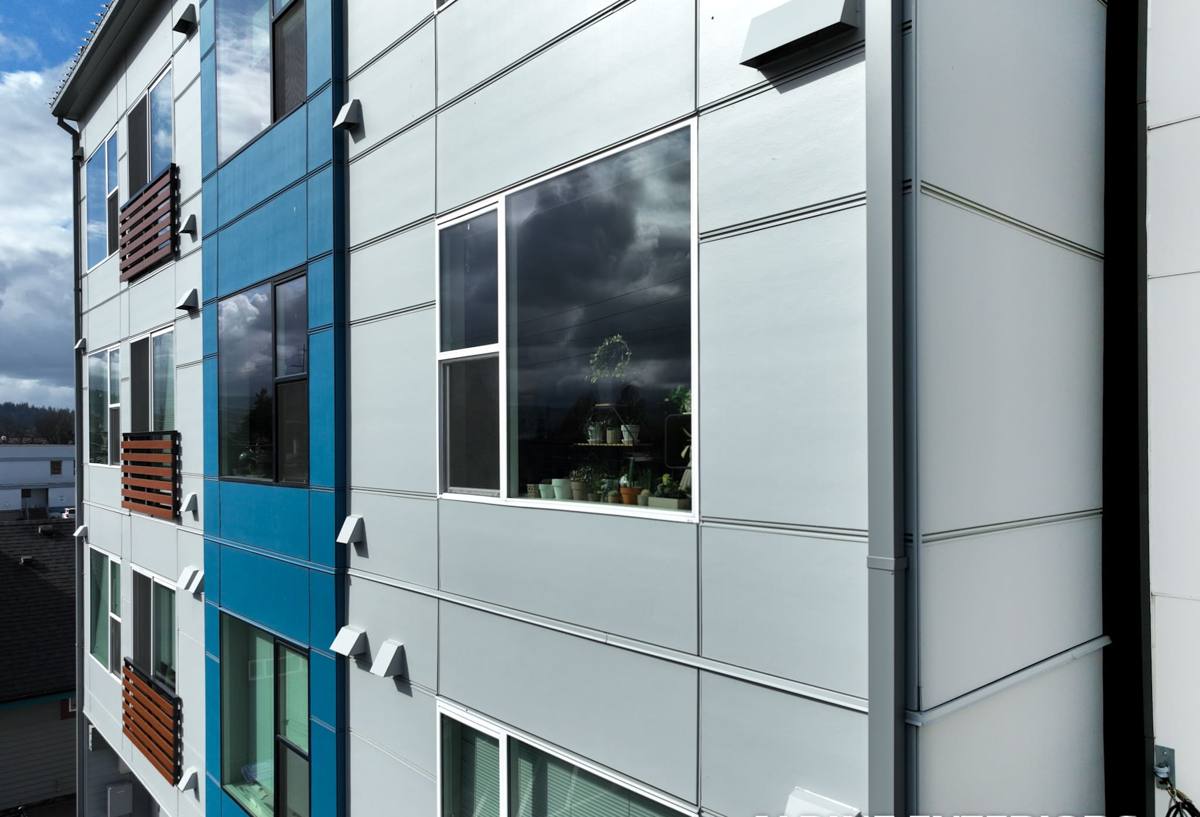
Why the Installation Matters More Than the Window Itself
The Sill Pan and Flashing Sequence
Most window leaks don't start with a bad window — they start with a sill pan that wasn't sloped to drain, a flashing lap installed in the wrong order, or a gap left where the window's nailing flange meets the water-resistive barrier. Water that gets behind a window here has a long wet season to keep working on whatever it finds, so a flashing sequence that would get away with being sloppy in a drier climate doesn't get the same pass in Ferndale. We build a sloped sill pan under every window, lap the flashing so water sheds outward at every layer, and integrate the window flange into the wall's drainage plane rather than just caulking around the edges and calling it sealed.
Rough Opening Condition
Before a new window goes in, the rough opening needs to be checked for square, level, and — on older homes especially — for hidden water damage from years of a prior window's flashing not doing its job. Skipping that inspection is one of the more common ways a new window ends up sitting in a compromised opening, where it looks fine on install day but starts showing problems within a season or two because the framing underneath was never actually sound.
Signs a Ferndale Home's Windows Are Due for Attention
Not every issue means a full replacement, but these are the signs worth having someone look at, especially on a home exposed to Ferndale's coastal weather:
- Visible fogging or condensation between panes, which means the seal on a double- or triple-pane unit has failed
- Soft, discolored, or spongy trim and sill material, often the first visible sign of water getting behind the frame
- Persistent drafts or noticeably cold spots near the window even with it fully closed and locked
- Difficulty opening, closing, or locking a window that used to operate smoothly
- Visible gaps, cracked caulk, or peeling paint concentrated around the window perimeter rather than the wall generally
- Moss or dark staining building up on the sill or the wall just below the window
- Rising energy bills without another clear explanation, which can point to failed seals or aging single-pane glass
Our Window Installation Process
- On-site assessment — we look at each opening individually, check for existing water damage, and confirm actual measurements rather than assuming standard sizing
- Honest recommendation — full-frame replacement, retrofit installation, or opening repair first, explained in plain terms with the reasoning behind it
- Removal — the old window comes out carefully, and we inspect the framing and sheathing underneath before anything new goes in
- Opening prep and repair — any rot, damaged sheathing, or failed flashing found during removal gets addressed before the new window is set
- Sill pan and flashing — a sloped sill pan and a correctly lapped flashing sequence tied into the wall's water-resistive barrier
- Setting, shimming, and sealing — the new window is set square and level, shimmed correctly, and sealed with the right materials for a marine climate, not just a bead of generic caulk
- Trim and finish — exterior trim is integrated to match the surrounding siding so the finished opening looks intentional, not patched
Frame Materials: What Holds Up in This Climate
There's no single right answer for every home — budget, sun exposure, and how long you plan to stay in the house all factor in. What matters is understanding the real trade-offs before deciding, especially in a climate with this much sustained moisture and salt exposure.
| Frame Material | Strengths | Trade-Offs in Ferndale's Climate |
|---|---|---|
| Vinyl | Lower upfront cost, no painting required, good energy performance | Can expand and contract with temperature swings; lower-grade profiles may show stress at welded corners over time |
| Fiberglass | Dimensionally stable, holds paint well, strong resistance to moisture and corrosion | Higher upfront cost than vinyl; fewer color and style options at the budget end |
| Wood | Traditional appearance, good insulating properties | Needs regular painting and sealing to resist rot and moss in a wet, shaded climate; highest maintenance burden here |
| Wood-clad / composite | Interior wood look with a lower-maintenance exterior shell | Performs well when detailed correctly, but exterior cladding integrity at joints matters more here than in a drier climate |
Whatever frame material fits your home and budget, the glazing package matters too. Washington's energy code sets minimum U-factor requirements for replacement and new-construction windows, and we'll walk through the U-factor and NFRC ratings on any window package before it's ordered. On elevations that take direct sun, a low-E coating tuned for solar heat gain makes a real difference; on shaded, north-facing walls that stay damp longer, the glazing choice matters less than getting the sill and flashing right.
Full-Frame Replacement vs. Retrofit Installation
Not every window job calls for the same approach. A retrofit, or pocket, installation fits a new window into the existing frame, leaving the old frame and exterior trim largely in place. It's faster and less invasive, and it can be the right call when the existing frame is still sound and properly flashed. A full-frame replacement removes the window down to the rough opening, which costs more in labor but is the only way to actually inspect and correct what's happening behind the old frame.
When Retrofit Makes Sense
If the existing frame and flashing are in good condition and there's no sign of water intrusion, a retrofit installation is a reasonable, less disruptive option. We'll say so plainly when that's what an opening actually needs, rather than upselling a full-frame job that isn't necessary.
When Full-Frame Is the Right Call
Once there's evidence of water damage, soft trim, or a flashing detail that was never done correctly the first time, a retrofit just seals a problem behind new material instead of fixing it. In Ferndale's climate, where a hidden leak has a long wet season to keep doing damage, we lean toward full-frame replacement whenever the opening shows any sign of past moisture problems, so the new window isn't going in over a compromised opening.
New Windows for Additions and Ferndale New Construction
Not every job here is a replacement. Additions, remodels, and new construction all come with their own window needs, and new openings have to meet the same Washington State Energy Code performance requirements as replacements, along with correct flashing integration into whatever siding and water-resistive barrier system the rest of the house uses. Getting that integration right at the framing stage, before siding goes on, is far easier and cheaper than correcting it after the fact.
Why a Crew That Already Works Ferndale Matters
Manufacturer installation instructions are written for average conditions in a moderate climate. Ferndale's exposure to salt air, wind-driven rain, and a long moss season isn't average, and a crew that installs windows here regularly knows which parts of that generic guidance are worth following to the letter and where extra time on flashing or sealant pays for itself down the road. That experience shows up in decisions that don't come up in a sales conversation — how much lap a flashing course needs given the wind direction on a given elevation, when a sill needs a sloped composite pan instead of relying on caulk alone, and which openings on an older Ferndale home are likely to have hidden framing damage before the old window even comes out.
What to Ask Before You Hire
- Ask whether they recommend retrofit or full-frame installation for your specific opening, and why
- Ask how they build the sill pan and sequence flashing for a marine climate, not a generic answer
- Confirm current Washington state contractor licensing, bonding, and insurance
- Get a written scope of work specifying frame material, glazing package, and U-factor
- Ask how the window unit and the installation labor are each covered under warranty
- Ask what happens if hidden rot or water damage is found once the old window is out
If your Ferndale home has windows showing any of the signs above, or you're planning an addition and want the openings done right from the start, it's worth having someone look at the actual conditions before you commit to a plan. We offer free, no-pressure estimates for window installation in Ferndale and the surrounding area — use the form below to get a time on the schedule.