 Birch Bay
 Siding Built for Point Whitehorn's Shoreline Climate
Point Whitehorn sits on the bluffs and shoreline at the northern edge of Birch Bay, facing open water on the Strait of Georgia. That position puts homes here in a tougher environment than siding just a few miles inland. Wind off the water carries salt spray onto exterior walls, storms roll in with little to break their force, and the surrounding tree cover keeps everything damp long after a storm has passed. Siding that would hold up fine in a sheltered subdivision can fail early on a shoreline-exposed home in this part of Whatcom County.
When we talk about siding replacement for Point Whitehorn specifically, we're talking about a job that has to account for salt exposure, wind-driven rain intrusion, and a moss season that runs most of the year. Get those three things right and a siding system can last decades. Get them wrong — even with good-looking materials — and you're looking at repairs within a handful of years.
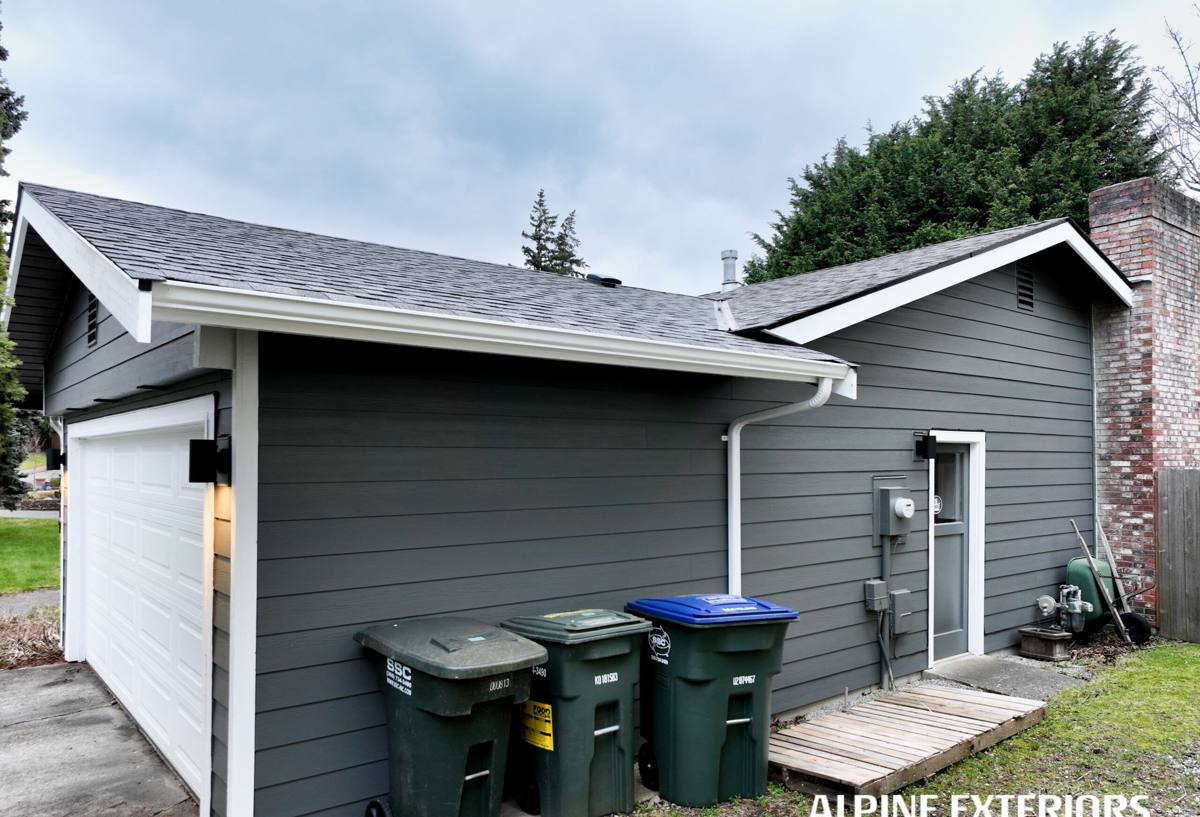
What Salt Air, Driving Rain, and Moss Do to Old Siding
Salt-laden air
Airborne salt from the Strait doesn't just sit on the surface — it works into fasteners, trim joints, and any spot where paint or factory finish has thinned. On wood and engineered wood products, that moisture-salt combination accelerates swelling, splitting, and paint failure. On metal fasteners and flashing, it accelerates corrosion. Homes closer to the bluff and more directly exposed to onshore wind see this faster than homes tucked behind trees or rises in the land.
Wind-driven rain
Storms coming off open water hit siding at an angle instead of falling straight down, which means water gets pushed sideways into laps, seams, and butt joints that were never designed to shed rain from that direction. This is where installation quality matters more than material choice — a siding system with proper flashing and correct lap coverage sheds wind-driven rain; one installed to a minimum standard lets water track behind the cladding.
Moss and prolonged dampness
Whatcom County's wet season is long, and shaded, north-facing walls in Point Whitehorn stay damp for extended stretches. Moss and algae take hold on siding that can't dry out, and on wood-based products that trapped moisture leads to rot from the back side — often invisible until the siding is soft or the paint is bubbling.
Signs Your Point Whitehorn Home Needs Siding Replaced — Not Just Patched
Coastal exposure means small problems turn into whole-wall problems faster than they would inland. Here's what tells us a section (or the whole house) is past the point where patching makes sense:
- Soft or spongy spots when you press on the siding, especially near the bottom courses and around windows
- Paint that's peeling, bubbling, or chalking heavily on the same walls every year
- Visible warping, cupping, or separation at panel joints
- Moss or algae that returns within months of being cleaned
- Streaking or staining below nail heads or fasteners — a sign of corrosion working through
- Rising energy bills with no other explanation, which can point to a compromised weather barrier
- Siding that's original to a home built more than 20-25 years ago, especially on the water-facing side
One or two of these on an otherwise sound wall might be a repair. Several of these together, or any sign of rot in the sheathing underneath, means it's time to talk about full replacement.
What a Correct Siding Replacement Actually Involves
Tear-off and sheathing inspection
The old siding comes off completely, not over-clad. That's the only way to find out what's actually happening underneath — soft sheathing, old rot repairs, or moisture trapped from a prior installation. In a coastal-exposed area like Point Whitehorn, skipping this step means building a new siding job on top of a problem that's already started.
Weather-resistive barrier and flashing details
A new, correctly lapped weather-resistive barrier goes on before any siding, along with properly integrated flashing at windows, doors, and every horizontal trim transition. This is the layer that actually keeps wind-driven rain out of the wall assembly — the siding itself is the second line of defense, not the first.
Installation to manufacturer spec
Fastener spacing, lap coverage, clearance from grade and roof lines, and joint treatment all follow the manufacturer's published specifications. This isn't optional detail — it's what the warranty is actually contingent on, and it's what determines whether the siding performs the way it's designed to in a high-exposure setting.
Finish and caulking
Factory-finished products reduce how much field caulking and painting a job depends on, but transitions, trim, and penetrations still need to be sealed correctly with products rated for the exposure. This is a spot where corners get cut on budget jobs, and it's usually the first place problems show up on a coastal home.
Why We Install Only James Hardie Fiber Cement
We standardized on James Hardie fiber cement siding for every home we work on, including in Point Whitehorn, and we don't install vinyl, LP SmartSide, Cemplank, Allura, or unfinished wood siding. That's a deliberate call, not a default.
Fiber cement doesn't absorb moisture the way wood-based products do, so it doesn't swell, split, or feed rot the way engineered wood can when it stays damp for long stretches — which is exactly the condition this stretch of coastline produces for much of the year. It's also non-combustible, which matters given Whatcom County's dry-season wildfire risk in surrounding areas. Hardie's ColorPlus factory finish is baked on and warranted against fading and peeling, which reduces the repainting cycle that salt air and UV exposure otherwise force. And Hardie engineers specific product lines — their HZ5 formulation — for climates that see more moisture and freeze-thaw cycling, which fits this part of Washington better than a one-size-fits-all product.
None of that means other products are junk. Vinyl is inexpensive and low-maintenance in mild climates; engineered wood has a warmer look and lower upfront cost than fiber cement. But on a shoreline-exposed home, those products' weak points — vinyl's impact and expansion issues, engineered wood's sensitivity to sustained moisture — are exactly the conditions Point Whitehorn delivers. We'd rather install one product correctly and stand behind it than offer three options and hope the cheaper ones hold up.
How Hardie Compares to Other Siding Options in This Climate
| Factor | James Hardie Fiber Cement | Vinyl | Engineered Wood (e.g. LP SmartSide) |
|---|---|---|---|
| Salt air / coastal exposure | Resists corrosion and salt-driven deterioration | Can become brittle and discolored over time | Moisture and salt accelerate edge swelling |
| Wind-driven rain tolerance | Strong when flashed and installed to spec | Prone to gaps at seams under wind pressure | Vulnerable at cut edges and joints if moisture gets in |
| Moss / prolonged damp exposure | Doesn't feed rot; surface can be cleaned | Doesn't rot but traps moisture behind panels | Sustained dampness can lead to hidden rot |
| Fire resistance | Non-combustible | Melts/deforms under heat exposure | Combustible, treated but still wood-based |
| Finish longevity | Factory ColorPlus finish, long fade/peel warranty | Color molded in, can chalk and fade | Requires field painting and repainting over time |
Our Process, Start to Finish
- On-site inspection — we look at your current siding, sheathing condition where accessible, and exposure factors specific to your lot (how open it is to the water, tree cover, prior moisture damage).
- Written estimate — a clear scope and price based on what we actually find, not a generic square-footage guess.
- Material order — Hardie panels, trim, and accessories ordered in the profile and color you choose.
- Tear-off and prep — full removal of old siding, sheathing repair where needed, new weather-resistive barrier installed.
- Installation — siding, trim, and flashing installed to manufacturer spec, with attention to every water-entry point.
- Final walkthrough — we go over the finished job with you before calling it done.
What Affects the Cost of a Point Whitehorn Siding Job
Every home is different, but the same handful of factors drive most of the price variation we see on jobs in this area:
| Factor | Why It Matters |
|---|---|
| Home size and number of stories | More surface area and taller walls mean more material and labor, plus added equipment for upper stories |
| Tear-off complexity | Homes with layered siding history (siding over siding) or hidden rot take longer to strip and repair before new siding goes on |
| Trim and architectural detail | Corner boards, window/door casing, and multiple roof transitions all add labor beyond flat wall installation |
| Site access and exposure | Bluff-adjacent or tree-heavy lots can affect staging, scaffolding, and weather-dependent scheduling |
| Sheathing and framing repairs | Any rot found during tear-off needs to be replaced before new siding can go on — this is usually the biggest cost variable on older homes |
We don't give ballpark numbers over the phone for this reason — a firm estimate requires seeing the current condition of your walls in person.
Why Local Experience in Point Whitehorn Matters
Siding crews who mostly work inland get used to a certain baseline: less wind, less salt, more predictable drying time. That baseline doesn't hold up on a shoreline-exposed home. Flashing details that are "good enough" on a sheltered lot can be undersized for a wall that takes wind-driven rain head-on several times a winter. Knowing which walls in this area need extra attention — and building in the margin that coastal exposure demands — comes from having done this work on homes facing the same conditions, not from a generic installation checklist.
We also know this stretch of Whatcom County well enough to set realistic expectations: which weeks of the year are workable for tear-off and install, what a bluff-facing wall needs versus a sheltered one, and how to sequence a job so open sheathing isn't left exposed to an incoming storm.
If your siding is showing wear, or you're just planning ahead for a home on this part of the coast, we're glad to come take a look. The estimate is free, there's no pressure to commit, and you'll walk away with a clear, honest picture of what your home actually needs.