 Birch Bay
 Siding Built for the Terrell Creek Coastline
Homes around Terrell Creek sit close to the water and close to the weather that comes off it. Salt-laden air drifts in off Birch Bay and the Strait of Georgia, driving rain comes in sideways more often than straight down, and the shaded, damp stretches near the creek and surrounding tree cover stay wet longer than they do just a few miles inland. That combination is hard on exterior materials that weren't engineered for it. It's also exactly why we install James Hardie fiber cement siding and nothing else — Terrell Creek is one of the neighborhoods where the difference between a correctly specified siding system and a generic one shows up fastest, sometimes within a single wet season.
This page covers what Terrell Creek homes specifically need from their siding, what a correct James Hardie installation looks like in this environment, and why local installation experience matters as much as the product itself.
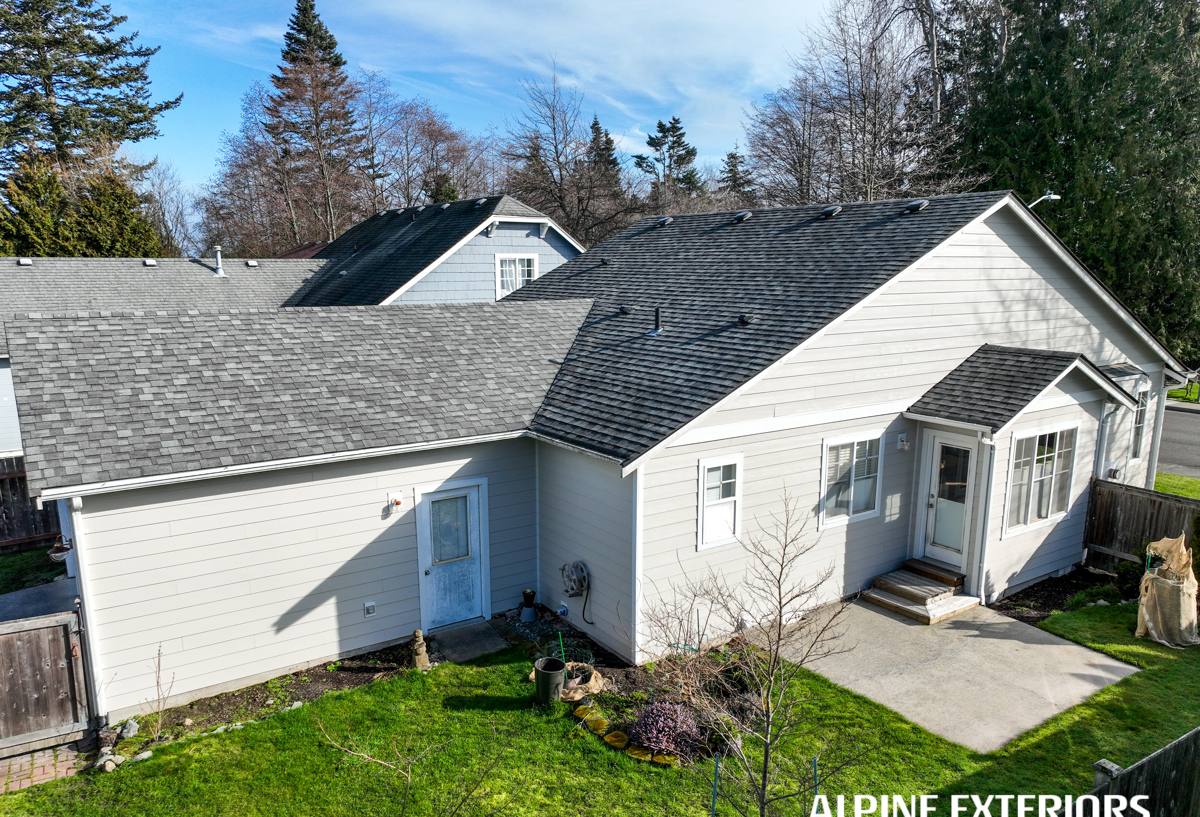
What This Microclimate Does to a House
Whatcom County's marine climate is mild compared to most of the country, but "mild" doesn't mean easy on a building envelope. Terrell Creek homes deal with a few specific stressors that add up over the years:
Salt Air
Airborne salt from Birch Bay accelerates corrosion on exposed metal — fasteners, flashing, trim caps — and it degrades paint films faster than it does further inland. Siding materials and finishes that aren't rated for coastal exposure tend to chalk, fade, or fail at the seams sooner near the water than they would across town.
Driving Rain
Wind off the water pushes rain horizontally into wall assemblies rather than letting it run straight down and off. That means water-shedding details — laps, flashing, joints, and the gap behind the siding — carry more of the workload here than they do on a sheltered inland lot. Any weak point in those details gets tested repeatedly.
A Long Moss and Mildew Season
Shaded, damp conditions near the creek and tree lines keep siding surfaces wet for extended stretches, especially on north- and west-facing walls. That's prime territory for moss, algae, and mildew to take hold on porous or absorbent materials, and once organic growth gets a foothold it holds moisture against the wall longer, which compounds the problem.
Why James Hardie Fits This Environment
We install James Hardie fiber cement exclusively — not as a sales position, but because it's the product line that holds up to the combination of conditions Terrell Creek deals with. Fiber cement is non-combustible and dimensionally stable, meaning it doesn't swell, cup, or rot the way wood-based and some engineered wood siding products can when they take on repeated moisture. That matters directly here, where the siding rarely gets a long uninterrupted dry stretch to fully recover between rain events.
HZ5 Engineering for the Pacific Northwest
James Hardie makes climate-specific product formulations, and the HZ5 line is engineered for regions with more moisture exposure and freeze-thaw cycling than the Southeast or Southwest. For a home near Terrell Creek, that engineering isn't a marketing detail — it's the difference between a product formulated for this exact kind of weather and one that's a general compromise across every climate zone in the country.
ColorPlus Factory Finish
Most of the finish failures we see on other siding products near the water trace back to the paint, not the substrate underneath it. James Hardie's ColorPlus finish is baked on in a controlled factory setting through multiple coats, which gives it better adhesion and UV/salt resistance than field-applied paint ever achieves on site. It also means touch-up and color match are simpler down the road, since the finish is a documented, consistent system rather than whatever happened to be in the sprayer that day.
What a Correct Installation Looks Like Here
James Hardie siding performs to spec only when it's installed to spec — and in a driving-rain, salt-air environment, the installation details matter more than the brand name on the box. A rushed or generic install can undercut even the best material.
Water Management Behind the Siding
Correct installation starts with a drainage plane and rainscreen gap behind the siding panels, so any water that does get past the surface has somewhere to go instead of sitting against the wall sheathing. On a Terrell Creek home taking wind-driven rain regularly, this gap is not optional — it's the difference between water that drains and water that gets trapped.
Flashing at Every Penetration
Windows, doors, hose bibs, light fixtures, and roof-to-wall transitions all need properly lapped flashing and sealant details, installed in the correct order so water is always directed outward and downward. These are the spots where most real-world siding failures actually start, regardless of the siding material — a great product installed over a bad flashing detail will still leak.
Fastening and Clearances
James Hardie specifies fastener type, spacing, and penetration depth, along with minimum clearances from grade, roof lines, and decks. Coastal salt air makes fastener choice especially important — the wrong fastener corrodes and stains the siding face or loses holding power years before the panel itself would fail. Clearance gaps also keep splash-back and standing moisture away from the bottom courses, which is where we see the most weathering on homes near the creek.
Joint and Seam Treatment
Butt joints, corners, and trim seams need to be treated as water-management details, not just cosmetic ones — caulked, flashed, or shiplapped per manufacturer spec so they don't become entry points during sideways rain.
Comparing Siding Options for a Terrell Creek Home
| Factor | James Hardie Fiber Cement | Vinyl | Untreated Wood / Cedar |
|---|---|---|---|
| Salt air resistance | Engineered for coastal exposure (HZ5), factory-baked finish | Can become brittle and discolor with UV and salt exposure over time | Vulnerable without diligent, ongoing sealing and refinishing |
| Moisture / rot behavior | Non-combustible, dimensionally stable, doesn't rot | Doesn't rot, but can warp or crack; traps moisture behind panels if not detailed well | Absorbs moisture; prone to rot, cupping, and moss colonization |
| Moss and algae resistance | Dense, factory-finished surface resists organic growth better than porous materials | Resists growth but seams and laps can trap grime | Porous surface is highly susceptible in shaded, damp areas |
| Finish longevity | Factory ColorPlus finish, long-term color retention | Color is through-body but can fade and chalk | Requires repeated repainting or staining, often every few years |
| Fire resistance | Non-combustible core material | Combustible, can melt or deform under heat | Combustible |
Our Process for Terrell Creek Projects
Every job follows the same sequence, adjusted for the specific exposure of the lot — a wall facing open water toward Birch Bay gets treated differently than a shaded wall backing up to the tree line near the creek.
- On-site assessment of current siding condition, moisture damage, and wall orientation relative to prevailing wind and rain
- Inspection of sheathing and framing once old siding is removed, with repair before anything new goes up
- Installation of a proper drainage plane and rainscreen gap
- Flashing at every window, door, and penetration before siding installation begins
- James Hardie HZ5 panel or plank installation to manufacturer fastening and clearance specifications
- Final joint, seam, and trim detailing, then a walkthrough of the finished work
We don't treat this as a generic siding swap. A home a block from the water needs different attention at the details than one set back and shaded — and that judgment only comes from having installed siding on enough homes in this specific area to know where the weak points typically show up.
Signs Your Current Siding Is Already Losing the Fight
Before you're deciding on a full replacement, it helps to know what to actually look for on a walk around the house:
- Dark green or black staining that keeps returning shortly after cleaning, especially on shaded or north-facing walls
- Soft, spongy, or visibly swollen spots when you press on the siding surface
- Paint or finish that's peeling, bubbling, or chalking heavily, particularly on walls facing the water
- Visible gaps, warping, or separation at butt joints and corners
- Rust streaks running down from fasteners or trim caps
- Consistently damp or musty smell along interior walls that back up to exterior siding
Any one of these on its own might just need attention. Several together, especially on a home that's been up for a couple of decades, usually points to a siding system that was never suited to this environment in the first place.
Why Hiring Local Experience Matters
James Hardie siding is engineered well, but engineering on paper only pays off with correct, climate-aware installation. A crew that already works Terrell Creek and the wider Birch Bay area has seen firsthand how these specific conditions — the salt exposure, the wind direction off the water, the shaded moss-prone stretches — actually play out on real houses over multiple seasons. That's different from a crew installing the same product without regard for which wall takes the weather and which one doesn't. It shows up in where extra flashing attention goes, how clearances are handled near grade, and which details get extra care instead of the bare minimum.
It also matters for accountability. A local, established installer is still around years later if a warranty question comes up — not just the manufacturer's warranty on the material, but the workmanship behind how it was put on the house.
Get a Free, No-Pressure Estimate
If your Terrell Creek home has siding that's showing its age, or you're planning ahead before the next wet season sets in, we're happy to take a look and walk you through what we see — no obligation, no pressure. Fill out the form below to schedule a free estimate.