 Birch Bay
 Siding Repair Built for the Terrell Creek Environment
Terrell Creek sits close enough to the water and the surrounding tree cover that its homes take on a specific mix of punishment: salt-laden air drifting off Birch Bay, driving rain that comes in sideways during winter storms, and long stretches of shade and dampness that keep moss and algae established on north-facing walls for months at a time. Siding here doesn't fail because of one dramatic event. It fails slowly, from repeated small exposures that add up over years. Repair work in this neighborhood has to account for that pattern, not just patch the visible symptom.
We work on homes throughout Whatcom County, and Terrell Creek has its own character worth understanding before a crew ever shows up with tools. Lots here often back up to trees or drainage corridors, which means more shade, more standing moisture on siding after storms, and slower dry-out times than a home in full sun a few miles inland. That single fact changes how we diagnose damage and what we recommend to fix it correctly.
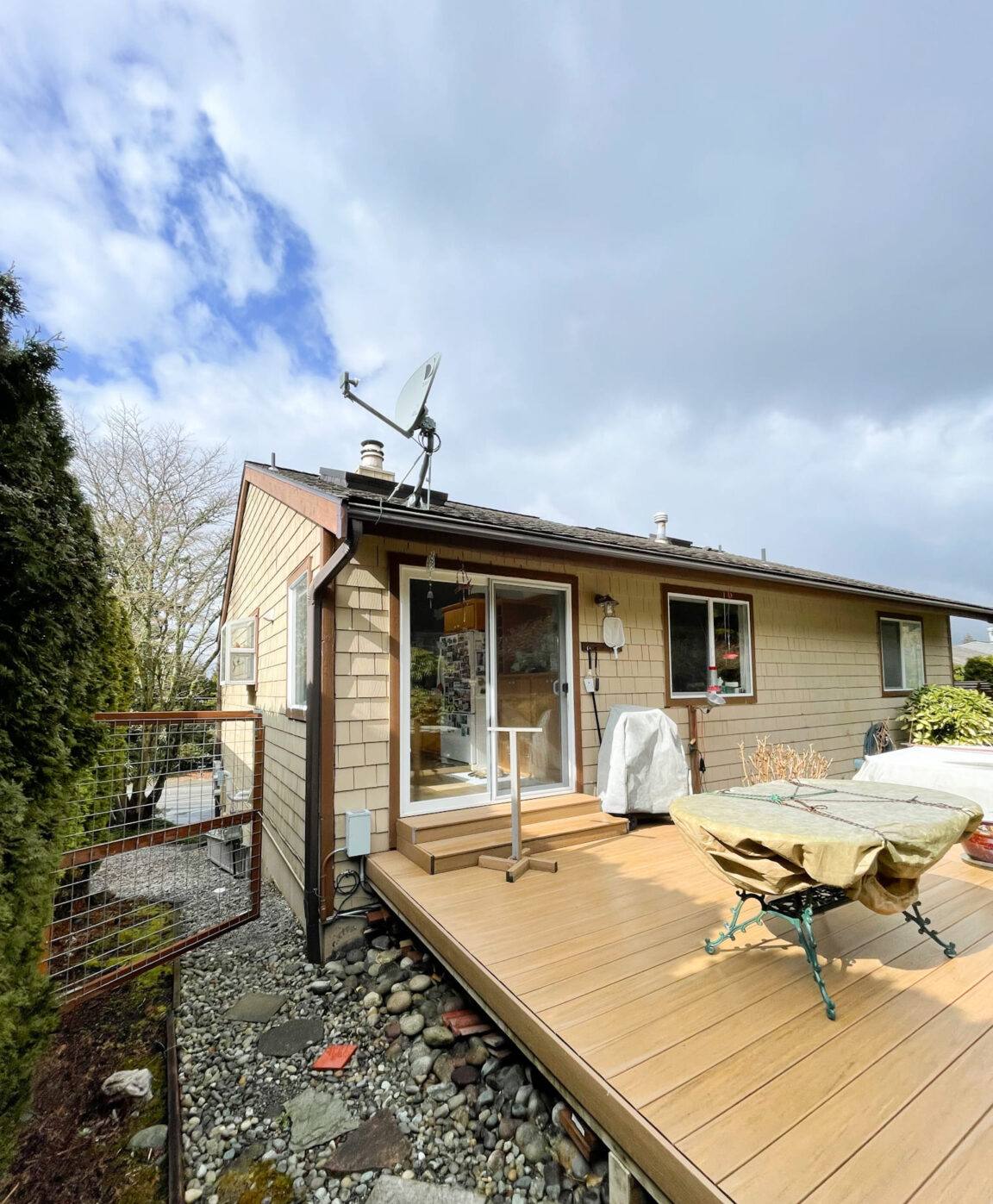
What Terrell Creek Homes Actually Need From a Siding Repair
A repair that only addresses the cosmetic problem — a cracked board, a stained panel, a section that's pulling away — misses the underlying cause almost every time. In this area, the underlying cause is almost always moisture management: water getting behind siding at a joint, a fastener, a window trim detail, or a spot where caulking failed years ago and nobody noticed until the damage showed on the surface.
Common Failure Points We See
- Butt joints and seams where old caulk has shrunk, cracked, or pulled away, letting wind-driven rain track behind the siding
- Lower courses near grade, decks, or downspouts that stay damp longer and show swelling, staining, or soft spots first
- North and west-facing walls with persistent moss and algae growth that holds moisture against the siding surface
- Trim and flashing details around windows and doors where the seal has failed and water is tracking down inside the wall
- Fastener corrosion or popped nails, common where salt air accelerates metal fatigue over time
Any one of these can look minor from the ground. The question we're actually answering during an inspection isn't "how bad does this look" — it's "how long has water had access to the wall assembly behind this siding, and what has that done to the sheathing and framing underneath."
Why Moss and Salt Air Change the Repair Approach
Moss doesn't just look bad. It holds moisture against whatever it's growing on, extends the amount of time a surface stays wet after rain, and creates a foothold for the freeze-thaw stress this region gets in winter. On siding materials that absorb moisture — wood, some engineered wood products, and coatings that have started to fail — sustained dampness under a moss mat is one of the more common reasons we find soft or delaminated material once we pull a section apart.
Salt air compounds the problem in a different way. It's harder on fasteners, on any exposed metal flashing, and on paint and coating systems that weren't built to shed salt-laden moisture repeatedly. A repair that ignores this — using the wrong fastener material, or a caulk and paint system not suited to the exposure — buys a homeowner a year or two before the same failure shows up again in the same spot.
This is also why we don't treat "repair" as a one-size job. A repair on a sheltered, sun-exposed wall in Terrell Creek can be a genuinely simple fix. A repair on a shaded, moisture-exposed wall facing the water needs a different level of scrutiny, because the conditions that caused the original failure are still present and will cause it again if the repair doesn't account for them.
Our Repair Process
1. Inspection Beyond the Visible Damage
We start by looking at the damaged area and its surroundings — not just the one board or panel that prompted the call. We check adjacent seams, trim, flashing, and fastener condition, and where there's any sign the moisture has been present a while, we open the section up to look at what's behind it. Siding that looks fine on the surface can be covering sheathing that's already compromised.
2. Honest Scope Assessment
Once we know what we're dealing with, we tell you plainly whether this is a targeted repair, a larger section replacement, or a sign that a full re-side should be on the table. We're not incentivized to oversell — but we're also not going to patch over rot and call it fixed, because that just delays a bigger cost and a bigger headache for you later.
3. Correct Repair Execution
Repairs are done to match the existing siding profile and reveal wherever possible, with proper flashing and sealing details at every seam and penetration — not just caulk smeared over the old failure point. Fasteners, house wrap integrity, and drainage behind the siding all get addressed as part of the work, not treated as someone else's problem.
4. Long-Term Fit With Your Siding System
If your home is sided in a moisture-sensitive material and this isn't the first repair call, we'll tell you that too. Sometimes a section-by-section repair strategy makes sense for years to come. Sometimes the smarter long-term move is planning a replacement with a material built to handle this climate rather than continuing to chase failures one at a time.
Repair vs. Replacement: What Actually Determines the Right Call
| Factor | Leans Toward Repair | Leans Toward Replacement |
|---|---|---|
| Extent of damage | Isolated section, clear boundary | Damage recurring across multiple walls |
| Underlying sheathing | Sound once opened up | Soft, stained, or rotted framing found |
| Siding material | Durable material, single failure point | Original material has ongoing moisture issues |
| Age of siding | Relatively young, isolated defect | Near or past expected service life |
| History of repairs | First repair call at this home | Repeat calls to the same walls over the years |
None of these factors alone makes the decision. We look at all of them together and give you a straight answer, including telling you when a smaller repair is genuinely the right and most cost-effective move.
Where James Hardie Fits Into the Repair Conversation
We only install James Hardie fiber cement siding, and it's fair to ask why that matters on a repair page rather than a full re-side page. It matters because when a repair reveals that the underlying material is the reason the damage keeps recurring, the conversation naturally turns to what goes back on the wall.
James Hardie's HZ5 product line is engineered for climates like ours — freeze-thaw cycling, sustained moisture, and coastal exposure. It's non-combustible, doesn't absorb water the way wood-based products can, and carries a ColorPlus factory finish designed to hold up under UV and moisture exposure far longer than field-applied paint. When we do recommend replacing a section or a full elevation instead of patch-repairing it again, this is the material we stand behind — not because it's the only option on the market, but because we've seen how it performs against exactly the conditions Terrell Creek homes deal with every winter.
Why Local Experience in This Neighborhood Matters
A contractor who's worked in Terrell Creek and the surrounding Birch Bay area already knows which wall orientations tend to have moss problems, which lots have drainage patterns that keep siding wet longer, and what typical construction from this area's building eras looks like once you open a wall up. That's not something you can fully substitute with a general inspection checklist — it's pattern recognition built from doing this work in this specific place.
It also matters for something more practical: showing up. Storm damage and moisture problems in this area don't wait for convenient scheduling, and a crew that already works this part of Whatcom County can respond faster and with a clearer sense of what they're likely to find before they even arrive.
What to Have Ready Before an Inspection
- Note when you first noticed the damage and whether it's changed or spread since
- Mention any recent storms, leaks, or interior signs of moisture (staining, musty smell) near the affected wall
- Let us know if this area of siding has been repaired before
- Point out any spots with persistent moss, algae, or standing water after rain
- Have your home's approximate siding age or installation year on hand if you know it
Get an Honest Look at What's Going On
If you're seeing damage, staining, moss buildup, or soft spots on your siding in Terrell Creek, it's worth getting a straight assessment before it grows into a bigger repair. We'll tell you what we find, what it means, and what your real options are — no pressure, no upsell. Reach out for a free estimate using the form below.