 Birch Bay
 Building Decks for Marietta's Shoreline Conditions
Marietta sits close enough to the water that its homes deal with a different set of stresses than a deck built twenty miles inland. Salt-laden air off the bay works on fasteners and metal connectors year-round. Driving rain off Georgia Strait finds every gap in a poorly flashed ledger board. And the long, wet moss season that defines this stretch of Whatcom County turns any deck surface that doesn't shed water well into a slip hazard by December. A deck built here has to be designed for those three things from the start, not patched for them later.
We build custom decks specifically for this pocket of Birch Bay, and the details that matter here aren't the same details that matter on a dry, inland lot. This page covers what actually goes into a deck that holds up on a Marietta property, how we approach the build, and what to expect from the process.
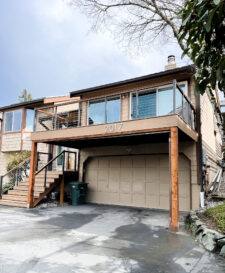
What Marietta's Climate Actually Does to a Deck
Salt Air and Corrosion
Proximity to Birch Bay's waters means airborne salt is a constant, low-grade factor even on properties that aren't waterfront. Standard hot-dip galvanized fasteners and hardware can start showing surface corrosion faster here than in a drier, inland part of the county. Over a few seasons, that corrosion weakens the connection between structural members — ledger bolts, joist hangers, post bases — long before the visible decking shows any wear. The fix isn't complicated, but it does mean choosing hardware rated for coastal exposure rather than whatever's cheapest at the yard.
Driving Rain and Water Intrusion
Storms coming off the water don't just fall straight down — wind-driven rain gets pushed sideways into ledger connections, stair stringers, and any spot where the deck meets the house. If the ledger flashing isn't installed correctly, water tracks behind it and into the rim joist or wall sheathing, where it can sit unnoticed for years. This is the single most common failure point we find on older decks in this area, and it's almost always a flashing detail that was skipped or done wrong the first time.
The Long Moss Season
Whatcom County's wet season runs long, and shaded or north-facing decks in Marietta can stay damp for weeks at a stretch. That moisture, combined with organic debris from surrounding trees, is exactly what moss and algae need to take hold. Beyond looking bad, a mossy deck surface is genuinely dangerous underfoot — and moss holding moisture against wood or composite decking accelerates whatever decay or degradation process is already at work.
What a Correctly Built Deck Looks Like Here
A deck that's going to hold up in Marietta's conditions gets a few things right from the framing up, not just at the surface:
- Ledger flashing that actually sheds water away from the house — proper metal flashing, correctly lapped, with a water-resistant barrier behind it, not just caulk over a bolt pattern.
- Stainless steel or coated coastal-rated fasteners and structural hardware at every connection, not standard-grade galvanized.
- Post bases and joist hangers set to keep wood off standing water, with drainage paths that don't trap moisture against framing.
- Decking material and gap spacing chosen to let the surface dry out between rain events rather than holding water in seams.
- Airflow underneath the deck — proper joist spacing and skirting that doesn't seal off ventilation — so the substructure can dry.
- Railing and stair hardware rated for the same coastal exposure as the rest of the structure, since these get handled constantly and corrode from the outside in.
Decking Material Choices for This Property Type
There's no single "right" decking material for every Marietta home — it depends on sun exposure, how much shade the lot gets, budget, and how much upkeep the homeowner actually wants to do. Here's how the common options compare for this specific climate:
| Material | How it handles salt air & rain | Moss/algae resistance | Maintenance |
|---|---|---|---|
| Pressure-treated wood | Good if properly sealed and re-treated; fasteners must be coastal-rated | Needs regular cleaning and sealing to resist moss buildup | Annual cleaning, periodic sealing/staining |
| Cedar | Naturally decent rot resistance but still needs sealing near salt air | Still susceptible in shaded, damp spots without upkeep | Regular sealing to maintain color and protection |
| Composite decking | Doesn't corrode or absorb salt; hardware still needs to be coastal-rated | Some boards resist algae/moss growth better than wood; varies by product line | Low — periodic washing, no sealing/staining |
| PVC/cellular decking | Fully resistant to moisture absorption and salt effects | Smooth, non-porous surface sheds moss buildup more easily | Lowest — occasional washing |
We'll walk through these trade-offs honestly during design — including upfront cost versus long-term maintenance — rather than steering every job toward the most expensive option. A well-built pressure-treated deck with the right hardware and proper sealing schedule can serve a Marietta home well for decades if the homeowner keeps up with maintenance. A composite or PVC deck costs more upfront but trades ongoing maintenance for material stability.
Our Process for a Marietta Deck Build
1. On-Site Assessment
We start by looking at the actual site conditions — sun and shade patterns, drainage, how close the deck will sit to grade, what direction storms typically hit the house from, and what's currently happening with any existing deck or ledger connection. This is where problems like poor drainage or an existing rot issue get identified before design starts, not discovered mid-build.
2. Design and Material Selection
We design the deck around how the homeowner actually uses the space, then match materials and hardware to the site conditions we found. This includes ledger flashing details, hardware grade, decking material, and railing choice — all decided together, not as afterthoughts.
3. Permitting
Deck projects in Whatcom County typically require a building permit, especially for attached structures above a certain height or size. We handle the permit process as part of the job so the structure is inspected and documented correctly — this matters both for safety and for resale down the line.
4. Construction
Framing, flashing, and structural connections come first and get done right before a single deck board goes down, since these are the parts that determine how the deck performs in wet weather five or ten years from now. Decking, railing, and finish work follow.
5. Final Walkthrough
We walk the finished deck with the homeowner, cover basic care — cleaning schedule, what to watch for in the moss season, when to reseal if applicable — so there are no surprises about upkeep.
Why a Marietta-Familiar Crew Matters
A crew that already works this part of Birch Bay isn't guessing at what conditions the deck will face — they've already seen what happens when a ledger flashing detail gets skipped on a house exposed to driving rain, and what a north-facing deck looks like after two moss seasons without the right decking gap spacing. That local experience shows up in decisions that aren't obvious from a spec sheet: hardware grade, drainage detailing, board spacing, and where extra ventilation actually earns its keep. It's the difference between a deck that's built to a generic standard and one that's built for what Whatcom County's coastal weather is going to throw at it.
Maintenance Checklist for Marietta Homeowners
Whatever material a deck is built from, a few habits go a long way toward keeping it sound in this climate:
- Sweep debris and standing organic matter off the deck surface regularly, especially in fall and winter.
- Check and clear gaps between boards so water isn't sitting in seams.
- Inspect ledger flashing and the house connection point once a year for any sign of water staining or gaps.
- Look at fastener heads and visible hardware for early corrosion, particularly on railings and stair connections.
- Clean moss and algae off the surface before it builds up — a stiff brush and mild cleaner is usually enough if caught early.
- Re-seal or re-stain wood decking on the schedule recommended for the product, not just when it visibly looks worn.
Cost Factors to Expect
Every deck project is different, but a few factors consistently move the price on a Marietta build: size and shape of the deck, height above grade and whether stairs or multiple levels are involved, decking material chosen, complexity of the railing system, and how much structural or drainage work the site needs before building can start. Coastal-rated hardware and proper flashing add some cost over a bare-minimum build, but they're the parts of the job that determine whether the deck is still sound in ten years or needs early repair.
If you're planning a custom deck in Marietta or elsewhere in Birch Bay, we're happy to come take a look at the site and talk through what it actually needs — no pressure, no upsell, just a straight assessment and a free estimate using the form below.