 Birch Bay
 Terrell Creek's Siding Problem Isn't Like Inland Whatcom County
Homes in Terrell Creek sit close enough to Birch Bay's shoreline that the exterior of a house takes a different kind of beating than a home twenty minutes inland. Salt-laden air moves through the neighborhood on a regular basis, driving rain comes in sideways off the water during winter storms, and the shaded, moisture-heavy microclimate keeps north- and west-facing walls damp for long stretches of the year. That combination is exactly what breaks down the wrong siding material faster than homeowners expect.
It's also why we don't treat a Terrell Creek siding job the same way we'd treat one in a drier part of Whatcom County. The product, the installation details, and the maintenance plan all need to account for salt exposure, sustained moisture, and the moss growth that comes with shade and dampness. Get any one of those wrong and you're looking at premature paint failure, soft trim, or rot behind the cladding within a handful of years.
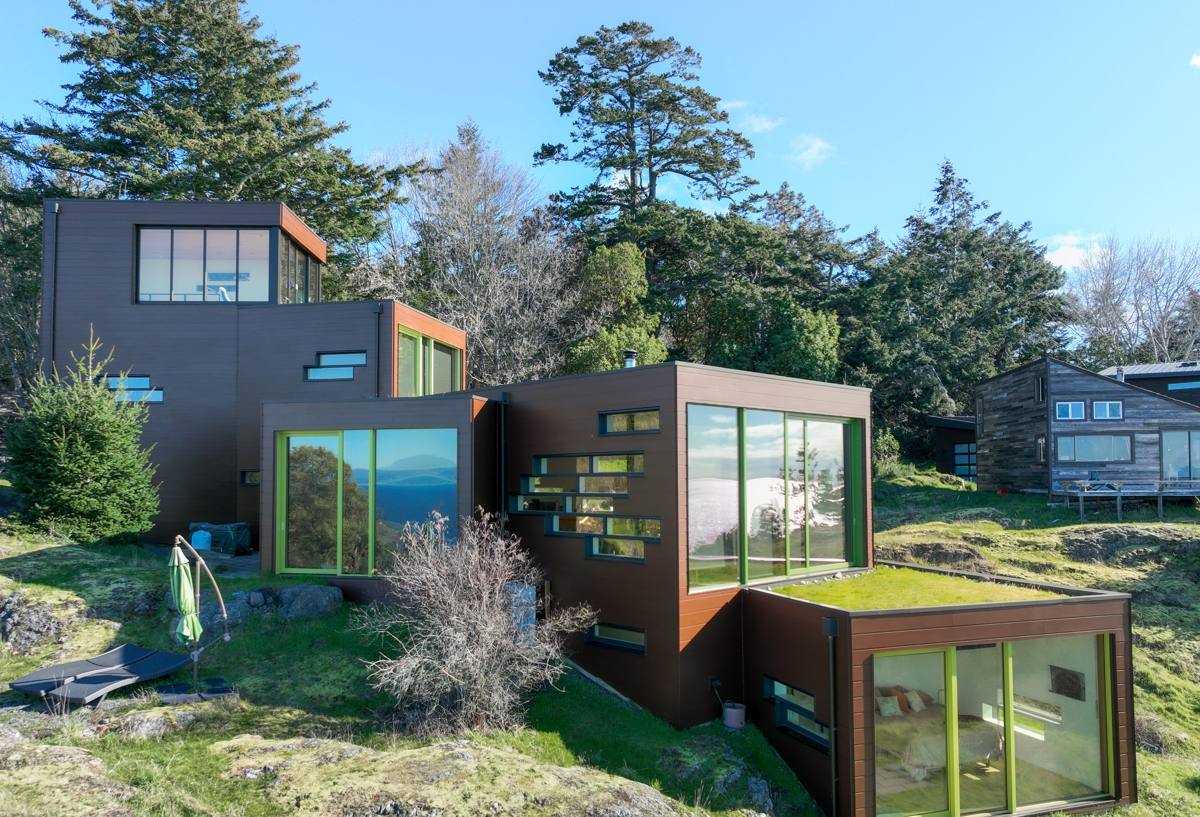
Why Fiber Cement Is the Right Material for This Neighborhood
Fiber cement siding is cement, sand, and cellulose fiber pressed and cured into a dense, stable board. It doesn't absorb water the way wood does, it doesn't expand and contract with humidity swings the way vinyl does, and it's non-combustible. For a neighborhood dealing with salt air and near-constant moisture cycling, those are the three properties that matter most.
We install James Hardie fiber cement exclusively — not vinyl, not LP SmartSide, not primed wood, and not other fiber cement brands. That's a deliberate standard, not a sales pitch. Vinyl can warp and fade under UV and salt exposure and it relies on loose-fit installation that leaves gaps moisture can work into. Engineered wood products use a wood-strand core that's more sensitive to sustained dampness than cured fiber cement, which matters a great deal in a shaded, damp micro-climate like Terrell Creek. Hardie's ColorPlus factory finish and HZ product engineering are built specifically for climates like this one, backed by a strong transferable warranty — and it's what we've standardized on for every home we side, in Terrell Creek and everywhere else we work.
What Salt Air Actually Does to Siding Over Time
Salt in the air settles on exterior surfaces and, combined with moisture, accelerates corrosion of fasteners and metal flashing, and it breaks down cheaper paint finishes faster than inland exposure would. Fiber cement itself doesn't corrode, but every metal component in the assembly — nails, flashing, trim fasteners — has to be rated for it, and the finish on the board has to be durable enough to shed salt residue during regular rinsing rather than chalk or fade prematurely.
What a Correct Fiber Cement Installation Involves
Fiber cement siding is only as good as the installation behind it. The board itself is excellent; a sloppy install in a wet climate like this one is where problems start. A correct job on a Terrell Creek home includes several details that are easy to skip and expensive to fix later.
Rain Screen Gap and Drainage
A ventilated rain screen gap between the water-resistive barrier and the back of the siding lets any moisture that gets past the cladding drain and dry out instead of sitting against the sheathing. In a neighborhood with this much sustained dampness, that gap is not optional — it's the difference between siding that stays dry behind the scenes and a wall assembly that slowly rots from the inside.
Flashing and Sealant Details
Every window, door, and penetration needs properly lapped flashing so water sheds outward and down, never behind the siding. Sealant is used at specific joints Hardie's installation instructions call for — not as a substitute for correct flashing, but as a supplement to it. Driving rain off the water finds every shortcut in this step.
Fastening and Joint Treatment
Fasteners need to be corrosion-resistant and driven to the manufacturer's specified depth — overdriven nails crack the board's edge and create a moisture entry point that's easy to miss until paint starts failing around it. Butt joints need to be back-flashed or sealed per spec, not just butted and caulked, especially on the elevations that catch the most wind-driven rain.
Choosing the Right James Hardie Product for This Location
James Hardie engineers its siding by climate zone rather than selling a single one-size-fits-all board. For Pacific Northwest coastal exposure, that typically means HZ5 formulations, engineered for high-moisture, freeze-thaw-capable climates rather than the drier HZ10 formulations sold in the Southwest. Getting the right climate-engineered product matters more in Terrell Creek than in a drier inland town, because the margin for error is smaller.
ColorPlus factory-applied finish is the other half of the equation. It's baked on in a controlled factory environment rather than field-applied, which gives it better adhesion and fade resistance than most job-site paint jobs — a real advantage when the finish is fighting salt air and UV on top of normal weathering.
How Fiber Cement Stacks Up Against the Alternatives
Homeowners in Terrell Creek often ask why we steer them toward fiber cement instead of the lower upfront cost of vinyl or the classic look of cedar. Here's an honest side-by-side, based on how each material actually performs in this specific climate.
| Material | Moisture & Salt Air Performance | Maintenance | Typical Lifespan |
|---|---|---|---|
| James Hardie fiber cement | Dense, cement-based board resists moisture absorption; factory finish holds up to salt exposure | Occasional rinsing and repaint/recaulk cycles over decades | 30+ years with correct install |
| Vinyl siding | Can warp, fade, or become brittle under sustained UV and salt exposure; loose-fit panels allow moisture behind cladding | Low, but panels can't be spot-repaired or repainted | 15-25 years, shorter in harsh coastal exposure |
| Engineered wood (e.g. LP SmartSide) | Wood-strand core more sensitive to sustained dampness and edge swelling than cured fiber cement | Regular paint and caulk maintenance, closer inspection of edges/seams | Varies widely with moisture exposure and upkeep |
| Cedar / primed wood | Natural material, absorbs moisture, prone to rot without diligent upkeep in a damp climate | Frequent repainting/staining, active moss and mildew treatment | Highly dependent on maintenance discipline |
Our Process for a Terrell Creek Siding Project
The steps don't change much from house to house, but the details we look for do — because we already know what this neighborhood's homes are up against.
- On-site assessment: We walk the exterior, check the elevations that take the most wind-driven rain, and look for existing moisture damage around windows, trim, and the base of walls.
- Moisture and substrate check: Before ordering material, we confirm what's happening behind the current siding — soft sheathing or trapped moisture changes the scope of the job.
- Product and color selection: We help you choose the right Hardie profile and ColorPlus color for the home, factoring in HOA or neighborhood expectations where they apply.
- Rain screen and flashing installation: Ventilated drainage gap and correctly lapped flashing go in before a single piece of siding is hung.
- Siding installation to Hardie spec: Correct fastener type, spacing, and joint treatment, following the manufacturer's published instructions for this climate zone.
- Final inspection and walkthrough: We check seams, flashing, and trim details together with you before calling the job finished.
What Affects the Cost of a Terrell Creek Siding Project
Costs vary by home size, elevation complexity, and how much of the existing wall assembly needs attention before new siding goes on. The factors below tend to move the number most.
| Cost Factor | Why It Matters Here |
|---|---|
| Existing moisture damage | Damp sheathing or trim found during tear-off has to be repaired before new siding goes on — common in shaded, damp lots |
| Number of elevations exposed to wind-driven rain | Water-facing walls often need more careful flashing and detailing than sheltered elevations |
| Trim and window count | Every window, door, and penetration needs flashing work, which adds labor time |
| Siding profile and color | Lap width, shingle-style panels, and custom ColorPlus colors carry different material costs |
| Access and site conditions | Sloped lots or tight setbacks near the shoreline can affect equipment access and labor time |
Living With Fiber Cement in a Salt Air, High-Moss Environment
Correctly installed Hardie siding is genuinely low-maintenance, but "low-maintenance" doesn't mean "no maintenance" — especially in Terrell Creek's climate. A little seasonal attention keeps it performing the way it's designed to for decades.
- Rinse the siding once or twice a year to clear off salt residue, especially on walls facing open water
- Keep gutters clear so water sheds away from the wall rather than sheeting down the siding face
- Trim back vegetation and tree cover where practical to reduce shade and moss buildup on north-facing walls
- Inspect caulking at trim, windows, and joints annually and re-caulk where it's cracked or pulled away
- Address any moss or mildew on the surface early with a gentle wash rather than pressure-washing, which can damage the finish
- Watch for paint chalking or fading as an early sign it's time to repaint, rather than waiting for visible failure
Why Hiring a Crew That Already Works in Terrell Creek Matters
Siding installation instructions read the same everywhere, but applying them correctly depends on understanding the specific conditions a house faces. A crew that regularly works in Terrell Creek already knows which elevations take the worst of the driving rain, how much moss pressure to expect on shaded walls, and what salt exposure does to fasteners and finishes over time. That local pattern recognition shows up in small decisions — where to add extra flashing attention, which color finishes hold up best, how aggressively to spec the rain screen gap — that a crew unfamiliar with this specific stretch of Whatcom County coastline might not think to prioritize.
It also means fewer surprises during the permitting and inspection process, since local experience translates into a smoother job from estimate to final walkthrough.
If you're weighing a siding replacement or repair in Terrell Creek, we're happy to take a look and walk you through what your home specifically needs. Reach out for a free, no-pressure estimate using the form below.