 Birch Bay
 Decking Built for How Marietta Actually Weathers
Marietta sits close enough to the water that its weather behaves differently than a deck built twenty miles inland. Homes here deal with salt-laden air coming off the bay, long stretches of driving rain through fall and winter, and a moss season that can run for months on shaded or north-facing sections of a yard. A deck that would hold up fine in a drier part of Whatcom County can start showing problems within a few seasons out here if it wasn't built with those specific conditions in mind.
Composite decking has become the material of choice for a lot of homeowners in this area, not because it's trendy, but because it's genuinely a better match for what the climate throws at it. This page walks through what that actually means in practice — the real wear factors, what a correct installation looks like, and how we approach the work when we're building or replacing a deck in this part of Birch Bay.
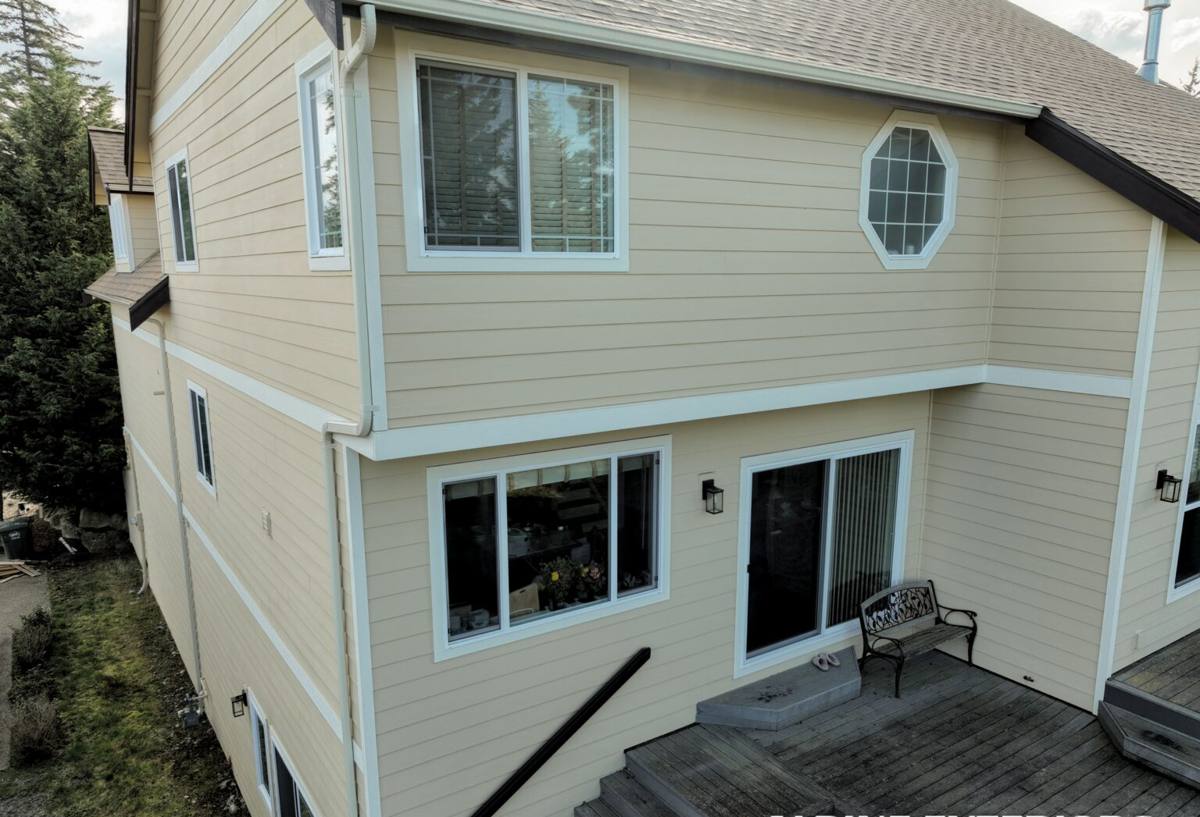
The Three Things That Wear Out a Deck Here
Salt Air and Metal Fatigue
Airborne salt doesn't just affect boats and railings right on the waterfront — it travels, and it accelerates corrosion on any exposed metal hardware over time. Standard carpentry screws, nails, and bracket hardware corrode faster here than they would further inland. Once a fastener starts rusting, it weakens, stains the surrounding material, and can eventually fail. This is one of the most overlooked failure points on decks in this area, and it has nothing to do with the decking boards themselves.
Driving Rain and Standing Water
Rain here often comes in sideways, driven by wind off the water, which means it finds its way into gaps, seams, and ledger connections that a straight-down rain never would. Combined with our wet season length, any decking material that absorbs moisture is going to spend a large part of the year saturated. That moisture cycling — wet, dry, wet again — is what causes warping, cupping, and rot in materials that aren't built to handle it.
Extended Moss and Algae Season
Shaded decks, decks under tree cover, and decks on the north or east side of a house can stay damp for weeks at a time in our climate. That's exactly the environment moss and algae need. Once organic growth gets a foothold on a deck surface, it holds even more moisture against the material and becomes a slip hazard, not just a cosmetic issue.
Why We Steer Most Marietta Homeowners Toward Composite
We still build with wood when a homeowner wants that look and understands the upkeep involved — that's a legitimate choice. But for most decks in this area, composite makes more sense once you weigh how the two materials actually perform against local conditions over the long run.
| Factor | Wood Decking | Composite Decking |
|---|---|---|
| Moisture absorption | Absorbs and releases moisture, driving warping and cupping | Minimal absorption, especially with capped boards |
| Moss/algae resistance | Porous surface holds organic growth | Denser, less porous surface; easier to keep clean |
| Maintenance | Annual sealing, staining, and spot repairs | Periodic washing; no sealing or staining |
| Fastener exposure | Often face-screwed, exposing more metal to salt air | Typically hidden-fastener systems, less exposed hardware |
| Upfront cost | Lower material cost | Higher material cost, lower cost over the deck's life |
| Warranty structure | Varies by lumber grade; workmanship-dependent | Manufacturer-backed, often 25+ years on the board itself |
The honest trade-off is upfront cost versus long-term maintenance. Wood is cheaper to install and can look great, but it asks for real annual upkeep to hold up against this much rain and salt exposure. Composite costs more going in and gives a lot of that maintenance time back.
What a Correct Composite Deck Installation Actually Involves
Composite boards are forgiving in some ways compared to wood, but they're unforgiving of shortcuts in the substructure and fastening. A deck that looks fine at handoff but wasn't built to spec will show problems within a couple of wet seasons — usually as squeaking, board movement, or soft spots where the frame underneath wasn't sized correctly.
Substructure and Joist Spacing
Composite boards generally need tighter joist spacing than solid wood decking, particularly at angles, stair treads, or hot tub areas. Manufacturer specs exist for a reason — building to the wood-frame spacing habits of the past is one of the most common causes of bounce and premature sagging.
Fastening and Board Expansion
Composite expands and contracts with temperature more than people expect. Gapping between boards has to account for that movement, and hidden fastener clips need to be installed correctly so boards aren't pinned too tight to move naturally. Get this wrong and you get buckling or popped fasteners down the line.
Drainage and Airflow Underneath
Given how much rain this area sees, what happens under the deck matters as much as what happens on top of it. Poor grading or blocked airflow underneath traps moisture against the joists and any ledger connections, which is where rot problems start even on a deck with composite boards on the surface.
Flashing at the Ledger Board
Where a deck attaches to the house is the single most common point of water intrusion on any deck, wood or composite. Proper flashing at that ledger connection is non-negotiable, especially with the amount of driving rain this area gets pushed against exterior walls.
Choosing the Right Composite Board for This Climate
Capped vs. Uncapped
Capped composite boards have a protective polymer shell wrapped around a wood-composite core, which resists moisture absorption, staining, and fading far better than uncapped composite. In a climate with this much rain and moss pressure, we recommend capped boards for nearly every project — the extra resistance to moisture and organic growth is worth the modest price difference.
Grooved-Edge vs. Solid Edge
Grooved boards allow for hidden fastener systems, which keep the surface clean and reduce exposed metal — a real advantage given how salt air treats hardware here. Solid-edge boards are typically face-screwed and are more common on stair treads or picture-frame borders where hidden clips aren't practical.
Color and Surface Considerations
Darker boards show less algae staining in shaded, damp areas but run hotter in direct sun; lighter boards stay cooler but can show green or black staining more visibly if a deck section stays wet and shaded for long stretches. We factor in your yard's actual sun and shade pattern before recommending a color, not just what looks good in a sample chip.
Our Process, Start to Finish
- Site visit and assessment — we look at sun/shade exposure, drainage, existing structure (if replacing a deck), and how the space is actually used.
- Design and board selection — layout, railing style, and composite line chosen based on budget, look, and how much moisture/shade exposure that specific area gets.
- Permitting — we handle the paperwork where a permit is required based on deck height, size, or attachment to the home.
- Demo, if applicable — removal of an old deck, with an honest look at whether the ledger connection and any framing underneath needs replacing, not just covering over.
- Substructure build — framing and joist spacing built to the composite manufacturer's spec, not generic wood-deck spacing.
- Decking installation — boards, fastening system, and expansion gaps installed to spec, with attention to drainage and airflow underneath.
- Railings and finishing details — stairs, railings, fascia, and any lighting or trim work.
- Final walkthrough — we go over the finished deck with you, including what maintenance it does and doesn't need going forward.
What Affects the Cost of a Composite Deck Project
Composite decking generally runs higher upfront than pressure-treated wood, with total project cost varying a lot based on the specifics below. We give firm numbers after seeing the site, but these are the main factors that move the estimate up or down.
| Factor | How It Affects Cost |
|---|---|
| Deck footprint (size) | Larger square footage means more board and labor cost, though per-square-foot cost can improve slightly at larger sizes |
| Height off grade / stairs | Elevated decks need more substructure, railings, and stair framing |
| Board tier chosen | Entry-level capped composite vs. premium PVC-composite lines carry a meaningful price gap |
| Existing structure condition | Reusing a sound substructure costs less than a full tear-off and rebuild |
| Railing style | Composite or metal railing systems cost more than basic wood rail options |
| Permit/engineering needs | Larger or more complex decks may require engineered plans, adding to project cost |
Keeping a Composite Deck Looking Right Through Moss Season
Composite decking cuts maintenance dramatically compared to wood, but "low-maintenance" isn't "no-maintenance," especially with the moss and algae pressure this climate produces. A little seasonal attention keeps a composite deck looking new for its full warranty life.
- Sweep off leaves, needles, and debris regularly, especially in fall — trapped organic material holds moisture against the board surface
- Wash the deck a couple of times a year with mild soap and water or a manufacturer-approved composite cleaner; avoid harsh chemical strippers made for wood
- Use a soft-bristle brush, not a wire brush, on any spots showing early moss or algae growth
- Keep gutters and downspouts near the deck clear so runoff isn't draining directly onto the deck surface
- Check hidden fastener clips and any exposed hardware periodically for early signs of corrosion, particularly on decks closer to the water
- Keep planters and furniture feet off direct contact with the board surface where possible, or move them periodically, to avoid trapped moisture spots
Why It Matters That We Already Work in Marietta and Birch Bay
A deck built by a crew that's never worked this stretch of Whatcom County tends to build to generic specs — the same joist spacing, the same fastener choices, the same drainage details they'd use anywhere. That's how you end up with a deck that looks fine on day one but starts showing rust streaks, soft framing, or moss buildup faster than it should.
Working regularly in this area means we already account for the wind and rain exposure typical of properties near the bay, we default to corrosion-resistant hardware without it being a special request, and we know which parts of a lot tend to stay damp and shaded longer through the year. That local familiarity shows up in decisions made before the first board is ever installed — substructure spacing, drainage grading, fastener selection — not just in the finished look.
Get a Straightforward, No-Pressure Estimate
If you're planning a new composite deck or replacing one that hasn't held up to the weather out here, we're happy to come take a look and give you an honest read on what your project needs. Use the form below to request a free estimate — no pressure, just a straight answer about what the job involves and what it'll cost.