 Birch Bay
 Storm Damage Roof Repair for Semiahmoo Homes
Semiahmoo sits right out on the water, and that changes what "storm damage" means for a roof compared to a house a few miles inland. Wind off the water hits harder and more often, salt-laden air works on metal and fasteners year-round, and rain doesn't just fall here — it drives sideways during a real blow. A roof repair that would hold up fine in a sheltered neighborhood can fail fast on a waterfront property if it isn't built with that exposure in mind.
This page covers what storm damage actually looks like on Semiahmoo roofs, what a correct repair involves, and how we approach the work as a crew that's out in Birch Bay and the surrounding Whatcom County waterfront on a regular basis.
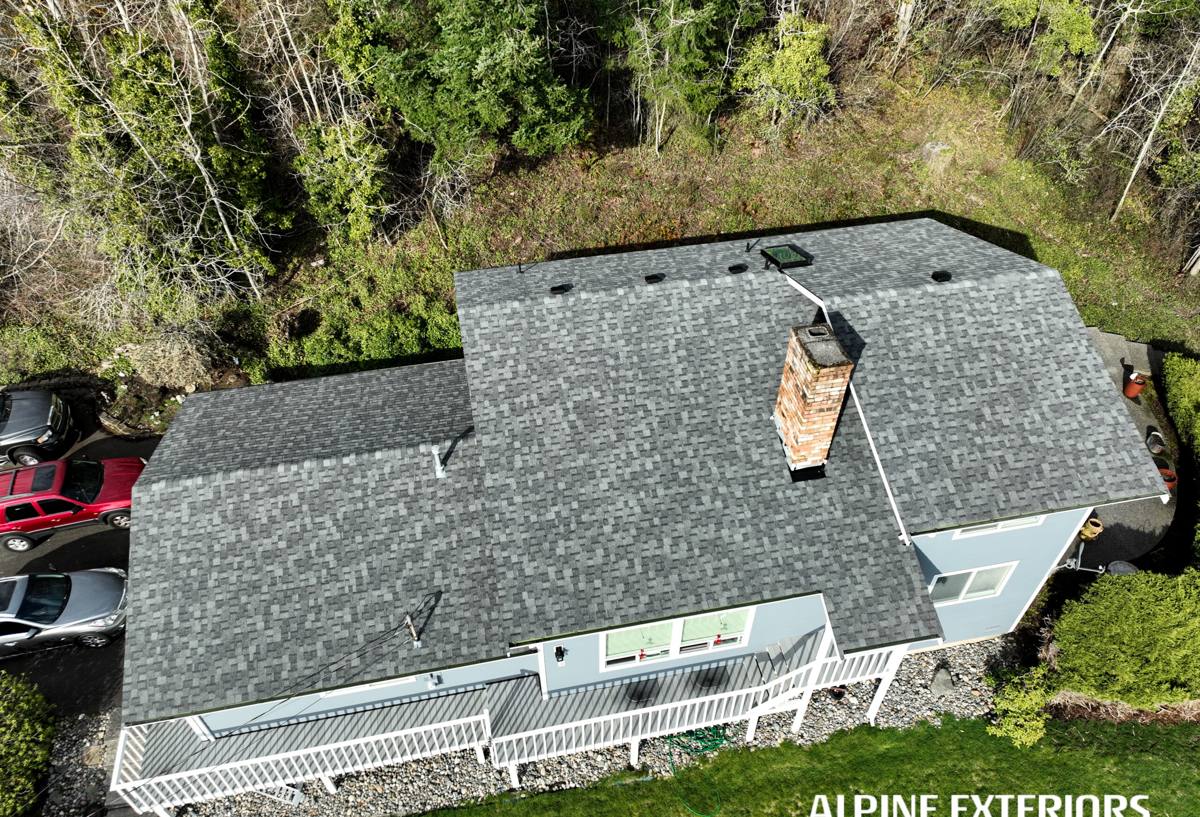
Why This Stretch of Whatcom County Is Hard on Roofs
A handful of climate factors stack up here in ways that don't get enough attention:
- Salt air: Metal flashing, fasteners, and vents corrode faster this close to saltwater than they would even a few miles east.
- Driving rain: Wind-driven rain during winter storms pushes water sideways and upward under laps and flashing that would keep out a straight-down rain.
- Long moss season: Cool, damp conditions for much of the year mean moss and algae get a long window to establish on north-facing and shaded slopes.
- Wind exposure: Open water frontage means less natural windbreak than a roof tucked into trees or a denser neighborhood.
None of these factors is dramatic on its own. Together, over years, they're why roofs out here tend to show wear patterns — lifted shingle edges, corroded flashing, moss-related rot at the eaves — that inland roofs of the same age often don't have yet.
What Storm Damage Actually Looks Like Here
Wind Damage
Wind rarely tears a roof off in one dramatic event. More often it works shingles loose at the tabs, cracks the seal strip, or lifts a ridge cap enough that the next rain gets underneath. Once a shingle's seal is broken, it can keep flapping in every wind event after that, widening the damage even on calm days.
Flashing Failure
Flashing around chimneys, skylights, and wall-to-roof transitions takes the brunt of driving rain. Salt air accelerates corrosion on lower-grade metal, and once flashing pulls away or rusts through, water gets behind siding and into the roof deck — often without any visible sign from the ground.
Moss and Organic Buildup
Moss holds moisture against the shingle surface long after a storm has passed. Left alone through a wet season, it lifts shingle edges, breaks the granule surface down faster, and can rot sheathing at the eaves where debris and moss tend to collect.
Granule Loss and Impact Damage
Wind-blown debris and heavy rain over time wear away the protective granule layer on asphalt shingles, especially on slopes that catch the prevailing wind and rain off the water. Bare spots age a roof faster and are an early warning sign, not just a cosmetic issue.
What a Correct Storm Damage Repair Involves
A Full Inspection Before Any Patch
A storm repair that only addresses the shingle you can see from the driveway misses the point. We check the full slope, the flashing details, the attic side of the deck where accessible, and adjacent areas — because wind and water damage rarely stay confined to one spot.
Matching Materials, Not Just Patching
A patch that doesn't match the existing shingle's profile, color, or age creates a weak seam and looks obviously mismatched. Where an exact match isn't available — which happens with older or discontinued shingle lines — we'll tell you honestly rather than force a mismatch and call it done.
Flashing and Underlayment, Not Just Shingles
If the shingle failed because the flashing or underlayment beneath it failed first, replacing only the shingle guarantees a repeat repair. Given how hard salt air is on cheaper flashing, we look at whether the flashing itself needs upgrading as part of the repair, not just replaced in kind.
Checking Ventilation
Poor attic ventilation traps moisture that mimics or worsens storm damage from the inside — condensation staining, soft decking, mold on the underside of sheathing. A storm repair is a good moment to confirm ventilation is actually working, since it affects how long the rest of the roof will last.
How Our Process Works
1. On-Site Inspection and Documentation
We walk the roof (or inspect closely from a ladder where pitch or safety requires it), photograph the damage, and note anything that looks pre-existing versus storm-related — this matters if you're filing an insurance claim.
2. A Written Scope and Estimate
You get a clear, itemized explanation of what's damaged, what needs repair versus what can be monitored, and a straightforward price — no vague allowances.
3. Repair or Replace, Decided Honestly
Not every storm-damaged roof needs full replacement, and not every roof is worth patching indefinitely. We'll tell you which situation you're in and why, including when a targeted repair is genuinely the right call.
4. The Work
Repairs are done to the same standard we'd want on our own homes — proper flashing laps, correct fastener patterns, and materials chosen for marine exposure, not just whatever's cheapest.
5. Cleanup and Walkthrough
We clear debris, check gutters and downspouts for anything that washed down during the repair, and walk the work with you before calling it finished.
Repair vs. Replace: What Actually Drives the Decision
Homeowners often assume storm damage means a full new roof. Sometimes it does — but often the right call is a targeted, well-executed repair. Here's how we weigh it:
| Factor | Favors Repair | Favors Replacement |
|---|---|---|
| Roof age | Under roughly half its expected service life | Near or past its expected lifespan |
| Extent of damage | Localized to one slope or feature | Spread across multiple slopes or the whole roof |
| Underlying deck condition | Sheathing is sound and dry | Soft, rotted, or repeatedly wet decking |
| Material availability | Matching shingle still in production | Discontinued profile or color, poor match likely |
| Repair history | First significant repair on this roof | Third or fourth patch in the same area |
None of these factors decides things alone — it's the combination that points toward the right answer, and we'll walk you through which ones apply to your roof specifically.
Working With Insurance on a Storm Claim
If your damage may be covered by homeowner's insurance, documentation matters more than anything else. We photograph and describe damage in a way that's useful for a claims adjuster, and we're glad to meet an adjuster on-site if that's helpful. What we won't do is inflate a scope of work or describe damage that isn't there to help a claim along — that kind of thing tends to catch up with a homeowner later, and it's not how we operate.
Why a Crew That Already Works Semiahmoo Matters
A roofer who's out in this part of Whatcom County regularly has a feel for which slopes take the worst of the weather off the water, how fast moss re-establishes here compared to more sheltered areas, and which flashing details tend to fail first on homes exposed to salt air. That's not something you can fully substitute with a one-time inspection from a crew that mostly works elsewhere.
There's also a practical side: storm damage doesn't wait for a convenient time, and a crew that's already local can usually get eyes on a problem — and back out for a follow-up if needed — faster than one driving in from further away.
Keeping a Semiahmoo Roof Healthy After a Repair
A good repair buys you time, but a few habits stretch that further given the local climate:
- Have moss treated or removed before it spreads across a full slope, not after
- Keep gutters and downspouts clear so water isn't backing up under the roof edge during heavy rain
- After any significant windstorm, do a visual check from the ground for lifted or missing shingles
- Have flashing around chimneys and skylights checked every couple of years, since it's the first thing salt air corrodes
- Don't ignore a small ceiling stain — trace it before it becomes a deck repair instead of a shingle repair
Get an Honest Look at Your Roof
If a recent storm has you wondering whether your roof needs attention, we're glad to take a look and give you a straight answer — repair, monitor, or replace — with no pressure either way. Use the form below to request a free estimate.