 Birch Bay
 Why Siding Replacement on Semiahmoo Isn't a Standard Job
Semiahmoo sits out on a narrow spit between Semiahmoo Bay and Drayton Harbor, on the edge of Blaine near the Canadian border. Homes here take a different kind of weather hit than properties set back even a few miles inland — open water on more than one side, wind with nothing to break it, and moisture exposure that runs heavier and longer than a typical Whatcom County lot. When siding on a Semiahmoo home fails, it's rarely just cosmetic. Usually the original material or installation wasn't built to handle this specific exposure, and a straight repaint or spot-patch job won't fix that underlying mismatch.
Replacing siding here is a chance to correct that mismatch rather than repeat it. That means picking a material engineered for heavy, sustained moisture exposure, and installing it with the flashing, drainage, and fastening details this location actually demands — not the minimum a calmer inland site would get away with.
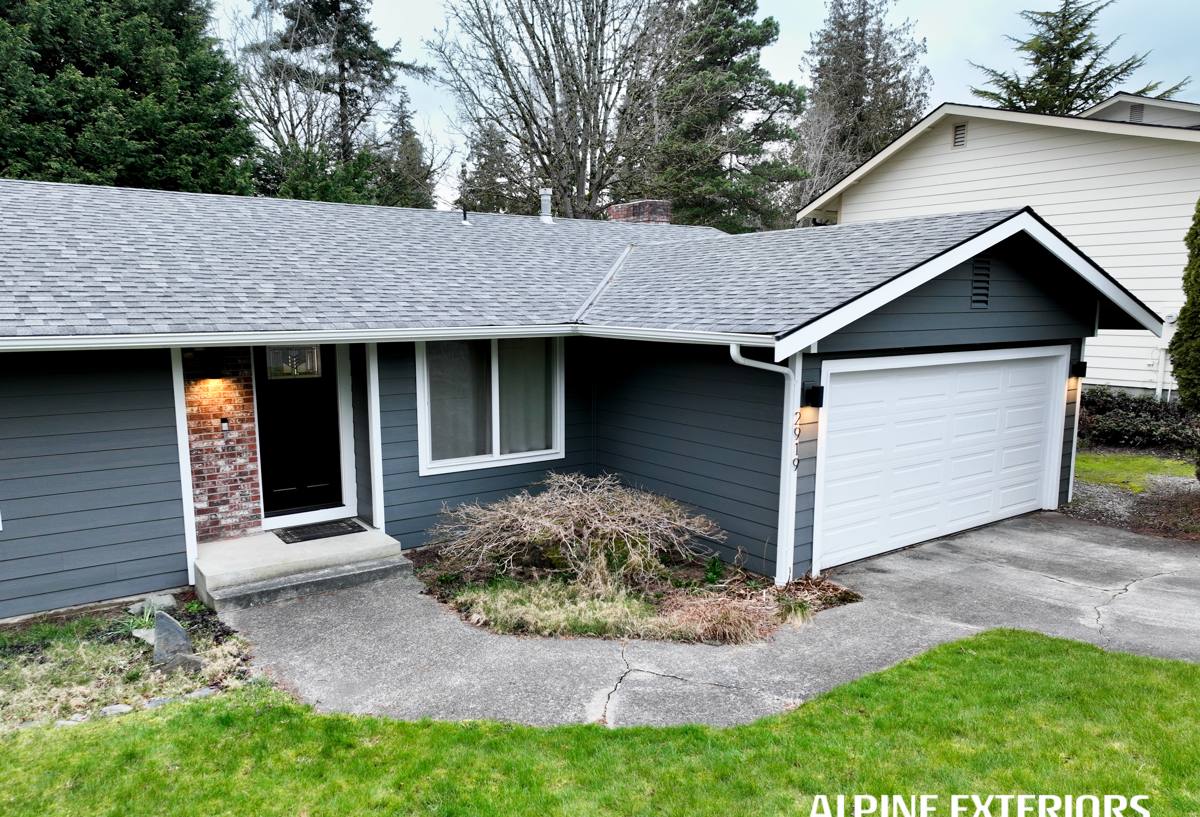
What Semiahmoo's Climate Does to Siding Over Time
Salt Air From the Water
Because Semiahmoo has water on more than one side, homes here get salt-laden air from multiple directions instead of one prevailing exposure. Salt speeds up corrosion in fasteners and metal trim, and it breaks down lower-grade paints and finishes faster than a drier, more sheltered site would. Old siding that's been fighting that exposure for twenty or thirty years is usually further along in failure than its age alone would suggest.
Driving Rain and Wind-Driven Moisture
With almost no windbreak, rain on the spit rarely falls straight down. It gets pushed sideways into wall assemblies, seams, and laps with more force than most inland properties ever see. Older siding systems — and older installation practices — were often not detailed for that kind of sideways moisture load, which is why water finds its way in through joints that would hold up fine in a calmer setting.
A Long Moss and Mildew Season
Mild temperatures, near-constant humidity, and shaded walls add up to a moss and mildew season that runs most of the year in this part of Whatcom County, and Semiahmoo's waterfront exposure doesn't shorten it. Porous or moisture-holding siding materials show it first, usually on north-facing walls or anywhere landscaping keeps a wall shaded and damp.
Signs Your Semiahmoo Home Needs Siding Replaced, Not Just Patched
Some siding problems are legitimately fixable with a repair. Others are a sign the whole system has reached the end of its useful life, and patching it just delays a bigger job while moisture keeps working on the wall behind it. Watch for these:
- Panels or boards that feel soft, spongy, or give slightly under hand pressure
- Moss or mildew that regrows within weeks of cleaning, even after washing
- Paint or finish that won't hold anymore, no matter how well it's prepped and applied
- Visible cupping, warping, or bowing along multiple courses, not just one damaged board
- Interior wall or ceiling stains near exterior walls, especially after a windy storm off the water
- Rising heating bills with no other explanation, which can point to moisture-saturated insulation behind the siding
One or two of these on their own might mean a targeted repair is enough. Several at once, especially across more than one wall, usually means the assembly behind the siding has been taking on water for a while and a full replacement is the more honest recommendation.
What a Correct Siding Replacement Job Involves
Removing the Old Siding the Right Way
A proper replacement starts with a full tear-off, not siding-over-siding. That's the only way to actually see what's happening underneath — sheathing condition, insulation, and any rot or moisture damage that's been hidden for years. On a Semiahmoo property, where wind-driven rain has had decades to find weak points, skipping this step means installing a new, better product over a problem that never got fixed.
What Goes Behind the New Siding
The siding itself is only one layer of the wall system. Behind it needs to be a properly lapped weather-resistant barrier, correctly integrated flashing at every window, door, and penetration, and drainage detailing that lets any moisture that does get past the siding find its way back out instead of sitting against the sheathing. On an exposed spit property, this layer matters as much as the visible siding — arguably more, since it's the layer that determines whether the assembly survives the next twenty years of wind-driven rain.
Installing to Manufacturer Spec
Fiber cement only performs the way it's engineered to when it's installed to the manufacturer's published spec — correct fastener type and spacing, proper clearance from grade and roof lines, and joints that are factory-mitered or properly caulked rather than just butted together. A quality product installed loosely will still develop moisture problems in a climate like this one. The material and the installation have to both be right; neither one covers for the other.
Why We Replace Siding With James Hardie Fiber Cement — and Nothing Else
We install James Hardie fiber cement exclusively. We won't install LP SmartSide, vinyl siding, Cemplank, Allura, primed spruce, or cedar. That's not a supplier relationship — it's a professional standard we settled on after years of seeing which materials hold up on exposed, salt-air properties like this one, and which ones start showing problems within a few years no matter how carefully they're maintained.
- Non-combustible core: Fiber cement doesn't feed a fire the way wood-based siding products can, which matters for both safety and, often, insurance underwriting.
- Factory-applied ColorPlus finish: The color is baked on under controlled factory conditions instead of brushed on in the field, and it resists fading, chalking, and moisture intrusion far longer than site-applied paint.
- Climate-engineered HZ5 formulation: Built specifically for regions with heavy moisture exposure and freeze-thaw cycling — a fair description of waterfront Whatcom County.
- Dimensional stability: Fiber cement doesn't swell, cup, or warp the way engineered wood products can after repeated wetting over a long wet season.
- Strong transferable warranty: Hardie backs its product with one of the more substantial warranty structures in the industry, provided installation follows their spec.
Each of the products we don't install has a legitimate place in the market, and plenty of homeowners are satisfied with them on calmer, less exposed sites. On a Semiahmoo replacement, though, we'd rather stand fully behind one system than offer a cheaper alternative that quietly shifts long-term maintenance risk back onto the homeowner.
Comparing Replacement Materials for a Semiahmoo Home
| Material | Moisture Behavior | Upkeep in Salt Air | Typical Longevity Here |
|---|---|---|---|
| James Hardie fiber cement | Dimensionally stable, resists swelling | Low; factory finish resists fading and chalking | 30+ years with correct installation |
| Vinyl siding | Can warp or distort with heat and settle over time | Low upfront cost, but seams and fasteners are exposure points | Variable; shorter on exposed, high-wind waterfront lots |
| LP SmartSide / engineered wood | Wood-based core is moisture-sensitive at cut edges and joints | Moderate; edge sealing and caulk upkeep matter | Depends heavily on installation quality and upkeep |
| Cedar / primed wood | Absorbs and releases moisture readily | High; regular refinishing needed in wet, salty air | Shorter without consistent maintenance |
What Drives the Cost of a Siding Replacement Here
Every Semiahmoo replacement is priced against the specific house, not a flat rate per square foot, but the same handful of factors tend to move the number the most:
- Sheathing condition found at tear-off: hidden rot or moisture damage behind old siding on an exposed lot is more common here than inland, and repairing it adds to the scope
- Home size, story count, and trim complexity: more corners, gables, and window/door openings mean more flashing detail and labor
- Access on the property: tight spit lots or waterfront setbacks can affect staging, scaffolding, and material delivery
- Disposal of the old material: full tear-off generates more debris than a repair, and volume affects haul-away cost
- Product choice within the Hardie lineup: lap siding, panel systems, and board-and-batten each price differently
We walk through all of this on-site before writing a scope, so the number reflects your actual house rather than a generic estimate.
Our Siding Replacement Process, Step by Step
- On-site assessment of the existing siding and, where visible, the wall assembly behind it
- A clear, written scope and price before any work begins — no verbal-only agreements
- Full tear-off of the old siding, with an inspection of sheathing and framing underneath
- Repair of any rot or moisture damage found, discussed with you before proceeding
- Installation of a properly lapped weather-resistant barrier and correctly integrated flashing
- James Hardie fiber cement installed to manufacturer spec, with corrosion-resistant fasteners
- Trim, caulking, and finish work completed to a clean, consistent standard
- A final walkthrough with you before we consider the job done
Why Hiring a Crew That Already Works Semiahmoo Matters
A contractor who regularly works this specific stretch of coastline already knows how salt air, open wind, and prolonged moisture behave differently here than they do even a short drive inland. That familiarity shows up in decisions a homeowner might never notice directly — how flashing gets lapped, which fastener grade gets used, where extra drainage detailing gets added around a window that catches more wind-driven rain than the wall next to it. Those details are exactly what determines whether a siding replacement lasts one wet season or several decades on an exposed property like this.
Questions Worth Asking Before You Sign a Siding Replacement Contract
- Do they do a full tear-off, or will they side over the existing material?
- What happens, cost-wise, if they find rot or moisture damage once the old siding comes off?
- What siding material do they install, and why — and will they put a written warranty behind it?
- Do they carry current Washington contractor licensing and active liability insurance?
- How do they detail flashing at windows, doors, and roof-to-wall transitions for wind-driven rain?
If your Semiahmoo home's siding is showing its age, we're glad to walk the exterior with you and give an honest read on whether it needs repair or full replacement. Reach out below for a free, no-pressure estimate.