 Birch Bay
 Why Cherry Point Roofs Wear Differently
Cherry Point sits out on the water, and that location shapes everything about how a roof ages here. Salt-laden air off the Strait moves inland constantly, and it doesn't just sit on the surface of a shingle — it works into exposed fasteners, flashing seams, and any spot where metal meets metal. Add the driving rain that comes with Whatcom County's coastal storms, wind that has nothing to slow it down before it hits a rooftop out on the point, and a moss season that runs long because of the moisture and shade many of these lots have, and you get a roofing environment that's genuinely harder on materials than most inland Washington neighborhoods.
None of that means asphalt shingle roofing is a poor choice for this area. It means the installation has to account for those conditions from the first nail. A roof that would hold up fine in a drier, more sheltered part of the county can fail early here if it's put on the same generic way. That's the difference between a roof that needs attention every couple of years and one that quietly does its job for decades.
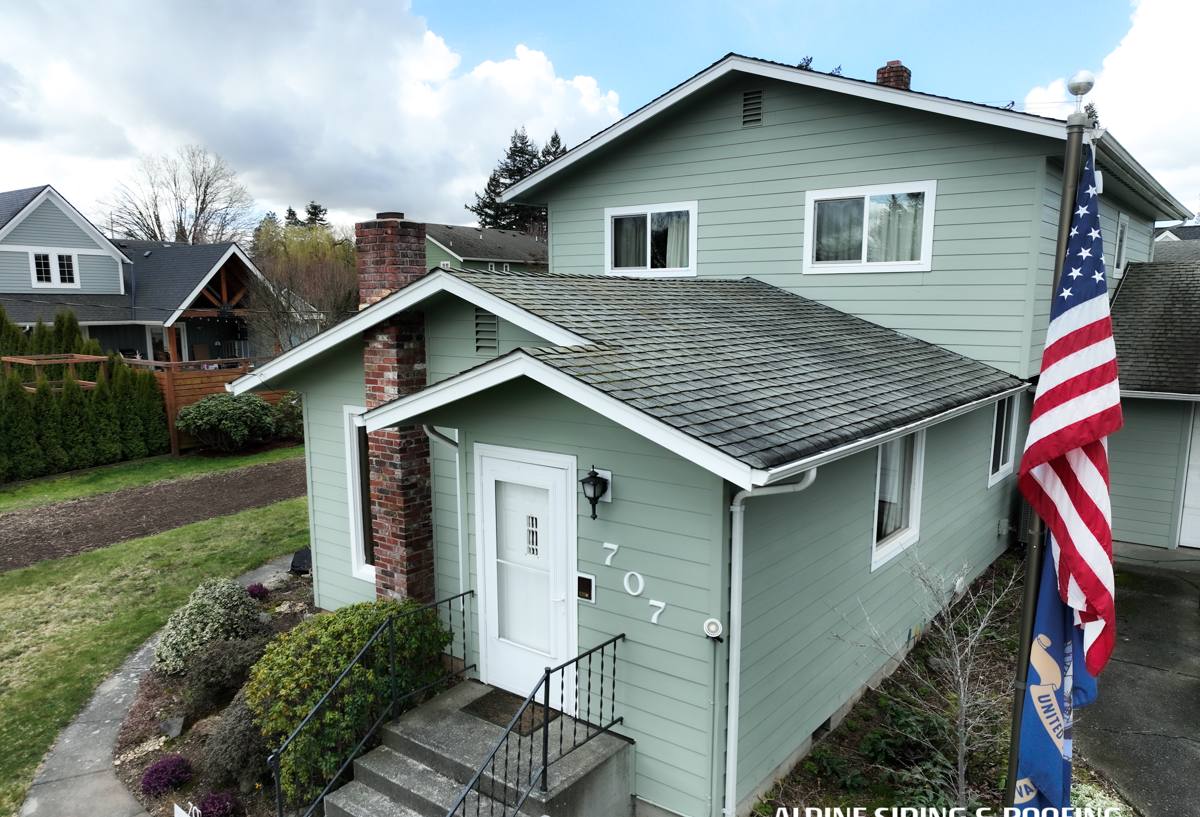
What a Correct Asphalt Shingle Installation Involves
Deck and Underlayment First
Everything starts with the roof deck. Before a single shingle goes down, the sheathing needs to be sound — no soft spots, no delamination, nothing hiding rot from a slow leak years back. Over that deck goes a synthetic or felt underlayment rated for the wind and moisture exposure of the site, not whatever happens to be cheapest that week. On a job out here, we don't treat underlayment as an afterthought; it's the layer that keeps the house dry if wind ever drives rain up under a shingle tab, which happens more often on exposed, open lots than it does in tucked-away neighborhoods.
Ice-and-Water Protection Where It Counts
Self-adhering ice-and-water membrane belongs at eaves, valleys, and around any roof penetration — chimneys, vents, skylights. In a marine climate like this one, that membrane is doing double duty. It's not just about occasional freeze events; it's about wind-driven rain finding the weak points in a roof system faster than a calm, dry climate ever would. Skipping this step, or using it only where code minimums require it, is one of the most common shortcuts that shows up as a leak two or three winters later.
Flashing Details Salt Air Punishes
Flashing is where a lot of roofs near the water actually fail, and it's rarely the shingles themselves. Salt air accelerates corrosion on lower-grade metal, so flashing material and fastener choice matter more here than in a landlocked neighborhood. Step flashing at walls, counterflashing at chimneys, and properly formed valley metal all need to be installed — and fastened — with corrosion resistance in mind, not just whatever matches the shingle color.
Ventilation for a Marine Climate
Balanced intake and exhaust ventilation keeps moist air from condensing inside the attic, which matters everywhere but especially where humidity is already high most of the year. Poor ventilation shortens shingle life from underneath, drives premature curling, and creates the damp attic conditions that feed moss and mildew even before they show up on the roof surface. A correct install accounts for the vent area the attic actually needs, not a token ridge vent added because it looks finished.
Choosing a Shingle That Can Handle the Exposure
Not every asphalt shingle is built the same way, and the differences matter more in a climate that pushes wind, moisture, and organic growth at a roof year-round. For Cherry Point homes, we generally steer people toward algae-resistant (AR) shingles, which use copper- or zinc-infused granules to slow the black streaking and moss colonization that shaded, damp roofs are prone to here. We also pay close attention to wind rating, since a lot of these lots sit with little windbreak between the roof and open water.
| Shingle Type | Typical Wind Rating | Algae Resistance | Best Fit |
|---|---|---|---|
| 3-tab (economy) | Lower | Usually not included | Budget projects, less exposed roofs |
| Architectural / laminate | Higher, class-rated options available | Commonly available as an upgrade | Most Cherry Point homes — good balance of durability and cost |
| Premium / designer laminate | High, often top-tier class ratings | Standard on most product lines | Full-exposure lots, steep or complex rooflines, longer-term hold |
We won't put a bargain 3-tab shingle on a fully exposed Cherry Point roof and call it a good long-term choice — not because the product is defective, but because it's simply not built for this level of wind and salt exposure, and a homeowner deserves to know that trade-off before signing anything.
Repair, Recover, or Full Replacement?
Not every problem calls for a new roof. The right call depends on the roof's age, how localized the damage is, and what condition the deck underneath is in. A roof with isolated wind damage or a single failed flashing detail is often a straightforward repair. A roof approaching the end of its expected service life, with widespread granule loss, curling shingles, or soft decking in multiple spots, is usually better served by a full tear-off and replacement — patching an old roof repeatedly tends to cost more over time than doing the job right once.
| Factor | Leans Toward Repair | Leans Toward Replacement |
|---|---|---|
| Roof age | Under two-thirds of expected lifespan | Near or past expected lifespan |
| Damage extent | Isolated to one area or detail | Spread across multiple slopes |
| Decking condition | Solid, no soft spots | Soft, delaminated, or previously patched |
| Moss/algae staining | Surface only, recently cleaned | Long-term staining, granule loss underneath |
| Typical cost range | A few hundred to low thousands | Several thousand and up, based on size and pitch |
Cost ranges vary a lot based on roof size, pitch, number of layers to remove, and how much decking repair is needed once the old shingles come off — an honest estimate only happens after someone's actually looked at the roof, not off a phone call.
How We Approach a Cherry Point Roofing Job
- Walk the roof and attic to assess deck condition, ventilation, flashing, and the extent of any moss or algae growth.
- Give a straight answer on repair versus replacement, with the reasoning behind it, not just a quote.
- Plan the job around the specific exposure of the site — wind side, shaded slopes, proximity to the water.
- Tear off and inspect the deck before anything new goes down, replacing any compromised sheathing.
- Install underlayment, ice-and-water membrane, and flashing rated for a marine environment.
- Set shingles to manufacturer nailing specs for the wind exposure of the site, not a generic pattern.
- Clean the site thoroughly, including magnetic sweep for stray fasteners.
- Walk the finished roof with the homeowner and go over care and warranty details before we leave.
Living With Moss and Algae in a Marine Climate
Even a well-built roof needs some ongoing attention out here. The combination of shade, humidity, and salt air means moss and algae aren't a one-time problem — they're a maintenance reality for most homes in this part of Whatcom County. The goal isn't to eliminate growth entirely; it's to keep it from taking hold long enough to lift shingles or trap moisture against the roof surface.
- Keep gutters and valleys clear of needles and debris, especially under overhanging trees.
- Have moss physically removed rather than scraped, which can damage granule coverage.
- Use zinc or copper strips near the ridge to slow regrowth between cleanings, where appropriate for the roof.
- Avoid pressure washing shingles — it strips granules and shortens shingle life.
- Trim back branches that keep a slope shaded and damp longer than the rest of the roof.
- Have the roof looked at after major windstorms, not just when a leak shows up.
Signs Your Cherry Point Roof Needs a Closer Look
Coastal exposure tends to show up on a roof gradually, then all at once. Catching the early signs saves money and usually turns a replacement-level problem back into a repair.
- Granules collecting in gutters or at downspout outlets.
- Shingle tabs that have curled, cracked, or lifted at the edges.
- Dark streaking or thick moss cover on north-facing or shaded slopes.
- Rust staining or visible gaps around flashing at chimneys, vents, or walls.
- Daylight visible through the roof deck from inside the attic.
- Soft or spongy spots when walking the roof during inspection.
Why Hiring a Crew That Already Works Cherry Point Matters
A roofing crew that mostly works drier, more sheltered inland neighborhoods isn't automatically wrong for this job, but they're often making decisions on the fly that a crew familiar with this stretch of coast has already worked out — which underlayment holds up to the wind, where flashing tends to fail first, how much ventilation a given attic actually needs given the humidity here. Those aren't dramatic differences on paper, but they add up to years of extra service life or, if skipped, a callback within a couple of winters. Local experience also means realistic timelines and material choices, since availability and lead times for marine-rated components aren't always the same as what a big-box inland supplier stocks.
Ready for a Straight Answer on Your Roof?
If your roof is showing wear, due for a look after a recent storm, or you're just planning ahead, we're happy to take a look and give you an honest read on what it actually needs. Use the form below to request a free, no-pressure estimate — no obligation, just a clear picture of where things stand.