 Birch Bay
 Marietta's Roofs Take a Different Kind of Beating
Marietta sits close enough to the water that homes here deal with a combination most inland roofs never see: salty marine air, wind-driven rain that comes in sideways off the Salish Sea, and a moss season that can stretch for months at a time. None of these are dramatic events. They're slow, steady pressures that wear on a roof year after year until small problems become expensive ones. A roof that would hold up fine forty miles inland can start showing rust streaks, lifted seams, or moss-clogged valleys here within a few seasons if it wasn't built for this specific environment.
That's the case for metal roofing in this part of Whatcom County. Done correctly, with the right panel type, coatings, and fastening, a metal roof handles salt exposure and heavy rain better than most alternatives. Done poorly, with the wrong fastener metal or a rushed underlayment job, it can corrode or leak faster than the roof it replaced. The difference almost always comes down to whether the crew installing it understands the coastal conditions they're building for.
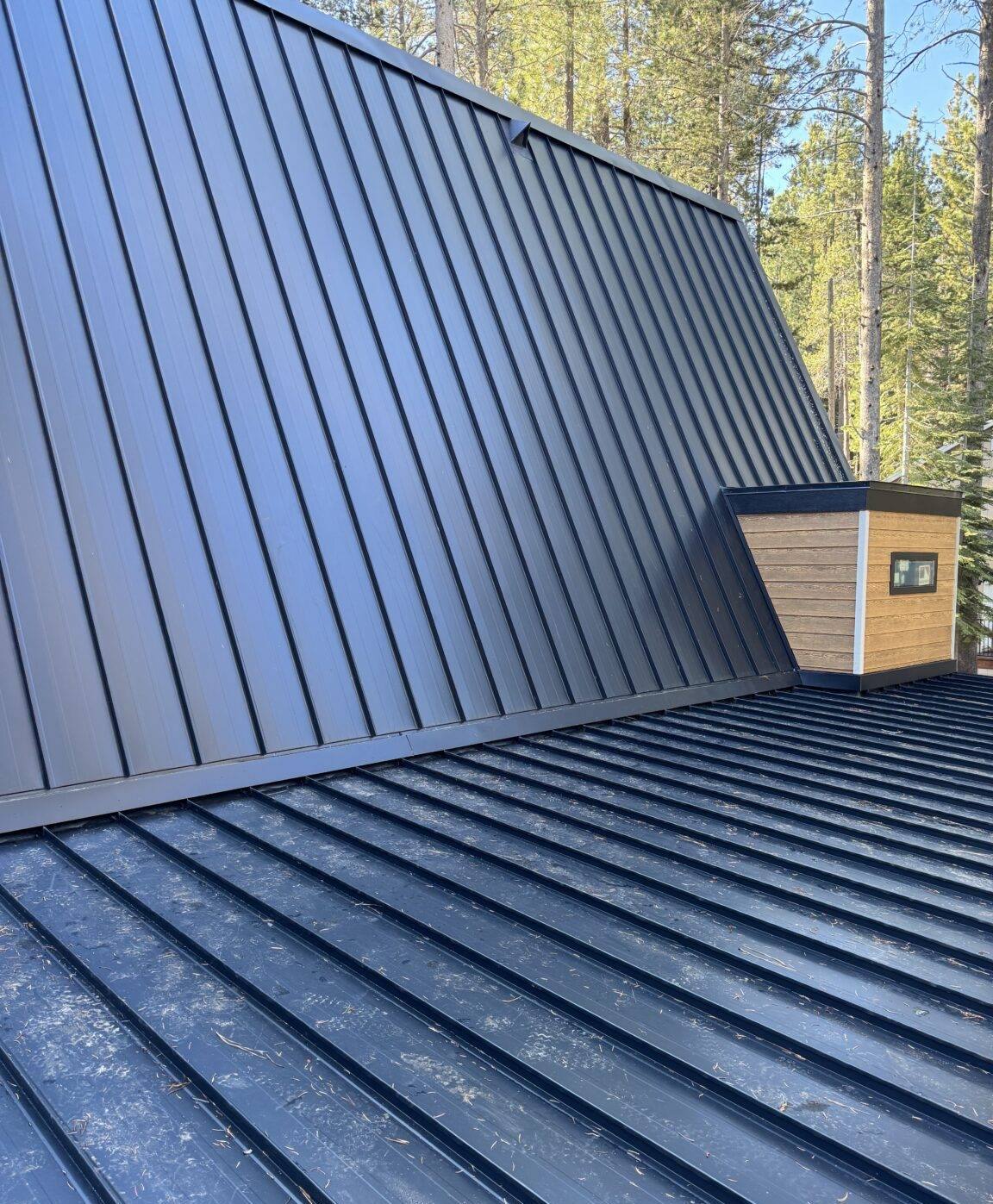
Why Metal Roofing Makes Sense for Marietta Homes
Salt Air and Corrosion
Airborne salt is chemically aggressive to exposed metal, especially at cut edges, fasteners, and any spot where a coating has been scratched or worn through during installation. This is why panel material and coating matter more here than in a drier, inland climate. Properly coated steel or marine-grade aluminum, installed with fasteners rated for the same environment, resists this kind of corrosion for decades. Mismatched metals or bargain-grade fasteners are where coastal metal roofs actually fail, and it usually shows up as rust bleeding down a panel seam long before the roof itself is old.
Wind-Driven Rain
Rain that falls straight down is easy to shed. Rain that's being pushed sideways by wind off the water finds every weak seam, lap, and penetration on a roof. Metal roofing, particularly standing seam systems with concealed fasteners, gives wind-driven rain far fewer places to get a foothold than a shingle roof's overlapping tabs. The tradeoff is that the installation has to be precise — panel laps, end caps, and flashing details all matter more on a metal roof than on most other roofing types, because there's less redundancy built into the system if a detail is done wrong.
Moss and Debris Shedding
Whatcom County's long wet season is exactly the kind of environment moss thrives in. Metal's smooth, hard surface doesn't give moss spores much to grip onto compared to the textured surface of asphalt shingles or the porous surface of wood shakes, so moss growth is generally slower and shallower on a metal roof. It's not moss-proof — organic debris in valleys and against roof-to-wall transitions can still hold moisture long enough for growth to start — but a metal roof that's kept clear of debris stays far cleaner over time than most other materials in this climate.
Comparing Metal Roofing Options
Not all metal roofing is the same product wearing different clothes. The panel type you choose affects how well it performs in Marietta's conditions, how it looks, and what it costs relative to other options.
| Panel Type | Best For | Coastal Durability | Relative Cost |
|---|---|---|---|
| Standing seam (concealed fastener) | Homes wanting maximum weather protection and a clean, modern look | Excellent — no exposed fasteners for salt air to attack | $$$ |
| Exposed-fastener panel | Budget-conscious projects, outbuildings, secondary structures | Good, if fasteners and washers are marine-rated and checked periodically | $$ |
| Metal shingle / shake profile | Homeowners wanting a traditional look with metal's durability | Very good — fewer exposed seams than exposed-fastener panel | $$$ |
Steel with a quality factory coating and aluminum are both reasonable choices for a saltwater-adjacent property; the right one depends on your roof's exposure, your budget, and the look you're after. We'll walk through the tradeoffs specific to your home rather than pushing one option across every project.
What a Correct Metal Roof Installation Actually Involves
Underlayment and Moisture Barrier
A metal roof's surface sheds water, but the underlayment underneath is what protects the deck if wind ever drives moisture past a seam or fastener. In a climate with this much sustained rain, we don't treat underlayment as an afterthought — it's a synthetic or self-adhering ice-and-water membrane installed at valleys, eaves, and penetrations, not just a thin felt layer rolled out to check a box.
Flashing and Penetrations
Chimneys, vents, skylights, and wall transitions are where the majority of roof leaks start, on metal roofs and every other type. Flashing has to be custom-fit and properly lapped with the panel system, not just caulked and hoped for. Caulk is a maintenance item, not a waterproofing strategy — if a detail depends on sealant alone to stay dry, it wasn't installed correctly.
Fastening and Panel Movement
Metal panels expand and contract with temperature swings, and coastal wind loads add another layer of stress. Fasteners and clips need to be spaced and installed to allow for that movement without loosening over time or over-tightening and deforming the panel. This is a detail that's easy to rush and hard to inspect once the roof is finished, which is part of why the installing crew's experience matters as much as the material itself.
Ventilation
A well-ventilated attic keeps moisture from condensing on the underside of the roof deck, which matters even more under a metal roof in a wet climate. We check existing ventilation as part of every metal roofing project rather than assuming the current setup is adequate.
Signs a Marietta Roof Needs Attention
Coastal wear doesn't usually announce itself with a dramatic leak. It shows up gradually, and homeowners often live with early warning signs for a season or two before calling anyone. Watch for:
- Rust streaking below fasteners, seams, or flashing on an existing metal roof
- Moss or dark streaking building up in valleys, along the north side of the roof, or near roof-to-wall junctions
- Granule loss or curling shingle edges on an asphalt roof nearing the end of its service life
- Soft or discolored fascia and soffit boards, which often points to water finding its way past the roof edge
- Visible daylight or drafts in the attic near vents, chimneys, or skylights
- A noticeable increase in interior humidity or condensation during the wet months
Any one of these on its own isn't necessarily an emergency, but they're worth a real inspection rather than a guess, especially before another wet season sets in.
How We Approach a Metal Roofing Project
1. On-Site Assessment
We start by getting on the roof, not just looking at it from the ground. That means checking the deck condition, current ventilation, flashing details, and how exposed the roof is to prevailing wind and salt air off the water.
2. Straightforward Proposal
You get a written scope covering panel type, underlayment, flashing approach, and ventilation — not a vague one-line estimate. If there are tradeoffs between panel options for your specific roof, we explain them plainly so you can make an informed call.
3. Installation
We protect landscaping and property during the tear-off, install the deck repairs and underlayment first, then the panel system and flashing details, with attention paid to the seams and penetrations that are most likely to be tested by wind-driven rain.
4. Final Walkthrough
Before we consider the job done, we walk the roof and the property with you, confirm the details, and make sure debris and materials are cleared away.
Maintaining a Metal Roof in This Climate
Metal roofing is low-maintenance compared to most materials, but "low-maintenance" doesn't mean "no maintenance," especially this close to saltwater. A simple annual check goes a long way toward getting the full lifespan out of the investment:
- Clear leaves, needles, and debris from valleys and roof-to-wall transitions before the wet season builds up
- Look for early rust spotting near fasteners, cut edges, or flashing and address it before it spreads
- Check that gutters and downspouts are flowing freely, since backed-up water sits against roof edges longer than it should
- Keep overhanging branches trimmed back to reduce debris buildup and moss spore contact
- Have a professional look at flashing and seams every few years rather than waiting for a visible leak
Why a Crew That Already Works in Marietta Matters
Salt exposure isn't uniform across Whatcom County — a roof a few hundred yards from the water deals with different conditions than one set back and sheltered by trees or terrain. A contractor who works Marietta and the greater Birch Bay area regularly has a feel for that variation: which fastener and coating combinations actually hold up here, where moss tends to establish first, and how local wind patterns tend to drive rain into a roof. That local pattern recognition is hard to replace with a generic install, no matter how good the materials are on paper.
We're a Birch Bay-based crew, and metal roofing on coastal Whatcom County homes is work we do regularly, not an occasional job we take on. That familiarity shows up in the small decisions — flashing details, fastener choice, ventilation calls — that determine whether a metal roof performs for decades or starts giving you trouble in year five.
Get a Straightforward Estimate
If your roof is showing wear, coming up on a replacement, or you're just weighing whether metal roofing makes sense for your Marietta home, we're glad to take a look and give you an honest, no-pressure assessment. Use the form below to request a free estimate and we'll walk you through your options plainly, without any pressure to decide on the spot.