 Birch Bay
 Semiahmoo Sits Right in the Weather
Semiahmoo's waterfront position puts homes there in one of the harsher microclimates in Whatcom County. The deck framing, fasteners, and boards on a Semiahmoo property take a steady combination of salt-laden air off the water, wind-driven rain, and long stretches of overcast, damp weather that never quite lets wood dry out between storms. That combination is different from what a deck faces a few miles inland, and it changes how fast a deck ages and what it takes to replace one correctly.
Salt air accelerates corrosion on anything metal — nails, screws, joist hangers, bolts — long before most homeowners notice a problem on the surface. Driving rain gets pushed sideways into ledger boards, stair stringers, and railing posts by wind off the bay, finding gaps that a calmer inland deck would never see moisture through. And the region's long moss season, often running from fall through spring, keeps deck surfaces damp and shaded even when it isn't actively raining, which is exactly the environment moss, algae, and rot fungi need to take hold.
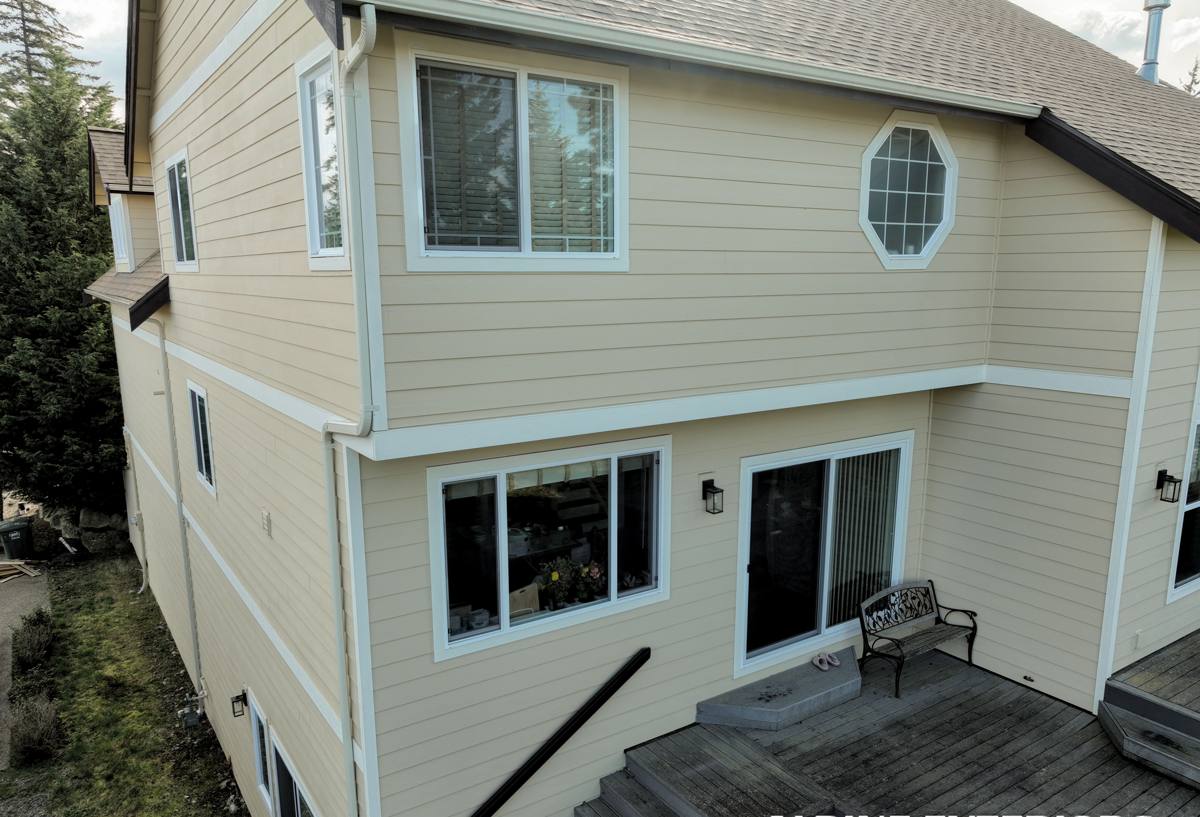
Signs a Semiahmoo Deck Needs Replacement, Not a Patch
Not every aging deck needs a full teardown. But there's a point where patching individual boards or sistering a joist stops making sense, especially on a waterfront lot where the underlying structure has been exposed to salt air and moisture for years. Here's what tells us a deck has crossed that line.
Structural Red Flags
Soft or spongy spots underfoot usually mean the joists or the decking itself have started to rot from the inside, even if the top surface still looks reasonable. A ledger board that's pulling away from the house, visible rust streaking down from fasteners, or a railing that flexes more than it should are all signs the frame — not just the surface boards — has been compromised. On a deck exposed to Semiahmoo's salt air, corroded structural hardware is one of the most common reasons we recommend full replacement over repair, because you can't inspect every fastener buried inside the framing.
Surface and Moisture Signs
Persistent moss or algae that comes back within weeks of cleaning, graying or checking wood that's gone past cosmetic weathering, and standing water that doesn't drain within a day after rain all point to a deck that's lost its ability to shed moisture the way it's supposed to. Once a deck stops draining well, everything else — rot, mold, fastener corrosion — accelerates.
Material Choices That Actually Hold Up Near the Water
Material selection matters more on a Semiahmoo deck than it does on a typical inland build, because salt air and constant dampness punish weak points faster. There's no single "best" material for every situation — it depends on budget, how much upkeep you're willing to do, and how close the deck sits to open water and prevailing wind.
| Material | How It Handles Salt Air & Moisture | Maintenance Burden | Typical Lifespan Here |
|---|---|---|---|
| Pressure-treated wood | Resists rot reasonably well if properly sealed and re-sealed; fasteners are the weak point in salt air | High — annual cleaning and periodic sealing | 10-15 years before major repair or replacement |
| Cedar | Naturally moisture- and insect-resistant, but still needs finish protection against UV and driving rain | Moderate to high — regular finish maintenance | 15-20 years with consistent upkeep |
| Composite decking | Doesn't absorb moisture the way wood does, resists moss growth better on the surface, but quality varies by product line | Low — periodic washing, no sealing or staining | 20-25+ years, warranty-backed |
| Capped composite / PVC | Best resistance to moisture intrusion and surface staining in coastal air; the cap layer keeps water out of the core | Low — washing only | 25+ years, strongest warranties |
Whatever the surface material, we're just as focused on what's underneath. A composite deck built on corroding fasteners or undersized framing will still fail early — the surface material only protects what you can see.
What a Correct Deck Replacement Actually Involves
A deck replacement done right is a structural project, not a cosmetic swap of old boards for new ones. On a Semiahmoo property, a few pieces matter more than usual.
Framing and Fasteners
We spec fasteners and structural connectors rated for coastal exposure, not standard interior-grade hardware. In an environment where salt air corrodes ordinary fasteners over a matter of years rather than decades, using the right-grade hardware up front is one of the cheapest ways to add real service life to a deck.
Ledger Attachment and Flashing
The ledger board — where the deck ties into the house — is the single most common failure point on any deck, and it's especially important to get right where wind-driven rain is common. Proper flashing detail keeps water from being forced up and behind the ledger, which is how rot gets started inside a wall that the homeowner won't see until it's a much bigger repair.
Footings and Post Bases
Footings need to be sized and set to current code depth and bearing requirements, and post bases should keep wood posts elevated off concrete so they're not sitting in standing water after a heavy rain. This region gets enough sustained wet weather that post-base drainage isn't optional.
Drainage and Spacing
Board spacing and any under-deck drainage systems need to account for the volume of rain this area gets, not a drier regional average. A deck that drains slowly stays wet longer, and wet decks are where moss, mold, and rot get a foothold.
Our Process for a Semiahmoo Deck Replacement
1. On-Site Assessment
We start by getting under the deck, not just walking across the top of it. That means checking joists, the ledger connection, footings, and fastener condition directly, since surface appearance alone doesn't tell the real story on a deck that's been exposed to salt air for years.
2. Permitting
Deck replacement in Whatcom County typically requires a permit, particularly for structural work involving footings, ledger attachment, or any change to the deck's size or height. We handle that process as part of the job so it isn't left for the homeowner to sort out.
3. Demolition and Disposal
Old decking, framing, and any corroded hardware are removed and hauled off. This is also when we get our clearest look at the house's rim joist and siding behind where the old ledger was attached, so we can flag any hidden moisture damage before it's covered back up.
4. Rebuild
Framing, flashing, footings, and decking go in to code, with fasteners and connectors matched to the coastal exposure this location gets. We build it to be inspected and to hold up, not just to look finished on day one.
5. Final Walk-Through
We walk the finished deck with the homeowner, cover what maintenance it actually needs (which varies by material), and answer questions before we consider the job done.
Keeping a New Deck Ahead of the Moss Season
Even a well-built deck needs some ongoing attention in an area with a moss season this long. The good news is that a properly built deck with the right material choice needs far less than an older, poorly-drained one.
- Sweep or blow off leaves and debris regularly, especially in fall when they trap moisture against the boards
- Rinse the surface periodically to keep salt residue and organic buildup from settling in
- Check that gaps between boards stay clear so water keeps draining rather than pooling
- Inspect railing posts and stair connections once a year for movement or corrosion at the hardware
- Reseal wood decking on the manufacturer's recommended schedule — don't wait until it's visibly graying
- Trim back vegetation that's shading the deck and keeping it damp longer than it needs to be
Why Hiring a Crew That Already Works This Area Matters
A deck built to a generic regional standard, without accounting for salt air exposure and this area's rain and moss patterns, tends to show problems early — corroding hardware, ledger moisture, surface growth that keeps coming back. A crew that already works Semiahmoo and the broader Birch Bay waterfront knows which fastener grades and material choices actually hold up here versus which ones look fine in a showroom and struggle within a few years of coastal exposure. That's not a marketing point — it's the difference between a deck that needs real attention again in a decade and one that doesn't.
We're also familiar with the permitting expectations for Whatcom County waterfront and near-waterfront properties, which can involve additional considerations depending on setback and shoreline factors specific to a given lot.
What Affects the Cost of a Deck Replacement Here
Every deck is different, but a few factors consistently move the price on a Semiahmoo replacement more than they would on a typical inland job.
| Factor | Why It Matters Here |
|---|---|
| Deck size and layout | More square footage and multi-level or stair-heavy designs mean more framing, fasteners, and labor |
| Material selection | Coastal-grade or capped composite materials cost more up front but reduce long-term maintenance and replacement frequency |
| Ledger and flashing complexity | Proper flashing detail against wind-driven rain takes more time than a basic reseal-and-caulk approach |
| Fastener and hardware grade | Coastal-rated connectors cost more than standard hardware but matter more in salt air |
| Footing and structural condition | Undersized or deteriorated footings found during demo may need to be replaced to meet current code |
We'd rather walk your specific deck and give you real numbers than quote a broad range that doesn't reflect what your property actually needs.
If your Semiahmoo deck is showing soft spots, persistent moss, rusting hardware, or is simply past its useful life, we're glad to take a look and put together a free, no-pressure estimate — just fill out the form below and we'll get in touch.