 Birch Bay
 Storm Damage Roof Repair for Point Whitehorn Homes
Point Whitehorn sits right up against the water off the northern edge of Birch Bay, and that location cuts both ways. It's a beautiful spot to own a home, and it's also one of the more exposed pieces of roofline in Whatcom County when a winter system rolls in off the Strait of Georgia. Wind gusts that would just rattle windows a few miles inland can lift shingles, drive rain sideways under flashing, and strip granules off a roof that looked fine the week before. If you've had a storm move through and you're not sure whether your roof took real damage or just a scare, that's exactly what this page is for.
We work on roofs in this neighborhood regularly, and the damage we find after a storm here tends to follow a pattern that's a little different from what we see farther inland. This page walks through what that pattern looks like, what an honest repair actually involves, and how we handle the job from first call to final nail.
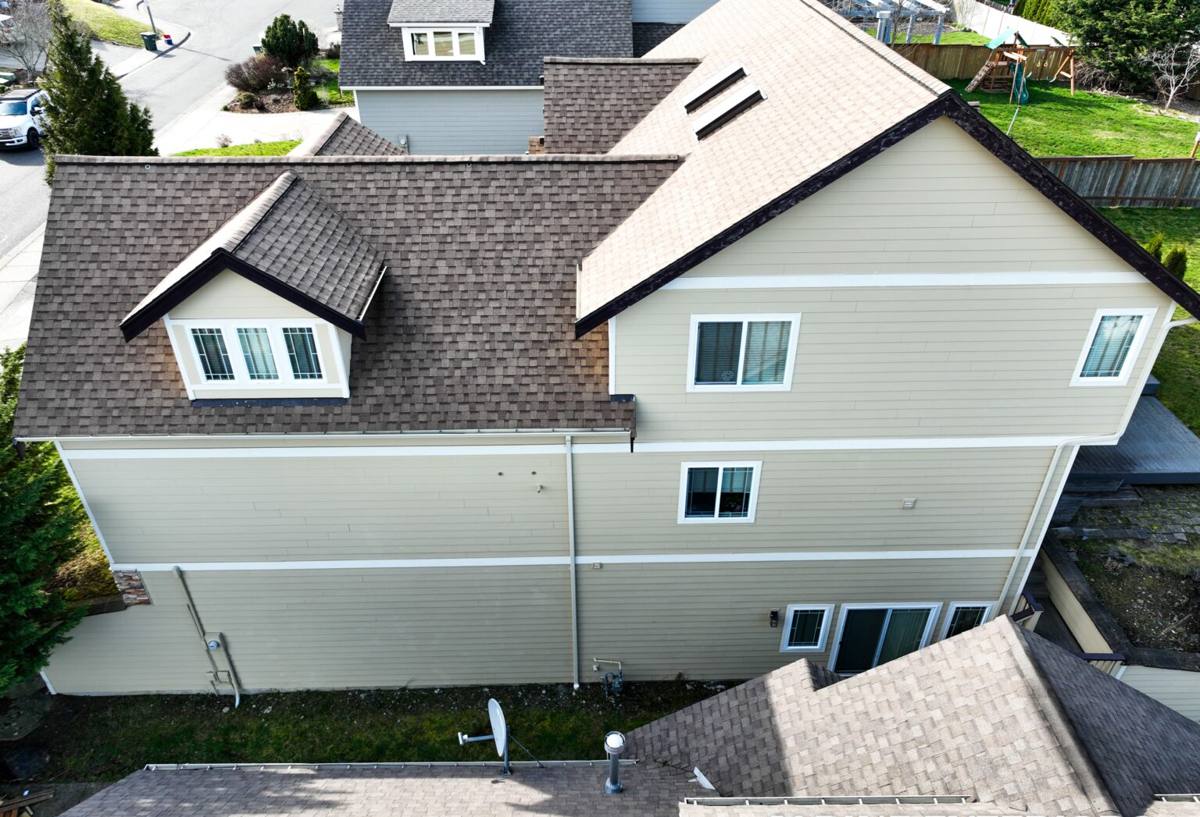
What Point Whitehorn's Climate Does to a Roof
Three things drive most of the roof damage we see out here, and they compound each other over time.
Salt Air and Metal Fatigue
Being this close to the water means a steady low-level exposure to salt-laden air, even on calm days. Salt accelerates corrosion on exposed metal — flashing, fasteners, gutter hangers, and the edges of metal roofing panels. A fastener that would last decades in a drier inland location can start showing rust streaks or backing out years sooner here. Once a fastener loosens or a flashing seam corrodes through, that's the entry point water uses during the next storm.
Wind-Driven Rain and Flashing
Storms coming off the water don't just drop rain straight down — they push it sideways and upward under roof edges, ridge caps, and anywhere flashing meets a wall or chimney. A roof can shed a normal rain shower without issue and still leak during a wind-driven event, because the water is being forced into laps and seams that were never designed to handle water moving in that direction. This is why storm damage often shows up as an interior leak in a spot that has never leaked before — the wind direction that particular storm brought was one the roof hadn't been tested against.
The Long Moss Season
Whatcom County's damp, mild stretch from fall through spring is long, and north-facing and shaded roof sections in Point Whitehorn hold moisture for extended periods. That's ideal growing conditions for moss. Moss isn't just cosmetic — it holds water against the roofing material, lifts shingle edges as it grows, and works its way under tabs and around fasteners. A roof going into storm season with an established moss problem is already weakened at exactly the points where wind and rain will look for a way in.
Signs Your Roof Has Storm Damage
Not all storm damage announces itself with a hole in the ceiling. A lot of it is subtle enough that homeowners miss it until the next storm makes it worse. After any significant wind or rain event, it's worth checking for:
- Shingles that look lifted, curled, or are missing outright, especially near ridges, edges, and valleys
- Granules collecting in gutters or at the base of downspouts — a sign of shingle surface wear
- Bent, lifted, or missing flashing around chimneys, vents, skylights, or where a roofline meets a wall
- Water stains, discoloration, or soft spots on interior ceilings or in the attic
- Daylight visible through the roof deck when viewed from inside the attic
- Gutters pulling away from the fascia or full of debris that's preventing water from draining
- New moss growth or heavier moss than usual concentrated in one area — often a sign that section is holding more moisture than it should
Any one of these on its own might be minor. Several together, or any sign of active water intrusion, means it's worth getting a professional look before the next storm finds the same weak spot.
What a Correct Storm Damage Repair Actually Involves
A repair that just covers the visible damage without addressing why it happened is a repair you'll be paying for again. Here's what we consider a complete job.
A Full Assessment, Not Just a Patch
We look at the damaged area and everything around it — the surrounding shingles, the underlayment where it's exposed, the flashing at nearby penetrations, and the decking underneath if there's any sign it got wet. Storm damage rarely stays confined to a single shingle; wind that tore one loose usually stressed the ones next to it too.
Flashing and Underlayment Come First
Given how much of the damage out here traces back to wind-driven rain finding a way past flashing, we treat flashing repair as the priority, not an afterthought. That means replacing corroded or bent flashing rather than just re-sealing it with caulk, and checking that underlayment beneath the repair area is intact and properly lapped so water sheds correctly even if it gets past the shingle surface.
Matching Materials the Right Way
When we replace shingles, we match the existing product as closely as possible in profile and color so the repair doesn't stand out and, more importantly, so the repaired section performs the same as the rest of the roof under wind load. Mismatched shingle types laid side by side can shed water differently and create new weak points at the seam between old and new.
Addressing the Moss, Not Just the Symptom
If moss contributed to the damage, we clear it properly rather than just power-washing the surface, which can strip granules and shorten shingle life. We also look at whether poor airflow or overhanging vegetation is keeping that section of roof wetter than the rest, since moss removal without addressing the cause is a repair you'll be redoing in a year or two.
Our Process for Point Whitehorn Storm Repairs
- Initial contact and scheduling. We get a description of what you're seeing — a leak, missing shingles, storm timing — so we can bring the right materials and plan for the actual scope, not just a generic inspection.
- On-site inspection. We check the roof surface, flashing, gutters, and attic if accessible. We photograph anything relevant for our own records and for you, since documentation matters if you end up filing an insurance claim.
- Straight explanation and written estimate. You get a clear picture of what's damaged, what caused it, and what it will take to fix — with options if there's more than one reasonable way to approach it. No pressure to upsell into a full replacement if a targeted repair will genuinely hold up.
- The repair itself. We do the work with materials matched to your existing roof, prioritizing flashing and underlayment integrity, not just visible shingle replacement.
- Final check. We walk the completed repair and the surrounding area before we consider the job done, and let you know if we spotted anything else worth keeping an eye on.
Repair or Replace? What Actually Drives That Decision
After storm damage, the question we get most is whether a repair is enough or whether it's time to talk about a full roof. There's no single right answer — it depends on the roof's age, condition, and how widespread the damage actually is.
| Factor | Leans Toward Repair | Leans Toward Replacement |
|---|---|---|
| Roof age | Under 12–15 years, or a durable metal/tile roof in good condition | Near or past the material's typical service life |
| Damage extent | Isolated to one or two areas (a valley, a flashing point, a wind-torn section) | Scattered across multiple slopes or repeated storm hits over several seasons |
| Underlying deck condition | Decking is dry and solid where exposed | Soft, delaminated, or water-stained decking found during inspection |
| Granule loss / surface wear | Limited to the storm-affected area | Widespread thinning across the whole roof, storm damage or not |
| Moss and moisture history | First significant moss issue, caught early | Long-term moss damage that's compromised multiple sections over the years |
We'll always tell you honestly which side of that table your roof falls on. If a repair will genuinely hold up through the next few storm seasons, that's what we'll recommend and price.
Insurance and Storm Claims
Many storm repairs in this area do get filed as insurance claims, particularly when wind speeds during the event were high enough to be a matter of public record. We document the damage thoroughly with photos and a written scope, which gives you something concrete to bring to your adjuster. We're not a public adjuster and we don't handle the claim itself, but a clear, honest damage assessment from a contractor who actually did the inspection tends to make that conversation with your insurer go a lot smoother than a vague description on its own.
Why Local Experience in Point Whitehorn Matters
A roofing crew that mostly works dry, wind-sheltered inland jobs and one that regularly works this stretch of Birch Bay waterfront will size up the same storm-damaged roof differently. We know that flashing failures out here are more often a corrosion story than a workmanship story, that moss shows up on different slopes than it would a few miles inland, and that a repair needs to be built to handle wind-driven rain from more than one direction, not just straight-down weather. That's not a marketing line — it changes where we look first during an inspection and what we prioritize in the repair.
It also means we're not guessing at what "normal wear" looks like for a Point Whitehorn roof versus what's actually storm damage that needs attention now. That judgment call, made correctly, is often the difference between a repair that costs a few hundred dollars and one that turns into a full deck replacement because water sat under a shingle for two more winters than it should have.
Keeping Your Roof Ready Between Storms
A little attention between storm seasons reduces how often you need emergency repair calls in the first place. Worth doing at least once a year, ideally before the fall storm season starts:
- Clear gutters and downspouts so wind-driven rain has somewhere to go instead of backing up under the roof edge
- Check and treat moss on north-facing and shaded slopes before it establishes
- Trim back branches that keep a section of roof shaded and damp longer than the rest
- Have flashing around chimneys, vents, and skylights checked for corrosion or lifting before it becomes a leak
- Walk the attic after a hard storm and look for new light, moisture, or staining, even if nothing looks wrong from the ground
If you've had a recent storm move through Point Whitehorn and want an honest look at what it did to your roof, we're glad to come take a look. The estimate is free, there's no pressure attached to it, and you'll get a straight answer about whether you're looking at a repair or something bigger — just fill out the form below.