 Birch Bay
 Marietta's Coastal Exposure Is Not Like Inland Siding Conditions
Marietta sits close to the water on Drayton Harbor, in the same coastal band as the rest of Birch Bay and northern Whatcom County. That location is part of what makes the neighborhood a good place to live, but it also means the exterior of a home does more work here than it would a few miles inland. Salt-laden air moves off the water and settles on siding, trim, and fasteners. Wind-driven rain comes in at an angle instead of straight down, which pushes water into laps, seams, and butt joints that a calmer climate would never test. And a long, damp moss season keeps north- and shade-facing walls wet for weeks at a time.
None of that is unusual for this part of Washington. But it does mean that siding installed to a generic national standard, rather than to the actual conditions on a Marietta lot, tends to show problems years before it should — swelling at the bottom edge, peeling paint at seams, soft spots behind trim, and moss or algae staining that keeps coming back no matter how often it's washed off.
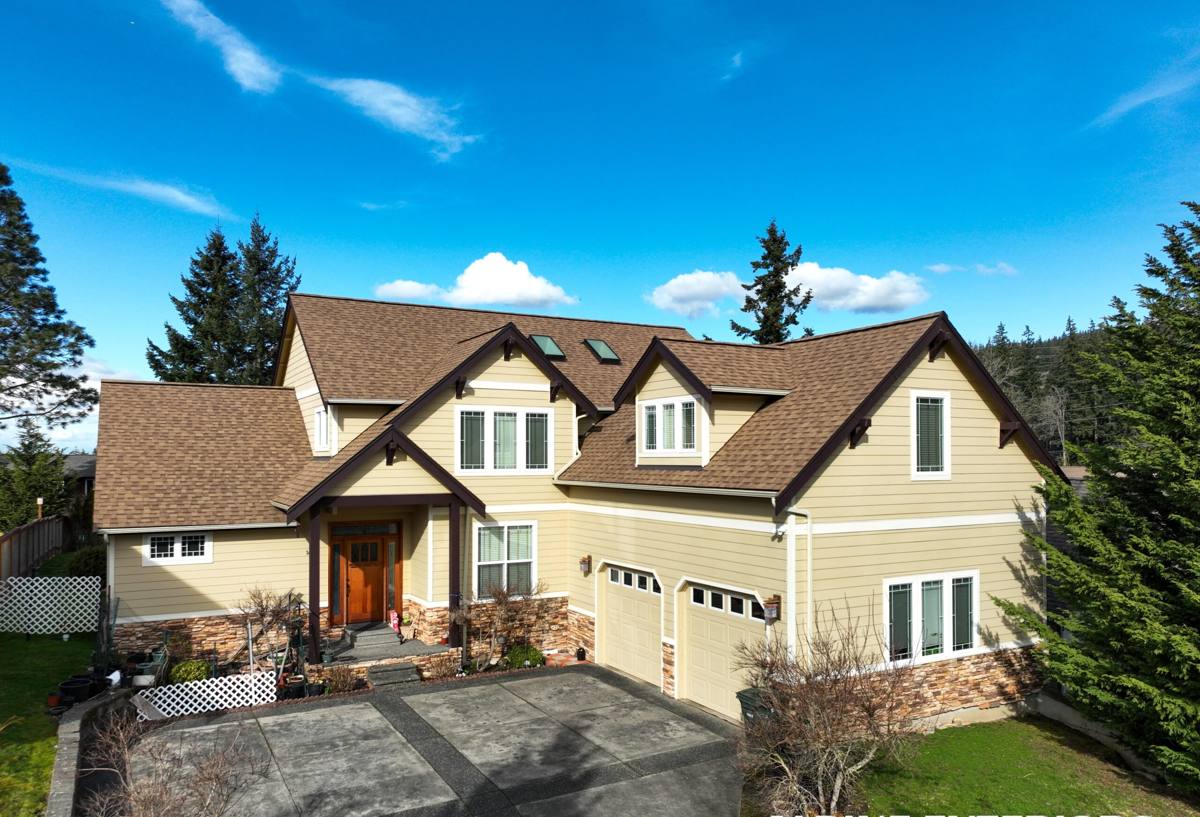
What Salt Air, Driving Rain, and Moss Actually Do to Siding
Salt Air
Airborne salt is corrosive to exposed metal — nail heads, flashing, and fastener systems that aren't rated for coastal exposure will oxidize and stain faster near the water than they would ten miles inland. It also accelerates the breakdown of lower-grade paint films, which is why coastal homes often show chalking and fading on the weather side of the house first.
Driving Rain
Wind off the bay doesn't let water run down and off the wall the way it does in a still climate. It drives moisture sideways and upward, which means laps, joints, and penetrations (hose bibs, light fixtures, vents) need to be detailed as if they'll see direct wetting, not just runoff. A siding job that relies on caulk alone to keep water out of a joint is a maintenance problem waiting to happen in a spot like Marietta.
Moss and Algae Season
Whatcom County's wet season runs long, and shaded or north-facing walls in Marietta can stay damp for extended stretches. Moss and algae don't just look bad — sustained moisture against a wall surface is what eventually leads to rot in the substrate behind poorly installed or poorly ventilated siding.
What a Correct Siding Installation Involves Here
Good siding starts before the first board goes up. In a Marietta setting, the details that matter most are the ones you can't see once the job is finished:
- A continuous, correctly lapped weather-resistive barrier behind the siding — the actual water management layer, not decoration
- Properly integrated flashing at every window, door, and roof-to-wall intersection, so water is directed out and away rather than trapped
- Correct fastener type and placement for the siding manufacturer's coastal/high-exposure specifications
- Proper clearance between the bottom edge of the siding and the ground, decks, and roof lines, so splash-back and standing moisture don't sit against the material
- Rainscreen or ventilated gap detailing where conditions call for it, so damp walls can actually dry out between storms
- Sealed, back-primed cut ends at every joint — an exposed raw edge is where moisture intrusion usually starts
Skip any one of these and the siding may still look fine on installation day. The failures show up two, five, or ten years later, usually in the form of soft trim, staining, or a section that has to be torn off and redone.
Why We Install Only James Hardie Fiber Cement
We made a deliberate decision to install James Hardie fiber cement siding exclusively, and not vinyl, LP SmartSide, primed spruce, cedar, or other fiber cement brands. That's a standard we hold on every job, including here in Marietta.
Fiber cement is non-combustible, which matters on its own merits, and it doesn't absorb and swell with moisture the way engineered wood products can if a seam is compromised. Hardie's ColorPlus factory finish is baked on under controlled conditions rather than field-painted, which gives it better adhesion and fade resistance than site-applied paint — a real advantage in a location where sun, salt, and rain all work against a painted surface. Hardie also engineers specific product lines (their HZ5 line, for example) for climate zones with more moisture exposure, which is directly relevant to a coastal Whatcom County property. And the warranty is transferable and backed by a large, established manufacturer, which matters if the home changes hands.
We're not saying every other product on the market is unusable — vinyl, wood, and engineered wood sidings all have a place and plenty of contractors do good work with them. Our position is narrower: given what this climate does to a wall over 20-30 years, fiber cement installed correctly is the product we're willing to stand behind, so it's the only one we put on homes.
Our Installation Process for Marietta Homes
- Site walk and assessment. We look at sun/shade exposure, wind direction relative to the water, drainage around the foundation, and the condition of the existing wall assembly before quoting anything.
- Tear-off and substrate check. Old siding comes off and we inspect the sheathing underneath for rot or hidden moisture damage — common on older coastal homes — before anything new goes on.
- Weather barrier and flashing. This is the step that determines whether the job holds up. We install and lap the water-resistive barrier correctly and flash every penetration and intersection before siding starts.
- Hardie installation to spec. Boards are cut, fastened, and gapped according to James Hardie's published installation requirements for this climate zone — not shortcuts.
- Trim, caulking, and touch-up. Cut ends are sealed, joints are finished, and any factory-finish touch-up is done with Hardie-matched product.
- Final walk-through. We go over the finished job with the homeowner before calling it done.
What Drives Siding Installation Cost in Marietta
| Factor | Why It Matters Here |
|---|---|
| Home size and wall complexity | More corners, dormers, and roof-to-wall intersections mean more flashing detail and labor time |
| Substrate condition | Coastal homes more often need sheathing repair once old siding comes off, which affects the final price |
| Siding profile and finish | Lap width, texture, and color selection within the Hardie product line affect material cost |
| Removal and disposal | Tearing off old vinyl, wood, or aging fiber cement adds labor and haul-away cost |
| Access and site conditions | Lot slope, landscaping, and proximity to neighboring structures affect staging and equipment needs |
| Trim and accessory work | Fascia, soffit, and window/door trim replacement done alongside siding is more efficient than doing it later |
We give exact numbers only after seeing the home in person — anyone quoting a firm price over the phone for a coastal property they haven't walked is guessing.
Signs a Marietta Home May Need New Siding
- Persistent moss or algae staining that returns shortly after cleaning
- Soft or spongy spots when you press on the siding, especially near the bottom courses or trim
- Visible warping, buckling, or gaps opening up at seams
- Paint that's peeling, bubbling, or chalking heavily on the weather-facing side
- Rust streaks from corroding fasteners
- Rising energy bills that suggest the wall assembly isn't performing the way it should
Any one of these on its own isn't necessarily an emergency, but a combination of two or three is usually a sign that moisture has already gotten past the surface.
Why It Matters to Hire a Crew That Already Works This Area
Siding installation isn't identical everywhere in Whatcom County. A crew that mostly works dry, inland jobs may not default to the flashing and drainage details a bay-facing wall in Marietta actually needs. A crew that works Birch Bay and the surrounding coastline regularly already knows which walls take the worst of the weather, how the moss season behaves locally, and where the driving-rain problem areas tend to show up on a given lot orientation. That local pattern recognition is worth more than a lower bid from a crew that's never dealt with coastal exposure before.
Get a Free, No-Pressure Estimate
If you're weighing a siding replacement for a Marietta property, or you're just not sure whether what you're seeing is cosmetic or something more serious, we're happy to take a look. The estimate is free, there's no pressure, and you'll get a straight answer about what your home actually needs. Use the form below to get started.