 Birch Bay
 Decks Near Birch Bay Take a Different Kind of Beating
A deck in Marietta doesn't fail the way a deck fails in a dry inland climate. Out here, close to the water, the damage is driven by a specific combination: salty marine air that speeds up corrosion on anything metal, driving rain that gets pushed sideways into ledger boards and railing posts, and a moss season that can run from fall through spring. Any one of those would be manageable on its own. Together, over enough years, they're what turns a solid deck into a soft, slippery, structurally questionable one.
We repair decks in Marietta and the surrounding Birch Bay area regularly enough to know which failure points show up first and which ones homeowners tend to miss until they're expensive. This page covers what actually goes wrong with decks here, what a correct repair looks like, and how we approach the work.
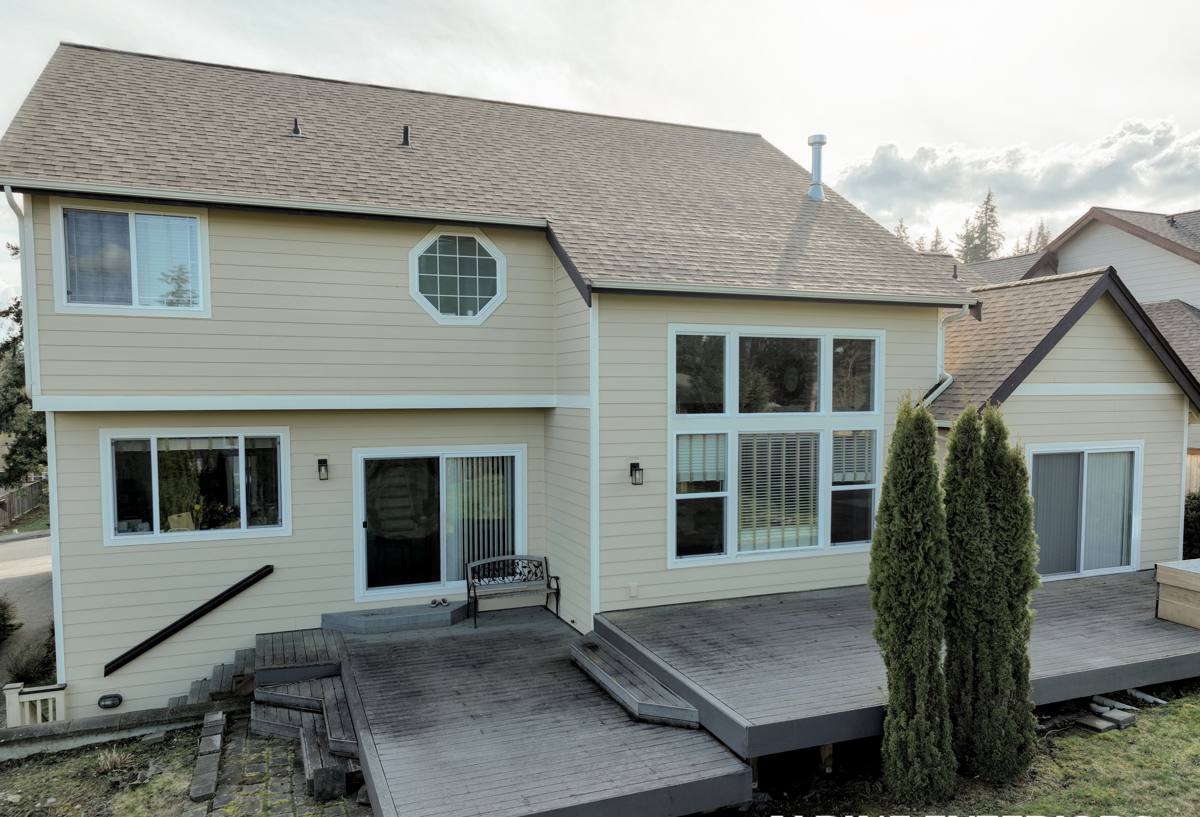
Common Deck Problems We See in Marietta
Ledger Board and Framing
The ledger board — where the deck attaches to the house — is the single most important structural connection on most decks, and it's also the part most exposed to water that runs down the siding and collects behind the deck surface. Without proper flashing, water sits against that connection year after year. In a climate with this much sustained rainfall, that's where we most often find rot that isn't visible from the top of the deck at all.
Decking Surface and Moss Growth
Wood and even some composite decking in shaded, damp spots near Birch Bay grow moss and algae faster than most homeowners expect. Beyond the slip hazard, moss holds moisture against the board surface constantly, which accelerates rot in wood decking and can dull or stain the surface of composite material if it's left to sit.
Railings and Guard Posts
Railing posts take a lot of lateral load, and if the post base or the bolts anchoring it have started to corrode or the wood around them has softened, a railing can feel "loose" long before it looks obviously damaged. Salt-laden air speeds up corrosion on standard fasteners and connectors, which is a bigger factor this close to the water than it would be further inland.
Fasteners and Hardware
Screws, joist hangers, and structural connectors that aren't rated for coastal exposure will rust, weaken, and sometimes stain the surrounding wood. This is one of the most common issues we find on decks that are otherwise in decent shape — the boards look fine, but the hardware holding everything together doesn't match the environment it's in.
Stairs
Stair stringers and treads see concentrated foot traffic and often sit closer to grade, where splash-back and standing water are worse. Combined with moss, stairs are frequently the first part of a deck to become a genuine safety issue.
Repair or Replace? How We Make That Call
Not every deck problem means starting over, and not every "just needs a few boards" job is actually safe to patch. The honest answer depends on where the damage is and how far it's spread.
| Factor | Repair Usually Makes Sense | Replacement Usually Makes Sense |
|---|---|---|
| Structural framing (joists, beams) | Isolated soft spots, caught early | Widespread rot or sagging across multiple joists |
| Ledger board connection | Flashing failure caught before framing is affected | Rot has spread into the house rim joist or band board |
| Decking surface | Scattered damaged boards, frame is sound | Most boards are cupped, splintering, or moss-stained throughout |
| Railings and posts | Loose hardware or a single failed post | Multiple posts with softened wood or corroded anchors |
| Age of the deck | Under 15–20 years, built to a reasonable standard | Older deck already near the end of its service life |
| Overall cost | Repair cost is a fraction of full replacement | Repair cost starts approaching replacement cost |
We won't sell a full replacement when a repair will hold up, and we won't patch something that's a safety risk. We tell you which situation you're in and why, based on what we actually find once we're under the deck and into the framing — not just what's visible from the top.
What a Correct Deck Repair Actually Involves
A repair that only replaces what's visible on the surface often misses the reason the damage happened in the first place. A correct repair addresses the cause, not just the symptom.
- Inspecting the ledger board connection and flashing, not just the boards around it
- Checking joists, beams, and posts for soft spots with a screwdriver or awl, not just a visual look
- Confirming footings haven't shifted or settled, especially on older decks
- Replacing corroded or undersized fasteners and connectors with hardware rated for coastal, wet-climate exposure
- Re-flashing any point where the deck meets the house siding, so water is directed away instead of trapped
- Testing railing posts for lateral movement, not just checking that the rail itself feels sturdy
- Addressing moss and algae at the source — drainage and airflow — not just cleaning the surface once
Skipping any of these means the same problem tends to come back within a few seasons, which ends up costing more than doing it right the first time.
Our Process for a Marietta Deck Repair
- Inspection. We check the deck from underneath as well as on top — ledger connection, framing, footings, fasteners, and the decking surface itself.
- Honest scope. We explain what's actually wrong, what's cosmetic versus structural, and what a repair versus replacement would each involve.
- Written estimate. You get a clear, itemized estimate before any work starts — no surprise add-ons once we're into the job.
- Repair work. Damaged framing, decking, railings, and hardware are addressed in the right order — structure first, surface second.
- Weather protection details. Flashing, fastener choice, and drainage are handled with this climate in mind, not treated as an afterthought.
- Final walkthrough. We go over what was done and what maintenance, if any, will keep it holding up.
Material Choices: What We Use and Why
Both wood and composite decking can work well in the Birch Bay area, but each comes with trade-offs worth understanding before a repair.
Wood decking (typically cedar or pressure-treated fir) is affordable to repair in sections and easy to match to an existing deck, but it needs regular sealing or staining to hold up against this much sustained rain, and it's more prone to moss growth if it's not maintained.
Composite decking resists rot and doesn't need staining, which appeals to a lot of homeowners who don't want ongoing maintenance. Our standard is to be upfront that composite still needs proper ventilation underneath and correct fastening — installed without adequate airflow, it can trap moisture against the framing below it, which shifts the maintenance burden from the surface to the structure underneath. We'll walk through what that means for your specific deck rather than assume one material is automatically the better call.
For repairs, we also try to match new material to the existing deck where it makes sense, so the repaired sections don't weather at a visibly different rate than the rest of the deck over time.
Why a Crew That Already Works in Marietta Matters
Deck repair here isn't the same trade as deck repair somewhere dry and inland. A crew that already works Birch Bay and Whatcom County knows which fastener grades actually hold up against the salt air, how much flashing detail this rainfall demands, and which shaded, low-airflow spots on a property are going to grow moss again in six months if drainage isn't corrected. That's the kind of judgment that only comes from repeatedly seeing how decks in this specific climate actually fail — not from a general checklist.
It also means we're familiar with permitting expectations in Whatcom County for structural deck work, so repairs that involve framing or footings are handled to code, not just made to look right.
Keeping a Repaired Deck in Good Shape
A repair holds up longer with a little seasonal attention, especially given how long the moss season runs here:
- Clear leaves and debris from between boards before fall rains set in
- Rinse or gently brush off moss and algae before it establishes, rather than after it's thick
- Check that gutters and downspouts near the deck aren't dumping extra water onto it
- Reseal or restain wood decking on the schedule the product calls for, not just when it looks faded
- Do a quick railing and stair check each fall — a loose post is easier to fix in October than after a winter of use
If a repair is done correctly the first time, this kind of upkeep is minor. It's mainly there to keep small issues from turning back into structural ones.
If you've got a deck in Marietta that's showing soft spots, moss buildup, loose railings, or you're just not sure whether it needs a repair or something more, we're glad to take a look. Use the form below to request a free, no-pressure estimate — we'll tell you honestly what we find.