 Birch Bay
 Why Cherry Point's Exposure Is Tougher on Siding Than People Expect
Cherry Point sits right up against the Salish Sea, and that location shapes everything about how siding ages here. Homes get a steady diet of salt-laden air blowing off the water, wind-driven rain that hits walls sideways instead of falling straight down, and long gray stretches where surfaces barely get a chance to dry before the next system rolls through. Add in the shade from mature evergreens that's common on lots throughout this part of Whatcom County, and you have conditions that push ordinary siding products past what they were designed to handle.
None of this is unique to one street or one lot — it's the baseline for anything facing open water in this stretch of the county. But it does mean that a siding choice that performs fine forty miles inland can struggle here, and that installation details that don't matter much in a drier climate become the difference between a wall system that lasts decades and one that needs attention in year eight or nine.
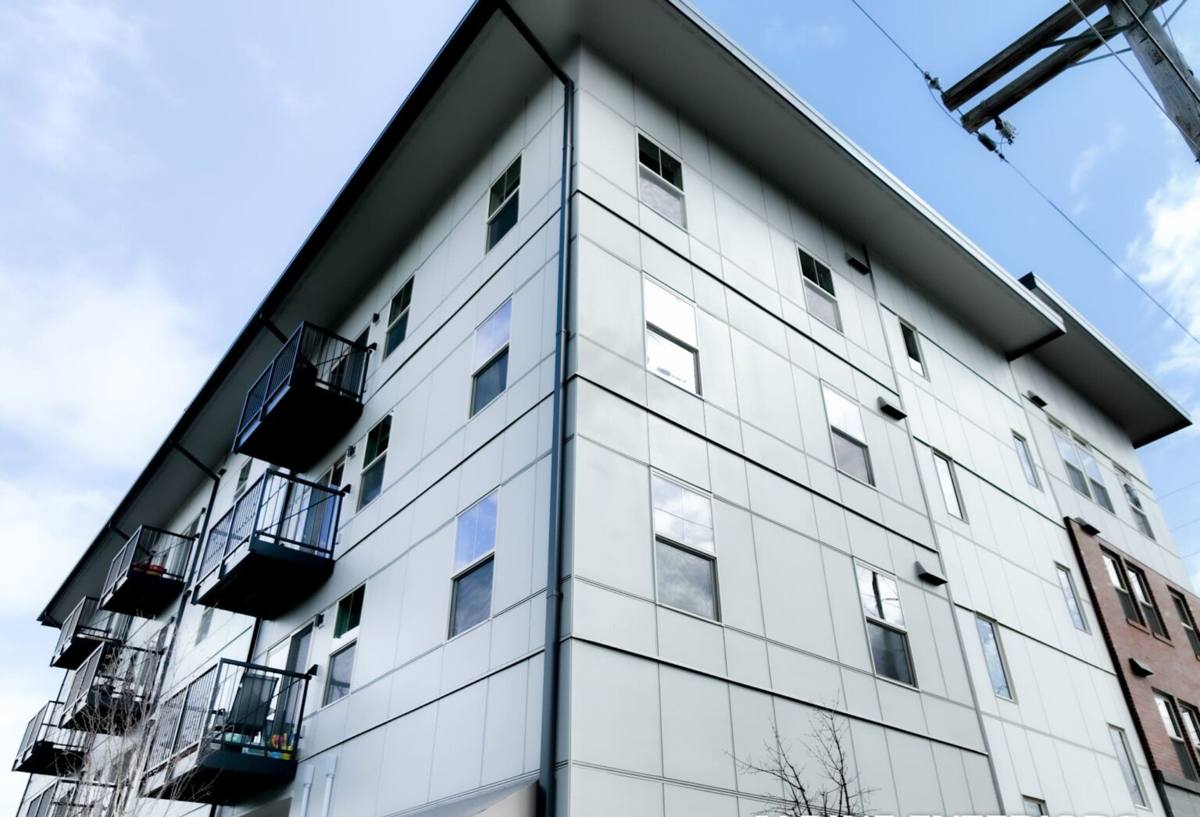
What Salt Air, Rain, and Moss Actually Do Over Time
Salt air is corrosive to exposed metal fasteners and trim, and it accelerates the breakdown of finishes that aren't formulated to resist it. Wind-driven rain doesn't just wet the siding surface — it finds its way behind poorly lapped panels, undersized flashing, and gaps around windows and penetrations, where it can sit against sheathing far longer than anyone walking by would guess. And moss, which thrives in the shaded, damp conditions common near Birch Bay, holds moisture against siding surfaces and trim for weeks at a stretch, especially on north-facing walls and anywhere tree cover blocks the sun and wind.
Individually, each of these is manageable. Together, over years, they're what separates a siding system that still looks and performs well after fifteen years from one that's cupping, staining, softening at the bottom edges, or hosting rot behind the surface nobody can see until a section starts to sag.
The Failure Points We See Most Often on Older Siding
- Butt joints and corners where caulking has failed, letting wind-driven rain track behind the panel
- Bottom edges near grade or decks that stay damp longer than the rest of the wall
- North- and west-facing walls where moss and algae build up and hold moisture against the surface
- Fastener heads and trim metal showing corrosion from sustained salt exposure
- Areas around window and door penetrations where flashing was skipped or done wrong the first time
Why We Install Only James Hardie Fiber Cement
We don't install vinyl, LP SmartSide, Cemplank, Allura, primed spruce, or cedar. That's a deliberate standard, not an oversight, and it comes directly from watching how siding performs in exactly this kind of exposure over time. Vinyl expands and contracts with temperature swings and can warp or crack in sustained wind; wood and wood-composite products need a maintenance commitment — repainting, sealing, moisture monitoring — that most homeowners don't sign up to keep pace with, and in a climate this damp, falling behind on that maintenance shows up fast. Fiber cement doesn't rot, doesn't attract insects, and doesn't expand and contract the way vinyl does, and it's non-combustible, which matters more each wildfire season even here on the wet side of the state.
James Hardie specifically engineers its HardieZone products for regional climate exposure — homes in this part of Washington fall into the HZ5 zone, formulated for wetter, more variable conditions. The factory-applied ColorPlus finish is baked on under controlled conditions rather than field-applied, which matters enormously in a place where you can't count on a stretch of dry, moderate-temperature days to cure paint correctly. That finish is backed by a real, transferable warranty on both the product and the finish — something field-painted materials generally can't offer in the same form.
What James Hardie Gets Right — and What It Requires
To be fair to the product: fiber cement is heavier and more labor-intensive to install correctly than vinyl, it requires specific fasteners and clearances, and it costs more up front than the lower-tier alternatives. We think that trade-off is worth it for what it buys a Cherry Point homeowner in reduced long-term maintenance and moisture resistance, but it's a real trade-off, not a marketing footnote.
What a Correct Installation Involves in This Climate
The product is only half the equation. A lot of the siding problems we get called out to inspect trace back to installation shortcuts, not the material itself. In a wind-driven-rain environment like Cherry Point, these details aren't optional extras:
- Rainscreen gap: a drainage space behind the siding lets any moisture that does get past the surface drain and dry instead of sitting against the sheathing
- Correct flashing at every penetration: windows, doors, hose bibs, and vents all need properly lapped flashing, not just caulk
- Manufacturer-specified fastener spacing and clearance from grade and roof lines, which affects both warranty coverage and how the panels shed water
- Proper panel gaps and factory-recommended caulking at joints, sized and sealed to allow for minor movement without opening a path for water
- Weather-resistant barrier integration so the whole wall assembly works as a system, not just the visible surface
Skip any one of these and you can end up with siding that looks fine from the curb for a couple of years while moisture accumulates behind it — which is exactly the kind of hidden damage that's expensive to fix once it surfaces.
Siding Options Compared for This Exposure
| Material | Behavior in Salt Air & Driving Rain | Maintenance Burden | Typical Lifespan Here |
|---|---|---|---|
| Vinyl | Can warp, crack, or fade under sustained wind and UV exposure | Low, but limited repair options once damaged | Shorter in high-wind, high-exposure spots |
| Cedar / primed wood | Absorbs moisture; prone to rot and moss growth without diligent upkeep | High — regular painting/sealing required | Highly dependent on maintenance follow-through |
| LP SmartSide / wood composite | Better than raw wood but still moisture-sensitive at cut edges and joints | Moderate — finish and joint upkeep needed | Depends heavily on installation and upkeep |
| James Hardie fiber cement | Non-combustible, dimensionally stable, resists moisture-driven decay | Low — occasional wash, periodic caulk checks | Long-term when installed to spec, backed by transferable warranty |
Our Process for Cherry Point Homes
Assessment and Planning
We start by walking the exterior with you, looking specifically at the walls that take the worst of the weather — usually the water-facing and north sides — and checking for existing moisture damage behind the current siding before we ever talk product or price. If there's rot or compromised sheathing, that gets addressed as part of the scope, not discovered mid-project.
Prep and Removal
Old siding comes off, the wall is inspected and repaired as needed, and the water-resistive barrier and rainscreen system go in correctly the first time — this is the step that determines how the whole wall performs for the next several decades, and it's the one that's easiest to shortcut and hardest to fix later.
Installation
James Hardie panels, lap siding, or trim go on to manufacturer spec: correct fastener pattern, correct clearances, correct flashing at every window, door, and penetration. We follow the HZ5-rated installation guidelines that apply to this climate zone, not a generic national spec.
Final Walkthrough
We go over the finished work with you, point out anything you should keep an eye on seasonally, and make sure you know what routine maintenance actually looks like — which, with Hardie, is minimal compared to what most of the alternatives require.
Ongoing Maintenance for a Cherry Point Property
Even low-maintenance siding benefits from a little seasonal attention in this climate. A simple annual routine keeps a correctly installed Hardie system performing the way it's designed to:
- Rinse siding once or twice a year to clear salt residue and organic buildup, especially on shaded or north-facing walls
- Check and clear gutters before the fall rains so water isn't overflowing onto siding and trim
- Watch for moss or algae starting on shaded sections and address it early rather than letting it establish
- Inspect caulking at joints, corners, and trim every year or two and re-caulk if it's cracking or pulling away
- Look at fastener heads and metal trim periodically for early signs of corrosion
Why a Crew That Already Works Cherry Point Matters
Siding installation isn't identical everywhere in Whatcom County. A crew that's worked this shoreline knows which walls typically take the worst wind-driven rain, how much rainscreen clearance actually matters here versus somewhere more sheltered, and what the local moss and moisture patterns look like across a full year, not just on the day of the estimate. That local pattern recognition shows up in the details — where extra flashing attention goes, which trim gaps need more caulk relief, which sides of the house get inspected more closely before the tear-off even starts.
It also matters for accountability. A contractor with an established local presence isn't going anywhere after the job is done, and stands behind both the workmanship and the manufacturer warranty that comes with a correctly installed James Hardie system.
If you're weighing a siding replacement or repair on a Cherry Point property, we're happy to walk the exterior with you, point out what we see, and give you a straightforward, no-pressure estimate — no obligation, just an honest look at what your home actually needs.