 Birch Bay
 Why Ferndale Decks Wear Differently Than Decks Inland
A deck in Ferndale doesn't fail the same way a deck in a dry inland climate does. Homes here sit close enough to the water that salt-laden air reaches wood, fasteners, and hardware year-round, not just during storms. Add Whatcom County's long stretch of driving rain and the extended moss season that follows it, and you get a specific pattern of deck wear: corroded fasteners before the wood itself looks bad, soft spots at ledger boards and stair stringers where water sits longest, and a slick green film on boards that never fully dries out between rain events.
Most deck damage in this area starts invisibly. Water gets into a joint, a fastener hole, or the connection between the deck and the house, and it stays there because the surrounding air rarely gets dry enough to pull moisture back out. By the time a homeowner notices a soft board or a wobbly rail, the underlying structure has often been compromised for a season or two already. Repairing a Ferndale deck correctly means understanding that pattern, not just patching whatever is visibly broken on the surface.
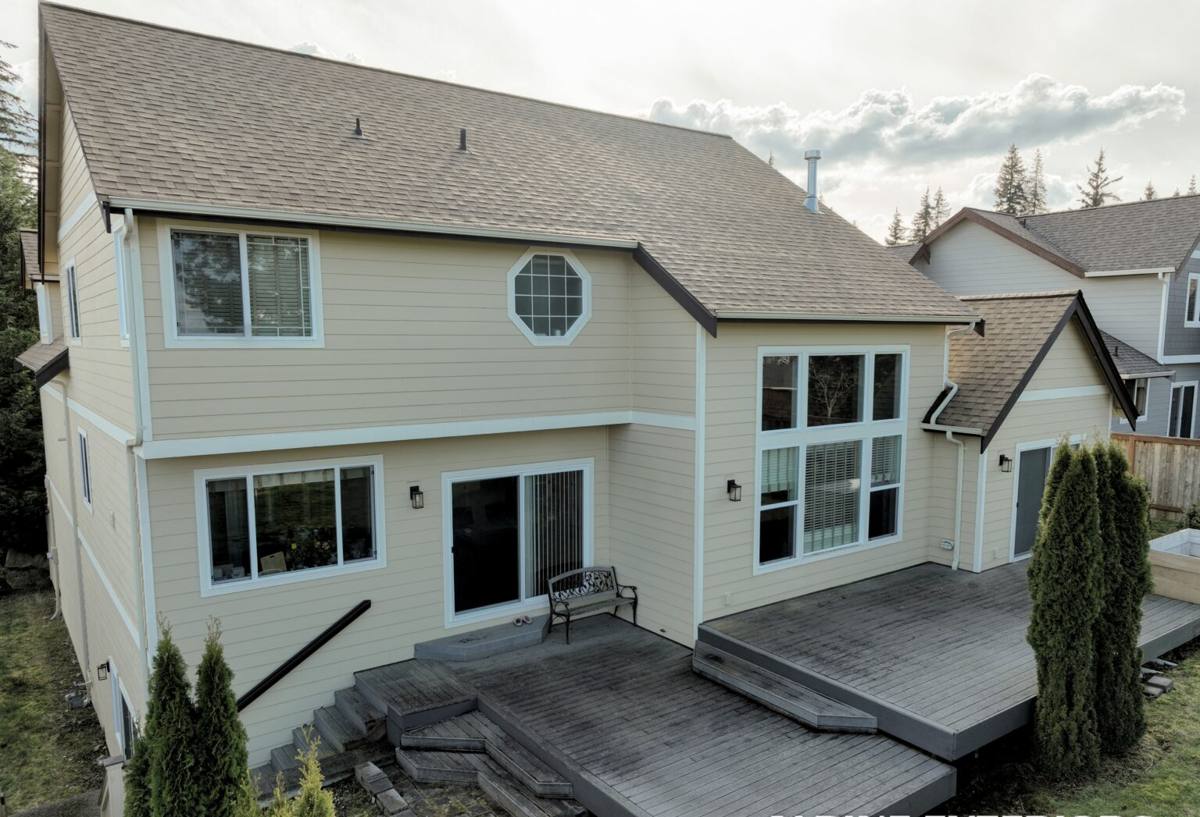
Signs Your Deck Needs Repair Work
Some deck problems are obvious. Others hide in plain sight for years because they don't look dramatic until they're serious. Here's what we tell Ferndale homeowners to check for, or to ask about at their next inspection:
- Boards that feel spongy or flex noticeably underfoot, especially near the house or at stair landings
- Rust streaks running down from screw or nail heads, which usually mean the fastener is corroding faster than the wood around it
- Gaps or separation where the deck ledger meets the house, or visible daylight behind flashing
- Persistent green or black film on boards that reappears within weeks of cleaning
- Railings or posts that shift or wobble when pushed, rather than staying rigid
- Stair stringers with visible splitting, especially at the point where they meet the ground or a concrete pad
- Discoloration or dark staining underneath the deck, which often points to standing water or poor drainage below the joists
Any one of these on its own might be minor. Several at once usually means the deck has been dealing with moisture longer than it should have, and it's worth having someone look at the structure, not just the surface boards.
What a Correct Deck Repair Actually Involves
Starting Below the Surface
A repair that only replaces the boards you can see doesn't fix a Ferndale deck — it just delays the next problem. Before we touch decking material, we check the structure underneath: the ledger board connection to the house, the joists, the beams, and the footings. This is where the real damage usually lives, because it's the part of the deck that stays wettest longest and gets the least airflow.
The Ledger Connection
The ledger board — where the deck attaches to the house — is one of the most important structural points on any deck, and one of the most common failure points in a wet climate. Flashing that was installed incorrectly, or that has simply worn out after years of driving rain, lets water track behind the ledger and into the rim joist or wall framing. A proper repair means correcting the flashing detail, not just re-securing the same connection that let water in the first place.
Joists, Beams, and Footings
Joists and beams that have taken on moisture can look fine from below and still be significantly weaker than they should be. We check for soft spots, delamination in engineered lumber, and corrosion at joist hangers, which are often galvanized but not always rated for the level of salt exposure a coastal Whatcom County deck sees over time. Footings get checked for movement or settling, especially on older decks where post bases may have been sitting in standing water for years without anyone noticing.
Fasteners and Hardware
In this climate, fasteners are frequently the first thing to fail — well before the wood around them shows real damage. Standard galvanized screws and nails can corrode faster near the coast than the manufacturer's rating suggests, which is why hardware upgrades are often part of a proper repair, not just a like-for-like swap.
Repair or Replace: How We Help You Decide
Not every deck problem calls for a full rebuild, and not every deck is worth saving as-is. The right call usually comes down to how much of the structure is still sound versus how much has been compromised.
| Factor | Leans Toward Repair | Leans Toward Replacement |
|---|---|---|
| Ledger & framing condition | Solid, dry, no rot at connections | Soft or delaminated wood at multiple structural points |
| Footings & posts | Stable, no visible movement or settling | Shifting, cracking, or undersized for current code |
| Age of structure | Newer deck with isolated damage | Older deck already near the end of its practical service life |
| Extent of damage | Contained to a few boards, one stair run, or one rail section | Spread across joists, ledger, and decking together |
| Original build quality | Built to code with proper flashing and hardware | Missing flashing, undersized framing, or non-rated fasteners from the start |
When we inspect a deck, we're honest about which side of that table it falls on. A deck with isolated, contained damage on a sound structure is a good repair candidate. A deck with compromised framing at multiple points usually costs more to keep patching over time than it does to rebuild correctly once.
Materials That Hold Up to Salt Air and Long Wet Seasons
Framing and Structural Repairs
For any structural work — joists, beams, ledger repairs, post replacement — we use pressure-treated lumber rated for ground contact where appropriate, paired with corrosion-resistant fasteners and connectors suited to coastal exposure. This isn't an upgrade we push to increase the bill; in a climate with this much salt air and standing moisture, standard-grade hardware is a false economy that shows up as a callback within a few years.
Decking Surface Options
For the visible decking itself, homeowners typically choose between wood and composite, and the right answer depends on how much maintenance they're willing to commit to versus how much they want to spend upfront.
| Decking Type | Maintenance in This Climate | Trade-Offs |
|---|---|---|
| Pressure-treated wood | Regular cleaning, sealing, and moss removal needed to prevent rot | Lower upfront cost but more ongoing upkeep during the long wet season |
| Cedar | Natural rot resistance, but still needs periodic sealing near salt air | Attractive appearance, moderate maintenance, higher material cost than treated wood |
| Composite decking | Occasional washing; doesn't absorb moisture like wood | Higher upfront material cost, but far less vulnerable to rot and moss staining over time |
We don't push one decking material on every homeowner. What we do insist on is that whichever surface material you choose, it's installed over structurally sound, properly flashed framing — because even the best composite board won't save a deck with a failing ledger or rotted joists underneath it.
Our Deck Repair Process
Inspection First
Every repair starts with a hands-on inspection, not a guess from the ground. We check the ledger connection, probe joists and beams for soft spots, look at footings, and test railings and stair stringers for movement. We also look underneath the deck where possible, since that's often where the earliest signs of moisture damage show up.
A Clear, Honest Scope
After the inspection, we walk you through exactly what we found and what it means — what's cosmetic, what's structural, and what can wait versus what shouldn't. If a full rebuild is genuinely the better long-term value, we'll tell you that directly instead of layering repair on top of repair.
Doing the Repair Right
Structural repairs come first: correcting flashing at the ledger, replacing compromised joists or beams, addressing footing issues, and upgrading hardware where the existing fasteners aren't holding up. Only once the structure underneath is sound do we move on to decking, rails, and stairs. We build in proper drainage and airflow wherever the original construction skipped it, since poor airflow is one of the biggest reasons moisture problems return after a repair.
Living With a Long Moss Season
Even a well-built, well-repaired deck in Ferndale needs some ongoing attention because of how long the wet season runs here. Moss and algae growth on decking isn't just a slip hazard — moss holds moisture directly against the wood surface, which accelerates rot in exactly the areas where water already sits longest. Regular cleaning, keeping gutters and downspouts directed away from the deck structure, and trimming back vegetation that shades and dampens the deck surface all make a real difference in how long a repair lasts. We're happy to walk homeowners through a simple seasonal maintenance routine as part of any repair job, since a few minutes of upkeep a couple of times a year goes a long way toward avoiding another repair call down the line.
Why Hiring a Crew That Already Works in Ferndale Matters
Deck repair isn't a one-size-fits-all trade. A contractor who mostly works drier inland climates may not think twice about standard hardware, standard flashing details, or a decking material choice that would be perfectly fine somewhere else but is a poor fit for salt air and a long wet season. Working in Whatcom County's coastal conditions day in and day out means we're not guessing at what holds up here — we're applying what we've already seen fail and what's actually worked.
There's also a practical side to hiring local: a crew that's already in the area can typically get to an inspection faster, understands the permitting and inspection process for Ferndale and the surrounding county, and isn't disappearing after the job with no easy way to follow up if something needs a second look. For structural work like deck repair, that accountability matters as much as the workmanship itself.
Get an Honest Look at Your Deck
If your deck feels soft in places, shows rust streaks at the fasteners, or just hasn't been looked at structurally in a few years, it's worth getting an honest assessment before small problems become expensive ones. We offer free, no-pressure estimates for Ferndale homeowners — use the form below to schedule a time for us to take a look.