 Birch Bay
 Why Decks in Marietta Wear Out Faster Than Homeowners Expect
If you own a home in the Marietta area near Birch Bay, you already know your deck doesn't age the way a deck does further inland. Whatcom County's coastal weather is a lot harder on exterior wood and hardware than most homeowners realize until they're standing on a deck that feels soft underfoot or looking up at railing posts that have started to lean. Three things do most of the damage here: salt-laden air off the water, long stretches of driving rain, and a moss season that can run most of the year in shaded or north-facing spots.
Salt air accelerates corrosion in fasteners, joist hangers, and any exposed metal hardware. Once those connections start to rust, they lose holding strength long before the wood around them looks obviously bad. Driving rain — the kind that comes in sideways off Birch Bay rather than falling straight down — gets pushed into places a builder in a drier climate wouldn't think twice about: under railing caps, behind fascia boards, and into end-grain cuts that weren't sealed. And moss doesn't just look bad. It holds moisture against the decking surface for weeks at a time, which is exactly the environment that rot needs to get started.
None of this means a deck is doomed. It means a deck built or repaired for this specific climate needs different choices — in materials, in fastener grade, in framing details, and in drainage — than a deck built somewhere with a milder or drier year-round pattern. That's the lens we bring to every Marietta deck replacement.
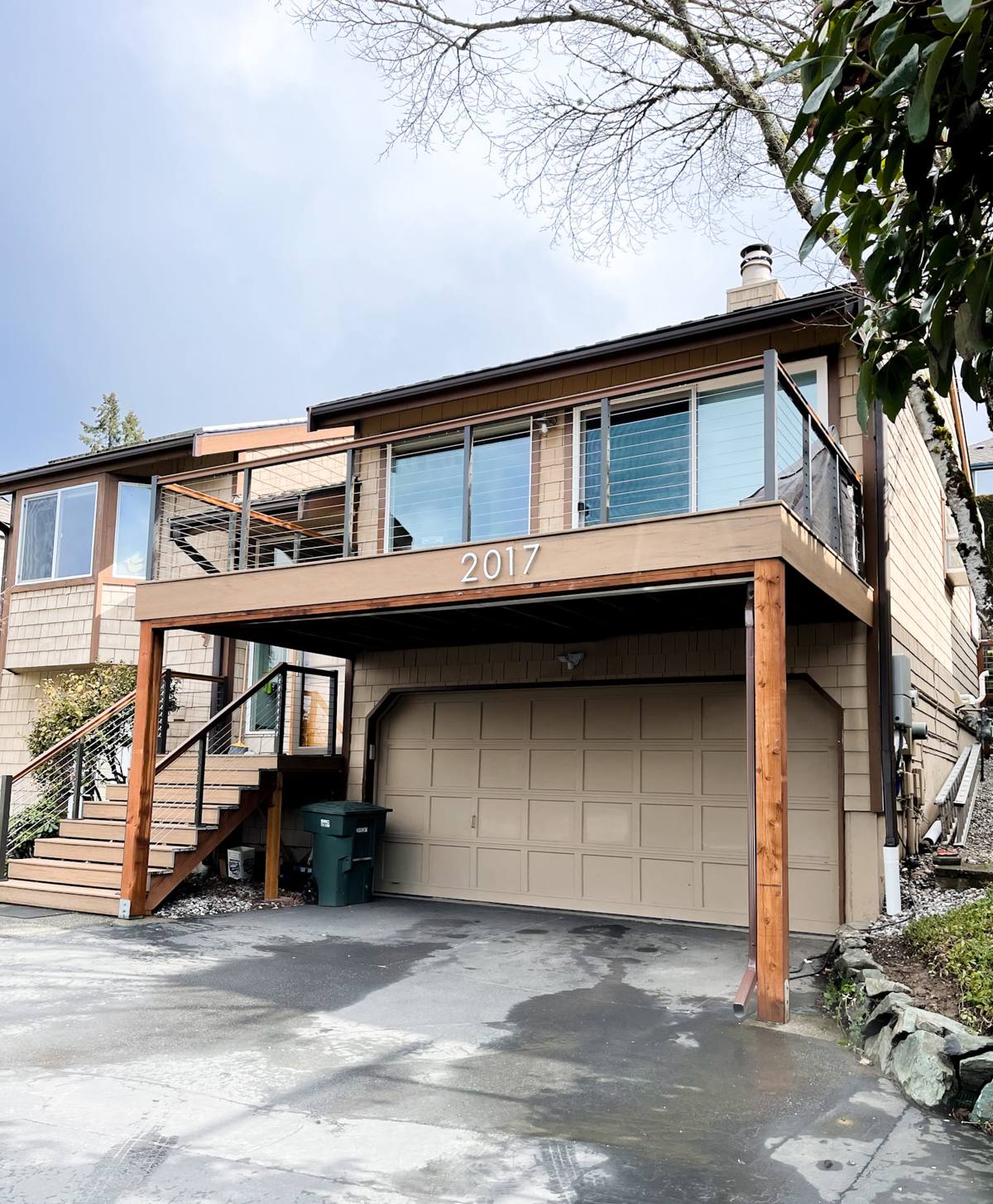
Signs a Marietta Deck Needs Replacement, Not Just Repair
Not every deck problem means starting over. But there's a point where patching boards or sistering a joist is just delaying a bigger, more expensive failure. Here's what we look for during an inspection to tell the difference.
- Soft, spongy, or bouncy spots in the decking surface, especially near the house or in shaded corners
- Visible rot or dark staining at the ledger board where the deck attaches to the house
- Rust streaking around fasteners, joist hangers, or post bases
- Railing posts that wiggle or have visible gaps where they meet the framing
- Persistent moss or algae growth that comes back within weeks of cleaning
- Stairs that feel uneven, springy, or have visibly split stringers
- A deck more than 15-20 years old that has never had the framing inspected, only the surface refinished
If you're seeing two or more of these, it's usually a sign the structural wood and connectors — not just the visible decking boards — have been compromised. At that point, a full or near-full replacement is almost always the more honest recommendation, because rebuilding around failed framing rarely holds up as well as starting clean.
What a Correct Deck Replacement Actually Involves
A deck replacement done right is a structural project, not a cosmetic one. Swapping out old boards for new ones without addressing what's underneath just resets the clock on the same problems. Here's what we look at on every job.
Ledger Board and House Connection
The ledger board — where the deck ties into your house — is the single most important connection on the whole structure, and it's also the one most exposed to water intrusion if it isn't flashed correctly. We use proper flashing details and structural fasteners rated for the load, not just lag screws driven into siding.
Footings and Posts
Coastal soil and heavy seasonal rain can shift footings over time. We check footing depth and condition against current code requirements rather than assuming the old footings are adequate just because the old deck stood on them for years.
Framing and Joists
Joist size, spacing, and hardware all need to match the actual load the deck will carry — including furniture, hot tubs if applicable, and snow load where relevant. We also make sure joist hangers and structural screws are rated for the exposure they'll face, not standard interior-grade hardware.
Drainage and Airflow
A deck that can't shed water and dry out between rain events is a deck that will rot from the inside out. Proper board spacing, ledger flashing, and grading underneath the deck all matter more here than they would in a drier climate.
Choosing Decking Material for Whatcom County's Coastal Climate
There's no single "best" decking material — there's a best material for your budget, your maintenance appetite, and how exposed your specific site is to salt air and standing moisture. Here's an honest comparison of the main options we install and repair around Birch Bay.
| Material | Upfront Cost | Salt Air & Moisture Resistance | Maintenance | Realistic Lifespan Here |
|---|---|---|---|---|
| Pressure-treated fir/pine | Lowest | Fair — depends heavily on sealing and upkeep | Annual cleaning and periodic sealing | 10-15 years with consistent maintenance |
| Cedar | Mid-range | Good natural rot resistance, but softer surface | Regular cleaning; benefits from sealing every 1-2 years | 15-20 years with upkeep |
| Composite decking | Higher | Excellent — doesn't absorb water or rot | Occasional washing; no sealing or staining | 25+ years, backed by manufacturer warranty |
We install all three, and which one makes sense depends on your site. A deck tucked under trees on the shaded side of the house, where moss is a constant fight, is often a better candidate for composite simply because it won't feed the moss problem the way wood does. A sunnier, more exposed deck might do perfectly well in cedar if you're willing to keep up with sealing. We'll walk your specific site with you and give you a straight answer, not just a sales pitch for whatever we make the most margin on.
Railings, Fasteners, and Hardware That Actually Hold Up
The framing and decking get most of the attention, but hardware failure is one of the most common reasons decks near the water fail early. Standard interior-grade screws and brackets corrode faster than most homeowners expect once they're exposed to salt-laden air year-round. On every replacement, we use stainless steel or hot-dip galvanized fasteners rated for coastal exposure, and we match joist hangers and structural connectors to the same standard. It costs a little more upfront than using whatever hardware is cheapest at the yard, but it's the difference between hardware that's still solid in fifteen years and hardware that's rusting through in five.
Railings deserve the same attention. A railing that looks fine but has corroded fasteners at the post base is a safety issue, not just a cosmetic one. We build railing connections to hold real, ongoing load — not just to pass a first inspection.
Our Deck Replacement Process, Start to Finish
Homeowners in Marietta tend to want two things from a contractor: a straight answer about what's actually wrong, and a process that doesn't turn into a guessing game once work starts. Here's how we run a deck replacement.
- Inspection and honest assessment. We look at the ledger connection, framing, footings, and hardware — not just the surface boards — and tell you plainly whether you need a full replacement, a partial rebuild, or just targeted repairs.
- Material walkthrough. We go over decking and railing options against your budget, your site's sun/shade exposure, and how much maintenance you actually want to do.
- Written estimate. You get a clear scope of work and price before anything is torn out, with the cost factors spelled out — no vague allowances that turn into surprise change orders.
- Permitting. We handle the permit process where required so the finished deck is code-compliant and won't cause problems if you sell the home later.
- Demolition and disposal. The old deck comes out and is hauled away — you're not left with a pile of rotted lumber in the yard.
- Framing and structural work. Ledger, footings, posts, and joists go in first, built to current code and to the exposure your site actually sees.
- Decking, railing, and stairs. Surface materials go on last, with attention to spacing and drainage so the finished deck can actually shed water.
- Final walkthrough. We go over the finished deck with you, including basic care guidance specific to the material you chose.
What Drives the Cost of a Deck Replacement
Every deck is different, so we won't quote a number without seeing your site — but it helps to understand what actually moves the price up or down before you start getting bids.
| Cost Factor | Why It Matters |
|---|---|
| Deck size and shape | More square footage and more corners/angles mean more framing, more cuts, and more labor |
| Decking material | Composite costs more upfront than wood but needs far less long-term maintenance |
| Height off the ground | Taller decks need more substantial framing, railings, and often stairs |
| Condition of footings | Footings that don't meet current code or depth requirements need to be replaced, not reused |
| Site access | Decks with tight or obstructed access can add labor time for demolition and material handling |
| Permit requirements | Local permitting and inspection can add time and modest fees depending on scope |
We break all of this out in writing so you know exactly what you're paying for, not just a lump sum.
Permits and Code Considerations
Deck replacements involving structural changes — new footings, changed height, or altered attachment to the house — typically require a permit and inspection. This isn't a hoop to jump through for its own sake; it's the mechanism that confirms the framing, railings, and stair geometry actually meet current safety standards. Skipping this step, or hiring a crew that skips it, can create real problems later — from safety issues to complications if you ever sell the home and a buyer's inspector flags unpermitted structural work. We handle the permit process as a standard part of any replacement that requires one, so you don't have to navigate it yourself.
Why a Crew That Already Works in Marietta Makes a Difference
Deck-building know-how that works fine in a dry inland climate doesn't automatically transfer to a site exposed to salt air and driving rain off Birch Bay. A crew that regularly works this specific area already knows which fastener grades hold up, which decking materials actually earn their keep against moss and moisture, and where water tends to find its way into a structure if flashing and drainage aren't handled correctly the first time. That's not something you learn from a manual — it's something you learn from seeing which decks in this climate hold up and which ones don't, year after year.
There's also a practical advantage to hiring locally: a crew based near Birch Bay can respond quickly if something needs a follow-up look, understands the permitting process for Whatcom County projects, and has a reputation in the community worth protecting — which tends to show up in how carefully the work gets done.
Caring for Your New Deck Through Moss Season
A well-built deck still needs some basic upkeep to get its full lifespan out of this climate, especially through the long stretch of the year when moss and algae are actively trying to gain a foothold. A few habits go a long way:
- Sweep off leaves, needles, and debris regularly — they trap moisture against the surface
- Rinse off moss and algae growth as soon as you notice it, before it has a chance to establish
- Keep gutters and downspouts near the deck clear so runoff isn't draining directly onto it
- Check railing posts and stair connections once a year for any looseness
- If you chose wood decking, plan on resealing on the schedule appropriate to that species rather than waiting until it looks obviously weathered
None of this is complicated, but staying ahead of it is a lot easier than trying to catch up after a few years of neglect — especially in a climate that doesn't give wood or hardware much of a break.
Let's Take a Look at Your Deck
If your deck is showing any of the warning signs above, or you're just not sure whether it's a repair or a replacement situation, we're happy to come take a look. We'll give you a straightforward, no-pressure assessment and a written estimate built around what your specific site actually needs — no upselling, no guesswork. Use the form below to request your free estimate.