 Birch Bay
 Siding Built for the Custer Climate
Custer sits in that stretch of Whatcom County where Salish Sea weather meets rural Northwest woodland — close enough to Birch Bay and the water to catch salt-laden air and wind-driven rain, and shaded enough by fir and cedar cover that many homes stay damp for days after a storm passes. That combination is hard on exterior materials. Paint fails early, seams swell, and moss finds every north-facing wall and shaded eave. Siding that works fine in a drier inland climate can struggle here within a decade.
This page is about one thing done right: fiber cement siding installed on Custer homes, the way the local climate actually demands it. We install exclusively James Hardie fiber cement — no vinyl, no engineered wood, no cedar — and this page explains what that means for a Custer property specifically, not siding in general.
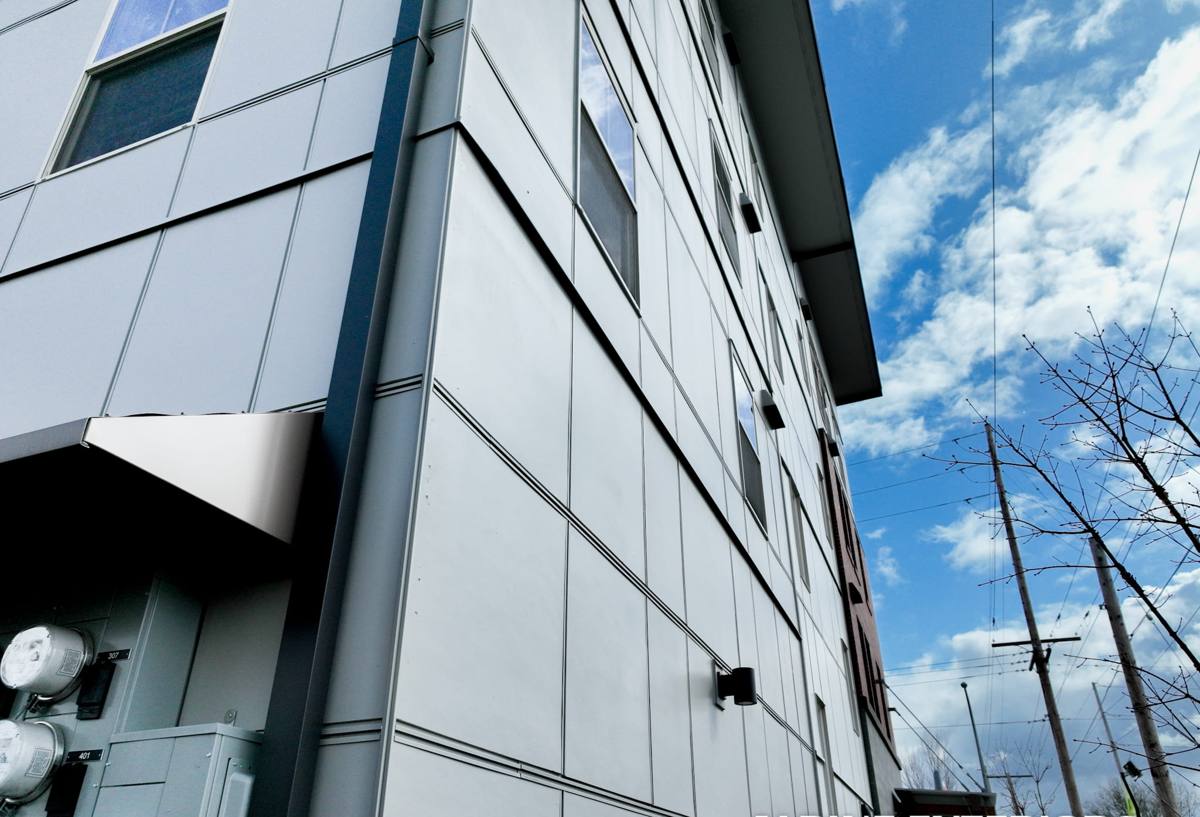
What Custer's Weather Does to a House
Salt Air Exposure
Even set back from Birch Bay itself, Custer homes pick up salt-bearing air moving inland off the Strait of Georgia and Semiahmoo Bay. Salt is corrosive to fasteners, trim hardware, and paint film. Over years, it accelerates the breakdown of coatings that aren't formulated to resist it, leading to chalking, fading, and eventually bare substrate exposed to moisture.
Driving Rain
Whatcom County storms rarely arrive straight down. Wind pushes rain sideways into wall assemblies, which means the water-resistive barrier, flashing, and siding laps behind the visible surface matter as much as the siding itself. A product or installation that only handles vertical rainfall well will leak here.
Moss Season
Long, wet, low-sun stretches from fall through spring create ideal moss and algae conditions, especially on shaded north and east walls and anywhere tree canopy blocks drying sun. Moss holds moisture against the siding surface far longer than open exposure would, and organic growth left unchecked works into seams and fastener heads over time.
Why This Rules Out Some Common Siding Choices
We get asked regularly why we don't install vinyl, LP SmartSide, Cemplank, Allura, or bare cedar and primed spruce. Our answer isn't that these products are worthless — it's that we've weighed their real-world trade-offs against Custer's specific climate and decided we won't put our name on the result.
- Vinyl expands and contracts with temperature swings and can warp or pull loose at fastener points under sustained wind-driven rain; seams are a weak point for water intrusion over time.
- Engineered wood products (like LP SmartSide) use wood strand substrates that are vulnerable if moisture gets past the coating at a cut edge, seam, or fastener — a real risk in a climate this wet, this often.
- Cedar and primed spruce are natural wood products that need ongoing refinishing to resist moisture and moss, and untreated cut edges are an entry point for rot in a damp coastal climate.
- Cement-board alternatives (Cemplank, Allura) are fiber cement chemically, but we've standardized on one manufacturer, one warranty structure, and one factory finish system rather than mixing suppliers.
Fiber cement itself is non-combustible, dimensionally stable, and doesn't rot the way wood-based products can. James Hardie is the version of that product we trust enough to install exclusively.
Why We Install Only James Hardie
James Hardie's HZ5 product line is engineered for climates like ours — freeze-thaw cycling, sustained moisture, and coastal air. The ColorPlus factory finish is baked on under controlled conditions rather than field-applied, which means better adhesion and fade resistance than a job-site paint job, and it comes with its own finish warranty backing it. The substrate itself doesn't feed moss the way wood fiber can, and it won't absorb water and swell at a cut edge the way engineered wood can.
None of that guarantees a good result on its own. Fiber cement is installation-sensitive — get the flashing, clearances, or fastening wrong and you can undermine a good product. That's the next piece.
What a Correct Installation Actually Involves
A lot of Hardie's real-world performance comes down to details that aren't visible once the job is finished:
- Proper clearance from grade, roofing, and decks so siding isn't sitting in standing water or splash-back — critical given how much rain Custer sees.
- Correct flashing and water-resistive barrier integration behind the siding, since wind-driven rain will find any gap in the drainage plane over time.
- Fastener placement and type matched to Hardie's specifications — over-driven or under-driven fasteners are a common failure point that shows up years later as cracking or loosening.
- Correct joint and seam treatment at butt joints and inside/outside corners, sealed and gapped per manufacturer spec rather than caulked tight, which can trap moisture.
- Painted or factory-finished cut edges so no raw fiber cement is left exposed to the weather.
Skipping any one of these doesn't usually cause an immediate problem — it shows up three, five, or ten years later as moisture damage, premature paint failure, or moss establishing itself at a seam. That's exactly the kind of failure that's expensive to trace and fix after the fact, and exactly why installation quality matters as much as product choice.
Our Process on a Custer Project
1. On-Site Assessment
We walk the property, note sun and shade exposure on each elevation, existing moss or moisture staining, current siding condition, and any trim, window, or roofline details that affect flashing and transitions.
2. Product and Line Selection
We help you choose the right Hardie profile (lap, shingle, panel) and HZ line for your exposure, along with a ColorPlus color that suits the home and holds up under coastal light.
3. Tear-Off and Substrate Check
Old siding comes off, and we inspect sheathing underneath for any moisture damage before it's covered back up — this is the point where hidden problems from a prior installation get caught, not after.
4. Water Management Installation
Water-resistive barrier, flashing at every penetration and transition, and correct clearances go in first. This is the layer that actually keeps water out over the life of the house.
5. Siding Installation to Spec
Hardie boards are installed per manufacturer fastening and clearance requirements, with cut edges sealed and joints treated correctly.
6. Final Walkthrough
We review the finished work with you, including a straightforward look at what upkeep (if any) the home will need going forward.
Comparing Siding Options for a Custer Home
| Factor | Vinyl | Engineered Wood (LP SmartSide) | Cedar / Primed Spruce | James Hardie Fiber Cement |
|---|---|---|---|---|
| Moisture tolerance | Moderate; seams can leak | Vulnerable if coating is breached | Requires ongoing sealing/refinishing | Strong; non-combustible substrate |
| Moss/algae resistance | Growth on surface in shaded areas | Growth risk plus substrate concern | High risk without regular maintenance | Factory finish resists growth better |
| Coastal/salt air durability | Can chalk and fade | Coating wears, exposes substrate | Needs frequent refinishing | Formulated for coastal exposure (HZ5) |
| Finish longevity | Factory color, can fade | Field or factory paint varies | Refinish every few years typically | ColorPlus factory finish, long warranty |
| Upfront cost | Lower | Moderate | Moderate to higher | Moderate to higher |
Upfront cost is only part of the picture. What matters more in a climate like Custer's is how the material behaves in year eight or year fifteen — after several moss seasons and years of salt-air exposure.
Reducing Moss and Moisture Problems After Installation
Even the right siding benefits from basic homeowner upkeep, especially in shaded parts of a Custer lot:
- Trim back tree branches and shrubs that keep a wall shaded and slow to dry after rain.
- Rinse siding annually, particularly north-facing and shaded walls, to clear early moss and organic buildup before it establishes.
- Keep gutters clear so overflow isn't running down the siding face during heavy rain events.
- Check caulking at trim and penetrations periodically — sealant is the one component that does wear over time, unlike the siding itself.
- Address any moss growth early rather than letting it spread into seams and fastener locations.
Why a Crew That Already Works in This Area Matters
Siding installation isn't one-size-fits-all across Whatcom County. A crew that regularly works Custer and the greater Birch Bay area already understands which elevations take the worst of the wind-driven rain, how much shade tree cover typically creates on these lots, and how much clearance and flashing detail this specific climate actually needs — not generic manufacturer minimums, but what holds up here. That local pattern recognition is difficult to replicate with a crew that's unfamiliar with the area, and it's the difference between a siding job that looks right on installation day and one that still performs correctly after its fifth Whatcom County winter.
If you're weighing a siding replacement or new construction project in Custer, we're happy to walk the property, talk through what your specific exposure and shade conditions call for, and give you a straightforward, no-pressure estimate using the form below.