 Birch Bay
 Siding Installation for Cherry Point Homes
Cherry Point sits on the shoreline north of Birch Bay in Whatcom County, and homes out here take on a version of the same marine climate that shapes exterior work all along this stretch of coast — salt-laden air off the water, driving rain that comes in sideways more often than straight down, and a moss season that can run for most of the year on shaded walls. Siding installation in a spot like this isn't quite the same job as siding installation twenty miles inland. The material has to handle more sustained moisture exposure, and the installation details — flashing, drainage, fastener choice — have to be built for that exposure from the first course to the last.
We install James Hardie fiber cement siding exclusively, and we've worked enough homes in and around Cherry Point and greater Birch Bay to know which details actually matter out here versus which ones are just standard practice everywhere else. This page walks through what the local climate does to siding, what a correct installation actually involves, and how our process works from the first visit to the final walkthrough.
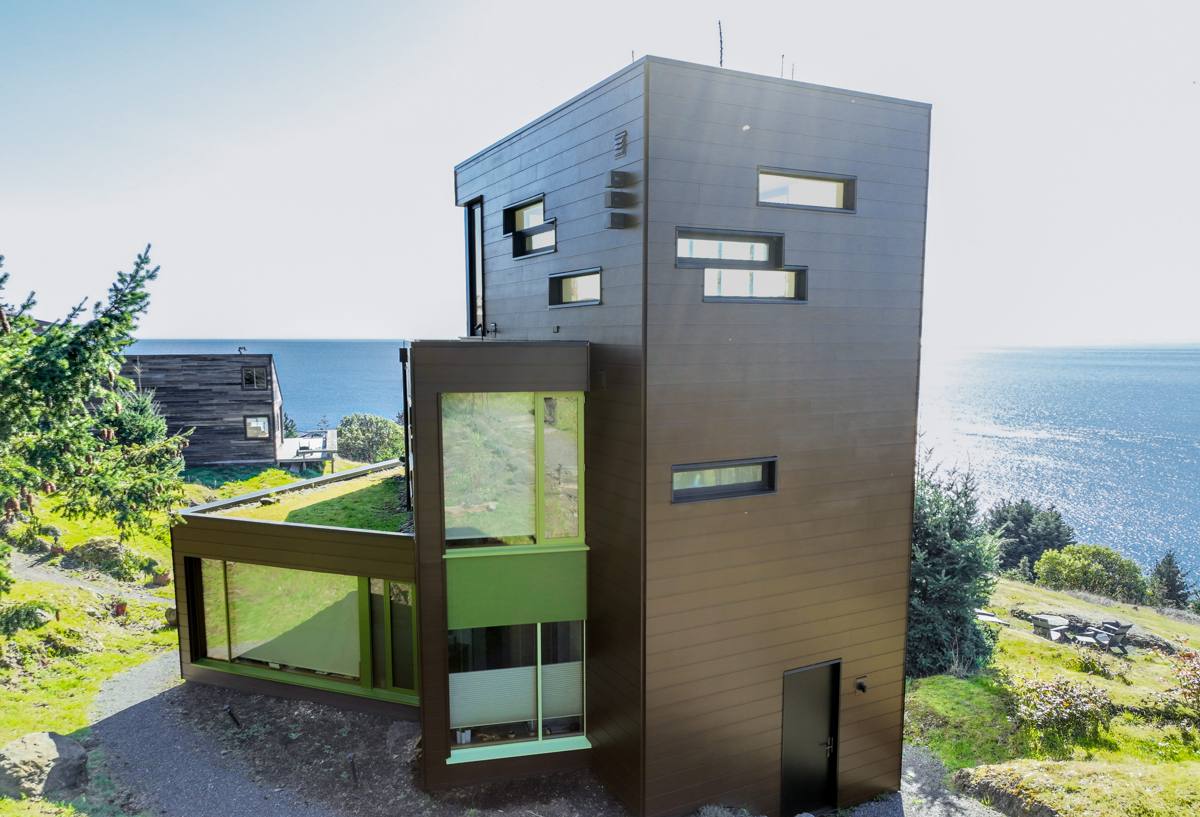
What Shoreline Exposure Does to Siding at Cherry Point
Salt Air and Corrosion
Being close to the water means Cherry Point homes deal with more airborne salt than properties set back further inland. Salt accelerates corrosion on fasteners, flashing, and any exposed metal trim, and it can wear down lower-grade finishes faster than a drier climate would. That's not a reason to avoid siding work here — it's a reason to be deliberate about which fasteners, flashing metals, and finish systems go on the wall in the first place.
Driving Rain and Wind-Driven Moisture
Shoreline exposure also means more wind, and wind-driven rain behaves differently than a straight-down downpour. It gets pushed sideways into laps, joints, and anywhere a wall assembly has a seam. A siding job that would hold up fine in a sheltered, inland yard can develop moisture problems here specifically because water is finding its way in from the side, not just from above. That changes how joints get treated and how much drainage space needs to be built into the wall assembly behind the siding.
A Long Moss and Mildew Season
Mild temperatures and near-constant moisture add up to a moss and mildew season that runs long on this part of the Whatcom County coast, especially on shaded or north-facing walls. Any siding material that's even slightly porous becomes a surface for growth to take hold over time. The finish and the base material both matter here — a factory-cured finish resists that growth differently, and for longer, than a field-applied paint job ever does.
What a Correct Siding Installation Involves
Good siding starts long before the first plank goes up. On a Cherry Point property, we treat the following as standard parts of the job, not optional upgrades:
- Weather-resistive barrier: A continuous, properly lapped house wrap or building paper behind the siding, with every penetration sealed before any cladding goes on.
- Drainage plane: A gap or rain-screen detail between the siding and the wall assembly so any moisture that does get past the surface can drain and dry instead of sitting against the sheathing.
- Flashing at every transition: Windows, doors, roof-to-wall intersections, and deck ledgers all need correctly lapped flashing, installed so water sheds outward at every layer rather than relying on caulk alone.
- Corrosion-resistant fasteners: In a shoreline location, fastener grade isn't a place to cut cost. We use fasteners rated for the corrosive exposure this stretch of coast sees.
- Correct clearances: Proper gap from grade, roofline, and horizontal surfaces like decks and patios, so the bottom edge of the siding isn't sitting in standing water or constant splash-back.
- Manufacturer-spec fastening pattern: Correct nail or screw type, spacing, and placement, per Hardie's published installation instructions, so the panels perform the way they're engineered to.
Skipping any one of these usually doesn't show up on day one. It shows up two or three wet seasons later, as bubbling paint, soft trim, or moisture trapped behind a wall that should have been draining the whole time.
Why James Hardie Is the Only Siding We Install
We install James Hardie fiber cement exclusively — not LP SmartSide, not vinyl, not Cemplank, not Allura, not primed spruce or cedar. That's a professional standard, built from what we've seen holding up, and what hasn't, in this kind of marine climate over time.
| What Matters Here | Why It Matters at Cherry Point |
|---|---|
| Non-combustible core | Fiber cement doesn't feed a fire the way wood-based siding products can |
| Factory-applied ColorPlus finish | Cured under controlled conditions, holds color longer against salt air and UV than field-applied paint |
| HZ5 climate-engineered formulation | Built for regions with sustained moisture exposure and freeze-thaw cycling, which fits this stretch of coast |
| Dimensional stability | Doesn't swell, cup, or warp the way engineered wood or wood-based products can under repeated wetting |
| Transferable warranty | Backed by one of the stronger warranty structures in the industry when installed to spec |
Every product we don't install has a legitimate place in the market, and plenty of homeowners are satisfied with them elsewhere. But on a shoreline exposure like Cherry Point, we'd rather stand fully behind one system we know performs than offer a cheaper option that quietly shifts long-term maintenance risk back onto the homeowner.
Our Installation Process
- On-site assessment: We walk the exterior, check the condition of the existing siding and sheathing, and look specifically for how moisture and salt exposure have affected the wall assembly so far.
- Written scope and material plan: Before anything is torn off, we put together a clear scope — profile, color, trim details, and a realistic timeline — so there are no surprises mid-project.
- Removal and sheathing check: Old siding comes off and the sheathing underneath gets inspected. Any rot or moisture damage gets addressed before new siding goes up, not covered over.
- Weather barrier and drainage detailing: House wrap, flashing, and drainage gap installation happen before a single piece of Hardie touches the wall.
- Siding installation to spec: Panels or lap siding go up following Hardie's published fastening and clearance requirements, with joints and penetrations sealed correctly.
- Final walkthrough: We go over the finished work together, check trim and caulk lines, and confirm everything meets the scope agreed on at the start.
Cost Factors for Siding Installation at Cherry Point
Every home is different, so we don't quote pricing sight unseen, but a few factors consistently move the cost and timeline on jobs in this area:
| Factor | Why It Affects Cost or Timeline |
|---|---|
| Existing siding removal | Tear-off and disposal of old material adds labor before new siding can start |
| Sheathing condition | Rot or moisture damage found underneath has to be repaired before new siding goes on |
| Home size and story count | More wall area and taller elevations mean more material, more staging, and more time |
| Trim and window count | Every window, door, and trim detail is a place that needs custom flashing and fitting |
| Shoreline exposure prep | Homes closer to the water may need extra drainage detailing and corrosion-resistant hardware |
Signs a Cherry Point Home May Need New Siding
- Visible cracking, buckling, or warping in the siding panels
- Soft spots when the siding is pressed, which can indicate moisture behind the surface
- Persistent moss or mildew staining that returns quickly after cleaning
- Paint that's peeling, bubbling, or chalking well ahead of schedule
- Rising energy bills that suggest the wall assembly isn't sealing the way it should
- Visible gaps at trim, corners, or window transitions where flashing may have failed
Why a Crew That Already Works Cherry Point Matters
A contractor who's worked this stretch of coastline before already knows how salt air, wind exposure, and prolonged dampness behave differently here than they do a few miles inland. That shows up in small decisions — how much drainage gap to build in, which fastener grade to use, where to add extra flashing attention — and those small decisions are what determine whether a siding job holds up for one wet season or several decades. Familiarity with Cherry Point and greater Birch Bay isn't a marketing point; it's the difference between a crew guessing at what this climate needs and a crew that's already seen what it does to exterior work that wasn't built for it.
Before You Hire, Ask These
- What siding material do you install, and why did you choose it over the alternatives?
- Do you carry current Washington contractor licensing and active liability insurance?
- How do you detail flashing and drainage for wind-driven rain specifically?
- What fastener grade do you use, and is it rated for coastal or marine exposure?
- Can I get a clear, written scope of work before signing anything?
If you're considering new siding for a home in Cherry Point or elsewhere around Birch Bay, we're glad to walk the exterior with you and give an honest read on what it needs. Reach out below for a free, no-pressure estimate.