 Birch Bay
 Building a Deck That Actually Holds Up Near Cherry Point
Cherry Point sits right up against the Strait of Georgia, and that proximity to open water shapes everything about how a deck should be built here. Salt-laden air moves inland on a regular basis, driving rain comes in sideways more often than most homeowners expect, and the shaded, damp stretches of the year give moss and algae months to take hold on any horizontal surface. A deck built to a generic spec sheet — the kind that works fine in a dry inland climate — tends to show its age fast out here: rusted fasteners, cupped boards, slick green film underfoot, and railing posts that loosen years before they should.
A deck built correctly for this specific stretch of Whatcom County looks almost the same on day one. The difference shows up five, ten, and twenty years down the road, in the hardware that hasn't bled rust streaks into the decking, the ledger board that hasn't rotted behind the siding, and the surface that still has grip on a wet January morning.
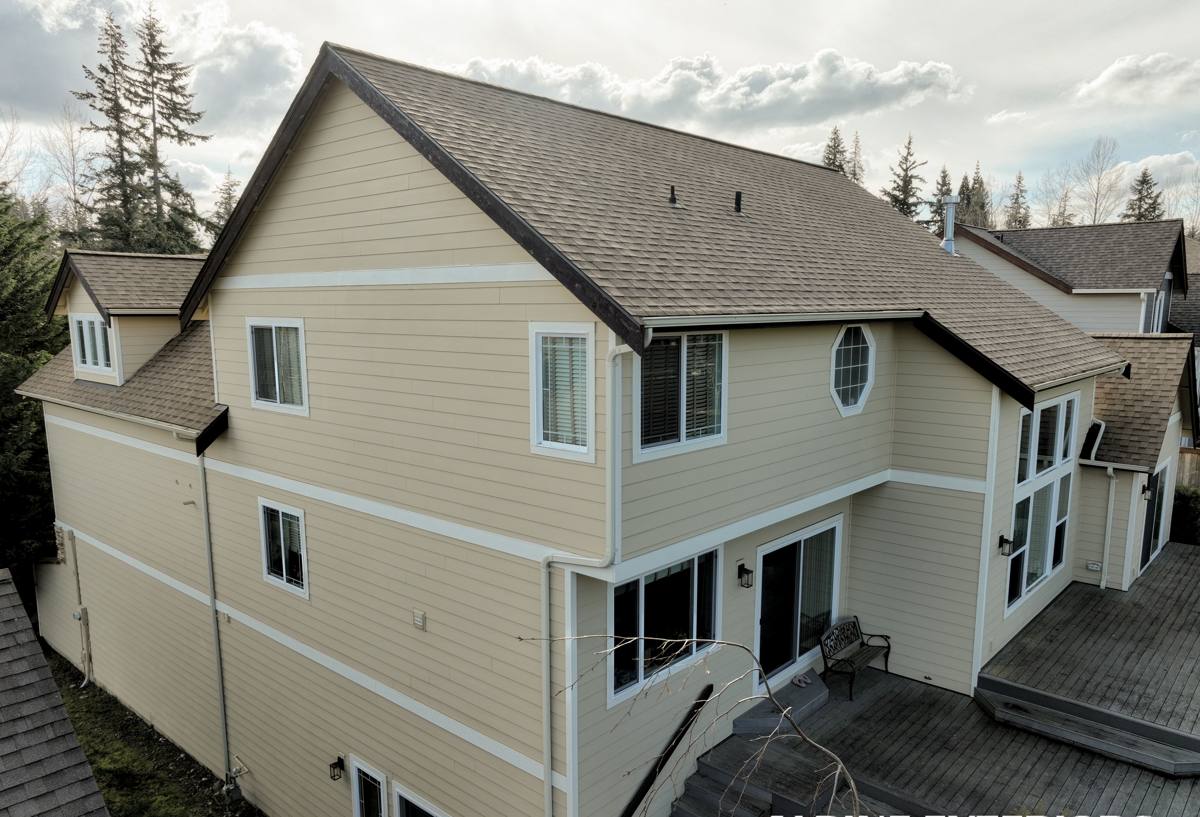
What Cherry Point Properties Demand From a Deck
Every deck we build gets evaluated against the site it's going on, not just a standard plan. A few conditions come up again and again in this area:
Salt Air and Corrosion
Airborne salt accelerates corrosion on anything metal — fasteners, joist hangers, post bases, and railing hardware. Standard hot-dip galvanized fasteners can start showing surface rust within a few seasons this close to the water. We build in corrosion-resistant hardware rated for coastal exposure as a baseline, not an upgrade.
Wind-Driven Rain
Storms coming off the water don't just fall straight down — they push rain sideways into ledger connections, under railing base plates, and into any gap where end grain is exposed. Flashing details and water-shedding sequencing matter more here than in a sheltered inland yard.
Shade, Moisture, and Moss
Mature trees and marine cloud cover keep many Cherry Point lots damp and shaded for long stretches of the year. That's exactly the environment moss, algae, and mildew need. Decking material, board spacing, and airflow underneath the structure all affect how fast growth returns after cleaning.
Ground and Drainage Conditions
Low-lying or poorly drained yards near the shoreline can hold moisture around footings longer than well-drained inland soil. Footing depth and drainage prep need to account for that, not just meet the bare minimum.
Choosing the Right Decking Material for This Climate
There's no single "best" decking material — there's the right material for how you'll use the deck, your maintenance appetite, and your budget. Here's how the common options actually compare in a marine climate like this one.
| Material | Moisture & Moss Behavior | Maintenance | Typical Lifespan |
|---|---|---|---|
| Pressure-treated wood | Absorbs moisture; needs sealing to resist cupping and moss growth | Annual cleaning, re-staining/sealing every 2-3 years | 15-20 years with upkeep |
| Cedar | Naturally rot-resistant but still absorbs moisture without finish | Regular sealing/staining, moss removal in shaded spots | 15-25 years with upkeep |
| Capped composite | Won't rot or absorb water; surface moss wipes off easier than wood | Periodic washing; no staining or sealing | 25-30+ years |
| Uncapped composite | More moisture-resistant than wood but can still stain and grow mildew over time | Regular cleaning to prevent staining | 20-25 years |
In our experience, capped composite tends to be the lowest-maintenance choice for shaded, moisture-heavy Cherry Point lots, since it doesn't need refinishing and sheds surface growth more easily during cleaning. Wood is still a legitimate choice for homeowners who want a natural look and are willing to keep up with sealing on a schedule — it's a maintenance commitment, not a flaw, and we're upfront about that trade-off either way.
The Structural Details Most Decks Get Wrong
The parts of a deck nobody sees are the parts that determine whether it lasts. A few areas we treat as non-negotiable:
Ledger Board Flashing
Where the deck attaches to the house is the single most common failure point on decks in wet climates. Proper flashing — installed in the correct sequence with the house's water-resistive barrier — keeps water from tracking behind the siding and rotting the rim joist. We don't shortcut this step, even though it's invisible once the deck is finished.
Footings and Post Bases
Footings need to reach frost depth and bear on solid, well-drained soil. Post bases should hold the post above the decking surface, not buried in standing water or wet mulch, to prevent slow wicking and rot at the base.
Joist Protection
Untreated cut ends and joist tops left exposed are where rot typically starts, even on pressure-treated lumber. Joist tape or a comparable moisture barrier on top of the joists, plus sealant on cut ends, adds real years to the structure underneath the decking.
Fastener Selection
We match fastener type to decking material and to the coastal environment — stainless or coated fasteners rated for corrosive exposure, sized and spaced to the manufacturer's specifications rather than "close enough."
Our Custom Deck Process
Every deck we build in the Cherry Point area follows the same sequence, whether it's a modest ground-level platform or an elevated deck built for a water view.
- On-site assessment: We look at grade, drainage, sun/shade exposure, existing structure (if replacing a deck), and how the space will actually be used.
- Design and material selection: We walk through decking, railing, and layout options with honest trade-offs — not just the highest-margin upsell.
- Permitting: We handle the permit application through Whatcom County (or the relevant local jurisdiction) where required, including any setback or height review.
- Site prep and footings: Layout, excavation, and footing placement built to code depth for this area's frost and soil conditions.
- Framing with protective detailing: Ledger flashing, joist protection, and corrosion-resistant hardware installed as standard practice, not an add-on.
- Decking and railing installation: Fastened and spaced per manufacturer spec, with attention to airflow underneath for moisture and moss control.
- Final walkthrough: We go over care and maintenance specific to the material you chose, so there are no surprises in year two.
Railing and Hardware Choices That Matter Here
Railings take a lot of direct weather exposure and a lot of hand contact, which makes hardware choice especially important this close to the water. Aluminum and vinyl railing systems tend to resist salt corrosion better than uncoated steel. Where wood or composite railing is used, we pay close attention to post connection hardware and cap flashing, since horizontal rain gets driven into these joints during storms off the water. Glass and cable railing systems, popular for view lots, need corrosion-rated hardware specifically — the fittings are more exposed and harder to service after the fact than a standard baluster railing.
Keeping a Deck Ahead of Moss and Moisture
No decking material is entirely maintenance-free in a climate this damp — the goal is minimizing the work, not eliminating it. A simple seasonal routine keeps most decks in this area performing well for decades:
- Sweep debris off the deck surface regularly, especially in fall when leaves and needles trap moisture against the boards
- Rinse or wash the surface at least once or twice a year to remove early moss and algae growth before it takes hold
- Check and clear gaps between boards so water and debris can drain instead of pooling
- Inspect railing posts and stair connections annually for movement or loosening hardware
- Re-seal or re-stain wood decking on the schedule the product calls for — don't wait for visible graying
- Look underneath the deck once a year for standing water, blocked drainage, or signs of rot at the ledger
Permits and Local Considerations
Deck projects in unincorporated Whatcom County, including the Cherry Point and Birch Bay area, generally require a building permit once the structure exceeds a certain size or height above grade — the specific thresholds and any shoreline or setback review depend on your parcel and its proximity to the water. We handle the permit process as part of the build rather than leaving homeowners to sort it out, and we flag early if a property's location might trigger additional review.
Why Hire a Crew That Already Works This Area
A contractor who's built decks elsewhere in Whatcom County but hasn't worked the specific conditions along Cherry Point and the Birch Bay shoreline can still do competent work — but they're learning the local weather behavior on your project instead of applying what they already know. We've built and repaired decks in this exact environment enough to know which corners get hit hardest by wind-driven rain, which yards hold moisture longest, and which hardware choices actually hold up rather than just meeting the minimum code requirement. That local pattern recognition is what separates a deck that looks good at handoff from one that still looks good a decade later.
If you're planning a new deck or replacing one that's showing its age, we're happy to take a look and talk through honest options for your property — no pressure, no obligation. Fill out the form below to schedule a free estimate.