 Birch Bay
 Board & Batten Siding in Terrell Creek: What the Style Needs to Do Here
Board and batten is one of the most requested looks in Terrell Creek and the surrounding Birch Bay area — vertical panels with raised battens covering the seams, giving a home a clean, distinct profile that reads differently than standard lap siding. It works on farmhouse-style homes, modern builds, and as an accent on gables, dormers, and entry walls paired with horizontal siding elsewhere on the same house.
But board and batten is also one of the more failure-prone siding styles when it's installed with the wrong product or the wrong technique, because every vertical seam and every batten strip is a potential water path. On a Whatcom County shoreline property, that's not a small detail. A board and batten job in Terrell Creek has to be built to shed water down, not let it sit in a seam, and it has to hold up to salt-laden air that will find every gap in a coating system over time. This page covers what that actually requires, and what our crew does differently working in this specific pocket of Birch Bay.
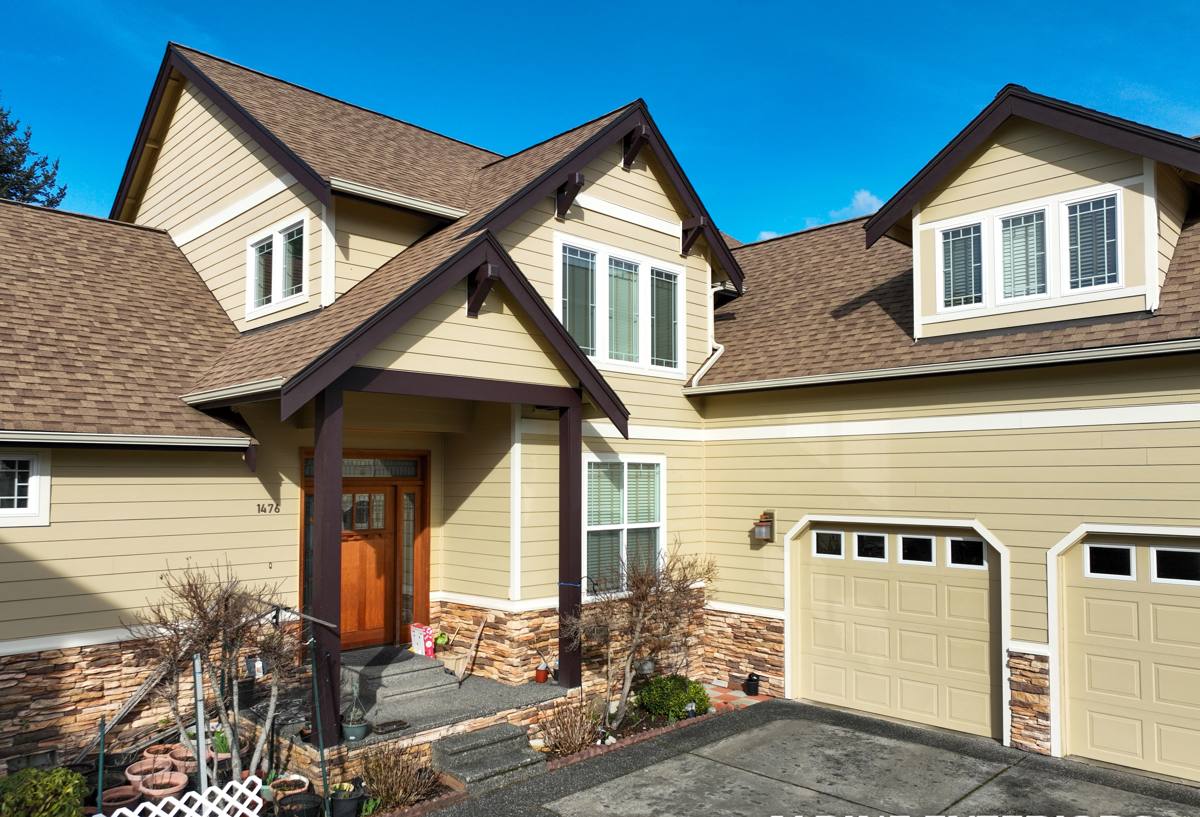
Terrell Creek's Climate Reality
Terrell Creek sits close enough to Birch Bay and the Strait of Georgia that homes here deal with a specific combination of stressors most inland Whatcom County properties don't face to the same degree:
- Salt air: Airborne salt from the bay accelerates corrosion on fasteners, flashing, and any metal trim components, and it degrades cheaper paint and coating systems faster than inland exposure.
- Driving rain: Wind off the water pushes rain sideways into wall assemblies, not just straight down. Vertical siding styles like board and batten are more exposed to this than lap siding because the battens create horizontal ledges where wind-driven water can be forced upward and behind the board.
- A long moss and algae season: The Pacific Northwest's wet, mild winters and shaded, tree-lined lots common around Terrell Creek keep siding surfaces damp for extended stretches, which is exactly what moss, algae, and mildew need to take hold — especially on north-facing walls and anything close to overhanging trees.
- Freeze-thaw cycling in the shoulder seasons: Not extreme by mountain standards, but real. Trapped moisture that freezes and thaws repeatedly in a seam or behind a batten will work a failure point wider every year.
None of these factors are unique to Terrell Creek alone, but they stack here in a way that makes material choice and installation detail matter more than they would on a typical inland lot.
What Correct Board & Batten Installation Actually Involves
Substrate and Weather-Resistive Barrier
Board and batten siding is only as good as what's behind it. A correctly built wall has a continuous weather-resistive barrier (WRB) with all seams lapped and taped, and any penetrations — hose bibs, vents, light fixtures — properly flashed before the first board goes up. On a home exposed to driving rain the way Terrell Creek properties can be, skipping or shortcutting this layer is the single most common cause of hidden rot behind board and batten siding, because by the time it shows on the surface, the sheathing underneath is often already compromised.
Batten Spacing and Fastening
Battens need consistent spacing for the reveal to look intentional, but more importantly they need to be fastened into framing or solid backing — not just into the board beneath them — and fastener placement has to account for the panel's ability to expand and contract with temperature and moisture changes. Fiber cement moves differently than wood or vinyl, and fastening it like either of those materials is a common mistake that leads to cracking or fastener pop-through over time.
Flashing and Trim Details
Every horizontal transition — window heads, water tables, the base of the wall — needs flashing that directs water out and away from the substrate, not down behind it. On vertical siding styles, the top and bottom terminations of each board matter as much as the field installation, because that's where wind-driven rain concentrates.
Fastener and Hardware Selection
In a salt-air environment, fastener corrosion resistance isn't optional. Hot-dip galvanized or stainless fasteners, and corrosion-resistant flashing and trim hardware, cost more up front but are the difference between a wall system that lasts and one that develops rust streaks and loosening fasteners within a few years near the water.
Why We Install James Hardie Board & Batten and Nothing Else
We install James Hardie fiber cement exclusively — we don't offer LP SmartSide, vinyl, Cemplank, Allura, primed spruce, or cedar board and batten, and that's a deliberate standard, not a limitation of what we know how to work with. Board and batten in particular is a style where the material choice matters more than usual, because the vertical seams and batten strips are constant moisture exposure points.
| Material | Behavior in Salt Air / Driving Rain | Long-Term Maintenance |
|---|---|---|
| James Hardie fiber cement | Non-combustible, dimensionally stable, factory-baked ColorPlus finish resists fading and doesn't rely on field-applied paint for its primary protection | Occasional wash-down; recaulking at trim joints on the normal schedule |
| Wood (cedar, primed spruce) | Absorbs moisture at end grain and seams, more prone to swelling and warping under repeated wet-dry cycling | Regular repainting/restaining, ongoing caulk and rot inspection |
| Vinyl | Can warp or become brittle with temperature swings; seams are a visual and functional weak point on vertical profiles | Low upkeep but limited repairability and shorter realistic lifespan |
| LP SmartSide (engineered wood) | Treated to resist moisture but still wood-based; edge and cut-end sealing is critical and easy to shortcut in the field | Coating maintenance and diligent caulk inspection at every seam |
This isn't a claim that the other products can't be installed well — it's that fiber cement gives us a material that doesn't depend on a perfect paint film or perfect edge-sealing to resist the moisture load a Terrell Creek wall sees. James Hardie's HZ5 product line is engineered specifically for Pacific Northwest-style climate exposure, and the ColorPlus factory finish carries its own warranty separate from the substrate — something none of the alternatives above match with the same combination of coverage.
Our Process for a Terrell Creek Board & Batten Project
- On-site assessment: We walk the home, check current siding and sheathing condition, and identify wind and rain exposure on each elevation — the ocean-facing and prevailing-wind walls in Terrell Creek usually need closer attention than the sheltered sides.
- WRB and substrate plan: If the existing sheathing shows moisture damage, we address it before anything goes back on the wall. Covering a compromised substrate with new siding just hides the problem.
- Material and reveal selection: We work out batten spacing and panel layout with you up front, including how board and batten will transition to any adjacent siding style or trim on the home.
- Installation to manufacturer spec: Fastener type, spacing, flashing sequence, and gaps are all installed to James Hardie's published requirements — not shortcuts based on habit.
- Final inspection and walkthrough: We check every seam, transition, and penetration before calling the job done, and walk the finished siding with you.
Cost Factors for a Terrell Creek Board & Batten Job
| Factor | Why It Moves the Price |
|---|---|
| Substrate condition | Rot or moisture damage found behind old siding adds repair scope before new siding can go up |
| Wall height and access | Two-story gables and steep-site homes near the water take longer and need more scaffolding or lift access |
| Amount of trim and transition detail | Board and batten used as an accent alongside lap siding means more cutting, more transitions, and more flashing work than a full-wall application |
| Existing siding removal | Tear-off and disposal of old cedar, vinyl, or engineered wood siding adds labor separate from the new install |
| Color and finish selection | Factory ColorPlus finishes vs. field-painted primed panels affect both material cost and how the wall will hold up over time |
We give a real number after seeing the specific walls, not a blanket square-footage rate — a shaded, moss-prone north wall and a full-sun south wall on the same house can have different prep needs.
Maintenance a Terrell Creek Homeowner Should Actually Plan For
- Rinse siding annually, and more often on shaded or tree-adjacent walls where moss and algae growth is faster
- Keep gutters and downspouts clear so roof runoff isn't dumping extra water down the wall at concentrated points
- Trim back vegetation and tree limbs that keep a wall section shaded and damp longer than the rest of the house
- Inspect caulking at trim joints, window flashing, and the base of the wall once a year and recaulk as needed — caulk is a maintenance item on every siding material, including Hardie
- Watch fastener heads and metal trim for early rust streaking, which shows up faster in salt air and is worth addressing before it spreads
Why a Crew That Already Works Terrell Creek Matters
Board and batten installed to a general national spec and board and batten installed for a specific wind and moisture exposure on a specific street in Terrell Creek are not the same job, even though they look identical from the curb. A crew that's already worked this neighborhood has a feel for which elevations take the worst of the weather off the water, where moss tends to establish first, and how the local building department expects flashing and moisture barriers documented. That local pattern recognition is what keeps a board and batten wall performing ten and twenty years out, not just looking good on install day.
We're a Birch Bay-based crew, and Whatcom County's coastal exposure — Terrell Creek included — is the environment we build for every day, not an occasional job outside our normal territory.
Getting Started
If you're weighing board and batten for a Terrell Creek home, we're glad to walk the property, look at your current siding and substrate condition, and give you a straightforward, no-pressure estimate using the form below.