 Birch Bay
 Why Terrell Creek Decks Wear Out Faster Than You'd Expect
If you own a home near Terrell Creek, you already know the deck out back doesn't age like a deck in a drier inland town. Whatcom County's marine climate keeps everything damp for long stretches of the year, and the proximity to Birch Bay and the Strait means salt-laden air is a constant companion, even a few blocks off the water. Add in the region's long moss season, where shaded, north-facing, or tree-covered decks stay wet and green from fall through spring, and you have a combination that quietly breaks down fasteners, ledger boards, and decking material years before a homeowner expects to replace them.
Most deck failures we see in this area aren't dramatic. They're slow: a soft spot near the stairs, boards that cup and crown, rust streaks bleeding from screw heads, or a railing post that's gone spongy at the base. By the time it's visibly a problem, the damage underneath is usually further along than the surface suggests. That's the nature of moisture damage in a coastal, mossy climate — it works from the inside out.
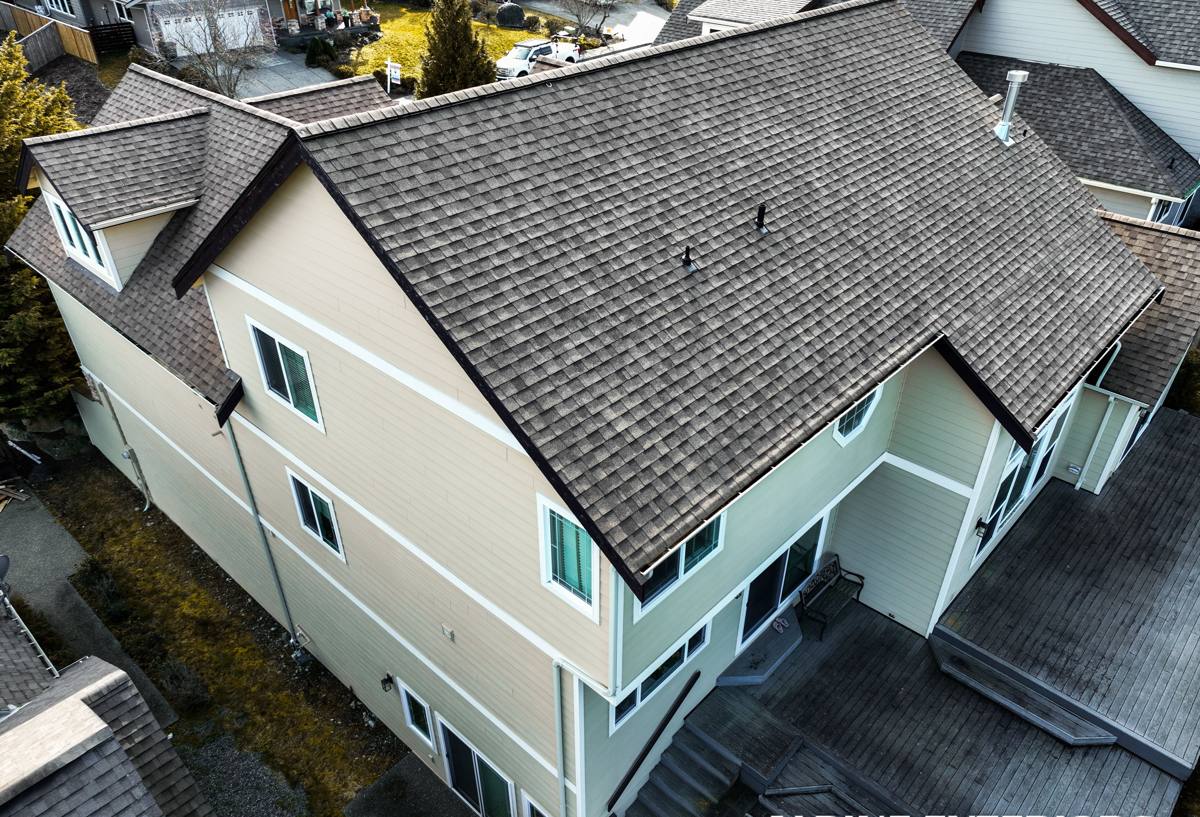
What "Deck Replacement" Actually Means Here
We use the term "replacement" deliberately, not "resurfacing" or "repair." A lot of deck problems in Terrell Creek homes start below the decking boards — in the joists, the ledger board attachment to the house, the posts, and the footings. Simply screwing down new boards over a structure that's already compromised is a short-term fix that hides a long-term problem. A proper replacement means:
- Full removal of old decking, railings, and any deteriorated framing members
- Inspection of joists, beams, posts, and footings for rot, rust, or undersized/outdated framing
- Correcting the ledger board flashing and attachment — a common failure point in wet climates
- Rebuilding structure to current code, including proper joist spacing and hardware
- Installing new decking and railing material suited to the site's sun, shade, and moisture exposure
- Grading and drainage checks underneath the deck so water has somewhere to go
Skipping the structural review is the single most common shortcut in this trade, and it's the reason some "new" decks still have problems within a few years. We don't quote a replacement without looking at what's underneath first.
Signs a Terrell Creek Deck Needs Replacing, Not Patching
Not every deck needs a full teardown. But in our experience with homes in this area, certain signs almost always point to replacement rather than repair:
- Soft or spongy decking in more than one or two isolated spots
- Rust staining around multiple fastener heads, especially on older screws or nails
- Visible gap, movement, or rust at the ledger board where the deck meets the house
- Persistent moss or algae growth that returns within weeks of cleaning
- Posts that show rot or insect damage at or near ground contact
- A deck original to the home that's 15-25+ years old and has never had structural work done
Building for This Specific Climate
A deck built the same way here as it would be in a dry climate is a deck that will need attention again sooner than it should. The details that matter most for homes around Terrell Creek and the rest of Birch Bay:
Fastener and Hardware Choice
Salt air accelerates corrosion on standard fasteners and connectors. We use fasteners and structural hardware rated for coastal or high-corrosion exposure rather than standard interior-grade hardware. It costs more up front and saves the deck from the rust-streak, loosening-screw problem that shows up on lower-grade builds within a handful of years.
Ledger Flashing and Water Management
The ledger board — where the deck attaches to the house — is the single most common source of hidden rot in this climate. Proper flashing detail here isn't optional; it's the difference between a deck that stays sound and one that rots from the house outward. We treat this connection as critical, not routine.
Airflow and Moss Management
Shaded and tree-covered lots are common near Terrell Creek, and shade plus moisture is exactly what moss and algae need. Framing that allows airflow underneath the deck, decking material with lower moisture retention, and spacing that lets boards dry between rain events all reduce how fast moss re-establishes.
Footings and Ground Contact
Saturated ground for much of the year means footings need to be set correctly and posts need proper standoff from soil and moisture. Undersized or shallow footings are a common shortcut on older decks in this area, and they show up as movement or settling over time.
Decking Material Options: An Honest Comparison
There's no single "best" decking material for every home — it depends on budget, maintenance appetite, and how much sun or shade the deck gets. Here's how the common options actually compare for a climate like this one:
| Material | Moisture Performance | Maintenance | Typical Lifespan Here |
|---|---|---|---|
| Pressure-treated wood | Good if sealed regularly; prone to moss/mildew if neglected | Needs re-sealing every 1-2 years | 10-15 years with upkeep |
| Cedar | Naturally rot-resistant but softer, absorbs moisture over time | Regular sealing/staining recommended | 15-20 years with upkeep |
| Composite decking | Excellent — doesn't absorb water or rot | Periodic cleaning, no sealing/staining | 25-30+ years |
| PVC/capped polymer | Excellent — fully sealed surface, very low absorption | Minimal — occasional washing | 25-30+ years |
For a moss-prone, salt-air lot near Terrell Creek, composite and capped polymer boards tend to make the most sense long-term because they don't feed algae growth the way untreated or under-maintained wood does. That said, plenty of homeowners prefer the look and lower upfront cost of wood and are happy to keep up with sealing — it's a legitimate choice as long as the maintenance commitment is realistic. We'll walk through the trade-offs honestly rather than push one product line.
Our Process for a Terrell Creek Deck Replacement
1. On-Site Assessment
We walk the existing deck, check the ledger connection, probe framing and posts for soft spots, and look at drainage and sun/shade exposure on the specific lot. This tells us whether we're dealing with a straightforward rebuild or additional structural correction.
2. Straightforward Scope and Pricing
We explain what we found, what needs to happen structurally, and what material options fit the budget and the site conditions. No pressure to upgrade beyond what the project actually needs.
3. Removal and Structural Rebuild
Old decking, railing, and any compromised framing come out. Framing, ledger flashing, posts, and footings are corrected or rebuilt to current code before any new decking goes down.
4. Decking, Railing, and Finish Work
New decking and railing are installed per the chosen material's manufacturer specs, with attention to fastener spacing, drainage gaps, and clean edge and stair details.
5. Final Walkthrough
We walk the finished deck with the homeowner, check railings and stairs for solid, code-compliant construction, and answer any maintenance questions specific to the material chosen.
What This Costs, in Broad Terms
Every deck is different, but a few factors consistently drive cost on replacement projects in this area:
- Size and footprint — larger decks and multi-level designs cost more in material and labor
- Structural condition — how much of the framing, ledger, and footings need correction versus straightforward reuse
- Material choice — pressure-treated wood is the lowest upfront cost, composite and PVC cost more up front but less over time
- Railing style and stairs — custom railing, glass panels, or multiple stair sections add labor
- Site access — decks with difficult equipment or material access can add cost
Rather than quoting a number that doesn't reflect your specific deck, we prefer to walk the site and give a real estimate based on what's actually there.
Why a Crew That Already Works Terrell Creek Matters
Deck construction isn't identical everywhere. A crew that regularly works in Birch Bay and around Terrell Creek already understands which lots hold moisture longest, which fastener and flashing details actually hold up against salt air, and which decking products perform well versus which ones look good on a showroom sample but struggle once they're exposed to a real Whatcom County winter. That local pattern recognition is hard to replicate for a crew that's never built here before — and it's the difference between a deck that needs attention again in five years and one that doesn't.
Ready for a Straightforward Estimate?
If your deck is showing soft spots, persistent moss, rust at the fasteners, or is simply original to a home that's been standing for well over a decade, it's worth having it looked at before those problems get further along. Reach out for a free, no-pressure estimate — we'll walk the deck, tell you honestly what it needs, and give you real options and pricing using the form below.