 Birch Bay
 Roof Repair Built for Custer's Climate, Not a Generic Fix
Most roof repair calls in Custer aren't dramatic. Nobody's ceiling is caving in. It's a stain that showed up after the last storm, a shingle corner curling up along the south slope, or a neighbor mentioning that your roof is looking mossy from the street. Small signs, but they're worth taking seriously here, because Custer sits in a part of Whatcom County where salt-tinged marine air, wind-driven rain, and a moss season that runs most of the year all work on a roof at the same time. A repair that would hold up fine in a drier, inland market doesn't always hold up here, and that gap is usually what brings a homeowner back to us a second time after a repair from someone else didn't last.
This page is specifically about repair — patching, flashing fixes, leak diagnosis, and targeted section replacement — not a full tear-off and re-roof. If your roof needs a repair, our first job is figuring out honestly whether a repair is actually the right call or whether you're better served putting that money toward a replacement instead. We'll walk through both further down.
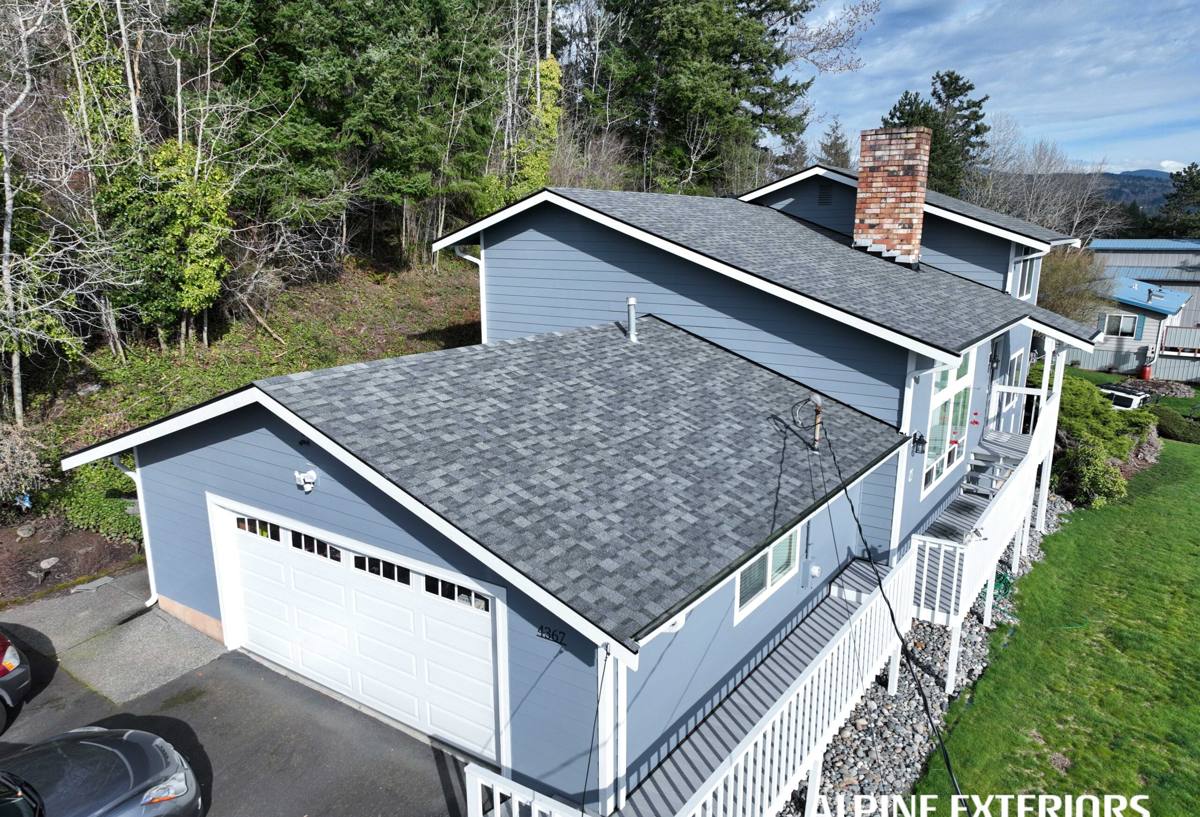
What Custer's Weather Actually Does to a Roof Over Time
None of the three conditions below is unusual on its own. What makes Custer roofs age the way they do is that all three are present, most of the year, on the same roof.
Salt Air Off the Water
Custer's proximity to the coast means salt-laden air reaches most properties in town, not just the ones with a water view. Salt exposure speeds up corrosion on exposed metal — flashing, drip edge, fasteners — and corroded metal is one of the most common places we find an active leak starting from underneath, well before the shingles above it look obviously damaged.
Wind-Driven Rain
Rain here doesn't reliably fall straight down. Wind pushes it sideways and up under shingle tabs, into valleys, and against flashing that was only ever sealed to handle water running downhill. A roof that's watertight in a light, straight rain can still leak in a wind-driven storm if the underlayment, laps, and flashing weren't detailed with that specific stress in mind.
A Long Moss Season
Mild, damp conditions keep moss and algae actively growing across most of the calendar year on shaded and north-facing roof planes, which describes a lot of lots around Custer with mature tree cover. Moss isn't just cosmetic. It holds moisture against the shingle surface, lifts shingle edges as it grows, and works its way under tabs over time — turning a cosmetic problem into a leak point if it's left alone.
The Repairs We Actually See Most in Custer
Repair calls here tend to cluster around a handful of recurring issues rather than being random. Recognizing the pattern helps us diagnose faster and helps you understand what you're likely dealing with.
- Flashing failures at valleys, chimneys, and wall intersections — the single most common source of an active leak, usually from corrosion, poor original sealing, or flashing that was never properly integrated with the underlayment.
- Wind-lifted or missing shingles — most common on exposed slopes and roof edges that catch more direct wind, often after a specific storm event.
- Moss-related shingle damage — lifted tabs and granule loss on shaded, north-facing planes where moss has been established for a season or more.
- Nail pops and cracked shingles — often a sign of a rushed original install, showing up as small, isolated leaks that are easy to miss until they've been dripping into the attic for a while.
- Deteriorated pipe boots and vent seals — rubber and plastic components around roof penetrations that break down with UV and weather exposure faster than the shingles around them.
Repair or Replace? How We Actually Make That Call
We don't default to recommending a full replacement just because it's a bigger job. A well-targeted repair on an otherwise sound roof is often the right answer, and we'll tell you that plainly. But there are situations where repair is a short-term patch that ends up costing more over a few years than doing the replacement once. Here's roughly how we think through it.
| Factor | Leans Toward Repair | Leans Toward Replacement |
|---|---|---|
| Roof age | Under roughly 12-15 years, especially architectural shingles | Approaching or past its expected lifespan |
| Extent of damage | Isolated to one section, valley, or penetration | Spread across multiple slopes or the whole roof |
| Underlying deck condition | Deck is dry and solid where damage occurred | Soft, rotted, or repeatedly wet decking found underneath |
| Shingle matching | Matching shingles are still reasonably available | Discontinued product makes patch repairs visually mismatched |
| Repair history | First or second repair on this roof | Third or later repair, or recurring leaks in different spots |
We'll give you our honest read during the inspection, including telling you when a repair genuinely won't hold and a replacement is the more responsible spend. That conversation costs you nothing, and it's the same conversation whether the answer benefits us or not.
What a Correct Roof Repair Actually Involves
A repair that lasts starts with an accurate diagnosis, not a guess based on where the ceiling stain happens to be — water travels along the deck and rafters before it shows up inside, so the visible stain and the actual leak point are often several feet apart.
Finding the Actual Source
We trace the leak from the interior evidence back to its source on the roof, checking flashing, valleys, penetrations, and shingle condition along the way rather than assuming the nearest visible damage is the cause. Patching the wrong spot means the leak comes back, sometimes in a different-looking place, and the homeowner reasonably assumes the repair failed when really the wrong area was ever addressed.
Matching Materials and Method
Repairs get tied into the existing roofing system correctly — proper shingle weaving and fastening patterns, underlayment integration at the repair edges, and flashing that's re-integrated with the water-shedding path rather than just caulked over the top. Caulk and sealant have their place, but as a stand-alone patch over a structural flashing problem, they're a short-term measure at best, and in this climate's wind-driven rain, often a very short one.
Addressing Moss and Ventilation Where Relevant
If moss contributed to the damage, we deal with the moss itself, not just the shingle it damaged — otherwise the same section is likely to fail again on the same timeline. We'll also flag it if poor attic ventilation is compounding moisture problems from underneath, since that's a separate issue a shingle-level repair won't fix on its own.
How Our Repair Process Works
- In-person inspection: We get on the roof and, where relevant, into the attic to trace the actual source of the problem — not a drive-by estimate from the street.
- Honest repair-or-replace assessment: You get a straight answer about whether a repair will actually hold given the roof's age and condition, or whether it's a better use of your money to replace the section or the roof.
- Written scope and estimate: A clear description of what's being repaired and how, not a vague line item, so you know exactly what you're paying for.
- The repair itself: Correct tie-in with the existing roofing system, matched materials where available, and flashing work done to shed water the way it was originally designed to.
- Walkthrough: We show you what we found and what we did before calling the job finished.
Why Hiring a Crew That Already Works in Custer Matters
A crew that regularly repairs roofs around Custer has already seen which flashing details fail first in this specific combination of salt air and wind-driven rain, and which roof orientations hold moss long enough to cause real damage rather than just looking bad. That's the kind of knowledge that shows up in small decisions during a repair — which a crew unfamiliar with this particular stretch of Whatcom County might not think to make at all.
It also matters afterward. A repair warranty only means something if the company behind it is still reachable a year or two later, and a contractor with an ongoing, established presence in the area is one you can actually call back if a question comes up.
Signs Your Custer Roof May Need a Repair Now
- Water staining on interior ceilings, especially after a wind-driven rain event
- Visible moss buildup or dark streaking on shaded, north-facing roof planes
- Curling, cracked, or missing shingles, particularly on exposed or elevated slopes
- Granules collecting in gutters or at downspout outlets
- Daylight visible through the roof deck from inside the attic
- Soft or spongy spots when walking the roof, which can indicate deck-level moisture damage
If you're seeing any of these, it's worth having the roof looked at before the next stretch of wet weather rather than waiting for a small leak to become a bigger repair.
Repair Cost Factors Worth Understanding
| Factor | What It Affects |
|---|---|
| Size and location of the damaged area | Labor time and how much of the roofing system needs to be opened up |
| Roof pitch and access | Staging, safety equipment, and time on the roof |
| Deck condition underneath the damage | Whether the repair is shingles-and-flashing only or includes deck replacement |
| Shingle availability and matching | Whether a close match is achievable or a more visible patch is unavoidable |
| Flashing scope | Whether the fix is a spot repair or a more complete re-flash of a valley or wall intersection |
A written estimate that itemizes what's actually being repaired tells you far more than a single number, and it's worth asking any contractor to walk through the scope before you compare bids.
If you're dealing with a leak, missing shingles, or a mossy patch that's been bothering you, we're glad to come take an honest look and give you a straight answer — repair or replace — along with a written estimate. Use the form below to request a free, no-pressure estimate.