 Birch Bay
 Siding Repair Built Around Lynden's Climate, Not a Generic Checklist
Homes near Lynden and Birch Bay take a different kind of beating than siding fifty miles inland. You're close enough to Birch Bay and the Strait of Georgia to get salt-laden air pushed in on prevailing winds, far enough into Whatcom County's agricultural lowlands to see long stretches of still, damp air that never quite dries out, and squarely inside a Pacific Northwest weather pattern that delivers driving, wind-blown rain for months at a time. Add a moss season that can run from fall through spring, and you have a set of conditions that will find every weak point in a home's exterior — a hairline caulk crack, an unsealed cut edge, a butt joint that was never flashed correctly.
A siding repair in this area isn't just about making a damaged section look better. It's about understanding why that section failed in the first place, so the repair doesn't just delay the same problem by a season or two. That's the approach we bring to every Lynden repair call.
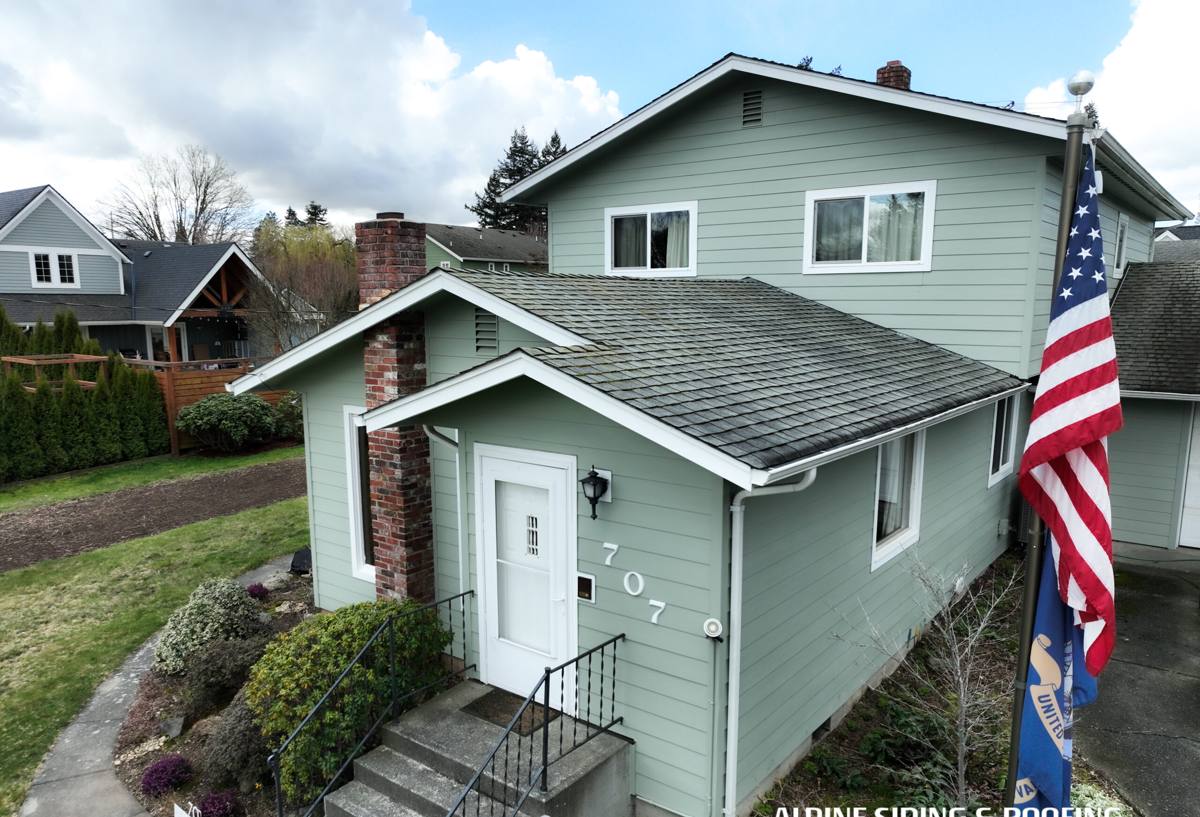
What Whatcom County's Climate Actually Does to Siding
Salt Air and Coastal Exposure
Even a few miles inland from Birch Bay's shoreline, homes pick up airborne salt on windy days. Salt doesn't just sit on the surface — it accelerates corrosion on fasteners, hinges, and any exposed metal trim, and it can degrade lower-quality paint and coatings faster than inland exposure would. Siding that isn't factory-finished to handle this exposure tends to chalk, fade, or lose adhesion at the surface first.
Moss and Prolonged Moisture
Whatcom County's moss season is long because the conditions that grow moss — shade, moisture, and mild temperatures — persist for much of the year. Moss on a roof or siding isn't just cosmetic. It holds moisture directly against the siding surface far longer than open air would, which is exactly the kind of sustained dampness that causes swelling, delamination, or rot in siding that isn't engineered to shed water quickly.
Wind-Driven Rain
Rain that falls straight down is far less damaging than rain pushed sideways by wind. Driving rain gets forced into gaps that would never see water in calmer conditions — behind trim, into unsealed joints, up under J-channel. Over years, that repeated intrusion is what turns a small installation gap into a rot problem.
Signs a Lynden Home Needs Siding Repair
Most siding problems give warning signs well before they become structural. Homeowners in this area should watch for:
- Soft, spongy, or visibly swollen spots when you press on the siding
- Persistent moss or dark streaking in the same spots season after season
- Paint or finish that's bubbling, peeling, or chalking unevenly across the wall
- Visible gaps at butt joints, corners, or around window and door trim
- Cracked or missing caulk at seams that used to be sealed
- Rust staining below nail heads or metal fasteners
- Warping or buckling panels, especially near ground level or under downspouts
- A musty smell or interior wall staining on the corresponding indoor wall
None of these mean the whole house needs new siding. But they do mean the affected area needs a real look before another wet season passes.
Common Repair Scenarios We See Around Lynden and Birch Bay
Moisture Damage at Trim and Butt Joints
The most frequent call we get in this area isn't storm damage — it's slow moisture intrusion at joints and trim that were never properly sealed or flashed during the original installation. By the time it's visible from outside, there's often already some damage to the substrate behind it.
Impact and Wind Damage
Winter windstorms in this part of Whatcom County can crack panels, tear loose poorly fastened sections, or drive debris into siding. These repairs are usually more straightforward once the damaged pieces are identified and matched.
Failed Caulk and Sealant Joints
Caulk has a service life, and in a climate with this much rain and temperature swing, it doesn't last as long as homeowners expect. Failed sealant at joints, corners, and penetrations is an easy fix on its own — but if it's been failed for a while, it's worth checking what's happened behind it first.
What a Correct Siding Repair Actually Involves
Diagnosing the Cause, Not Just the Symptom
Cutting out a damaged panel and screwing in a new one is the easy part. The part that actually prevents a repeat call is figuring out why that section failed — a missing flashing detail, a gap that lets wind-driven rain behind the wall, or a joint that was never sealed. We open the area up enough to see the substrate and any framing behind it before deciding on the fix.
Matching Material and Finish
A patch that doesn't match color, texture, or profile stands out for the life of the house. We work with pre-finished materials specifically so that repairs blend into the existing wall rather than becoming a visible scar.
Sealing and Flashing Detail
Most repair failures trace back to a detail, not the material itself — a joint that wasn't caulked, a piece of flashing that was skipped, a fastener that wasn't set correctly. We treat these details as the actual repair, not an afterthought to it.
Repair or Replace? How We Make the Call
Not every damaged section needs a full re-side, and not every repair is worth doing if the underlying siding is near the end of its service life. Here's the general framework we use when assessing a Lynden-area home:
| Factor | Favors Repair | Favors Replacement |
|---|---|---|
| Extent of damage | Isolated to one or two sections | Recurring across multiple walls |
| Cause | One-time impact or failed sealant | Systemic moisture intrusion or original installation errors |
| Age of existing siding | Newer, still within its expected service life | Already near or past its expected lifespan |
| Substrate condition | Sheathing and framing intact | Rot or damage found behind the siding |
| Material match | Matching product still available | Discontinued profile or color, patch would be visible |
We'll always tell you honestly which side of that table your home falls on — including when a repair is the right call and a full replacement isn't necessary yet.
Why We Repair With James Hardie Fiber Cement
We install and repair exclusively with James Hardie fiber cement siding. We don't install vinyl, LP SmartSide, or other fiber cement brands, and that standard applies to repair work too. Fiber cement is non-combustible, holds its factory-applied ColorPlus finish far longer than field-painted materials, and — critically for this climate — doesn't absorb and swell with moisture the way wood-based or lower-grade products can. When we patch a section of Hardie siding, we're matching into a product built for the exact conditions Birch Bay and Lynden deal with: sustained moisture, salt exposure, and temperature swings. That consistency matters more here than in a milder climate, because a mismatched patch material will fail on a different timeline than the wall around it.
Our Repair Process for Lynden Homes
- On-site assessment — we inspect the damaged area and open it up enough to check the substrate behind it, not just the visible surface.
- Honest diagnosis — we explain what caused the failure and whether it's isolated or a sign of a broader issue.
- Material matching — we source matching profile, texture, and ColorPlus finish wherever possible so the repair blends in.
- Correct detailing — proper flashing, fastening, and sealing at every joint, so the fix addresses the actual failure point.
- Clean handoff — a final walk-through so you know exactly what was done and what to watch for going forward.
Why a Crew That Already Works in Lynden Matters
Siding repair done by someone unfamiliar with this specific stretch of Whatcom County often misses the climate context that actually matters — how much moss buildup is normal here, how far salt exposure reaches inland from Birch Bay, or how aggressively wind-driven rain hits certain wall orientations during the wet season. A crew that already works in this area has seen the same failure patterns on other homes nearby and knows what to check for before it becomes a bigger problem. That local pattern-recognition is often the difference between a repair that lasts and one that's back on the schedule next winter.
If you've noticed damage, soft spots, or recurring moss on your siding, we'll take a look and give you a straightforward, no-pressure assessment of what it actually needs. Use the form below to request a free estimate for your Lynden or Birch Bay home.