 Birch Bay
 Roofing in a Salt-Air, High-Moss Climate
Semiahmoo sits close enough to the water that the weather behaves differently here than it does even a few miles inland. Homes near Birch Bay and along the Semiahmoo shoreline take on salt-laden air, wind-driven rain, and a moss season that can run most of the year in Whatcom County's mild, damp climate. A roof built or repaired without that in mind tends to fail faster than the shingle manufacturer's rated lifespan would suggest. This page covers roof repair specifically for the Semiahmoo area — what the local climate does to a roof, what a correct repair actually involves, and how we approach these calls as a crew that already works this stretch of coastline.
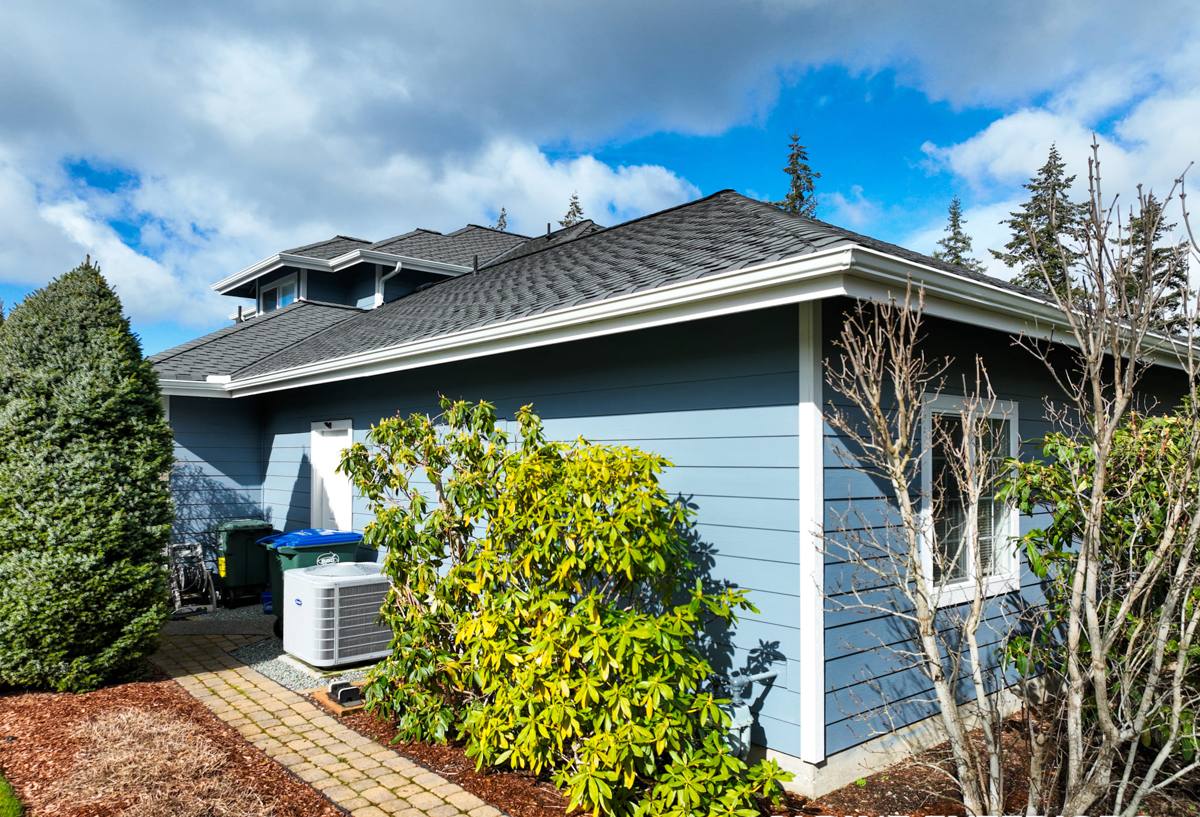
What This Climate Does to a Roof Over Time
Every roofing material is rated for a certain lifespan under average conditions. Semiahmoo isn't average. The combination of salt air, near-constant humidity, and heavy moss growth accelerates wear in ways that show up as isolated repair needs long before a roof reaches the end of its full service life.
Salt Air and Metal Components
Flashing, fasteners, gutters, and any exposed metal on a roof are usually the first things to show salt exposure. Standard galvanized nails and lower-grade flashing can corrode faster this close to the water than the same materials would a few miles inland, and once a fastener starts to go, the shingle or panel it's holding down loses its grip. That's one reason we pay close attention to metal quality and fastener choice on every Semiahmoo repair rather than defaulting to whatever's cheapest.
Moss, Moisture, and Slow Decay
Whatcom County's mild, wet climate keeps moss and algae growing on shaded and north-facing roof sections for much of the year. Moss doesn't just look bad — it holds moisture directly against the roofing material, works its way under shingle edges, and lifts them just enough for water to get underneath. By the time moss is visible from the ground, it has usually been working on the roof deck underneath it for a while already.
Wind-Driven Rain and Flashing Failures
Storms coming off the water don't always fall straight down. Rain pushed sideways by wind finds its way under shingle edges, around chimneys, and through flashing seams that would hold up fine in a calmer climate. Most of the "mystery leaks" we get called out for in this area trace back to flashing — around vents, skylights, chimneys, and roof-to-wall transitions — rather than damage in the open field of the roof itself.
Signs a Semiahmoo Roof Needs Repair, Not Just Cleaning
Homeowners often assume a mossy or stained roof just needs a wash. Sometimes that's true. Other times, what looks like a cosmetic problem is already a repair issue underneath. Watch for:
- Shingles that are cupped, curled, or visibly lifted at the edges
- Dark streaking or algae staining that keeps returning soon after cleaning
- Moss growing in thick mats rather than a thin surface layer
- Granules collecting in gutters or piling up at downspout outlets
- Soft or spongy spots when the roof is walked on, a sign of deck damage underneath
- Daylight visible through the roof deck from inside the attic
- Water stains on interior ceilings, especially right after a windy storm
- Rusted, lifted, or missing flashing around chimneys, vents, and skylights
Any one of these on its own might be a minor fix. Several of them together usually mean it's time for an actual inspection rather than another round of surface cleaning.
What a Proper Roof Repair Actually Involves
Inspection Before Anything Else
We don't quote a repair from the ground or from a photo. A correct repair starts with getting on the roof, checking the deck for soft spots, and tracing leaks back to their actual source — which is often several feet away from where the stain shows up inside the house. Water travels along rafters and sheathing before it drips through a ceiling, so the visible damage and the real entry point are rarely in the same spot.
Matching Materials and Roof Age
A repair should use materials compatible with what's already on the roof — matching shingle profile and, where possible, color, plus flashing and underlayment suited to the roof's existing age and condition. On a roof nearing the end of its useful life, we'll say so plainly rather than sink materials and labor into a section that's going to need full replacement soon anyway.
Flashing, Underlayment, and the Details Everyone Skips
Most roof failures in this climate happen at transitions, not in the open field of the roof: chimney bases, skylight curbs, valleys, and roof-to-wall junctions. A repair that only swaps out surface shingles without addressing the flashing and underlayment underneath is a temporary fix at best. We treat those details as the actual point of the repair, not an afterthought tacked on at the end.
Checking Attic Ventilation While We're Up There
A repair is also a good time to check whether the attic is venting properly. In a damp coastal climate, poor ventilation traps moisture against the underside of the roof deck, which encourages rot and mold from the inside even when the shingles above look fine. We'll flag ventilation issues if we see them, since fixing a leak without addressing trapped moisture underneath just delays the next problem.
Materials That Hold Up Better in This Climate
Algae- and Moss-Resistant Shingles
Many current shingle lines include copper or zinc granules designed to slow algae and moss growth. They don't stop moss entirely, especially on shaded, north-facing slopes that stay damp longest, but they buy time between cleanings and hold up better than standard shingles in a climate like this one. On repairs, we'll match to what's already installed, but on larger sections we'll talk through whether upgrading to an algae-resistant product makes sense.
Flashing Metal Choices
Not all flashing metal ages the same way this close to saltwater. Standard galvanized steel is common and inexpensive, but it corrodes faster here than aluminum or coated steel products built for coastal exposure. On repair work, we choose flashing material based on where it sits on the roof and how much salt exposure that section actually gets, not just on habit.
Underlayment
Older roofs in this area often have traditional felt underlayment, which absorbs moisture and breaks down faster in a wet climate. Synthetic underlayment sheds water better and holds up longer under the kind of prolonged dampness Semiahmoo sees for much of the year. When we open up a section for repair, we'll typically upgrade the underlayment in that area even if the rest of the roof still has felt.
Repair or Replace? How We Help You Decide
Not every roof problem in Semiahmoo calls for a full replacement, and not every leak can be permanently solved with a patch. The right call depends on the roof's age, how widespread the damage is, and what's actually going on underneath the surface layer.
| Factor | Favors Repair | Favors Replacement |
|---|---|---|
| Roof age | Under 12–15 years, or an older roof that's been well maintained | At or past the manufacturer's rated lifespan |
| Extent of damage | Isolated to one section, a flashing detail, or a handful of shingles | Spread across multiple roof planes |
| Deck condition | Solid, no soft spots or rot found on inspection | Soft decking or rot found in more than one area |
| Moss/algae history | First significant growth, caught early | Repeated heavy moss buildup over multiple seasons |
| Leak pattern | Single, traceable source | Multiple, unrelated leak points |
We'll walk you through where your roof falls on that spectrum and give you a straight answer, not an automatic push toward the bigger job.
Our Process for Semiahmoo Repair Calls
- Phone or on-site conversation — you describe what you're seeing (a stain, a leak, missing shingles, visible moss), and we ask enough questions to know roughly what to expect before we arrive.
- On-roof inspection — we get up on the roof, check the deck, trace the leak path, and document what we find so you can see it too, not just take our word for it.
- Written scope and estimate — a clear explanation of what needs repair, what materials we'll use, and why, before any work or deposit is discussed.
- The repair itself — removal of damaged material, deck repair where needed, correct flashing and underlayment work, and shingle or panel replacement matched to the existing roof.
- Cleanup and walkthrough — debris and old materials hauled off, and a final check with you before we consider the job done.
What Affects the Cost of a Roof Repair
Every repair is different, but the same handful of factors drive most of the cost variation we see on homes in this area.
| Cost Factor | Why It Matters |
|---|---|
| Roof pitch and access | Steeper roofs and limited ground access take longer and require more safety setup |
| Extent of deck damage | Rotted or soft decking has to be cut out and replaced before new roofing goes down |
| Number of penetrations | Chimneys, skylights, and vents each need their own flashing detail worked correctly |
| Material match | Discontinued shingle lines or colors can be harder and slower to source than current ones |
| Moss removal scope | Heavy, long-established moss takes more care and time to remove without damaging shingles |
We give a written estimate after an actual inspection, not a phone-quote guess, because most of these factors simply aren't visible from the ground or from a photo.
Why a Crew That Already Works Semiahmoo Matters
A roof repair crew that regularly works this area already knows roughly what to expect before they climb the ladder: how moss builds up on shaded, north-facing exposures near the water, which flashing details tend to fail first under wind-driven rain, and how quickly salt air ages exposed metal compared to more inland parts of Whatcom County. That familiarity shortens the inspection, sharpens the diagnosis, and means fewer surprises once the repair is underway. It also means scheduling isn't a guessing game — we're already working this part of the coastline, so getting a repair done before an incoming storm, rather than after the damage spreads, is usually realistic.
Keeping a Repaired Roof Healthy Year-Round
A good repair buys you time, but the same conditions that caused the original problem are still at work every day after we leave. A short annual routine helps a repaired roof actually last as long as it should:
- Clear gutters and downspouts before the fall rains arrive in earnest
- Remove moss and debris from valleys and north-facing slopes before it mats down
- Check flashing around chimneys and vents for lifting after any major windstorm
- Trim back overhanging branches that keep sections of the roof shaded and damp longer than necessary
- Have the roof looked at after any storm severe enough to cause visible damage elsewhere on the property
If you're seeing moss buildup, a stain on a ceiling, or lifted shingles on a Semiahmoo home, we're glad to take a look. Fill out the form below for a free, no-pressure estimate — we'll tell you honestly what we find and what it would actually take to fix it.