 Birch Bay
 Custer's Climate Is Harder on Siding Than Most Homeowners Realize
Custer sits close enough to Birch Bay and the Strait of Georgia that homes here deal with a combination most siding products were never designed for: salt-laden air blowing off the water, long stretches of driving rain pushed sideways by wind, and a wet season that can stretch from fall through spring. Add in the shade from mature evergreens common on rural Whatcom County lots, and you get the ingredients for a moss and algae season that can last most of the year on north-facing walls.
None of that is unusual for this part of Washington. But it does mean siding installed here needs to do more work than siding on a house fifty miles inland. Salt air accelerates corrosion on fasteners and trim. Wind-driven rain finds gaps that would never be a problem in a calmer climate. And moss doesn't just look bad — it holds moisture against the wall long after the rain has stopped, which is exactly the condition that rots wood-based siding and traps water behind poorly flashed seams.
Siding installation in Custer isn't just a cosmetic upgrade. It's the first line of defense between a house and a climate that stays damp for months at a time.
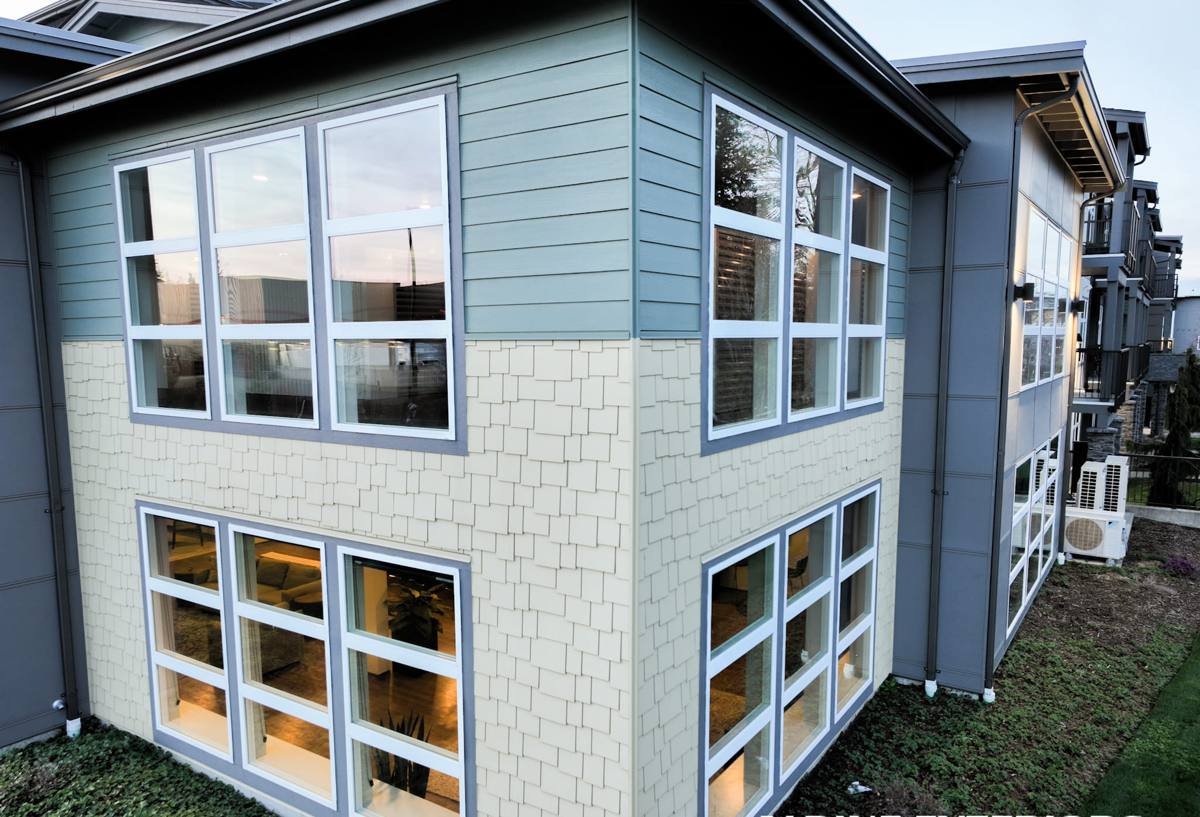
What a Correct Installation Actually Involves Here
Drainage Plane and Water Management
The siding itself is only part of the system. Behind it needs to be a proper drainage plane — a weather-resistant barrier with a rain screen gap that lets any water that gets past the siding drain out and lets the wall assembly dry. In a climate with as much sustained moisture as Custer sees, skipping or shortcutting this step is one of the most common reasons siding fails early, regardless of what material is on the outside.
Flashing at Every Penetration
Windows, doors, hose bibs, vents, and deck ledgers are all places where water tries to get behind the siding. Correct flashing at every one of these penetrations, installed in the right sequence with the drainage plane, matters more in a wind-driven-rain climate than almost anywhere else. This is also the step that's invisible once the job is done — which is exactly why it's worth asking a contractor to explain their approach before they start.
Fastening for Coastal Air
Salt air corrodes standard fasteners faster than people expect. Using corrosion-resistant fasteners rated for the material and the exposure, and fastening to the manufacturer's specification (not just "close enough"), is a small detail that determines whether trim and boards stay tight for decades or start working loose within a few years.
Clearance and Ventilation
Proper ground clearance, gaps at grade, and clearance from decks and walkways keep splashback and standing moisture away from the bottom courses of siding — one of the first places moss and rot show up on homes in shaded, damp lots.
Why We Install Only James Hardie Fiber Cement
We made a deliberate decision to install James Hardie fiber cement siding exclusively, and not vinyl, LP SmartSide, or other fiber cement brands. Fiber cement is non-combustible and dimensionally stable, so it doesn't expand, contract, warp, or cup the way wood-based products can when they cycle through wet Whatcom County winters and drier summers. Hardie's ColorPlus factory finish is baked on and warranted against fading and peeling, which matters in a marine climate where UV and salt exposure both work against paint over time.
Hardie also engineers specific product lines for different climate zones — their HZ5 line is built for the kind of freeze-thaw and moisture exposure the Pacific Northwest sees. That's a meaningful difference from a one-size-fits-all product, and it's a big part of why we standardized on this system rather than offering several competing materials.
We're not going to tell you every other siding product is junk — plenty of them perform fine in the right conditions. But after years of installing and repairing siding in this exact climate, fiber cement from a manufacturer that engineers for coastal exposure is what we're willing to put our name behind.
Our Installation Process
- On-site assessment — we look at your home's exposure (wind direction, shade, proximity to the bay), current siding condition, and any moisture damage already present.
- Tear-off and sheathing check — old siding comes off and we inspect the sheathing underneath for rot or soft spots before anything new goes up. This is where hidden moisture damage from a previous installation often shows up.
- Drainage plane and flashing — weather-resistant barrier, rain screen furring where called for, and flashing at every window, door, and penetration, installed in the correct water-shedding sequence.
- Hardie siding installation — installed to manufacturer specification for fastener type, spacing, and clearance, using the HZ5 product line suited to this climate.
- Trim, caulking, and touch-up — factory-finished trim and touch-up paint matched to the ColorPlus finish, so seams and cut edges are protected against moisture intrusion.
- Final walkthrough — we go over the finished job with you, including basic care and what to expect from the finish over time.
Comparing Siding Options for Custer's Climate
| Factor | James Hardie Fiber Cement | Vinyl | Wood-Based (LP/Cedar) |
|---|---|---|---|
| Salt air / corrosion resistance | Strong — non-combustible, stable material | Can become brittle over time in UV and salt exposure | Vulnerable without diligent maintenance |
| Moisture and moss resistance | Does not absorb water or rot | Doesn't rot, but seams and moisture behind panels can trap water | Absorbs moisture; prone to rot if moss/algae holds water against it |
| Finish durability | Factory-baked ColorPlus finish, long fade warranty | Color molded through, but can fade and chalk | Requires repainting/resealing on a recurring cycle |
| Fire resistance | Non-combustible | Can melt or deform under heat | Combustible |
| Typical maintenance | Occasional wash, repaint decades out | Low, but repairs can be visible | Regular repainting/staining and moisture monitoring |
Signs Your Current Siding Is Losing the Battle
- Persistent moss or algae streaking on north- or shade-facing walls that comes back soon after cleaning
- Soft, spongy, or discolored spots, especially near the bottom courses or below windows
- Paint that's peeling, bubbling, or chalking faster than it should
- Visible gaps, warping, or boards pulling away from the wall
- Rust streaks around fasteners or trim, a common sign of corrosion in coastal air
- Rising energy bills that may point to a compromised weather barrier behind the siding
Any one of these on its own might just need a repair. Several at once, especially on an older home, usually means the underlying wall assembly is due for a proper look.
What to Ask Before You Hire Anyone for Siding Work in Custer
- Will you show me the drainage plane and flashing details before the siding goes on, or just the finished product?
- What fasteners are you using, and are they rated for coastal/salt-air exposure?
- Are you installing to the manufacturer's written specification, and can I see it?
- How do you handle sheathing repair if you find rot during tear-off?
- What does the warranty actually cover — material, labor, or both — and for how long?
A contractor who can answer these clearly, without hedging, is telling you something important about how they actually build the wall — not just how the finished siding looks from the street.
Why Local Experience in This Area Matters
Whatcom County's coastline creates a lot of small variation from lot to lot — a home a few hundred feet from the water can have noticeably different wind and moisture exposure than one set back among trees. A crew that already works in and around Birch Bay and Custer has a working sense of which walls take the worst weather, where moss builds up fastest, and how local moisture patterns tend to expose weak spots in a wall assembly. That's the kind of judgment that doesn't come from a spec sheet — it comes from doing the work here, repeatedly, and seeing how different installations hold up over the following winters.
It also means we're not guessing at how James Hardie's HZ5 line performs in this specific climate — we've installed it here and seen the results.
Get a Straight Answer About Your Siding
If your Custer home's siding is showing its age, or you're planning ahead of a repaint or repair, we're happy to take a look and give you an honest read on what it needs — no pressure, no upsell. Request a free estimate below and we'll walk the exterior with you and talk through what correct siding installation looks like for your specific home and site.