 Birch Bay
 Marietta's Roofs Work Harder Than Most
If you own a home in the Marietta area, you already know your roof isn't dealing with the same conditions as a house forty miles inland. Being this close to the water in Whatcom County means salt-laden air moving through year-round, long stretches of driving rain off the water, and a moss season that can run eight or nine months out of the year in shaded, north-facing sections. None of that is dramatic on its own, but stacked together over years, it's exactly the combination that shortens the life of a roof that was installed without those specifics in mind.
We work on roofs in this stretch of Birch Bay and the surrounding Marietta neighborhoods regularly, which means we're not guessing at what's causing a leak or a soft spot — we've usually seen the same failure pattern on a house a few streets over.
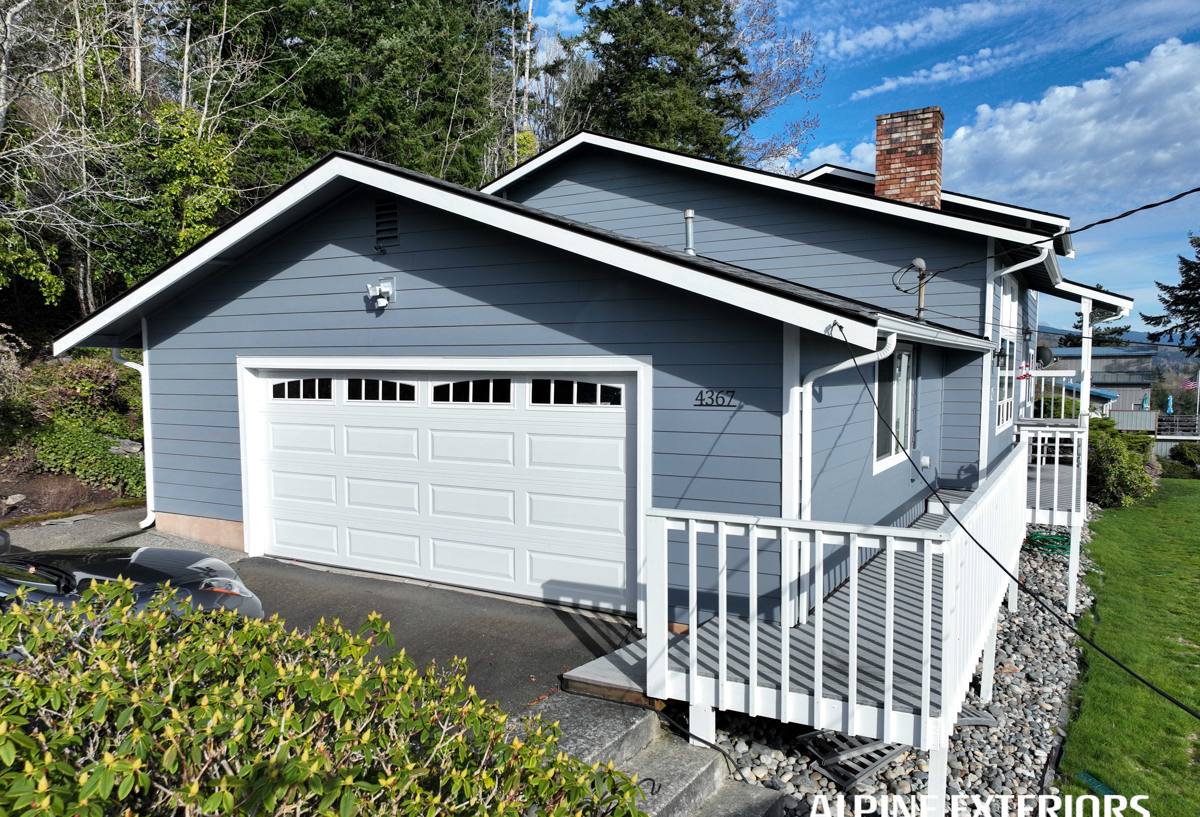
What the Local Climate Actually Does to a Roof
Salt Air and Metal Fatigue
Salt in the air accelerates corrosion on anything metal on your roof — flashing, fasteners, vent caps, gutter hardware. It's slow and easy to miss until a fastener head crumbles or a flashing seam that used to be watertight starts wicking moisture underneath the shingles.
Driving Rain and Wind-Driven Water
Rain that comes in at an angle behaves differently than straight-down rain. It gets pushed up under shingle laps, into valleys, and around anything that penetrates the roof deck — vent pipes, chimneys, skylights. A roof that's fine in a light, vertical rain can still leak in a Whatcom County wind-driven storm if the flashing details weren't done right the first time.
Moss, Shade, and Trapped Moisture
Moss doesn't just look bad. It holds water against the roofing material far longer than the material is designed to handle, and as it grows it lifts shingle edges and works into seams. On shaded roof sections — which are common on tree-lined lots in this area — moss can come back within a year or two of removal if the underlying cause (shade, poor airflow, organic debris) isn't addressed at the same time.
Signs a Marietta Roof Needs Repair, Not Just a Cleaning
A lot of roof problems out here get treated as cosmetic when they're actually early structural warnings. Here's what we tell homeowners to watch for:
- Granules collecting in gutters or at downspout outlets — a sign shingles are wearing thin
- Dark streaking or thick moss growth concentrated on north- or shade-facing slopes
- Soft or spongy spots when walking the roof (we check this during inspections, not something to test yourself)
- Water stains on interior ceilings, especially near chimneys, skylights, or where two rooflines meet
- Rust staining running down from metal flashing or vent pipes
- Curling, cracking, or lifted shingle edges, particularly on the side of the house that takes the most wind-driven rain
- Daylight visible through the roof deck from inside an attic space
Any one of these on its own might be minor. Two or three together usually means water has already found a way past the surface layer.
What a Correct Repair Actually Involves
A roof repair that holds up in this environment isn't just swapping a few shingles. It has to account for the same conditions that caused the damage in the first place.
Flashing First
Most leaks we trace back start at a flashing detail — chimneys, valleys, wall-to-roof transitions, vent penetrations — not the open field of shingles. Corroded or improperly lapped flashing gets replaced with corrosion-resistant material and re-integrated with the underlayment correctly, not just caulked over.
Underlayment and Deck Condition
Once shingles are pulled back in the repair area, we check the underlayment and the roof deck underneath. If moisture has been getting through for a while, the plywood or sheathing underneath can be soft or delaminating, and that has to be addressed before new shingles go back on — patching over a compromised deck just hides the problem for another season.
Moss and Debris Removal Done Properly
Moss removal on an active repair means clearing it without damaging the shingle surface (pressure-washing shingles too aggressively strips granules and shortens their life), then addressing organic debris in valleys and gutters that feeds regrowth. Where a section stays shaded and moss-prone, we'll talk through options like zinc or copper strips that discourage regrowth over time.
Matching Materials
Repairs on an existing roof mean matching the existing shingle profile, color, and, where possible, remaining product line as closely as the market allows, so the repaired section doesn't stand out and the water-shedding pattern (laps, exposure) stays consistent with the rest of the roof.
Repair or Replace? Honest Factors We Walk Through
Not every roof problem in Marietta needs a full replacement, and we don't push one when a targeted repair will genuinely hold up. Here's how we help homeowners think through the decision:
| Factor | Leans Toward Repair | Leans Toward Replacement |
|---|---|---|
| Roof age | Under roughly 12-15 years, condition otherwise good | Nearing or past the material's expected service life |
| Extent of damage | Isolated to one flashing detail or slope section | Multiple leak points, or granule loss across most slopes |
| Deck condition | Sheathing solid where inspected | Soft, delaminated, or rotted decking found in more than one area |
| Moss/moisture history | First significant occurrence, addressable with cleaning and flashing work | Repeated moss damage over several seasons with cumulative wear |
| Upcoming plans | Planning to stay several more years without other exterior work planned | Already planning siding, gutter, or other exterior upgrades — bundling saves cost |
We'll give you a straight answer based on what we actually find during the inspection — not the answer that makes the bigger invoice.
How Our Roof Repair Process Works
- On-site inspection. We walk the roof (not just look from the ground) and check the attic from inside where accessible, so we're diagnosing the actual cause, not just the visible symptom.
- Written assessment and options. You get a clear explanation of what's causing the issue, what repair scope is needed, and what it costs — before any work starts.
- Repair work. Flashing, decking, underlayment, and shingle work performed in the correct order so each layer is protected before the next goes on.
- Moss and debris cleanup. Any moss or organic buildup contributing to the problem gets cleared as part of the job, not left for a separate visit.
- Final walkthrough. We show you what was done and what to watch for going forward, particularly if shade or drainage on your lot make future moss management worth planning for.
Why We're Selective About Materials
Our standard is to use roofing materials and flashing metals suited to a marine, moss-prone climate — corrosion-resistant fasteners and flashing, and shingle products with a track record in wind-driven rain, rather than whatever is cheapest to source. That sometimes means a slightly different product than what's on the roof already, and we'll always explain the trade-off — cost, appearance, warranty terms, and long-term maintenance — so you're deciding with full information, not guessing.
Why Hiring a Crew That Already Works in Marietta Matters
Roofing crews that mostly work drier, inland climates sometimes under-detail flashing or underlayment because it's rarely tested by the conditions here. A crew that regularly works Birch Bay and Marietta roofs already accounts for salt exposure, wind-driven rain angles, and moss-prone shade patterns as a matter of habit — not as an afterthought once something fails. That local pattern recognition is often the difference between a repair that lasts and one that's back on the schedule in two years.
Between Repairs: What Homeowners Can Do
A few simple habits go a long way in this climate:
- Keep gutters and valleys clear of needles and leaf debris, especially heading into fall rains
- Trim back overhanging branches to reduce shade and speed up drying after rain
- Have moss growth addressed early rather than waiting for a full season of buildup
- Do a visual check after major windstorms for lifted or missing shingles
- Schedule a roof inspection every couple of years, even without visible problems
If you're seeing any of the warning signs above, or it's just been a while since your roof was actually inspected up close, we're happy to take a look. We offer a free, no-pressure estimate — you'll get a straight answer about what's going on and what it would take to fix it, whether that's a small repair or something bigger. The form below is the easiest way to get started.