 Birch Bay
 Roof Repair in Lynden: Fixing What a Valley Climate Wears Down
Lynden sits inland in the Nooksack River valley, in the northern reach of Whatcom County near the Canadian border. It doesn't take the direct salt spray that our waterfront service areas deal with, but it still sits inside the same marine-influenced weather pattern that shapes roofing across this whole part of Washington — frequent rain, a lot of it wind-driven rather than falling straight down, and mild, damp conditions that let moss and algae grow on a roof for most of the year. Surrounding farmland and mature tree lines add their own wrinkle: some roofs sit wide open to sun and wind, while others stay shaded and damp longer than they should.
Most roofs don't fail all at once. They develop a weak spot — a cracked flashing seam, a section of lifted shingles, a valley that's been quietly collecting moss and debris — and that weak spot gets worse every wet season until it turns into a leak, or worse, hidden rot in the decking underneath. Roof repair is about catching that problem while it's still a repair, and fixing it correctly enough that it doesn't just come back next winter. This page covers what that actually looks like for a Lynden home.
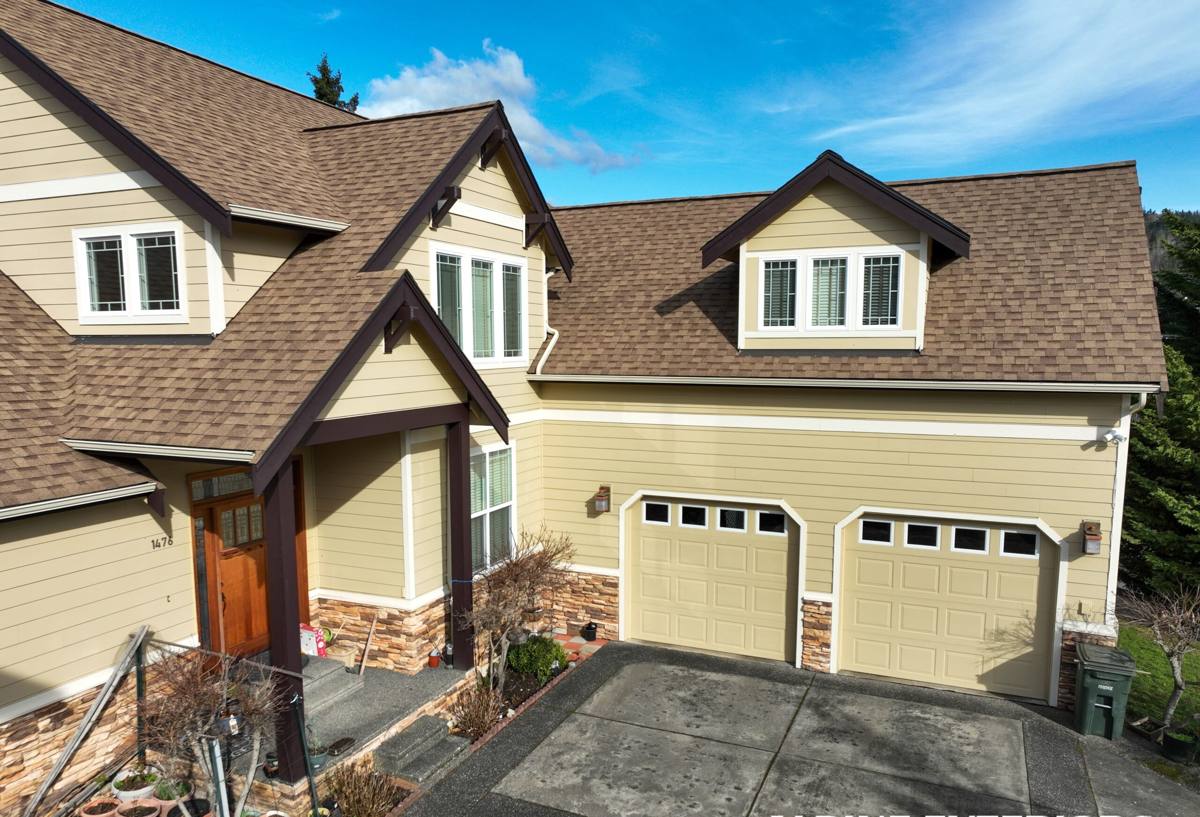
What This Climate Does to a Roof Between Repairs
Moss and Trapped Moisture
Shaded roof planes, north-facing slopes, and anything under mature trees hold moisture longer than sun-exposed sections. Over time that turns into visible moss, and moss is more than a cosmetic problem — it holds water directly against the roofing material, works its way under shingle tabs, and can lift or loosen a section of roof if it's left unaddressed. A lot of the repair calls we see start as "just some moss," and the underlying shingles or underlayment turn out to be softer than expected once we actually get up there.
Wind-Driven Rain in the Valley
Rain in the Nooksack valley rarely falls straight down. Wind pushes it sideways into roof valleys, around chimneys and vent pipes, and under flashing that isn't lapped correctly. That sideways load finds gaps that a straight-down rainfall never would, which is why a lot of Lynden roof leaks trace back to flashing and valley details rather than the shingles themselves failing outright.
Salt Air, Even This Far Inland
Lynden is far enough from the coastline that people sometimes assume salt exposure isn't a factor here. It still is, just at a slower pace than at the waterfront. Marine air moves inland across this part of Whatcom County, and over years it works on fasteners, flashing, and lower-grade metal hardware. A repair that reuses corroded fasteners or unsealed metal trim tends to need attention again sooner than one that accounts for that slow corrosion from the start.
Signs a Lynden Roof Needs Repair
Some of these are obvious from the ground; others only show up once you know where to look. If more than one of these applies, it's worth having the roof looked at before the next heavy rain.
- Moss that keeps returning quickly after cleaning, especially in valleys or on shaded, north-facing slopes
- Granules collecting in gutters or at the base of downspouts, a sign asphalt shingles are wearing thin
- Shingles that are cracked, curling at the edges, or missing after a windstorm
- Flashing around chimneys, skylights, or vent pipes that looks lifted, rusted, or has visibly failed sealant
- Water staining on an interior ceiling or upper wall, especially near an exterior wall or after a windy storm
- Sagging in a roof plane, or daylight visible through the roof deck from inside the attic
- A musty smell in the attic, which often points to trapped moisture before any staining shows up below
Repair or Replace? How We Make That Call
Not every roof problem calls for a full replacement, and not every roof problem should be patched and left alone. The honest answer depends on a handful of specific factors, and we walk through them with the homeowner rather than defaulting to whichever answer is more profitable for us.
| Factor | Leans toward repair | Leans toward replacement |
|---|---|---|
| Roof age | Well within its expected service life | Near or past the material's typical lifespan |
| Extent of damage | Isolated to one area — a valley, a vent, a section of shingles | Spread across multiple roof planes |
| Decking condition | Solid, dry sheathing under the damaged area | Soft, rotted, or repeatedly wet decking |
| Repair history | First or second repair on this roof | Recurring repairs in the same or nearby spots |
| Remaining warranty | Material and workmanship coverage still active | Warranty already expired or voided by prior work |
A roof with isolated, recent damage on solid decking is usually a straightforward repair. A roof that's needed three separate repairs in as many years, or where a small patch reveals soft decking spreading further than expected, is usually telling you the underlying materials are done, and repeated repairs just delay a replacement that's coming anyway. We'll always give you our honest read on which side of that line your roof falls on, in plain terms, with the reasoning behind it.
What a Correct Roof Repair Actually Involves
Diagnosing the Real Source, Not Just the Symptom
Water that shows up as a ceiling stain in one room can be entering the roof several feet away and traveling along the decking or a rafter before it drips down. A repair that only patches the spot directly above the stain, without tracing the water back to where it's actually getting in, often looks fixed for one dry season and then fails again. We start every repair by finding the actual entry point, not just the visible symptom.
Flashing and Valley Work
Given how often Lynden roof leaks trace back to flashing and valleys rather than the shingles themselves, this is where a repair earns its keep. That means properly lapped, sealed flashing at chimneys, vents, skylights, and roof-to-wall transitions, and valleys cleared of debris and re-flashed if the metal underneath has corroded or the sealant has failed.
Matching Existing Materials
Where possible, we match the replacement shingles or roofing material to what's already on the roof, both for appearance and so the repaired section weathers at a similar rate to the surrounding roof. Exact color matches aren't always possible on an older roof that's weathered and faded over the years — we'll be upfront about that before starting, rather than let it be a surprise at the end.
Checking Ventilation While We're Up There
Poor attic or roof deck ventilation traps moisture from the inside, which accelerates the same kind of damage this climate causes from the outside. Since we're already on the roof for a repair, we check ventilation as a matter of course — it costs nothing extra to look, and catching a ventilation problem early can prevent the next repair call.
Common Roof Repairs We Handle on Lynden Homes
- Shingle replacement: Swapping out cracked, curled, or wind-torn shingles in an isolated section of roof
- Flashing repair: Re-sealing or replacing failed flashing at chimneys, skylights, vent pipes, and roof-to-wall joints
- Valley repair: Clearing debris and re-flashing valleys where wind-driven rain and runoff concentrate
- Moss and organic growth remediation: Removing moss buildup and addressing the moisture conditions letting it return
- Storm damage repair: Addressing missing shingles, lifted flashing, or debris impact after a windstorm
- Leak tracing and decking repair: Finding the true entry point of a leak and repairing any soft or damaged decking underneath
Our Repair Process, Start to Finish
- Inspection and diagnosis: We get on the roof, identify the actual source of the problem, and check the surrounding area and decking condition, not just the spot you called about.
- Written estimate: You get a clear scope of what needs to happen and what it involves before any work starts — no vague verbal quotes.
- The repair itself: We do the work to the same flashing, fastener, and material standards we'd use on a full roof, since a repair is only as good as its details.
- Cleanup and walkthrough: We clear debris and old materials from the site and walk you through what was done and what to watch for going forward.
Many roof repairs fall in a modest cost range compared to a full replacement, but the honest range depends heavily on scope — a single flashing repair is a different job than a leak that's damaged decking across a section of roof. We'll give you a specific written number after we've actually looked at the problem, not a phone estimate.
Why a Crew That Already Works in Lynden Matters
A contractor who works this valley regularly already has a feel for how its microclimate behaves — where shaded, tree-lined lots tend to hold moisture longer than open farmland, how wind moves through the valley during a storm, and which flashing details tend to fail first on the roofs common to this area. That familiarity shows up in small but real ways: knowing to check a north-facing valley more carefully, or recognizing a repair pattern that points to a ventilation problem rather than just a bad shingle. It also means a shorter wait when a storm damages several roofs in the area at once, since we're not driving in from out of the county to get to you.
After the Repair: What to Expect
A properly done repair should hold up through normal wear for years, not just until the next heavy rain. We'll tell you plainly if a repair is a durable long-term fix or more of a stopgap on an aging roof that's likely to need further work — that distinction matters for planning and budgeting, and we'd rather you hear it from us upfront than find out the hard way. Simple homeowner-side maintenance, like keeping gutters clear and trimming back branches that shade a roof plane, goes a long way toward stretching the life of any repair in this climate.
If you're dealing with a leak, storm damage, or a roof that just doesn't look right anymore, we're happy to take a look and give you an honest read on what it actually needs. Reach out below for a free, no-pressure estimate.