 Birch Bay
 Ferndale's Roofs Work Harder Than People Realize
Ferndale sits close enough to the Salish Sea and Birch Bay that roofs here deal with a version of Pacific Northwest weather that's a little rougher than what you'd see further inland. Marine air carries salt and moisture onto shingles and metal flashing year-round. Add Whatcom County's long, wet fall-through-spring stretch, driving rain that comes in sideways during winter storms, and a moss season that can run eight months or more, and you've got a roof that's rarely given a chance to fully dry out. That combination is exactly what wears down roofing materials faster than the manufacturer's spec sheet assumes.
Most Ferndale roof repair calls we get aren't dramatic collapses — they're slow, quiet problems that started small: a lifted shingle tab, a hairline gap at a flashing seam, a patch of moss holding water against the deck. By the time a stain shows up on a ceiling, the damage has usually been building for a season or two.
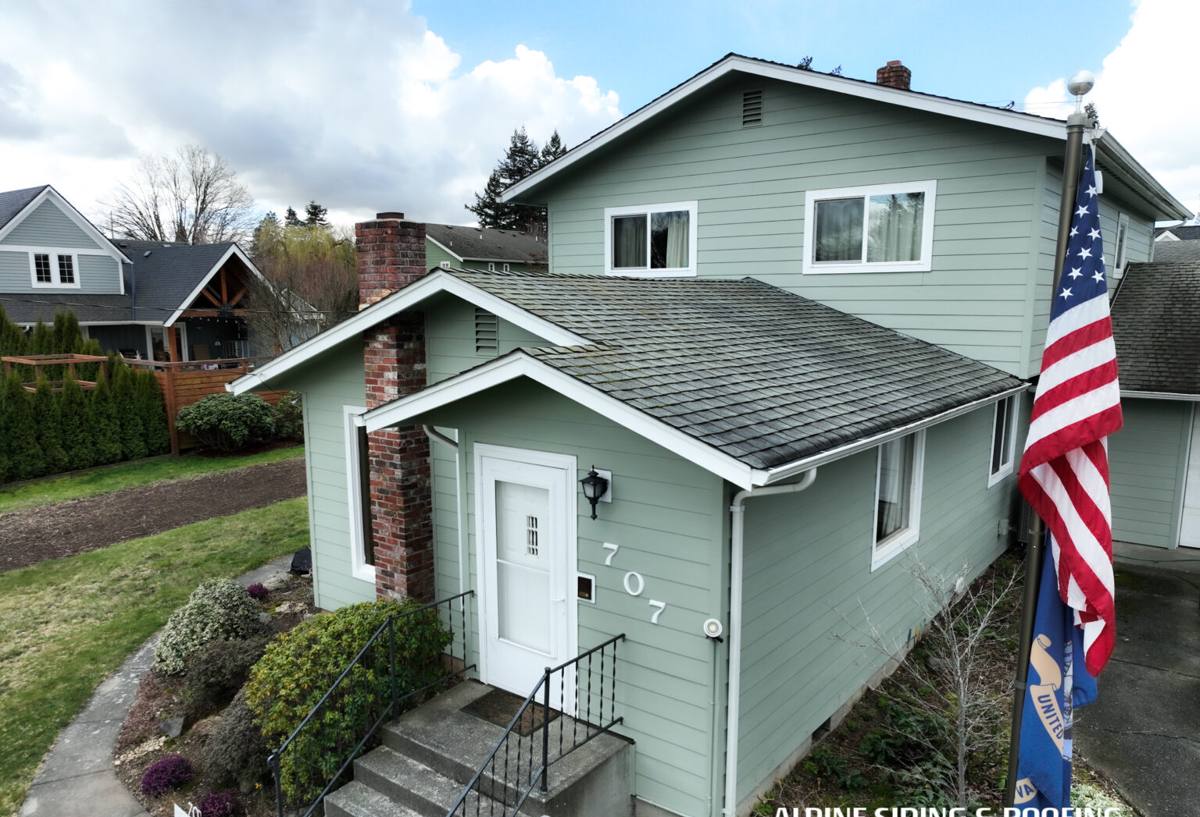
Signs a Ferndale Roof Needs Repair
Inside the House
- Brown or yellow ceiling stains, especially near exterior walls or chimneys
- Peeling paint or bubbling drywall on an upper floor after a hard rain
- A musty smell in the attic that wasn't there before
- Visible daylight through the roof deck when you look up in the attic
Outside the House
- Shingles that are cracked, curling at the edges, or missing granules (showing as bald, darker patches)
- Moss or algae streaking, particularly on the north-facing or shaded slopes that stay damp longest
- Rusted, lifted, or gapped flashing around chimneys, skylights, and roof-to-wall joints
- Sagging in the roofline, which usually points to deck or structural moisture damage, not just a surface issue
Any one of these on its own might be a minor fix. Several at once, or a leak that's already reached the interior, means it's worth having someone look at the whole roof rather than just chasing the visible symptom.
Why Moss Is the Real Long-Term Enemy Here
Whatcom County's climate is close to ideal for moss growth — mild temperatures, shade from mature trees, and moisture that doesn't fully evaporate for days at a time. Moss doesn't just look bad. Its root structure lifts shingle edges as it grows, which breaks the seal between shingles and lets wind-driven rain work its way underneath. Once moss has been established for a season or more, it's also holding water directly against the shingle surface and the underlayment beneath it, which speeds up granule loss and accelerates the exact kind of wear that leads to leaks.
Pressure washing moss off a roof does more harm than good — it strips granules and can drive water under shingles. The correct approach is a gentler treatment method combined with removing the physical moss growth by hand, followed by addressing whatever is keeping that section of roof shaded and damp longer than the rest.
Common Ferndale Roof Repair Issues
| Issue | Typical Cause | What a Correct Repair Involves |
|---|---|---|
| Leak at chimney or skylight | Flashing seal failed from age, movement, or moss lifting shingle edges | Remove and rebuild flashing with new step and counter-flashing, not just caulk over the gap |
| Missing or lifted shingles after a windstorm | Driving rain and gusts common to winter storms off the Salish Sea | Replace damaged shingles with matched material, re-seal adjacent tabs, check underlayment beneath |
| Moss-related granule loss | Extended shaded, damp conditions typical of Whatcom County's tree cover | Manual moss removal, gentle treatment, inspection of shingle life remaining underneath |
| Valley leaks | Debris buildup or worn valley flashing concentrating water flow | Clear debris, inspect and replace valley metal or membrane as needed |
| Soft or spongy deck sections | Long-term moisture intrusion through an undetected small leak | Cut back to sound decking, replace plywood/sheathing, then re-roof that section correctly |
What a Correct Roof Repair Actually Involves
It Starts With a Real Inspection, Not a Guess
A repair that only patches the spot where water is showing up inside the house often misses the actual entry point, which can be several feet away depending on the roof's slope and framing. We walk the roof, check the attic side where it's accessible, and trace water paths before deciding what actually needs to be opened up and fixed.
Matching Materials Matters
Shingles fade and wear unevenly over time, so an exact color match on an older roof isn't always possible — but matching the shingle type, weight, and profile is. Mixing incompatible materials, or using a lighter-weight shingle to patch a heavier architectural roof, creates a visible mismatch and a weak point that can fail again sooner than the surrounding roof.
Flashing and Underlayment Get Checked, Not Just the Shingles
Most leaks that keep coming back after a "repair" trace to flashing or underlayment that was left in place instead of replaced. Reusing old flashing to save time is one of the more common shortcuts we see from past patch jobs, and it's usually why a homeowner ends up calling a second contractor a year later for the same leak.
The Deck Underneath Has to Be Sound
If water has been getting in for a while, the plywood or sheathing under the shingles may be soft or delaminating. Repairing over damaged decking hides the problem temporarily but doesn't fix it — any section of soft decking needs to come out and be replaced before new roofing goes back down.
Our Roof Repair Process
- Inspection and honest assessment — we look at the whole roof, not just the reported leak, and tell you plainly if it's a repair or if the roof's age and condition mean replacement is the more honest recommendation.
- Written scope and estimate — you'll know what's being fixed, with what materials, and roughly why, before any work starts.
- Repair the source, not just the symptom — flashing, decking, and underlayment get addressed alongside the visible shingle damage.
- Matched materials — we use shingle types and flashing details consistent with what's already on your roof wherever possible.
- Cleanup and a final walk-through — debris cleared, gutters checked for roofing debris, and we show you what was done.
Repair or Replace? Honest Cost Factors
| Factor | Leans Toward Repair | Leans Toward Replacement |
|---|---|---|
| Roof age | Under 10-12 years, or a newer roof with isolated damage | Near or past the shingle's expected lifespan |
| Extent of damage | Localized — one slope, one flashing point, a few shingles | Widespread granule loss, multiple leak points, moss coverage across most slopes |
| Decking condition | Solid, dry decking under the damaged area | Soft or rotted decking found in more than one spot |
| History of repairs | First real repair needed | Third or fourth patch attempt on the same roof |
We won't push a full replacement when a repair will genuinely hold up, and we won't recommend patching a roof that's clearly at the end of its service life just to avoid a harder conversation. Broad repair costs for typical Ferndale-area jobs range from a few hundred dollars for a small flashing or shingle fix up to a few thousand for larger sections involving deck replacement — the inspection is what tells us which end of that range applies.
Why Hiring a Crew That Already Works in Ferndale Matters
A contractor who regularly works roofs in and around Ferndale and Birch Bay already knows what this specific stretch of Whatcom County throws at a roof — the moss patterns on shaded, tree-lined lots, the way winter storms driving in off the water push rain sideways into flashing and vents, and which roof details tend to fail first in this air. That's different from general roofing knowledge you'd get from a crew that mostly works drier inland climates. It also means faster response when a storm damages your roof and you need someone who isn't driving in from two counties over.
Roof Repair Checklist Before You Call Anyone
- Note where inside the house you've seen staining, dripping, or a musty smell, and roughly when it started
- Check the attic (if accessible) for daylight, dark stains, or damp insulation
- Look at the roof from the ground for missing shingles, moss patches, or debris buildup in valleys
- Check gutters and downspouts for granules, moss clumps, or standing water — signs of what's washing off the roof
- Avoid climbing onto the roof yourself, especially on wet or mossy sections — it's genuinely slick footing
- Get a written inspection and estimate before agreeing to any repair work
Get a Straight Answer About Your Roof
If you're seeing signs of a leak, moss buildup, or storm damage on your Ferndale home, it's worth getting a real look before the wet season makes things worse. We offer free, no-pressure estimates — fill out the form below and we'll take a look and tell you honestly what your roof actually needs.