 Birch Bay
 Roofing in Point Whitehorn: A Different Set of Problems Than Inland Homes Face
Point Whitehorn sits close enough to the water that homes here take on a combination of stresses most inland Whatcom County properties never deal with: salt-laden air off the Strait, wind-driven rain that gets pushed sideways under standard flashing details, and a wet season that runs long enough for moss and moisture to do real damage before anyone notices a problem. A roof that would hold up fine in a drier, more sheltered part of the county can wear out early here if it wasn't built and installed with this specific exposure in mind.
This page is about one job, done right, in one place: full roof replacement for homes in and around Point Whitehorn. Not a general overview of roofing — the specifics that matter for this stretch of Birch Bay.
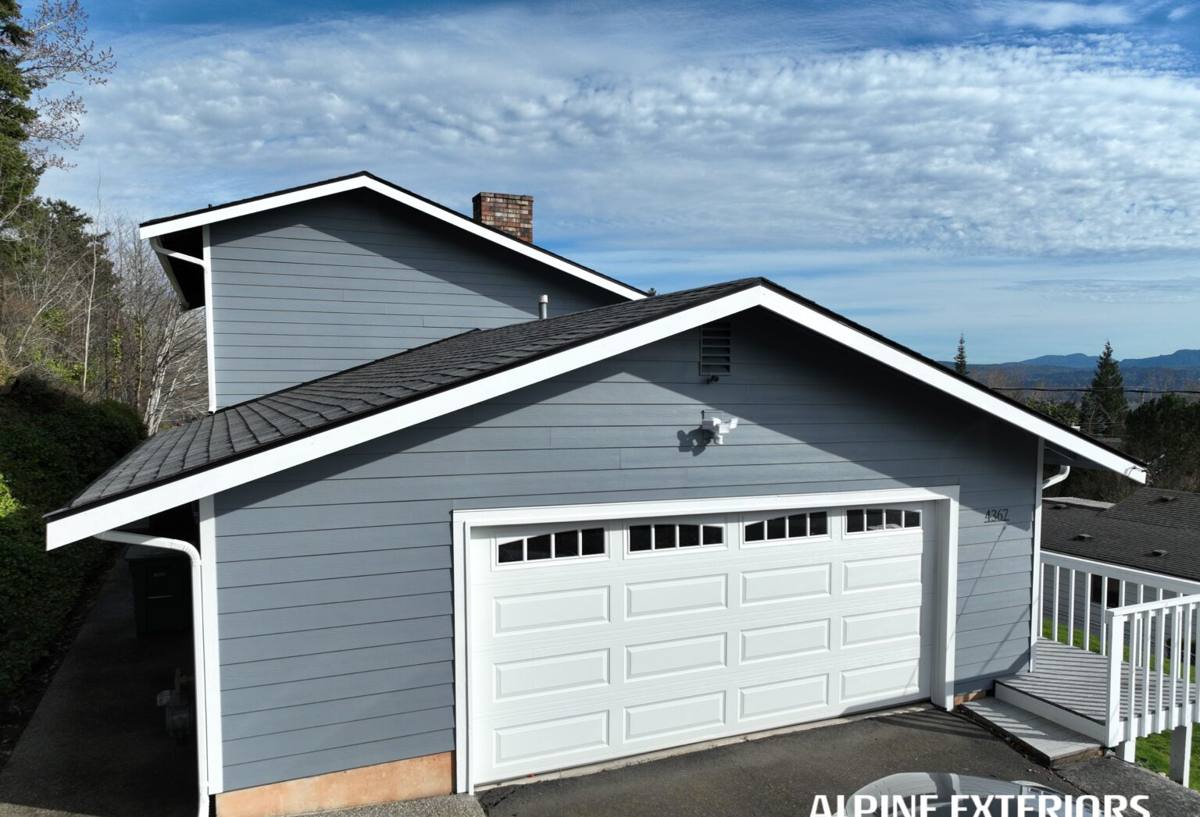
What Salt Air and Marine Exposure Actually Do to a Roof
Salt air is corrosive to anything metal, and a roof has more metal in it than most homeowners realize — nails, flashing, vent boots, drip edge, and on many homes, gutters and downspouts. Left unprotected or installed with the wrong-grade fasteners, these components corrode faster near the water than they would a few miles inland.
Fasteners and Flashing
Standard electro-galvanized nails and flashing can start showing rust streaks and pitting years before a comparable roof inland would. On a marine-exposed property, that's not cosmetic — corroded fasteners lose holding power, and failing flashing is one of the most common sources of roof leaks, period.
Shingle and Surface Wear
Salt-carrying wind also accelerates granule loss on asphalt shingles over time, and it combines with driving rain to push moisture into any gap in the roofing system that wouldn't be a problem in calmer conditions. None of this means a roof near Point Whitehorn can't last a normal service life — it means the materials and installation details need to account for the exposure from day one.
Moss, Moisture, and Birch Bay's Long Wet Season
Whatcom County's wet season stretches long, and shaded, north-facing, or tree-covered roof sections in this area can stay damp for extended stretches. That's exactly what moss needs to establish.
Why Moss Is More Than a Cosmetic Issue
Moss holds moisture directly against the roof surface. On asphalt shingles, that accelerates granule loss and softens the mat underneath. On any roof, moss growing under shingle edges or around flashing lifts material just enough to let wind-driven rain work its way in. By the time moss is visibly thick, it's usually already causing damage below the surface — not just sitting on top of it.
Where It Takes Hold First
North-facing slopes, roof valleys, areas under overhanging trees, and anywhere debris collects are the first spots to watch. These are also the areas most prone to failure first when a roof is nearing the end of its life.
What a Correct Roof Replacement Involves in This Environment
A roof replacement done for Point Whitehorn conditions isn't just "new shingles over what's there." It's a system, and every layer matters.
Full Tear-Off and Deck Inspection
We remove the old roofing down to the deck rather than layering over it. That's the only way to actually see the condition of the sheathing — soft or delaminated decking from long-term moisture exposure has to be found and replaced before new material goes down, not discovered later as a leak.
Underlayment and Ice-and-Water Protection
Given the amount of driving rain this area sees, underlayment choice matters more here than it does in drier parts of the state. We pay particular attention to eaves, valleys, and any low-slope transitions where wind-driven rain is most likely to find a way in.
Ventilation
A roof deck that can't breathe traps moisture from the inside as well as the outside, which shortens the life of the decking and the roofing material both. Proper intake and exhaust ventilation is part of a correct replacement, not an upgrade.
Flashing and Edge Metal
Given the corrosion risk from salt air, we use flashing and fastener grades suited to the exposure rather than defaulting to whatever's cheapest. This is one of the areas where cutting corners doesn't show up as a problem for a few years — and then shows up as a leak that's expensive to trace.
Material Selection
Not every roofing product performs the same way under salt exposure and heavy moss pressure. Part of doing this job right is being straightforward about which materials hold up well here and which ones create more maintenance burden than they're worth for this specific location.
Comparing Roofing Materials for Point Whitehorn Conditions
| Material | Wind & Driving Rain Performance | Moss Resistance | Typical Lifespan | Relative Cost |
|---|---|---|---|---|
| Architectural asphalt shingle | Good, with proper fastening and flashing | Moderate — benefits from algae/moss-resistant granules | 20–30 years | $ |
| Standing seam metal | Excellent | Very good — sheds moss more easily than textured surfaces | 40–50+ years | $$$ |
| Synthetic composite (slate/shake look) | Good to excellent | Good | 30–50 years | $$ |
| Wood shake | Fair – more sensitive to sustained moisture | Poor without ongoing maintenance | 15–25 years, maintenance-dependent | $$ |
We don't push one material as universally "best" — the right choice depends on the roof's slope, sun exposure, tree cover, and the homeowner's maintenance appetite. What we will tell you honestly is when a product is a poor match for a specific roof's exposure, and why, before you spend money on it.
Our Point Whitehorn Roof Replacement Process
1. On-Site Inspection
We walk the roof and the attic, not just look at it from the ground. That's the only way to catch deck softness, ventilation problems, or moss damage that isn't visible from the driveway.
2. Written Proposal
You get a clear scope of work and material specification in writing — what's being torn off, what underlayment and flashing are going in, and what the finished system looks like layer by layer.
3. Protection and Tear-Off
Landscaping, siding, and gutters get protected before tear-off starts. We don't leave a torn-open roof exposed to Birch Bay weather overnight if it can be avoided.
4. Deck Repair and Installation
Any compromised sheathing gets replaced before new roofing goes down. Then underlayment, flashing, ventilation components, and the final roofing material go in, in that order, with attention to the details that matter most in this location — valleys, eaves, and anywhere two roof planes meet.
5. Cleanup and Walkthrough
Job site gets cleaned, including a magnetic sweep for stray fasteners, and we walk the finished roof with you before calling it done.
Why It Matters That We Already Work in Point Whitehorn
A crew that only occasionally works this close to the water tends to treat every roof the same way, using standard fastener and flashing specs that are fine for a typical inland home but undersized for salt exposure. A crew that regularly works Point Whitehorn and the surrounding Birch Bay area already knows which roof orientations catch the worst of the wind-driven rain, which slopes hold moss longest, and which flashing details actually hold up here long-term instead of failing early.
That local pattern recognition is also what keeps a job moving efficiently — knowing how Whatcom County permitting and inspection works for reroofing, what typical wind exposure looks like on this stretch of coastline, and how to sequence a tear-off around the wetter stretches of the year so your home isn't left exposed longer than necessary.
Signs Your Point Whitehorn Roof May Be Due for Replacement
- Granules collecting in gutters or at downspout outlets in noticeably larger amounts than in past years
- Moss established in patches rather than a light surface film, especially on north-facing slopes
- Curling, cupping, or cracked shingles, particularly on sections most exposed to wind off the water
- Rust staining around flashing, vent boots, or exposed fasteners
- Soft spots underfoot when walking the roof, or sagging visible from the ground
- Daylight visible through the roof deck from inside the attic
- Water stains on interior ceilings or in the attic after heavy or wind-driven rain
- A roof approaching or past the upper end of its material's expected lifespan
Any one of these on its own isn't necessarily an emergency, but a few of them together usually means the roof is past the point where patch repairs make sense.
Keeping a New Roof Performing in This Climate
Even a correctly installed roof benefits from a little upkeep in this environment. Keeping gutters and valleys clear of needles and debris prevents standing water from sitting against the roofing material. Trimming back tree cover that shades a roof section year-round reduces how long that area stays damp. And catching moss early — before it's established enough to lift shingle edges — is far cheaper than dealing with the water intrusion it eventually causes. None of this replaces a properly built roof system, but it extends the life of one.
If you're weighing whether your Point Whitehorn roof needs repair or full replacement, we're glad to take a look and give you a straight answer either way. Reach out for a free, no-pressure estimate using the form below.