 Birch Bay
 Metal Roofing in Terrell Creek
Terrell Creek sits close enough to Birch Bay's shoreline that homes here deal with the same salt-laden air and wind-driven rain as the rest of Whatcom County's coast, plus the shade and moisture that come with a creek corridor running through the neighborhood. That combination is hard on roofing. Shingles wear faster under constant damp, moss gets a foothold in shaded valleys and north-facing slopes, and anything with exposed fasteners or weak flashing details eventually lets water find a way in. Metal roofing, installed correctly for this specific environment, handles all three problems better than most alternatives — but "installed correctly for this environment" is doing a lot of work in that sentence, and it's where a lot of roofing jobs in this area fall short.
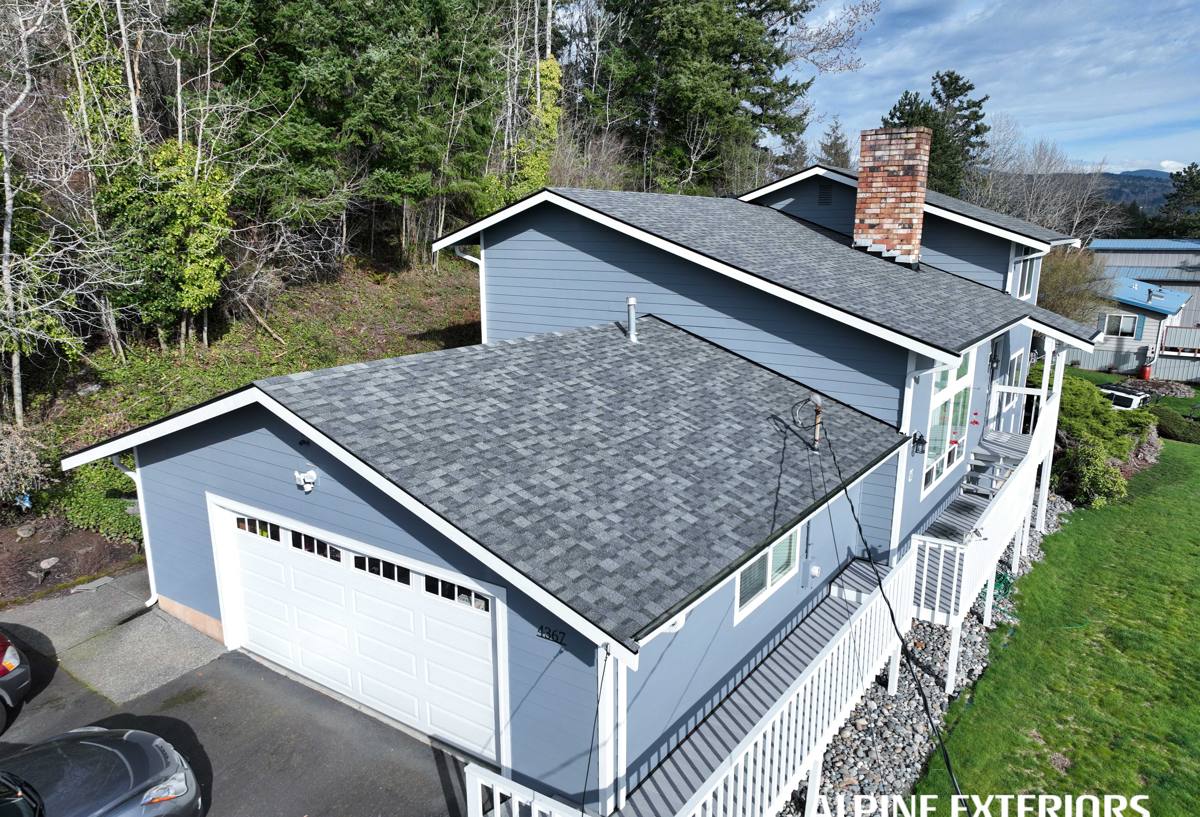
What Terrell Creek's Climate Actually Demands
Homeowners near Birch Bay tend to ask about metal roofing because they've already dealt with moss, algae streaking, or a roof that never quite dries out between rain events. Terrell Creek's location adds a wrinkle: tree cover and creek-side humidity keep some roof sections shaded and damp longer than open lots elsewhere in Whatcom County, even on days when the rest of the property is dry.
Salt Air
Airborne salt from Birch Bay travels further inland than people expect, especially on windy days. It accelerates corrosion on fasteners, flashing, and any exposed metal edge. Not every metal roofing product is built to shrug this off — fastener quality and coating type matter more here than in an inland town.
Driving Rain
Wind off the water doesn't just drop rain straight down — it pushes it sideways, up under eaves, and into any gap a standard installation might tolerate in a calmer climate. Seam design and flashing detail work carry more weight here than the roofing material itself.
Moss Season
Western Whatcom County's moss season runs long — realistically most of the fall through spring. Shaded roof sections near mature trees or creek-side vegetation stay damp enough for moss and moisture-loving growth to take hold if the roofing surface and slope don't shed water fast and give it nowhere to sit.
Why Metal Roofing Fits This Environment
Metal roofing isn't a fix for every home, but for the conditions Terrell Creek deals with, it solves problems that asphalt shingles structurally can't:
- A hard, non-porous surface gives moss and algae far less to grip than a shingle's granulated texture
- Steep effective water-shed on most metal panel profiles moves rain off the roof faster, which matters under sustained coastal downpours
- Coated steel and aluminum resist the corrosive effects of salt air far better than exposed fasteners or bare metal flashing on a shingle roof
- A properly installed metal roof commonly outlasts two or more shingle roof replacements over its service life
- Panel systems shed heavy rain without relying on granule wear that degrades over time, unlike asphalt
None of that holds true automatically. It depends on the panel system, the fastening method, and the flashing work — which is where installation quality matters as much as the material choice.
What a Correct Installation Involves Here
A metal roof that's going to hold up on a Terrell Creek property needs a few things done right that are easy to shortcut on a rushed job:
Underlayment Built for Wet Climates
A high-temp, self-adhering underlayment at eaves, valleys, and penetrations gives you a second line of defense if wind-driven rain ever gets past the panel seams — which it will try to do during a bad coastal storm. This isn't optional in a climate like ours.
Fastener and Flashing Material Matched to Salt Exposure
Standard fasteners corrode faster this close to the bay. We match fastener and flashing metal to the panel system to avoid galvanic corrosion — mixing incompatible metals is one of the most common causes of premature failure we see on coastal roofs.
Seam and Panel System Suited to Wind-Driven Rain
Standing seam and mechanically-locked panel systems handle sideways-driven rain better than exposed-fastener panels, particularly on roof sections that catch wind off the water. We size the panel and seam choice to each roof's exposure, not a one-size answer.
Ventilation That Doesn't Trap Moisture
A metal roof still needs a ventilated assembly underneath it. Trapping moisture against the underside of a metal roof in a damp climate like this one creates condensation problems that have nothing to do with the roofing material itself and everything to do with how the roof deck breathes.
Detail Work Around Penetrations and Valleys
Vents, chimneys, skylights, and valleys are where roofs actually leak — the field of the roof rarely fails first. Custom-formed flashing at every penetration, not a generic boot or a bead of sealant, is the difference between a roof that holds up for decades and one that needs attention in five years.
Our Process for Terrell Creek Roofs
- On-site inspection — we look at slope, shade patterns, existing moss or moisture damage, and how the roof currently handles water before recommending anything
- Panel and system recommendation — matched to the home's exposure to wind, salt air, and shade, not a default catalog pick
- Tear-off and deck assessment — we check the roof deck for rot or moisture damage before anything new goes down, which is common on older homes in shaded, damp locations
- Underlayment and flashing installation — built for coastal wind-driven rain, with attention to every valley, vent, and penetration
- Panel installation — fastened and sealed to spec for the specific system chosen
- Final walkthrough — we go over the finished roof and the maintenance it actually needs, which for most metal systems is minimal
Cost Factors for Terrell Creek Homes
Metal roofing costs more upfront than asphalt shingles. The honest comparison isn't sticker price — it's what each roof actually costs you over the years you own the home, especially in a climate this hard on roofing.
| Factor | Asphalt Shingle | Metal Roofing |
|---|---|---|
| Typical service life in this climate | 15–20 years, often shorter under heavy moss and moisture | 40–60+ years with proper installation |
| Moss and algae resistance | Low — granulated surface holds moisture and growth | High — hard surface sheds water and gives moss little to grip |
| Performance in wind-driven rain | Adequate if well-installed, more failure points over time | Strong with proper seam and flashing detail |
| Salt air corrosion resistance | Fasteners and flashing corrode faster near the bay | High if fasteners and panels are matched to coastal exposure |
| Upfront cost | Lower | Higher |
| Maintenance needs | Periodic moss treatment, granule loss over time | Minimal — occasional debris clearing and inspection |
Roof slope, panel profile (standing seam versus other exposed-fastener systems), the amount of valley and penetration detail work, and tear-off condition all move the price within that range. A specific number requires seeing the roof.
Why Local Experience with Terrell Creek Matters
A roofing crew that's worked this specific stretch of Whatcom County knows which roof sections in a creek-adjacent, tree-shaded property tend to hold moisture longest, how far salt air actually reaches inland here, and what wind-driven rain does to a poorly flashed valley during a real coastal storm — not a textbook one. That knowledge shows up in small decisions: which panel system to recommend for a shaded north slope versus an open south-facing one, which fastener spec actually holds up this close to the bay, and where the last roof on a similar property let water in. A crew unfamiliar with Birch Bay's specific conditions is guessing at some of that. We're not.
Signs Your Terrell Creek Roof Needs Attention
- Moss or dark streaking on shaded roof sections, especially near tree cover or facing away from the sun
- Rust staining around vents, flashing, or fasteners
- Granule buildup in gutters, a sign an asphalt roof is wearing down faster than it should
- Water stains on interior ceilings near valleys, chimneys, or skylights after a windy rain
- Curling, lifting, or missing shingles after a winter storm season
- Visible sagging or soft spots, which can point to deck moisture damage underneath
Maintenance After Installation
A properly installed metal roof in this climate doesn't need much, but it isn't zero-maintenance either. Clearing debris out of valleys and off panels once or twice a year keeps water moving the way it's supposed to, especially on shaded sections where leaves and needles collect. An occasional visual check after major windstorms — looking for lifted flashing or debris impact — catches small issues before they become roof deck problems. That's a fraction of the upkeep an asphalt roof needs in a moss-heavy climate like Terrell Creek's.
If you're dealing with moss, moisture, or a roof that's due for replacement on a Terrell Creek property, we're happy to take a look and walk you through what your specific roof needs — no pressure, no obligation. Use the form below to request a free estimate.