 Birch Bay
 Building Decks for a Waterfront Climate
Semiahmoo sits close enough to the water that its homes deal with a different set of conditions than decks built ten or twenty miles inland. Salt-laden air off the bay works into fasteners, hinges, and any exposed metal. Driving rain off winter storms finds its way into every seam that isn't detailed correctly. And the long, damp shoulder seasons that Whatcom County is known for mean moss and algae get a real head start on any surface that doesn't drain and dry quickly. A deck built without those factors in mind doesn't fail dramatically — it just ages fast, quietly, in ways that are expensive to fix later.
We build custom decks specifically with this stretch of coastline in mind. That doesn't mean a different product line or a sales pitch about "marine-grade" everything — it means choosing materials, fasteners, and construction details that are appropriate for a home that sits in salt air and gets rained on sideways more often than most.
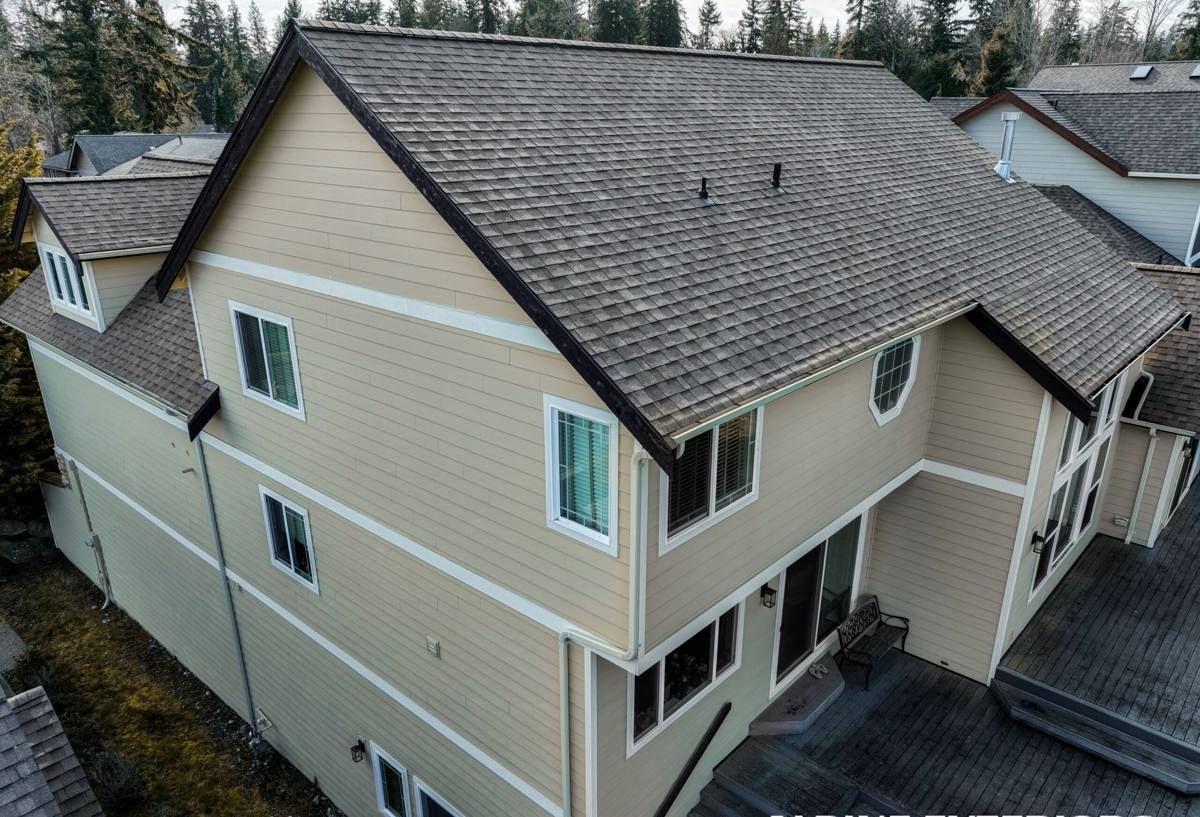
What Semiahmoo's Coastal Conditions Actually Do to a Deck
Salt Air and Corrosion
Airborne salt accelerates corrosion on anything ferrous. Standard zinc-coated screws and bolts can start showing surface rust within a season or two this close to the water, and once a fastener starts to corrode, it weakens and can stain the surrounding wood or composite. This matters most at structural connections — joist hangers, ledger bolts, post bases — where a failing fastener isn't just cosmetic.
Moisture and Driving Rain
Rain that comes in at an angle, which is common during winter storms here, gets pushed into places a vertical rain never would: under railing caps, behind ledger boards, into end-grain cuts that weren't sealed. Repeated wetting and drying cycles are what actually break decks down over time, more than any single storm.
Moss, Algae, and Shade
Whatcom County's moss season is long, and a deck with poor airflow underneath or boards installed too tight will hold moisture and grow moss and algae on the walking surface. Beyond looking bad, a mossy deck surface gets genuinely slick and becomes a fall hazard, especially on stairs.
Choosing the Right Decking Material for This Environment
There's no single "best" decking material for every home — it depends on budget, how much upkeep you want to do, and how the deck will be used. What we won't do is recommend a product that looks great in a showroom but is a poor match for a saltwater environment without being upfront about the trade-off.
| Material | How It Handles This Climate | Maintenance | Typical Lifespan |
|---|---|---|---|
| Pressure-treated wood | Needs consistent sealing to resist moisture and moss; lowest upfront cost | Annual cleaning and re-sealing recommended | 10–15 years with upkeep |
| Cedar | Naturally rot-resistant, ages to a silver-gray patina if left unfinished | Periodic cleaning; sealing optional but extends life | 15–20 years |
| Composite decking | Doesn't absorb moisture like wood, resists moss growth better with proper airflow underneath | Occasional washing, no sealing or staining | 25+ years, varies by manufacturer warranty |
| PVC decking | Fully non-organic, best resistance to moisture and moss buildup | Lowest maintenance of the group | 25+ years, varies by manufacturer warranty |
Composite and PVC boards cost more up front than wood, but for a Semiahmoo homeowner who doesn't want to be out there sealing and scrubbing every spring, the reduced maintenance often pays for itself over time. Wood decks aren't a bad choice — cedar in particular holds up well here — but they do require an owner who's willing to stay on top of sealing and cleaning.
Fasteners and Hardware
Whatever decking material you choose, we use stainless steel or coated fasteners rated for coastal exposure at every structural connection, not just where it's visible. This is one of those details that costs a little more and shows up nowhere on a spec sheet, but it's the difference between hardware that lasts and hardware that starts staining and weakening within a few years.
What's Underneath Matters More Than What's On Top
A beautiful deck surface built over undersized framing or a poorly flashed ledger board is a problem waiting to happen. We pay particular attention to the parts of a deck nobody sees once it's finished:
Ledger Attachment
Where the deck attaches to the house is the single most common failure point on any deck, and it's also the point most exposed to water running off the house. Correct flashing here — installed so water sheds away from the house rather than behind the ledger board — is non-negotiable.
Joists, Posts, and Footings
Framing sized and spaced for the actual loads the deck will carry, posts set on footings below frost depth, and joist tape or another moisture barrier on top of the framing to keep water from pooling against the wood. None of this is visible in the finished deck, and none of it is optional.
Airflow Underneath
Decks built low to the ground or without enough clearance underneath trap moisture and give moss a head start. Where site conditions allow, we build in enough clearance and, where they don't, we plan drainage and ventilation details to compensate.
Railings, Stairs, and Finish Details
Railings take a lot of abuse from salt air because they're the most exposed, highest-contact part of the deck. We look at railing systems the same way we look at decking — balancing appearance, upkeep, and how the material actually performs a short distance from saltwater. Stair treads get extra attention for slip resistance, since a wet, mossy stair tread is where most deck injuries actually happen.
Our Process for a Custom Deck Build
- On-site assessment: We look at your home's exposure — how much direct weather and salt air it gets, drainage on the site, and how the deck will be used — before recommending materials.
- Design and material selection: We walk through the trade-offs between wood, composite, and PVC honestly, based on your budget and how much maintenance you want to take on.
- Permitting: We handle the permit application and inspections required for the project.
- Framing and structural work: Ledger, footings, posts, and joists get built to hold up under coastal conditions, not just to pass a minimum code check.
- Decking, railing, and finish work: Surface materials and railings are installed with attention to fastener choice, spacing for drainage, and clean finish details.
- Final walkthrough: We go over care and maintenance specific to whatever material you chose, so you know what to expect in year one versus year ten.
Living With a Deck Through Moss Season
Whatever material you choose, a little seasonal attention keeps a Semiahmoo deck looking and performing well through the wet months. Here's what we recommend to homeowners after a build:
- Sweep debris off the deck regularly, especially fallen leaves and needles that trap moisture against the surface
- Rinse off salt residue and grime a few times a year, more often if the deck faces open water
- Check and clear any gaps between boards that may have filled with debris, since that traps water and encourages moss
- Inspect railings and stairs each fall for any looseness before the wet season sets in
- Re-seal wood decking on the schedule recommended for the specific product used
- Address any moss growth promptly with an appropriate cleaner rather than letting it build up over a season
Permits and Local Requirements
Deck construction in Whatcom County generally requires a building permit, with specifics depending on the deck's height, size, and attachment to the home. Requirements can vary depending on whether a property falls under county jurisdiction or has additional considerations tied to its location near the water. We handle the permit process as part of the build, so you're not stuck figuring out county requirements on your own.
Why Local Experience on This Coastline Matters
A deck contractor who mostly works inland can still build a structurally sound deck, but they may not think twice about fastener grade, ledger flashing details, or how much clearance to leave underneath for airflow — because those details simply don't matter as much away from the water. Working regularly in Birch Bay and Semiahmoo means we've seen how decks built without those considerations hold up a few winters in, and we build accordingly from the start rather than learning it on your project.
If you're planning a custom deck for a Semiahmoo home, we're happy to walk the site, talk through material options honestly, and put together a straightforward estimate — no pressure, no sales script. The form below is the easiest way to get started.