 Birch Bay
 Composite Decking Built for Lynden's Weather, Not Just Its Looks
Lynden sits inland from Birch Bay, but it doesn't escape the weather pattern that defines this corner of Whatcom County. The same marine air that pushes salt spray onto homes closer to the water also drives the long, wet stretches of driving rain that soak Lynden decks from October through April. Add in the shaded, slow-drying moss season that lingers into late spring, and a deck here needs to handle months of standing moisture, not just the occasional summer shower.
A lot of composite decking problems we get called out to fix in Lynden aren't material failures — they're installation shortcuts that didn't account for how wet this region actually stays. Composite boards themselves handle moisture better than wood, but only if the substructure, drainage, and fastening underneath them were built with this climate in mind. That's the part of the job that doesn't show up in a showroom sample.
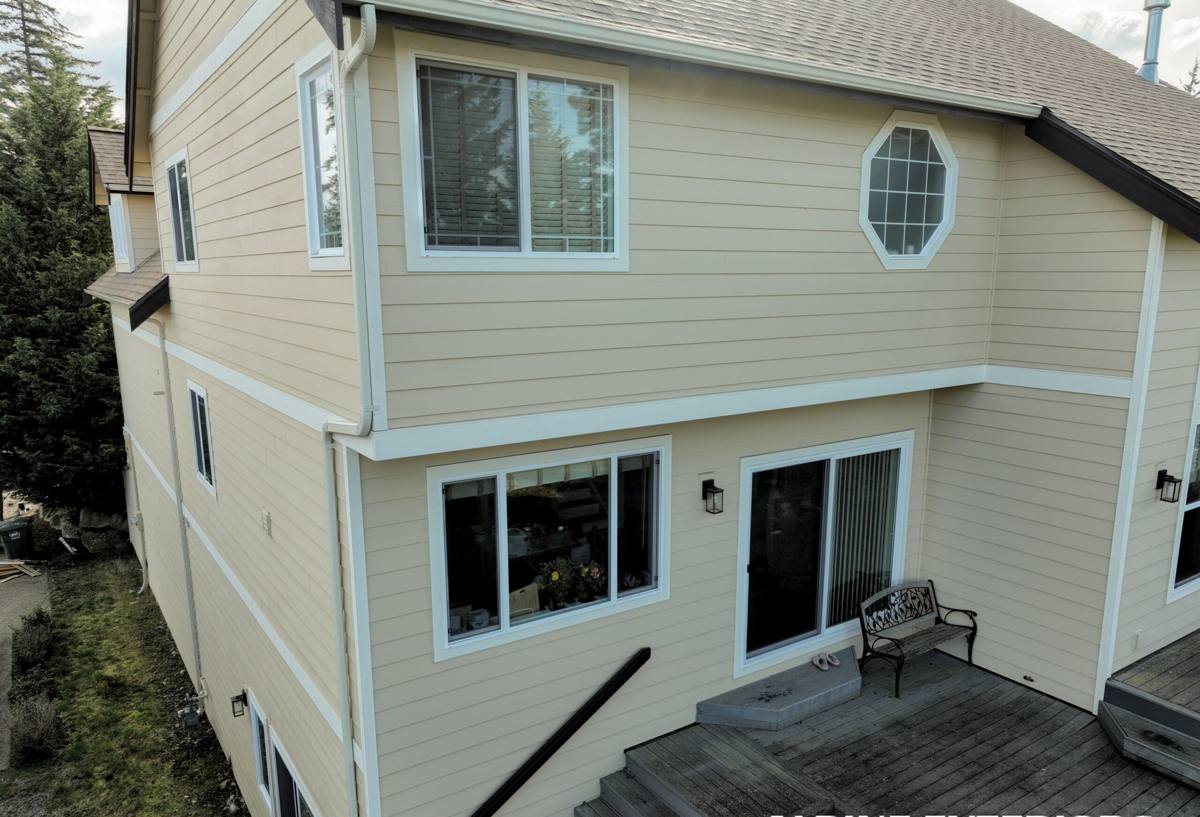
What Lynden's Climate Actually Does to a Deck
Whatcom County's weather is consistent in a way that punishes shortcuts. Homeowners here are dealing with a specific combination of stressors:
- Extended damp periods: Long stretches of overcast, drizzly days keep deck surfaces and substructures wet far longer than a single hard rain would.
- Moss and algae growth: Shaded decks, north-facing decks, and anything under tree cover can stay damp enough, long enough, for moss and green algae film to establish — making boards slick and hiding moisture underneath.
- Freeze-thaw cycling: Whatcom County gets enough cold snaps each winter that any water trapped in a joint, fastener hole, or ledger connection can freeze, expand, and work a fastener or board loose over a few seasons.
- Driving rain against the house: Wind-driven rain doesn't just fall on a deck surface — it gets pushed sideways into ledger connections and rim joists where the deck meets the house, which is where the most serious rot problems start.
None of this is unique to Lynden, but it's persistent here in a way that homes in drier climates simply don't deal with. A deck built to a generic national spec will survive it for a while. A deck built for this specific weather pattern will survive it for decades.
Why Composite Makes Sense Here
Composite decking earns its keep in a climate like this because it doesn't absorb water the way wood does, doesn't need annual staining to keep moisture out, and won't develop the soft, splintering rot that untreated or under-maintained wood decks get after a few wet winters. It also resists the moss and algae staining that's a constant fight on shaded wood decks in this area — composite surfaces are easier to clean and don't feed mildew growth the way bare or weathered wood fiber does.
That said, composite isn't maintenance-free, and it isn't foolproof against a bad install. The board itself can shrug off moisture — but the frame underneath it, the flashing where it meets your house, and the gaps left for airflow are still 100% dependent on how the job was done.
What a Correct Composite Decking Job Actually Involves
This is the part of a deck project that matters most and gets talked about least. Anyone can screw composite boards to a frame. Doing it right for a Whatcom County winter means getting these details right:
Ledger and Flashing
Where the deck attaches to your house is the single most common failure point on any deck in this region. Proper ledger board flashing — installed to shed water away from the house rather than trap it against the rim joist — is non-negotiable. This is also the connection point structural codes scrutinize most closely, and for good reason: a rotted ledger connection is a safety issue, not just a cosmetic one.
Substructure and Joist Spacing
Composite decking has different span and joist-spacing requirements than wood, and those requirements vary by brand and board profile. Installing composite boards over a frame built to wood-decking spacing is one of the most common shortcuts we see — it can lead to noticeable bounce, and over time, excess flex that stresses the board's fastening system.
Drainage and Airflow Underneath
A deck built low to the ground, or over a joist bay with poor airflow, holds moisture underneath far longer after Lynden's wet weeks. Correct grading beneath the deck, gapping between boards, and in some cases a drainage or ventilation system underneath low decks all matter more here than they would in a dry climate.
Fasteners and Hidden Fastening Systems
Most composite systems today use hidden clips rather than face screws, which gives a cleaner look and avoids the water-collecting screw holes that plague older wood and early composite decks. Getting clip spacing and board expansion gaps right is a manufacturer-spec detail, not a guess — composite boards expand and contract with temperature more than wood does, and gaps that are too tight will buckle over a Whatcom County temperature swing.
Stairs, Railings, and Post Connections
Post bases and stair stringers are exposed to the same driving rain and standing moisture as the rest of the deck, often worse, since they sit closer to grade. Proper post-base hardware and stringer protection prevent these from becoming the first thing to fail.
Composite vs. Wood vs. PVC: What Makes Sense for a Lynden Deck
| Factor | Wood (Cedar/Treated) | Composite | PVC/Vinyl |
|---|---|---|---|
| Moisture resistance | Moderate — needs regular sealing | High — engineered to resist rot | Highest — fully synthetic |
| Moss/algae resistance | Low — porous surface feeds growth | Good — smoother, denser surface | Good — non-porous surface |
| Annual maintenance | Staining/sealing most years | Occasional cleaning | Occasional cleaning |
| Upfront cost | Lowest | Mid-range | Higher |
| Look/feel | Natural wood grain | Wood-look, warmer underfoot | Uniform, can feel less natural |
| Typical warranty | Material only, if any | 25-30 year fade/stain, varies by brand | Often lifetime on material |
Most Lynden homeowners land on composite because it's the practical middle ground — meaningfully lower maintenance than wood without the higher price point and sometimes plasticky feel of full PVC. The right call still depends on your budget, how much shade your deck sits in, and how the deck ties into the rest of your home's exterior.
Our Process for a Lynden Composite Deck
- On-site assessment: We look at your existing structure (if replacing a deck), sun/shade exposure, drainage around the foundation, and how water currently moves across the site.
- Structural plan: We spec the substructure to the composite manufacturer's actual span and spacing requirements — not a generic wood-deck frame with composite laid over it.
- Board and color selection: We walk you through composite lines and profiles that hold up well in continuously damp, shaded conditions, not just what looks best in a sunny showroom sample.
- Permitting: Deck work typically requires a permit through Whatcom County or the relevant local jurisdiction, depending on size and attachment to the house. We handle that paperwork as part of the job.
- Installation: Ledger flashing, joist layout, hidden fastening, and proper board gapping are all done to the manufacturer's installation spec, which is what keeps the warranty valid.
- Final walkthrough: We go over care basics with you before we consider the job done — what to clean, what to check each season, and what's covered under warranty.
What Drives Cost on a Composite Deck Project
| Cost Factor | Why It Matters |
|---|---|
| Deck size and shape | Square footage and how many cuts/angles are needed both scale labor and material |
| Board tier | Entry-level composite lines cost less than premium capped or multi-tone boards |
| Substructure condition | Replacing rotted framing costs more than building on a sound existing structure |
| Height and railing | Elevated decks need code-compliant railings and stair systems, which add cost |
| Site access | Tight lots or decks over difficult grade take longer to frame and drain properly |
| Permit requirements | Larger or attached decks typically require permitting, which adds time and a fee |
Composite decking generally runs a noticeably higher upfront cost than pressure-treated wood, but the gap narrows over the life of the deck once you factor in the sealing, staining, and repair work a wood deck needs to survive this climate. We'll walk through real numbers for your specific deck during an estimate rather than quoting a number that doesn't reflect your site.
Signs an Existing Deck Was Built Wrong for This Climate
If you're dealing with an existing deck rather than starting fresh, these are the warning signs we look for on Lynden inspections:
- Persistent green or black staining that returns quickly after cleaning
- Soft or spongy spots at the ledger connection or near post bases
- Boards that have visibly bowed, cupped, or gapped unevenly
- Standing water or slow drainage underneath the deck after rain
- Rust streaking from fasteners, which often signals the wrong fastener type was used
- Railings or stair stringers that feel loose or flex under weight
Any of these point to a substructure or installation issue rather than a normal wear issue, and they're worth having looked at before they become a safety concern rather than just a cosmetic one.
Maintaining a Composite Deck Through a Whatcom County Winter
Composite cuts down on maintenance significantly, but "low-maintenance" isn't "no-maintenance" — especially with a moss season as long as this region's.
- Clean gaps between boards each fall: Leaves and debris trapped between boards hold moisture and feed moss growth over winter.
- Rinse or lightly scrub shaded areas: Spots that don't get much sun benefit from an occasional scrub with a soft brush and mild soap to keep algae film from establishing.
- Check drainage paths underneath: Make sure gutters, downspouts, and grading around the deck are still directing water away, not under it.
- Inspect railings and stairs once a year: A quick check for loose posts or fasteners catches small issues before winter freeze-thaw makes them worse.
- Avoid pressure washing at close range: High-pressure spray directly against composite boards can damage the surface texture on some product lines — a garden hose and brush is usually enough.
Why It Matters to Hire a Crew That Already Works in Lynden
Whatcom County's permitting requirements, typical soil and drainage conditions, and weather patterns aren't the same as a crew coming up from a drier region might be used to. A contractor who already works in Lynden and the surrounding Birch Bay area knows how local building departments handle deck permits, what substructure approach actually holds up through a real Whatcom County winter, and which composite lines perform well in shaded, damp yards rather than just on paper. That familiarity shows up in fewer surprises during the job and a deck that's built for the weather it will actually face, not a generic national spec.
Get a Straight Answer on Your Lynden Deck Project
Whether you're planning a new composite deck or trying to figure out if an existing one is holding up the way it should, we're happy to take a look and give you an honest read on what it needs. There's no pressure and no obligation — just a straightforward estimate based on what your home and your yard actually require. Fill out the form below to get started.