 Birch Bay
 Board & Batten Siding in Lynden: A Look That Has to Work as Hard as It Looks Good
Board and batten is one of the most requested siding profiles we install in Whatcom County, and Lynden homeowners have good reason to like it. The vertical lines suit farmhouse, craftsman, and modern builds alike, and it gives a home a cleaner, more custom look than standard lap siding. But board and batten is also a profile that punishes a sloppy installation faster than most others. Every vertical batten creates a seam, and every seam is a place where water, wind, and time can find a weakness if the job isn't done right. In a region that sees driving rain off the Salish Sea, salt-laden air moving inland, and a moss season that can stretch for months, that margin for error gets even thinner.
This page is specifically about board and batten siding for homes in the Lynden area, installed by the same crew that works Birch Bay and the rest of Whatcom County. We're not going to give you a generic national rundown of the product — we're going to walk through what this profile needs to hold up here, what a correct installation actually involves, and why our crew only installs it in one material.
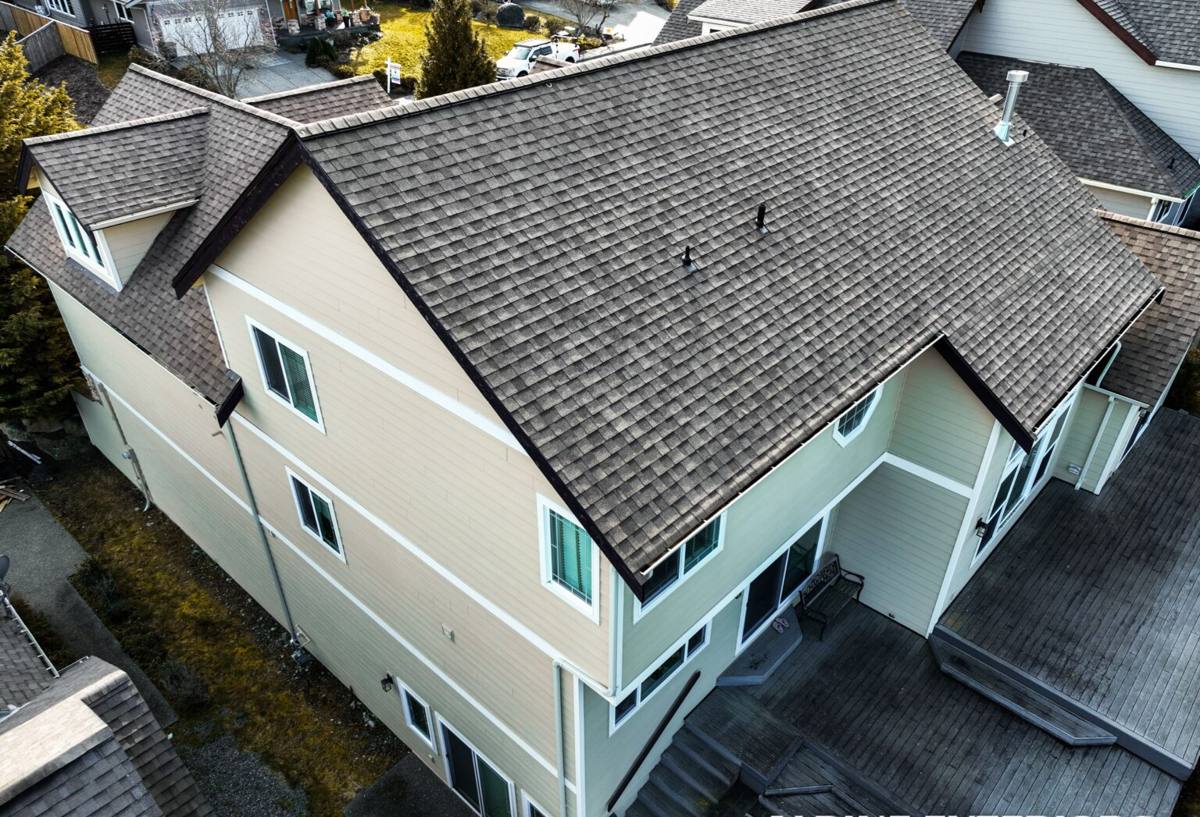
What Whatcom County Weather Does to Board & Batten Siding
Board and batten siding fails in predictable ways when it's installed without the local climate in mind. Understanding those failure points is the whole reason our process looks the way it does.
Moisture Behind the Battens
The batten strips that give this profile its signature look also create narrow cavities behind them. If those cavities aren't detailed correctly — proper flashing, drainage space, and sealant placement — they trap moisture instead of shedding it. In a climate with long stretches of steady rain and high humidity, trapped moisture behind battens doesn't just sit there; it feeds rot in wood-based products and encourages the exact conditions that grow moss and mildew on the surface.
Salt Air and Fastener Corrosion
Homes closer to the water pick up airborne salt that settles on every exterior surface, including siding fasteners. Standard fasteners can corrode faster in this environment, and a corroding fastener behind a batten is a problem you won't see until the batten itself starts to fail. Corrosion-resistant fasteners matter more here than in an inland, dry climate.
Moss and Sustained Dampness
Whatcom County's moss season is long because the conditions that grow moss — shade, moisture, and mild temperatures — persist for much of the year. Moss holds moisture against a surface far longer than open air would, and on a vertical batten joint, that sustained dampness is exactly what accelerates deterioration in materials that aren't dimensionally stable or moisture-resistant.
Why Material Choice Matters More on This Profile
Board and batten is often installed in wood, engineered wood, or fiber cement. We install it only in James Hardie fiber cement. That's not a marketing preference — it's a direct response to how this profile behaves under Whatcom County conditions.
- Wood battens and boards swell, shrink, and cup with repeated wet-dry cycles, which opens gaps at the seams over time — the worst possible outcome for a profile that depends on tight vertical joints.
- Engineered wood products can perform well when perfectly sealed and maintained, but any breach in the factory coating at a cut edge or fastener point becomes an entry point for moisture, and board and batten has more cut edges and fastener points per square foot than lap siding.
- Fiber cement doesn't swell or rot, holds its dimension in wet and dry cycles, and is non-combustible — which matters given wildfire smoke and ember exposure has become a broader Pacific Northwest concern in recent years, even in wetter coastal counties.
James Hardie's HZ5 product line is engineered for the freeze-thaw and moisture-cycling conditions common to the Pacific Northwest, and its factory-applied ColorPlus finish resists the fading and moisture intrusion that field-applied paint on wood or engineered wood battens is more prone to over time.
What a Correct Board & Batten Installation Involves
The visual result of board and batten is simple. What's behind it should not be treated as simple. Here's what we consider non-negotiable on every job:
| Step | Why It Matters in This Climate |
|---|---|
| Weather-resistive barrier, correctly lapped | Directs incidental moisture down and out rather than letting it track sideways behind battens |
| Rain screen / drainage gap | Lets any moisture that does get behind the siding actually drain and dry instead of sitting against the wall assembly |
| Corrosion-resistant fasteners | Reduces fastener failure from salt air exposure over the life of the siding |
| Proper batten spacing and fastening pattern | Keeps board and batten dimensionally stable through wet winters and drier summers |
| Flashing at all penetrations and terminations | Windows, hose bibs, and light fixtures are the most common leak points on any vertical siding profile |
| Factory-finished cut edges sealed per manufacturer spec | Every batten cut is a potential moisture entry point if left untreated |
Our Process for Lynden-Area Board & Batten Jobs
We work Whatcom County regularly, and our process reflects the fact that we're not learning the local climate on your roofline.
1. On-Site Assessment
We look at your home's specific exposure — how much wind-driven rain it takes, how close it is to moisture-holding shade, and the condition of the existing wall assembly underneath your current siding.
2. Detailing Plan Before Installation
Before a single board goes up, we plan out flashing details, drainage gap approach, and fastener spacing for your home specifically — not a generic template.
3. Installation to James Hardie Specification
Board and batten installed off-spec is one of the most common causes of premature siding failure we see when we're called in to look at other contractors' work. We install to the manufacturer's published installation requirements because that's what keeps the transferable warranty intact and the assembly performing as designed.
4. Final Walkthrough
We walk the finished job with you, point out how the drainage and flashing details were handled, and make sure you know what (if any) simple upkeep is worth doing down the road.
What to Check Before Hiring Anyone for Board & Batten Work
Board and batten is a profile where a good-looking install and a correctly built install can be hard to tell apart from the ground. Ask any contractor bidding the job:
- Do you install a drainage gap behind board and batten, or direct-to-sheathing?
- What fastener type do you use, and is it rated for coastal or high-moisture exposure?
- How do you flash around windows, hose bibs, and other penetrations on a vertical profile?
- Are you a James Hardie installer, and do you follow their published fastening and clearance specs?
- Does the manufacturer warranty stay valid with your installation, or does it require separate registration steps?
- Can you explain, in plain terms, how your process accounts for our specific weather?
A contractor who can answer these clearly and specifically, without hedging, is one who's actually done this work in this climate before — not just read about it.
Why a Crew That Already Works Birch Bay and Whatcom County Matters
Board and batten siding done right requires judgment calls specific to the site: how exposed is this wall, how much wind-driven rain does it actually take, how shaded is it, how close to salt air. A crew that works Whatcom County regularly has already made those calls dozens of times over. That's the difference between an installer following a manual and a crew that knows what this region's rain, salt, and moss do to a wall assembly over ten winters, not just the first one.
What Board & Batten Costs to Do Right
Costs vary based on square footage, the condition of what's being removed, how much trim and detail work the design calls for, and site access. Board and batten typically runs somewhat higher than standard lap siding on a like-for-like basis because it uses more linear material and more fastening and flashing detail per square foot. We won't quote a number without seeing the home, but we're happy to walk through the real cost factors with you honestly during an estimate, including where the money goes toward things you can't see once the job is finished — the drainage plane, the flashing, the fastener quality — rather than just the visible board and batten look.
If you're considering board and batten siding for a home in the Lynden area, we're glad to come take a look and walk you through what your specific home would need. There's no pressure and no cost for the estimate — just a straight answer about what correct board and batten siding looks like for your house and this climate.