 Birch Bay
 Why Ferndale's Weather Puts Extra Demand on a Roof
Ferndale sits close enough to the water that salt air is a real factor in how a roof ages, and far enough into Whatcom County's wet season that "driving rain" isn't an exaggeration — it's a normal Tuesday from November through March. Add in the long stretch of overcast, damp months that let moss get a foothold on anything with texture or shade, and you've got a climate that's genuinely tougher on a roof than most manufacturers' warranty language assumes.
None of that means a roof here is doomed to fail early. It means the roof needs to be matched to the conditions, and it needs to go on correctly the first time. That's the whole case for metal roofing in this area, and it's why we treat a Ferndale metal roof installation differently than we would in a drier, calmer inland market.
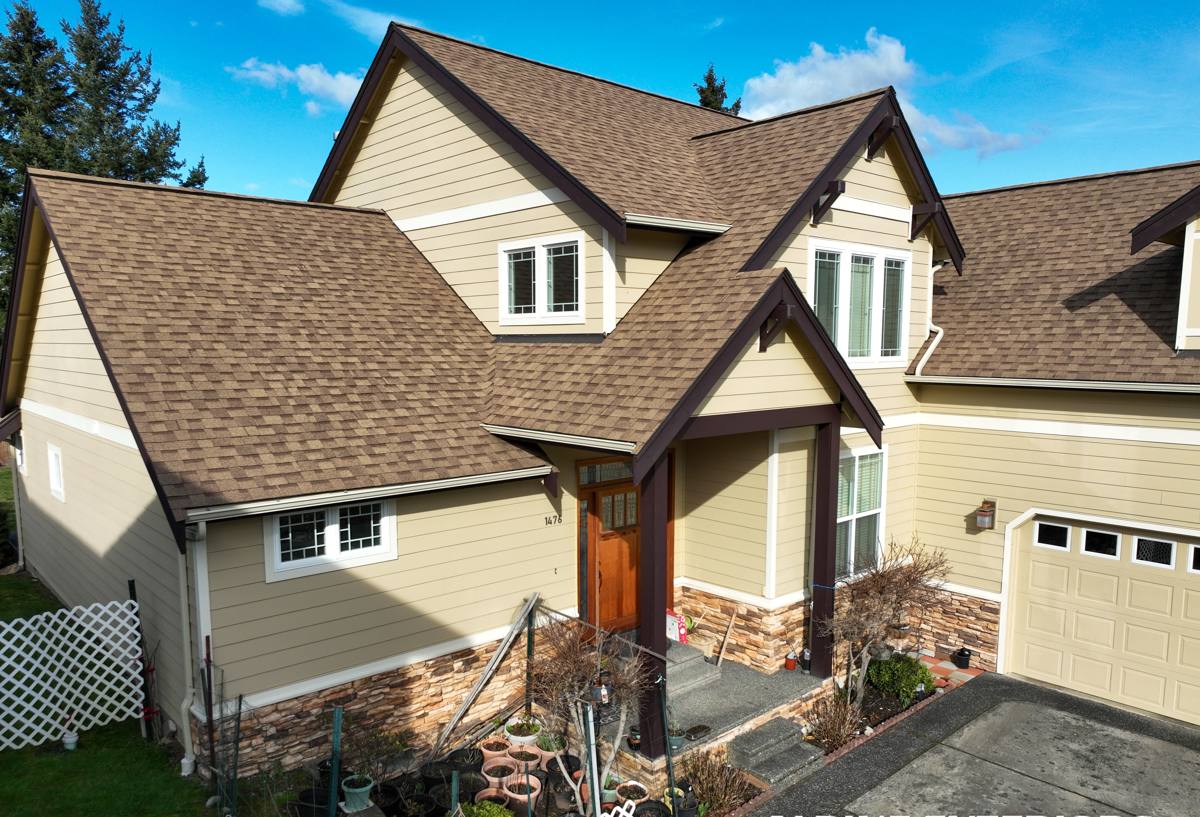
Why Metal Roofing Holds Up Well in This Climate
Metal roofing isn't a trend pick for coastal Whatcom County homes — it's a practical one. A few reasons it tends to outperform other roofing types here:
- Steep water shed: Metal panels move driving rain off the roof fast, with fewer overlapping edges for wind-blown water to work its way under.
- Nothing for moss to grip: Moss needs a rough, porous surface and moisture that lingers. A smooth metal panel gives it almost nothing to hold onto, especially compared to shingle granules or wood shakes.
- No absorbent surface to break down: Asphalt shingles slowly lose granules and stiffness under repeated wet-dry cycles. Metal doesn't absorb water the same way, so that particular aging mechanism isn't in play.
- Long service life: A correctly installed and finished metal roof is designed to outlast several shingle roof replacement cycles, which matters when you're weighing lifetime cost, not just sticker price.
The trade-off is that metal roofing is less forgiving of a rushed or sloppy install than shingles are. Get the details wrong and you trade one set of problems for another — which is why the installation section below matters as much as the material choice.
Panel Types and Finishes: What Actually Fits a Ferndale Home
"Metal roofing" covers a range of products, and the right one depends on the home's roof pitch, style, and how close it sits to salt air exposure. We walk through the real trade-offs with every homeowner rather than pushing one system for every job.
| Panel Type | Best For | Trade-Offs to Know |
|---|---|---|
| Standing seam (concealed fasteners) | Most homes, especially anywhere near salt air or high wind exposure | Higher upfront cost, but no exposed screws to work loose or corrode over time |
| Exposed-fastener panels | Budget-conscious projects, outbuildings, shops, and detached garages | Fasteners need periodic inspection and eventual re-torquing or replacement as gaskets age |
| Metal shingle/shake profiles | Homeowners who want a traditional roofline look with metal's performance | More seams and fastening points than standing seam, so installation quality matters even more |
Finish and coating matter as much as panel style. In a coastal-influenced climate, we generally steer homeowners toward higher-grade coatings and, where salt exposure is a real concern, toward metals and fastener hardware rated for corrosion resistance rather than the cheapest available option. It's a small cost difference upfront against a much bigger difference in how the roof looks and performs after a decade of Whatcom County winters.
Steel vs. Aluminum
Both are common, well-proven roofing metals. Steel panels, properly coated, hold up fine in most inland and semi-coastal settings. For homes with more direct salt air exposure — closer to the water, more open to onshore wind — aluminum's natural corrosion resistance can be worth the difference in material cost. We'll walk the site and give you a straight recommendation rather than a default answer.
What a Correct Metal Roof Installation Actually Involves
Most metal roof problems we get called out to inspect aren't material failures — they're installation shortcuts. A metal roof is a system, and every layer has a job.
Underlayment and Moisture Barrier
Metal panels aren't the only thing keeping water out. A high-quality synthetic or self-adhered underlayment underneath is what protects the deck if wind-driven rain ever gets past the panel seams — and in this area, at some point it will try. This layer gets skipped or downgraded more often than homeowners realize.
Fastening and Panel Layout
Panel spacing, screw pattern, and expansion allowance all affect how the roof handles temperature swings and wind uplift. Panels that are fastened too rigidly, or with the wrong pitch of screw, can back out or crack over years of expansion and contraction.
Flashing and Penetrations
Chimneys, vents, skylights, and valleys are where the vast majority of roof leaks actually start — on metal roofs and every other kind. Correct step flashing, properly formed valley metal, and sealed penetrations matter more than the panel choice itself.
Ventilation
A roof deck that can't breathe traps moisture underneath the metal, which shows up later as rot or premature fastener corrosion from the inside out. Ridge and soffit ventilation sized correctly for the attic space is part of doing this right, not an optional upgrade.
Our Process, From First Call to Final Walkthrough
- On-site assessment: We look at your current roof, deck condition, ventilation, and any trouble spots — valleys, chimneys, low-slope sections — before recommending a panel type or finish.
- Straight-talk estimate: You get a clear breakdown of material, labor, and any deck repair or ventilation work needed, with the reasoning behind each recommendation.
- Tear-off and deck prep: Old roofing comes off, the deck gets inspected and repaired where needed, and any soft or water-damaged sheathing is addressed before anything new goes down.
- Underlayment and flashing installation: This is the part of the job that's invisible once it's finished — and the part that determines whether the roof stays leak-free for decades.
- Panel installation: Panels go on to manufacturer spec, with attention to fastening, expansion allowance, and clean, tight seams.
- Site cleanup and final walkthrough: We clear debris and fasteners from the yard and driveway, then walk the finished roof with you so you know exactly what was done.
Keeping Moss and Salt Corrosion in Check Long-Term
Metal roofing needs far less maintenance than shingles, but "less" isn't "none." A little attention keeps the roof performing the way it's supposed to for its full service life.
- Clear overhanging branches so leaves and needles don't collect in valleys and around penetrations, which is where moisture and moss are most likely to start.
- Rinse off accumulated debris and grime once or twice a year — a simple garden hose is usually enough on a smooth metal surface.
- Check exposed fasteners periodically if your roof uses an exposed-fastener panel system, since gaskets and screws are the parts most likely to need attention over time.
- Keep gutters clear so water isn't backing up against the roof edge or fascia during heavy rain events.
- Have any dented, scratched, or scuffed panels touched up promptly — bare metal exposed to salt air and moisture is where corrosion gets its start.
What Affects the Cost of a Metal Roof in Ferndale
There's no single number that applies to every home, but the cost drivers are consistent. We'll always give you a specific number for your roof, not a generic estimate.
| Factor | Why It Matters |
|---|---|
| Panel type and finish | Standing seam with a premium coating costs more upfront than exposed-fastener panels, but typically needs less attention over time |
| Roof complexity | Steep pitches, multiple valleys, dormers, and chimneys all add labor and flashing work |
| Deck condition | Rotted or water-damaged sheathing found during tear-off needs to be replaced before new roofing goes on |
| Ventilation upgrades | Adding or correcting ridge and soffit ventilation adds cost but protects the investment |
| Tear-off vs. overlay | Full tear-off costs more than overlay but gives us a chance to inspect and fix the deck underneath |
Why Hiring a Crew That Already Works in Ferndale Matters
A metal roof installed to spec in a dry, mild climate can get away with shortcuts that simply don't hold up here. A crew that regularly works Ferndale and the surrounding Whatcom County area already knows which valleys collect debris in a west wind, how much ventilation a typical attic in this area actually needs, and which fastener and flashing choices are worth the extra cost given what the salt air and rain do over a decade. That's not something you can fully substitute with a spec sheet from a manufacturer based somewhere with a very different climate.
It also means faster, more accurate estimates, because we're not guessing at load requirements or weather exposure — we're applying what we already know about roofs in this specific part of Washington.
If you're weighing a metal roof for your Ferndale home, we're happy to walk the roof with you, talk through panel and finish options honestly, and give you a clear, no-pressure estimate. Use the form below to get started.