 Birch Bay
 Building Decks for Ferndale's Coastal Conditions
Ferndale sits close enough to Birch Bay and the Strait of Georgia that homes here deal with a version of coastal weather that inland Whatcom County doesn't see the same way. Salt-laden air moves in off the water, rainfall is frequent and prolonged rather than heavy and brief, and the shoulder seasons bring long stretches of damp, low-light weather that keeps wood surfaces wet for days at a time. A deck built without that in mind will look fine for a year or two and then start showing problems — soft spots, lifted fastener heads, green film underfoot, gaps opening between boards.
We build decks in Ferndale and the surrounding Birch Bay area on a regular basis, and the specification we use here is different from what we'd use for a dry-side Washington project. This page covers what that actually means: material choices, framing and drainage details, our process from first visit to final walkthrough, and the questions worth asking before you hire anyone to build a deck that has to survive this climate for decades, not years.
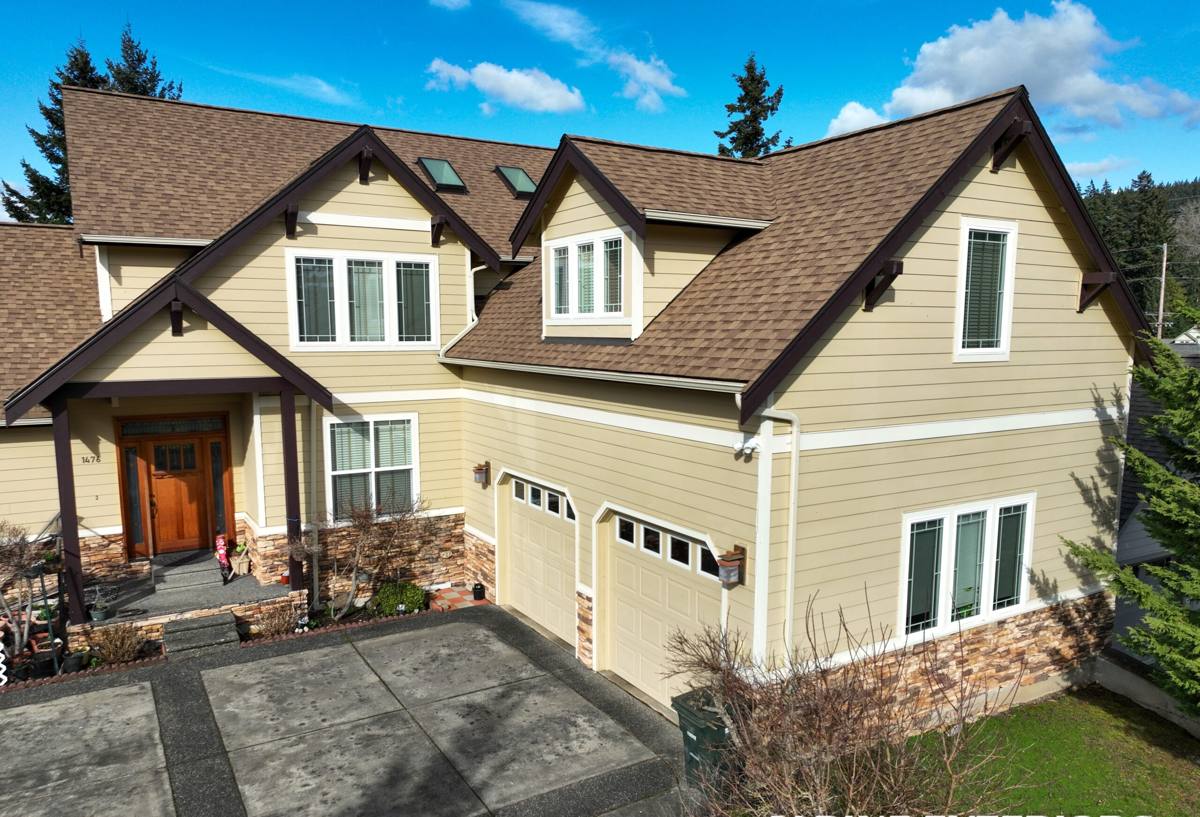
What Ferndale's Climate Actually Does to a Deck
Salt Air and Metal Fasteners
Proximity to the bay means airborne salt settles on every exterior surface, including the fasteners and hardware holding your deck together. Standard electro-galvanized screws and joist hangers corrode faster near the coast than they would twenty miles inland. Once a fastener starts rusting, it weakens, stains the surrounding wood, and eventually needs replacing — which usually means partial disassembly. This is why we spec stainless steel or heavy-duty coated fasteners rated for coastal exposure on every deck we build in this area, not just as an upsell but as the baseline.
Driving Rain and Moisture Load
Whatcom County rain doesn't just fall straight down — wind off the water drives it sideways into ledger connections, stair stringers, and any horizontal surface that isn't sloped to shed water. A deck board that stays wet for days at a stretch, over and over through the fall and winter, is under a very different moisture load than the same board in a drier climate. That affects which materials hold up, how we frame for drainage, and how we flash the connection where the deck meets your house — the single most common source of rot we find on older decks in this area.
Moss and the Long Wet Season
Moss needs shade, moisture, and time, and Ferndale's long wet season provides all three. Moss on a deck surface isn't just cosmetic — it holds moisture against the board, creates a slick and genuinely dangerous walking surface on stairs and ramps, and accelerates surface breakdown on wood decking. Sun exposure, board spacing, and surface texture all factor into how much moss a deck collects, and we account for that in the design rather than leaving it as a maintenance problem for you to fight every spring.
Decking Materials: What Holds Up Here
There's no single "best" decking material — the right choice depends on your budget, how much upkeep you want to do, and how much sun the deck actually gets. Here's how the common options compare for a Ferndale-area install specifically.
| Material | Coastal/Moisture Performance | Maintenance | Typical Lifespan Here |
|---|---|---|---|
| Pressure-treated wood | Good if properly sealed and re-sealed; vulnerable if maintenance lapses | Annual cleaning, re-sealing every 1-2 years | 15-20 years with upkeep |
| Cedar | Naturally moisture- and insect-resistant, but still needs sealing near the coast | Regular cleaning, periodic sealing | 15-20 years with upkeep |
| Composite decking | Excellent — doesn't absorb water or rot, resists moss staining better than wood | Occasional washing, no sealing or staining | 25-30+ years |
| PVC decking | Excellent — fully moisture-proof, best option directly exposed to salt air | Lowest of any option | 25-30+ years |
We install all of the above and won't push you toward the most expensive option if a well-maintained wood deck fits your budget and expectations better. What we won't do is install decking without the fastening and framing details that keep whichever material you choose performing the way it's supposed to. A composite deck built on undersized, poorly ventilated framing will still fail early — the substructure matters as much as the surface.
What a Correct Deck Build Actually Involves
Ledger Attachment and Flashing
The ledger board — where the deck attaches to your house — is the single point of failure we see most often on decks that weren't built for this climate. It needs proper flashing that directs water away from the house framing, not just caulk, which fails over time and lets water track behind the ledger and into the wall assembly. This is invisible once the deck is finished, which is exactly why it's the detail most likely to get skipped by a crew trying to save time.
Framing and Ventilation
Joists and beams sized correctly for the span and load, spaced to allow airflow underneath the deck, and either naturally durable or treated lumber — that's the baseline. Poor ventilation under a low deck traps moisture against the framing year-round, which is a slow but real problem in a climate that rarely gives wood a chance to fully dry out.
Fasteners and Hardware
Stainless steel or coated coastal-rated screws, joist hangers, and structural connectors throughout — not just on the visible surface. Mixing metals (for example, standard hangers with stainless screws) can actually accelerate corrosion through galvanic reaction, so hardware and fasteners need to be matched correctly.
Drainage and Slope
A deck surface should have a slight slope away from the house so water sheds rather than pooling on the boards or against the ledger. This is a small detail in the plans that has a big effect on how long the deck stays dry between rain events.
Railings and Stairs
Stairs and railings take the brunt of foot traffic and are usually the first place moss and slickness become a safety issue. We factor tread material, spacing, and drainage into stair design specifically because it's the part of the deck most likely to get walked on in wet conditions.
Our Process for a Ferndale Deck Project
- On-site visit: We look at your yard's sun exposure, drainage patterns, and how close you are to prevailing weather off the water — all of which affect material and design recommendations.
- Design and material selection: We walk through the options honestly, including cost, maintenance, and expected lifespan for your specific site, not a generic pitch.
- Permitting: Deck projects typically require a permit through the applicable local jurisdiction; we handle that process as part of the job.
- Framing and structural work: Ledger flashing, joist layout, and hardware selection done to coastal-appropriate specs, not just code minimums.
- Decking, railing, and stairs installed: Attention to spacing and drainage details that reduce moss buildup and standing water.
- Final walkthrough: We go over care and maintenance specific to the material you chose, so you know what upkeep actually looks like going forward.
Cost Factors for a Custom Deck in This Area
Every deck is different, but the same handful of factors drive cost on most Ferndale-area projects:
| Factor | Why It Affects Cost |
|---|---|
| Decking material | Composite and PVC cost more upfront than wood but require far less long-term maintenance |
| Deck size and height | Larger decks and multi-level designs require more framing, footings, and stairs |
| Site access and grading | Sloped or hard-to-access yards increase labor and sometimes require engineered footings |
| Railing style | Cable, glass, and custom railing systems cost more than standard wood or composite balusters |
| Hardware and fastener spec | Coastal-rated stainless hardware costs more than standard fasteners but avoids early corrosion |
We provide a detailed, itemized estimate before any work starts, so you know exactly what you're paying for and why — including where the coastal-specific upgrades add cost and why we consider them worth it.
Why Hiring a Crew That Works This Area Matters
A deck built to a generic spec sheet, without accounting for salt exposure, driving rain, and a long moss season, tends to develop problems earlier than it should — usually starting with the parts you can't see, like the ledger connection or the fasteners inside the framing. A crew that regularly works Ferndale and the broader Birch Bay area already knows which details matter here and builds to that standard by default, not as an afterthought after something fails.
It also matters for permitting and site conditions — familiarity with how projects get handled locally and what typical Whatcom County lots look like in terms of drainage and exposure saves time and avoids surprises mid-project.
Maintenance Checklist for Coastal Decks
Whatever material you choose, a few habits go a long way toward getting the full expected lifespan out of your deck in this climate:
- Sweep debris off the deck regularly, especially in fall when leaves and needles trap moisture against the surface
- Wash the deck at least once or twice a year to remove salt residue, dirt, and early moss growth before it takes hold
- Check railings and stair connections annually for looseness — a sign hardware may be corroding
- Re-seal wood decking on the manufacturer-recommended schedule; don't wait until it looks visibly dry or gray
- Keep gutters and downspouts near the deck clear so runoff isn't dumping extra water onto or under the structure
- Trim back overhanging vegetation to reduce shade and speed up drying time after rain
If you're planning a new deck or replacing one that's showing its age, we're happy to take a look and put together a straightforward, no-pressure estimate for your Ferndale property. Use the form below to get started.