 Birch Bay
 Windows Built for Point Whitehorn's Exposure
Point Whitehorn sits close enough to the water that its homes take a different kind of weathering than houses a few miles inland in Whatcom County. Salt-laden air off the Strait works into window hardware and finishes year-round, wind-driven rain finds its way into any gap in the flashing during winter storms, and the long gray stretch of moss season keeps trim, sills, and siding damp for months at a time. Standard windows, or windows installed without attention to these conditions, tend to show problems early: clouded glass seals, swollen sashes, corroded hardware, and rot starting at the corners where water collects.
Custom windows done right for this stretch of Birch Bay aren't about a fancier look. They're about matching the window unit, the flashing details, and the installation sequence to what this specific microclimate throws at a house. That's the difference between a window that still opens smoothly in ten years and one that's sticking, staining, or leaking by year five.
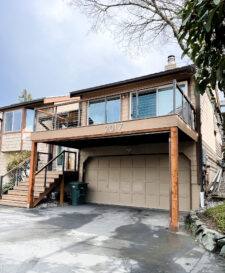
What "Custom" Actually Means Here
Custom windows means the units are built to the exact rough openings of your home rather than forced into stock sizes, and the frame, glazing, and hardware are chosen for how they'll hold up in a coastal-influenced environment. For older Point Whitehorn homes, that often includes odd-sized openings, out-of-square framing after decades of settling, or a mix of window styles added over different renovations. A correct custom job accounts for all of that instead of papering over it with trim.
Common reasons homeowners in this area go custom
- Original wood windows have failed at the sill or lower corners from years of moisture exposure
- Aluminum-frame windows from the 1970s–90s are pitting, corroding, or no longer sealing
- Rough openings are out of square or slightly out of size, so stock replacement units won't fit cleanly
- An addition or remodel needs window styles that match the original house rather than whatever is in stock
- Persistent fogging between panes signals failed seals that off-the-shelf swaps won't reliably fix if the opening itself is compromised
Frame Materials: What Holds Up Near the Water
Frame choice matters more here than in a lot of inland Whatcom County neighborhoods, because salt air and constant moisture accelerate whatever weaknesses a material has.
| Frame Material | How It Handles Salt Air & Rain | Maintenance | Our Take |
|---|---|---|---|
| Vinyl (quality, welded corners) | Won't corrode or rust; UV-stable formulations resist fading from coastal sun | Low — occasional cleaning | Solid, cost-effective choice for most Point Whitehorn homes |
| Fiberglass | Excellent — dimensionally stable in wet-dry cycling, doesn't expand/contract like vinyl | Low | Best long-term performer where budget allows, especially on more exposed elevations |
| Wood (clad exterior) | Good if cladding is intact; bare or damaged wood is vulnerable to the wet climate and moss growth | Moderate to high — cladding and seals need periodic inspection | Only where the look is a priority; we're upfront about the upkeep |
| Aluminum (uncoated or poorly finished) | Poor — prone to pitting and corrosion in salt air over time | High once corrosion starts | We generally steer homeowners away from this near the water; it's a maintenance burden we'd rather not sell you |
None of these are a "bad product" across the board — aluminum performs fine in dry inland climates, and wood has real appeal. Our recommendations are about matching material to Point Whitehorn's specific exposure, not knocking a brand.
Glass and Glazing for a Wet, Gray Climate
The Pacific Northwest's cloud cover and rain mean two things matter more here than in sunnier regions: keeping heat in during long damp winters, and keeping condensation from becoming a chronic moisture problem on interior sills and frames.
What we look at
- Double or triple pane with argon fill — cuts heat loss and reduces the interior condensation that shows up on cold, damp mornings
- Low-E coatings — help manage heat loss without darkening the room, useful given how much gray-sky daylight this area gets
- Warm-edge spacers — reduce the cold spot at the glass edge where condensation and eventual seal failure tend to start
- Tempered glass where code requires it — near doors, low sills, and other hazard locations
We won't push triple-pane on every window if it's not the right call for your budget or the specific opening — but for west- and northwest-facing windows that take the brunt of driving rain and wind, the upgrade often earns its keep.
Flashing and Installation: Where Most Failures Actually Start
Almost every leaking or rotting window we get called about in the Birch Bay area failed because of installation details, not because the window unit itself was bad. Driving rain doesn't need much of a gap to work its way behind trim and into wall framing, and once moisture gets in behind siding here, the long moss season keeps things from drying out between storms.
What a correct installation includes
- Inspecting the rough opening for existing rot or water damage before the new unit goes in — replacing a window over a rotten sill just hides the problem
- Installing a sloped sill pan so any water that does get past the window sheds outward instead of pooling
- Proper weather-resistive barrier integration, lapped correctly so water sheds down and out, not into the wall cavity
- Self-adhering flashing tape at the sides and head, sequenced so each layer overlaps the one below it
- Correctly sized shims and fasteners so the frame isn't racked or bowed, which stresses seals and hardware over time
- Sealant used at the right joints only — over-sealing can trap moisture instead of letting the assembly drain and dry
This sequencing is standard building science, but it takes discipline to do consistently, especially on a house where the existing framing isn't perfectly square. Skipping steps doesn't show up as a problem on install day — it shows up as a soft spot in the wall two or three winters later.
Dealing With Moss and Trim Deterioration
Moss season is a real design consideration around Point Whitehorn, not just a cosmetic nuisance. Moss and algae hold moisture against trim and siding longer than open air would, which is part of why we pay close attention to trim material and detailing right at the window perimeter.
- Cellular PVC or well-sealed composite trim resists the moisture retention that leads to rot, and doesn't need repainting as often as raw wood
- Drip caps above the window head shed water away from the top of the frame instead of letting it run down the face
- Adequate clearance and drainage paths at the sill keep debris and moss from building up directly against the window
Our Process for Point Whitehorn Homes
Because we already work regularly in this part of Birch Bay, we've got a feel for how homes here were typically built and what tends to be hiding behind the trim before we ever pull a window out.
What to expect
- On-site assessment — we measure every opening individually and check for existing moisture damage, rather than quoting off a standard size
- Honest material recommendations — based on the exposure of each elevation, not a one-size answer for the whole house
- Clear scope — you'll know upfront if a sill or framing repair is needed alongside the window itself, not after the fact
- Proper flashing and sill pan installation — every time, not just on the side of the house that's easy to see
- Cleanup and disposal — old units and debris hauled off, openings left weather-tight the same day where possible
Why Local Experience Matters for This Specific Job
A crew that hasn't worked this stretch of Whatcom County coastline can install a technically fine window and still get a bad outcome, because they're applying general practices to a house that has specific problems: salt exposure on hardware, wind-driven rain from a particular direction, and moss holding moisture against trim longer than it would a few miles inland. Knowing which elevations of a Point Whitehorn home typically take the worst weather, and having actually opened up walls in this neighborhood before, means fewer surprises during the job and a better shot at the window still performing correctly a decade out.
It also means a more useful conversation before any work starts. We can tell you, based on what we've actually seen on similar homes nearby, whether your symptoms point to a failed window or a flashing problem that a new window alone won't fix.
Cost Factors to Expect
Every home is different, so we won't quote a number without seeing the openings, but these are the main factors that move the price up or down:
| Factor | Effect on Cost |
|---|---|
| Frame material (vinyl vs. fiberglass vs. clad wood) | Fiberglass and clad wood run higher than vinyl |
| Number of panes and glazing upgrades | Triple-pane and low-E coatings add cost but reduce long-term energy loss |
| Existing rot or framing damage | Repair work at the opening adds cost but is far cheaper than deferring it |
| Window size and style (standard vs. custom shape) | Non-standard shapes and larger units cost more to fabricate |
| Number of openings done at once | Bundling multiple windows in one project typically reduces per-unit labor cost |
If you're weighing a window project for a home in Point Whitehorn, we're glad to take a look and give you a straightforward, no-pressure estimate — including telling you honestly if a repair rather than full replacement makes more sense for your situation. Use the form below to get started.