 Birch Bay
 Roof Replacement Built for the Terrell Creek Climate
Homes in the Terrell Creek area sit close enough to Birch Bay and the Strait of Georgia that the same salt-laden air affecting siding, gutters, and fasteners along the waterfront is working on your roof too — just more slowly, and less visibly, until it isn't. Add Whatcom County's long stretch of wet months, driving wind-driven rain off the water, and a moss season that can run nine months out of the year in shaded, north-facing sections, and you've got a roofing environment that's noticeably harder on materials than what you'd find twenty miles inland. A roof replacement here isn't just about swapping old shingles for new ones — it's about building an assembly that can shed wind-driven water, resist moss colonization, and hold up to slow salt-air corrosion for the full life of the material.
This page is specifically about full roof replacement for homes in and around Terrell Creek. If you're dealing with a roof that's past patching — worn out, leaking, or covered in moss that keeps coming back no matter how often it's cleaned — this is what a correct replacement looks like for this area, and how we approach it.
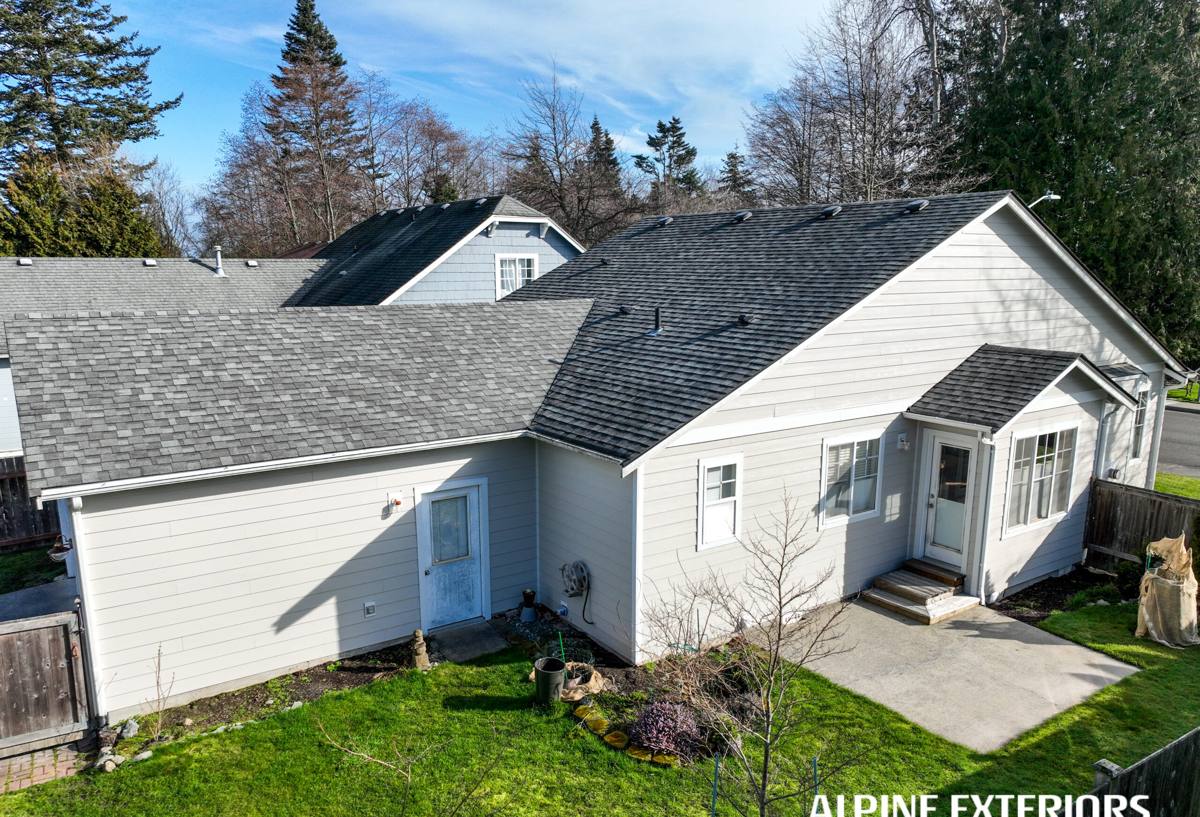
Signs a Terrell Creek Roof Needs Replacing, Not Just Repair
Repair makes sense when the problem is isolated — a cracked pipe boot, a few lifted shingles after a windstorm, a flashing detail that failed. Replacement makes sense when the roof's overall condition has declined to the point where repairs are just delaying the same failures somewhere else. In this climate, that decline tends to show up as:
- Granule loss heavy enough that you can see bare asphalt mat in multiple areas, not just one spot
- Moss or algae growth that returns within a season or two of cleaning, especially on north- or west-facing slopes
- Shingles that are curling, cupping, or have gone brittle — a sign the mat has absorbed moisture repeatedly over years
- Soft spots or sagging in the roof deck, usually found by walking the roof or noticing it from a ladder
- Rust streaking or corrosion on flashing, fasteners, or metal vents near the coast
- Interior signs — ceiling stains, musty attic smell, daylight visible through the deck — that point to underlayment failure, not just a surface issue
- A roof that's simply reached the end of its material's realistic service life for a coastal, high-moisture climate, which is usually shorter here than the manufacturer's national average suggests
If you're only seeing one or two of these and the roof is otherwise sound, repair is often the honest recommendation — we'll tell you that. Replacement gets recommended when the underlying materials, not just the surface, have been compromised.
What a Correct Roof Replacement Involves Here
Tear-Off and Deck Inspection
We don't install new roofing over old material. A full tear-off is the only way to actually see the deck, find soft or delaminated sheathing, and confirm the structure underneath is sound before anything new goes on. In a wet climate like this, hidden deck damage is common enough that skipping this step is how "new roofs" end up leaking within a couple of years.
Underlayment That Matches the Rainfall Pattern
Driving rain off the water doesn't just fall straight down — wind pushes it sideways and up under shingle tabs, which is exactly the kind of moisture standard underlayment isn't built for. We use self-adhered ice-and-water membrane at eaves, valleys, and around every penetration, with synthetic underlayment across the rest of the field. That combination is what actually keeps water out when rain is coming in sideways, not just straight down.
Ventilation
A roof that can't breathe traps moisture in the attic, which shortens the life of the deck and the shingles from underneath — often faster than weather does from above. Proper intake and exhaust ventilation is part of a correct replacement, not an upsell.
Flashing and Metal Details
Chimneys, skylights, sidewalls, and valleys are where most roof leaks actually start — not in the open field of shingles. Near the coast, we pay close attention to the metal itself: standard galvanized flashing corrodes faster in salt air than it does further inland, so we favor corrosion-resistant metals at these details.
Moss and Algae Resistance Built In
Given how much of the year this area stays damp and shaded in places, we install shingles with algae-resistant granules where the budget and roof design support it, and we address the root causes — poor airflow, overhanging branches, low-slope shaded sections — rather than just planning around annual cleanings.
Material Options for This Climate
There's no single "best" roofing material — the right choice depends on your budget, roof pitch, how much shade and moss exposure the roof gets, and how long you want to go before thinking about it again. Here's how the common options compare for a Terrell Creek property specifically:
| Material | Typical Lifespan Here | Moss/Algae Resistance | Salt Air Durability | Relative Cost |
|---|---|---|---|---|
| Architectural asphalt shingle (algae-resistant) | 20–30 years | Good, with granule treatment | Good — fasteners/flashing matter more than the shingle itself | $$ |
| Standard 3-tab asphalt shingle | 15–20 years | Fair — more prone to moss without treatment | Fair | $ |
| Standing seam metal | 40–50+ years | Excellent — moss has little to grip | Very good with coated/coastal-rated panels | $$$$ |
| Composite/synthetic shingle | 30–40 years | Good | Good | $$$ |
For most Terrell Creek homes, a quality algae-resistant architectural shingle hits the right balance of upfront cost, appearance, and realistic performance against moss and moisture. Metal earns its higher price tag on steep-pitch roofs, heavily shaded lots, or for owners planning to stay long enough to value the longer service life. We'll walk through the trade-offs against your specific roof, not just push the higher-margin option.
Our Roof Replacement Process
- On-site inspection — we walk the roof (weather permitting) and check the attic, looking at deck condition, ventilation, flashing points, and moss/moisture patterns specific to your lot and tree cover.
- Written estimate — a clear scope covering material choice, tear-off, deck repair contingencies, underlayment, flashing, and ventilation, so there are no surprise line items mid-project.
- Scheduling around the weather — we plan tear-off days to minimize the time your deck is exposed, which matters more here than in drier climates.
- Tear-off and deck inspection — old material removed, deck checked and repaired as needed before anything new goes down.
- Underlayment, flashing, and shingle installation — installed to the standards above, with attention to every penetration and transition, not just the open field.
- Cleanup and final walkthrough — magnetic sweep for fasteners, debris hauled off, and a walkthrough so you understand what was done and what maintenance, if any, to expect going forward.
Common Questions About Timing
Most straightforward residential roof replacements in this area take one to three days on-site, weather permitting. Complex rooflines, deck repairs, or larger homes can extend that. We won't schedule a tear-off during a stretch of forecast rain if we can help it — an exposed deck and Whatcom County weather don't mix well.
Moss, Algae, and Salt Air: What to Expect After Installation
A new roof reduces moss and algae problems significantly, but it doesn't make the climate go away. Realistic long-term care in this area looks like:
- Keeping overhanging branches trimmed back so shaded sections of roof get more airflow and sun exposure
- An annual visual check (or having us do one) for early moss growth, especially on north-facing slopes
- Gentle, low-pressure cleaning if moss does appear — never high-pressure washing, which strips granules and shortens shingle life
- Keeping gutters clear so water isn't sitting against the eaves, which is a common moss and rot starting point
- Periodic visual checks on flashing and exposed fasteners near the coast for early corrosion, especially after storm seasons
None of this is heavy maintenance — it's the difference between a roof that reaches its full expected lifespan and one that needs premature attention because moisture and moss got a head start.
Why Hiring a Crew That Already Works in Terrell Creek Matters
Roofing crews that mostly work drier, inland regions sometimes treat coastal Whatcom County jobs the same way they'd treat any other roof — standard underlayment, standard flashing metal, no particular plan for moss. That approach tends to hold up fine for a few years and then falls short exactly where this climate is toughest: at the flashing, at the eaves, and in shaded valleys where moss gets a foothold. Working in and around Birch Bay and Terrell Creek regularly means we're not guessing about how driving rain, salt air, and moss actually behave on roofs here — we're accounting for it as a matter of course, not as an afterthought or upgrade.
That local familiarity also shows up in smaller ways: knowing which roof orientations on a given lot tend to hold moss longest, understanding how prevailing wind off the water affects where water actually gets pushed during a storm, and having a realistic sense of how different materials have actually performed on nearby homes over time.
Get a Free, No-Pressure Estimate
If your roof in Terrell Creek is showing its age — moss that keeps coming back, granules in the gutters, or a leak you'd rather solve for good — we're happy to take a look and give you a straight assessment of repair versus replacement, with no pressure either way. Use the form below to request a free estimate.