 Birch Bay
 Windows Built for Terrell Creek's Climate
Terrell Creek sits close enough to the water that the same salt air, wind-driven rain, and long wet winters that define Birch Bay all take a toll on window assemblies here. Homes in this pocket of Whatcom County see more moisture cycling through their window openings each year than homes further inland, and that changes what "correct installation" actually means. A window that's fine in a dry, sheltered lot forty miles east can fail early here if it's not detailed for wind-driven rain and salt-laden air.
This page covers what we look at when we replace or install custom windows specifically for Terrell Creek properties — the failure points we see, the materials that hold up, and how we run the job so it doesn't come back to bite you in five years.
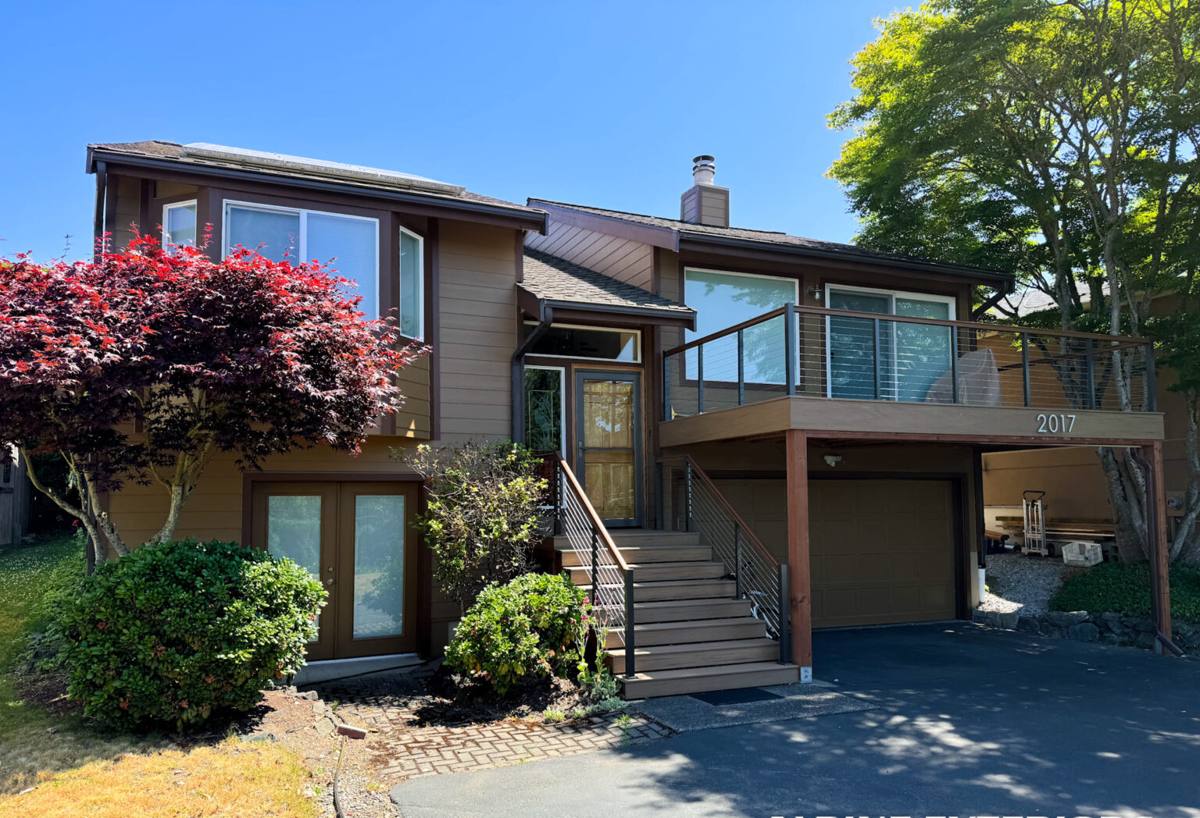
What Salt Air, Rain, and Moss Season Do to a Window
Salt air and hardware corrosion
Salt-laden air accelerates corrosion on window hardware, fasteners, and unprotected metal trim. Locks, cranks, and hinges that would last decades in a dry climate can start sticking or corroding within a few years if they're not rated for coastal exposure. This is one of the first things we check when we inspect an existing window — hardware condition tells us a lot about how the whole unit has aged.
Driving rain and water intrusion
Wind off the water doesn't just bring rain straight down — it drives it sideways, into the joints and reveals around a window frame. A window can look fine from across the room and still be letting water track behind the trim, into the wall cavity, where it causes rot and mold long before it ever shows up as a stain on the sill. Flashing detail and sealant choice matter more here than in a sheltered inland lot.
Moss and prolonged dampness
Birch Bay's long wet season keeps north-facing and shaded surfaces damp for months at a time. Moss and algae growth on exterior trim holds moisture against the window frame, which is hard on wood components and can degrade some sealants faster than manufacturers' published lifespans suggest. Homes tucked under tree cover in Terrell Creek see this more than open, sun-exposed lots.
Choosing the Right Window for This Location
We don't push one brand or material as the universal answer — the right choice depends on the home's exposure, budget, and how much upkeep the owner wants to take on. Here's how the common options actually perform in this specific climate:
| Frame Material | Coastal/Wet Climate Performance | Maintenance |
|---|---|---|
| Vinyl | Good moisture resistance, won't corrode; quality varies a lot by manufacturer | Low — occasional cleaning |
| Fiberglass | Very stable in temperature swings and damp conditions, holds paint well | Low |
| Aluminum | Durable but prone to condensation and corrosion near salt air unless properly clad or treated | Moderate |
| Wood (unclad) | Classic look, but most exposed to rot and moss in prolonged damp shade without diligent upkeep | High |
| Wood-clad (vinyl or aluminum exterior) | Combines interior wood look with a weather-resistant exterior shell | Low to moderate |
For most Terrell Creek homes we lean toward fiberglass or quality vinyl for exterior-facing rooms that catch the weather, and reserve unclad wood for sheltered interior spaces or homeowners who specifically want that look and are prepared to keep up with it. We're honest about the trade-offs — a wood window isn't a bad product, it's a higher-maintenance one, and that's a decision that belongs to the homeowner, not us.
What a Correct Installation Actually Involves
Most window failures we get called out to fix in this area aren't the window itself — they're the installation. A quality window installed without proper flashing and sealant sequencing will leak just as fast as a cheap one. Here's what we consider non-negotiable on every custom window job in Terrell Creek:
- Full removal of the old unit and inspection of the rough opening for existing rot or hidden moisture damage before anything new goes in
- Correct flashing sequence — sill pan flashing, then side flashing, then head flashing, layered so water is always directed outward and down, never trapped
- Weather-resistant barrier integration so the window ties properly into the home's existing house wrap or building paper, not just caulked over top of it
- Marine-grade or coastal-rated sealants at joints exposed to direct wind-driven rain
- Shimming and squaring the unit so it operates smoothly and doesn't rack over time, which can break seals prematurely
- Insulation of the gap between frame and rough opening — done right, not overpacked, which can bow the frame
- Interior and exterior trim finished to shed water away from the frame, not channel it toward the joint
Skip any one of these steps and you can end up with a window that looks new for a year or two and then starts showing the same water intrusion problems as the one it replaced.
Cost Factors for Terrell Creek Window Projects
Every home and opening is different, so we don't quote sight-unseen, but these are the main things that move the price up or down on a custom window job in this area:
| Factor | Why It Matters |
|---|---|
| Frame material chosen | Vinyl, fiberglass, aluminum, and wood-clad options carry different material costs |
| Existing rot or hidden damage | Rough opening repair adds labor and materials before the new window can even go in |
| Number and size of openings | Larger custom shapes and multi-window bays take more time to detail correctly |
| Exposure of the wall | Sides of the home that take direct wind-driven rain may warrant upgraded flashing and sealant systems |
| Access and site conditions | Second-story or hard-to-reach openings add scaffolding or lift time |
| Interior finish work | Matching existing trim, paint, or stain adds finishing labor |
Broadly, straightforward single-window replacements run at the lower end of a typical residential range, while custom sizes, upgraded coastal-rated materials, or openings with hidden rot to repair push toward the higher end. We'll walk the specific opening with you before giving a number.
How We Handle a Terrell Creek Window Project
1. On-site assessment
We look at the existing window, the rough opening, and the wall assembly around it — not just the glass. If there's evidence of past water intrusion, we'll tell you before we quote, not after we've started.
2. Material and design discussion
We talk through frame material, glass package, and grid or custom shape options based on how exposed the opening is and what you want the room to look like from both inside and out.
3. Removal and opening prep
Old unit comes out, we inspect and repair any rot or damage found in the framing before the new window goes in — this step gets skipped by crews in a hurry, and it's the one that causes callbacks.
4. Flashing and installation
Sill pan, side, and head flashing installed in the correct sequence, unit shimmed and squared, sealed with materials rated for this climate's wind and rain exposure.
5. Finish and walkthrough
Interior and exterior trim finished, operation checked, and we walk the job with you before calling it done.
Why a Crew That Already Works Terrell Creek Matters
Window installation isn't identical everywhere. A crew that mostly works dry, sheltered inland neighborhoods doesn't always think about wind-driven rain detailing or coastal-rated hardware by default — because they don't need to most days. A crew that regularly works Birch Bay and the Terrell Creek area already knows which walls take the worst of the weather, what kind of rot patterns show up in older openings out here, and which materials actually hold up through a Whatcom County winter instead of just performing well on paper.
That familiarity shows up in small decisions on the job — where to add extra sealant, whether a given wall needs upgraded flashing, whether hardware should be upgraded for corrosion resistance — the kind of judgment calls that don't show up on an estimate sheet but decide whether the window is still performing well in ten years.
Signs Your Current Windows Are Losing the Battle
- Sticking or corroded locks, cranks, or hinges
- Visible moss, algae, or persistent dark staining on exterior trim near the frame
- Soft or discolored wood on interior or exterior sills
- Drafts or condensation between panes on double- or triple-glazed units
- Difficulty opening or closing that didn't used to be there
- Peeling paint or bubbling finish concentrated around the window opening rather than the whole wall
Any one of these on its own isn't necessarily an emergency, but a few together usually means the window or its installation is past its useful life for this climate.
Get a Free, No-Pressure Estimate
If you're weighing whether to repair or replace windows on a Terrell Creek property, we're glad to take a look and give you a straight answer — including telling you if a window doesn't need replacing yet. Use the form below to request a free estimate, no pressure either way.