 Birch Bay
 Board & Batten Siding Built for Point Whitehorn's Shoreline Exposure
Point Whitehorn sits close to the water on the northern edge of Birch Bay, and that proximity changes what a siding job needs to do. Homes here take on salt-laden air off the Salish Sea, wind-driven rain that comes in sideways during winter storms, and long stretches of shade and dampness that keep moss and algae established on north and west walls most of the year. Board and batten siding, with its bold vertical lines and deep shadow reveals, is a popular choice for the area's mix of coastal cottages, newer builds, and remodeled homes — but only if it's installed with materials and detailing that account for what this exposure actually does to a wall assembly over time.
This page is about that one job, done right, for this one stretch of Whatcom County. We're not going to give you a generic siding overview — we're going to walk through what Point Whitehorn's climate demands from a board and batten installation, what a correct job looks like underneath the finish, and why our crew's familiarity with this specific area matters as much as the materials we use.
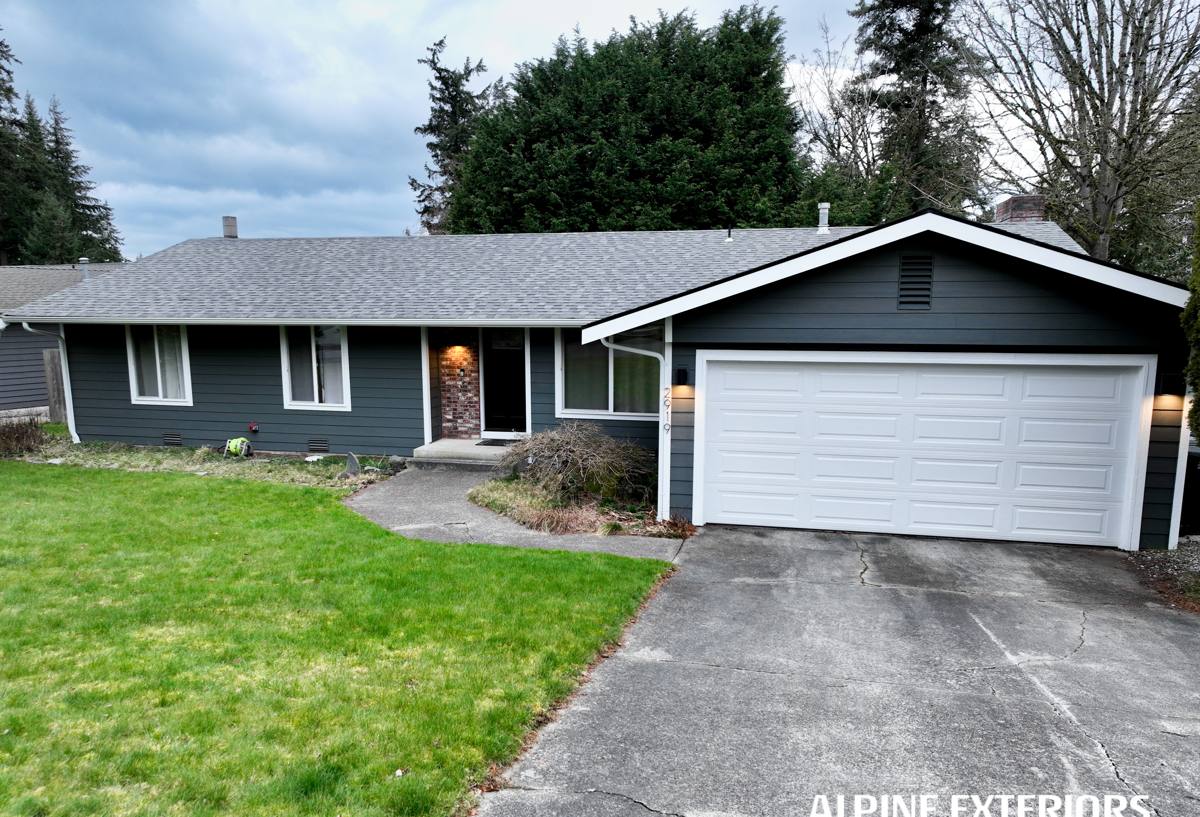
What This Climate Does to Board & Batten Siding
Salt Air and Coastal Exposure
Airborne salt from the Salish Sea settles on exterior surfaces year-round, and it's especially persistent on homes with direct or near-direct water exposure like much of Point Whitehorn. Salt accelerates corrosion on fasteners, hardware, and any metal flashing that isn't rated for coastal use. It also breaks down cheaper paint films faster than inland weather would, which shows up as chalking, fading, and early peeling on siding that wasn't finished for this kind of exposure.
Driving Rain and Wind-Driven Moisture
Winter storms here don't just drop rain straight down — wind pushes it sideways into wall surfaces, seams, and any gap in the cladding. Board and batten's vertical joints, if not flashed and fastened correctly, give wind-driven rain a direct path behind the siding. Once moisture gets past the surface, the sheathing, house wrap, and framing underneath are what actually determine whether that water causes rot or gets managed and drained back out.
Moss, Algae, and Prolonged Dampness
Between the marine humidity and the shade many Point Whitehorn lots get from mature trees, siding here stays damp longer than it would a few miles inland. That's ideal growing conditions for moss and algae, particularly on north-facing walls and anywhere siding sits close to grade or vegetation. Untreated wood-based products absorb this moisture and soften over years; a factory-finished fiber cement product resists it at the surface instead of letting it soak in.
What a Correct Board & Batten Installation Requires
Vertical Layout and Fastening
Board and batten relies on a base panel with vertical battens fastened over the seams, and the fastening pattern matters more here than in a drier climate. Fasteners need to be corrosion-resistant, set to the manufacturer's spacing, and driven so they don't crush the material or leave gaps that trap water. Getting this wrong doesn't show up immediately — it shows up as streaking, loosened battens, or soft spots three to five years later.
Water-Resistive Barrier and Flashing
Every seam, window, door, and penetration needs proper flashing integrated with the water-resistive barrier behind the siding, not just caulked over on the surface. This is the layer that actually protects the wall when wind-driven rain gets past the cladding — which, on an exposed lot like many in Point Whitehorn, it eventually will. Caulk is a backup, not a strategy.
Corners, Trim, and Ground Clearance
Outside corners, trim boards, and the bottom edge of the siding are where board and batten jobs most often fail early. We keep siding clear of grade and hard surfaces, flash trim boards so they shed water outward, and detail corners so there's no exposed end grain or unsealed seam sitting in the weather. These are small details on paper and the difference between a wall that lasts decades and one that needs attention in year six.
Why We Install James Hardie Board & Batten — and Not Vinyl, LP SmartSide, or Cedar
We standardized on James Hardie fiber cement for every home we side, including board and batten projects in Birch Bay and Point Whitehorn, and we won't install the alternatives homeowners often ask about. Here's the honest comparison, not a sales pitch:
| Material | How It Handles This Climate | Why We Don't Install It |
|---|---|---|
| Vinyl board and batten | Won't rot, but flexes and can warp or crack in temperature swings; seams can let wind-driven rain behind it | Appearance and durability trade-offs don't hold up to the standard we build to |
| LP SmartSide | Engineered wood core; performs well when perfectly sealed but any breach lets moisture into the wood substrate | Long-term moisture risk in a wet, salt-air climate is higher than we're willing to install and stand behind |
| Cedar board and batten | Handsome traditional look, but real wood needs ongoing refinishing and is vulnerable to moss, rot, and insects here | Maintenance burden is heavy for coastal exposure like Point Whitehorn's |
| James Hardie fiber cement | Non-combustible, dimensionally stable, factory-finished ColorPlus resists fading and moisture at the surface | This is what we install — engineered for exactly this kind of climate |
James Hardie's HZ5 product line is engineered for climates with freeze-thaw cycles and sustained moisture exposure, which describes Whatcom County's coastal edge well. The ColorPlus factory finish is baked on under controlled conditions rather than field-applied, so it holds color and resists the chalking and peeling that salt air accelerates on site-painted products. Combined with a transferable warranty, it's the system we're willing to put our name behind for a board and batten job that has to hold up against this exposure for the long term.
Our Process for a Point Whitehorn Board & Batten Project
- On-site assessment of the existing wall assembly, exposure direction, and any current moisture or rot issues before we quote anything
- Removal of old siding and inspection of the sheathing and framing underneath — this is where hidden problems get caught, not guessed at
- Repair of any compromised sheathing or framing before new materials go up
- Installation of a correctly lapped and taped water-resistive barrier with flashing at every window, door, and penetration
- Installation of James Hardie panel and batten to manufacturer fastening specs, with corrosion-resistant fasteners appropriate for coastal exposure
- Detailing of corners, trim, and ground clearance to keep water moving away from the wall, not into it
- Final walkthrough so you know exactly what's under your new siding and what maintenance, if any, it needs going forward
Cost Factors for Board & Batten Siding in This Area
Every quote depends on the specifics of your home, but these are the factors that most often move the number up or down on a Point Whitehorn or Birch Bay project:
| Factor | Why It Matters Here |
|---|---|
| Condition of existing sheathing | Coastal moisture exposure means hidden rot repair is more common here than inland, and it's priced once we can see the wall |
| Wall height and access | Multi-story or steep-lot homes near the water take longer to scaffold and detail properly |
| Amount of trim and corner detailing | Board and batten's visual style depends on clean trim work, which adds labor over a plain lap job |
| Flashing and window integration | Homes with more window and door penetrations need more flashing detail, which is where the real weather protection lives |
| Color and finish selection | ColorPlus factory finishes come in a range of options; some premium colors and trim combinations affect material cost |
Maintenance a Point Whitehorn Homeowner Should Actually Do
A correctly installed James Hardie board and batten system is low-maintenance, not no-maintenance. In this climate, a short annual routine keeps it looking and performing the way it should:
- Rinse siding gently once or twice a year to clear salt residue and organic buildup, especially on shaded or water-facing walls
- Check caulking at trim joints and penetrations annually and have any cracked or missing caulk redone before winter
- Keep gutters clear so overflow isn't running down the wall face
- Trim back vegetation and tree cover that keeps a wall section damp and shaded longer than necessary
- Watch for moss establishing at the base of walls or in shaded corners and address it early rather than letting it hold moisture against the siding
- Have a professional check flashing and seams if you notice any staining, soft spots, or paint failure between routine inspections
Why Hiring a Crew That Already Works Point Whitehorn Matters
Board and batten siding can be installed correctly or installed to look right for a season and fail quietly underneath. The difference is almost never the panel itself — it's the flashing, the fastening, and the judgment calls made on a specific wall in a specific spot. A crew that already works Birch Bay and the surrounding Whatcom County coastline has seen how this exposure plays out on real homes over years, not just on a spec sheet. That's the kind of experience that catches a problem before it's built into the wall instead of after.
If you're weighing board and batten siding for a home in Point Whitehorn, we're glad to come take a look and give you a straightforward, no-pressure estimate — what your walls actually need, what it will cost, and why.