 Birch Bay
 Roofing Built for Marietta's Coastal Climate
Marietta sits close enough to the water that homes here deal with a different set of roofing stresses than houses further inland in Whatcom County. Salt-laden air drifts in off the water and settles on roofing surfaces, metal flashing, and fasteners year-round. Add in the long stretch of driving rain that defines a typical fall-through-spring stretch in this part of Washington, plus a moss season that can run eight months or more, and you have a roof that's working hard every day it's up there. A roofing job that would hold up fine in a drier inland climate can fail early here if it wasn't installed with these specific conditions in mind.
That's the lens we bring to every new roof installation in Marietta: not just "put a roof on," but put on one that's actually matched to what this stretch of the Birch Bay coastline does to a house over time.
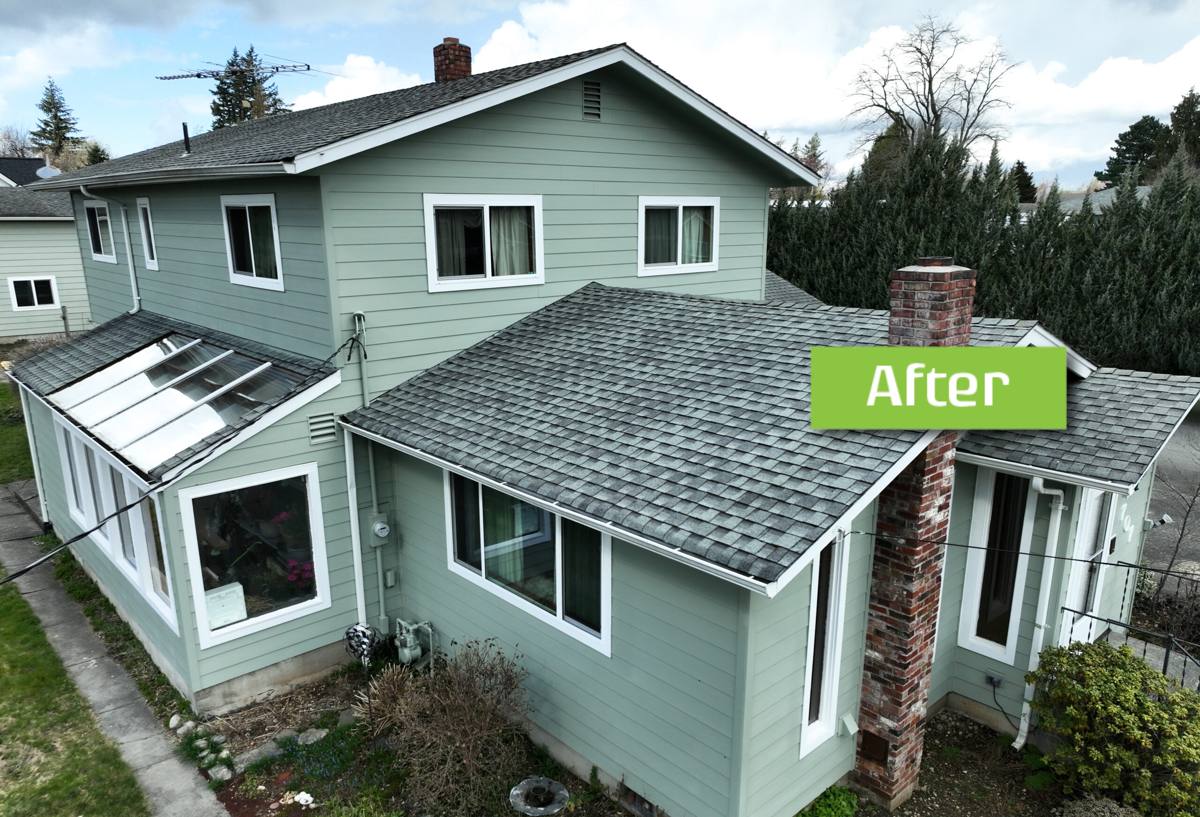
What Salt Air, Rain, and Moss Actually Do to a Roof
Salt air and metal components
Salt air speeds up corrosion on any exposed metal — flashing, fasteners, drip edge, vent stacks, and gutter hardware. Standard galvanized fasteners can show rust streaks years before they would further inland, and once a fastener starts to corrode, the seal around it weakens too. This is one reason fastener and flashing metal choice matters as much as the shingle or panel choice itself on a home this close to the water.
Driving rain and water intrusion
Wind-driven rain doesn't just fall straight down here — it gets pushed sideways and forced upward under shingle tabs, around chimneys and skylights, and into roof valleys. A roof detailed for a calmer climate, with minimal underlayment overlap or thin flashing at penetrations, will eventually leak even if the shingles themselves still look fine from the ground. Valleys, wall-to-roof transitions, and anywhere two roof planes meet are where this shows up first.
Moss and sustained moisture
Moss thrives wherever shade, moisture, and organic debris sit on a roof surface for extended periods, which describes a lot of roof lines around here for a good chunk of the year. Beyond the cosmetic issue, moss holds moisture against the roofing material, lifts shingle edges as its roots spread, and can work its way under laps over time. Roofs with poor airflow or heavy tree cover need moss-resistant materials and a realistic maintenance plan built in from day one, not treated as an afterthought once it's already established.
Signs a Marietta Home Needs a New Roof, Not Another Repair
Not every roof problem calls for a full replacement, but there's a point where patching stops making financial sense. Signs worth taking seriously:
- Shingles that are cupping, curling, or shedding granules in visible patches
- Moss or dark streaking that comes right back within months of cleaning
- Soft spots underfoot, or sagging visible from the ground or attic
- Daylight visible through the roof deck when you check the attic
- Repeated leaks around the same flashing point despite past repairs
- A roof at or past the age where its materials are expected to perform in this climate
- Rising heating bills tied to poor attic ventilation or waterlogged insulation
If two or more of these apply, it's worth getting a straight comparison of repair cost versus replacement cost before more money goes into patchwork on a roof that's already past its useful life.
What a Correct Roof Installation Actually Involves
A roof is a system, not a single product. Skipping any one layer undermines the rest, especially in a climate that punishes weak points. A properly done installation includes:
Full tear-off and deck inspection
Layering new shingles over old ones hides problems and voids most manufacturer warranties. A full tear-off lets us see the actual condition of the roof deck — soft or rotted sheathing, especially around valleys and penetrations, needs to be replaced before anything new goes down. Installing over a compromised deck just guarantees a shorter lifespan for the new roof.
Ice and water barrier at vulnerable points
Self-adhering waterproof membrane belongs at eaves, valleys, and around chimneys and skylights — the exact spots where wind-driven rain gets pushed under the surface layer. This isn't optional detailing in a climate like this one; it's the difference between a roof that sheds water and one that eventually lets it in.
Synthetic underlayment across the full deck
A quality synthetic underlayment gives a second line of defense across the entire roof, not just the high-risk areas. It also holds up better to job-site foot traffic and weather exposure during installation than older felt products.
Correct flashing at every penetration and transition
Chimneys, skylights, vent pipes, and any wall-to-roof transition need step flashing, counter-flashing, or pipe boots sized and installed correctly — not just caulked over. Caulk is a maintenance item, not a substitute for proper flashing, and it fails faster in salt air than most homeowners expect.
Balanced attic ventilation
Intake at the eaves and exhaust at the ridge need to work together to move air through the attic space. Ventilation that's out of balance traps heat and moisture, which shortens shingle life from underneath and creates the damp, still conditions moss prefers on the surface above.
Proper nailing pattern and fastener spec
Manufacturer nailing patterns exist for wind resistance, and this coastline sees its share of wind events. Corrosion-resistant fasteners matter more here than in a drier, inland location, since a fastener that weakens over time takes the roof's wind resistance down with it.
Comparing Roofing Materials for a Marietta Home
There's no single "best" roofing material for every house — it depends on the home's design, budget, and how much upkeep the owner wants to take on. Here's how the common options stack up against this area's specific conditions:
| Material | Salt-air & corrosion resistance | Moss resistance | Relative maintenance |
|---|---|---|---|
| Architectural asphalt shingle | Good, with corrosion-resistant fasteners and flashing | Moderate; benefits from algae-resistant granules | Low to moderate |
| Metal roofing (standing seam or panel) | Very good, when finish and fasteners are marine-grade rated | Very good; sheds moisture quickly | Low |
| Cedar shake | Fair; hardware needs careful selection | Poor without regular treatment and cleaning | High |
| Basic 3-tab asphalt shingle | Fair; thinner profile ages faster in wind and salt exposure | Lower than architectural shingle | Moderate |
We generally steer homeowners here toward architectural asphalt shingle with algae-resistant granules or a quality metal system, both of which handle salt air and sustained moisture better than cedar or basic 3-tab shingle. That's a maintenance-and-moisture-performance judgment based on this specific climate, not a knock on any manufacturer's product used correctly in a different setting.
What Drives the Cost of a New Roof
Every roof is priced individually after an on-site look, but the main cost factors are consistent. Understanding them ahead of time makes it easier to evaluate any estimate you receive.
| Factor | Why it matters |
|---|---|
| Roof size and pitch | More square footage and steeper pitches mean more material and labor time, plus added safety equipment on steep sections |
| Number of layers to remove | Tearing off multiple existing layers takes longer and increases disposal costs |
| Deck condition | Rotted or soft sheathing discovered during tear-off adds replacement cost, but skipping it isn't a real option |
| Material choice | Architectural shingle, metal, and cedar carry different material and labor costs |
| Roof complexity | Valleys, dormers, chimneys, and skylights each add flashing detail and labor time |
| Ventilation upgrades | Adding or correcting ridge and soffit ventilation is easiest to do during a full replacement |
Be cautious of any estimate that's dramatically lower than the others you've collected — it usually means a step is being skipped somewhere, and in this climate the skipped step is often the underlayment coverage or flashing detail that keeps water out.
How Our Installation Process Works
- On-site inspection and estimate. We look at the current roof, attic ventilation, and any problem areas before writing anything down, and walk through material options honestly, including trade-offs.
- Material selection. We help match the shingle or metal system to the home's exposure, roof pitch, and your budget rather than pushing one product for everyone.
- Scheduling around weather. Roofing work needs a reasonably dry window, so we plan installation dates with the regional forecast in mind rather than rushing into a marginal weather gap.
- Tear-off and deck inspection. Old roofing comes off down to the deck, with any damaged sheathing identified and replaced before moving forward.
- Underlayment, ice and water barrier, and flashing. Every layer goes down in the correct order and overlap, with extra attention at valleys, penetrations, and eaves.
- Roofing material installation. Shingles or panels go on following manufacturer nailing and spacing specifications, not shortcuts.
- Ventilation and cleanup. Ridge and intake ventilation are confirmed or corrected, and the property is cleared of debris and nails before we consider the job finished.
- Final walkthrough. We go over the finished roof with you, explain any maintenance recommendations specific to your home's setting, and answer questions before wrapping up.
Why Ventilation and Moisture Control Matter More Here Than Most Places
In a marine climate like this one, the space between the shingles and the living space of the house does a lot of quiet work. Warm, moist air from inside the home rises into the attic, and if it can't escape through balanced ridge and soffit ventilation, it condenses against the roof deck. Over a wet Whatcom County winter, that trapped moisture can rot sheathing from underneath — the same deck we just talked about inspecting during tear-off — while also feeding mold and mildew growth in the attic itself. Correct ventilation isn't a cosmetic upgrade; it's part of what makes the rest of the roofing system last as long as it's supposed to.
Keeping a New Roof Performing After Installation
A well-installed roof still needs a little seasonal attention in this climate, especially in the first few years:
- Clear gutters and downspouts before the fall rains pick up, so water has somewhere to go besides under the roofline
- Trim back tree limbs that shade the roof and drop debris, since shade and debris are what moss needs to establish
- Have moss growth treated early rather than waiting for a heavy mat to form
- Check attic ventilation isn't blocked by insulation or storage items
- Have flashing and fasteners visually checked after any major windstorm
None of this is heavy maintenance, but skipping it in a climate this wet shortens the life of even a well-installed roof.
Why a Crew That Already Works Marietta Makes a Difference
A roofing crew that regularly works this stretch of Birch Bay and the surrounding Whatcom County coastline already knows which details matter here: the fastener and flashing choices that hold up against salt air, the underlayment coverage that handles driving rain instead of just the average storm, and the ventilation setup that keeps moss from taking hold season after season. That's different from applying a generic installation approach and hoping it performs the same way it would somewhere drier and calmer. Local familiarity also means a straighter answer about what your specific roof, orientation, and tree cover actually need, instead of a one-size-fits-all recommendation.
If you're weighing repair against replacement, or just want a straight look at what your current roof will need in the next few years, we're glad to come take a look. There's no pressure and no cost for the estimate — just an honest assessment of where your roof stands and what a correct installation would involve for your home. Use the form below to get in touch and set up a time.