 Birch Bay
 James Hardie Siding, Installed for Lynden's Conditions
This page is about one specific thing: what it actually takes to put James Hardie fiber cement siding on a Lynden home correctly. Not siding in general, not a brand overview — the installation service itself, the decisions that go into it, and the standards we hold ourselves to on every job in this part of Whatcom County. If you already know you want Hardie and you're trying to understand what a real installation involves before you sign a contract, this is written for you.
We install James Hardie fiber cement exclusively. No LP SmartSide, no vinyl, no Cemplank or Allura, no primed spruce or cedar. That's a professional standard, not a sales pitch, and it exists because of what we've seen holds up in this specific climate — salt-tinged marine air, wind-driven rain, and a moss season that runs most of the year on shaded siding — and what doesn't.
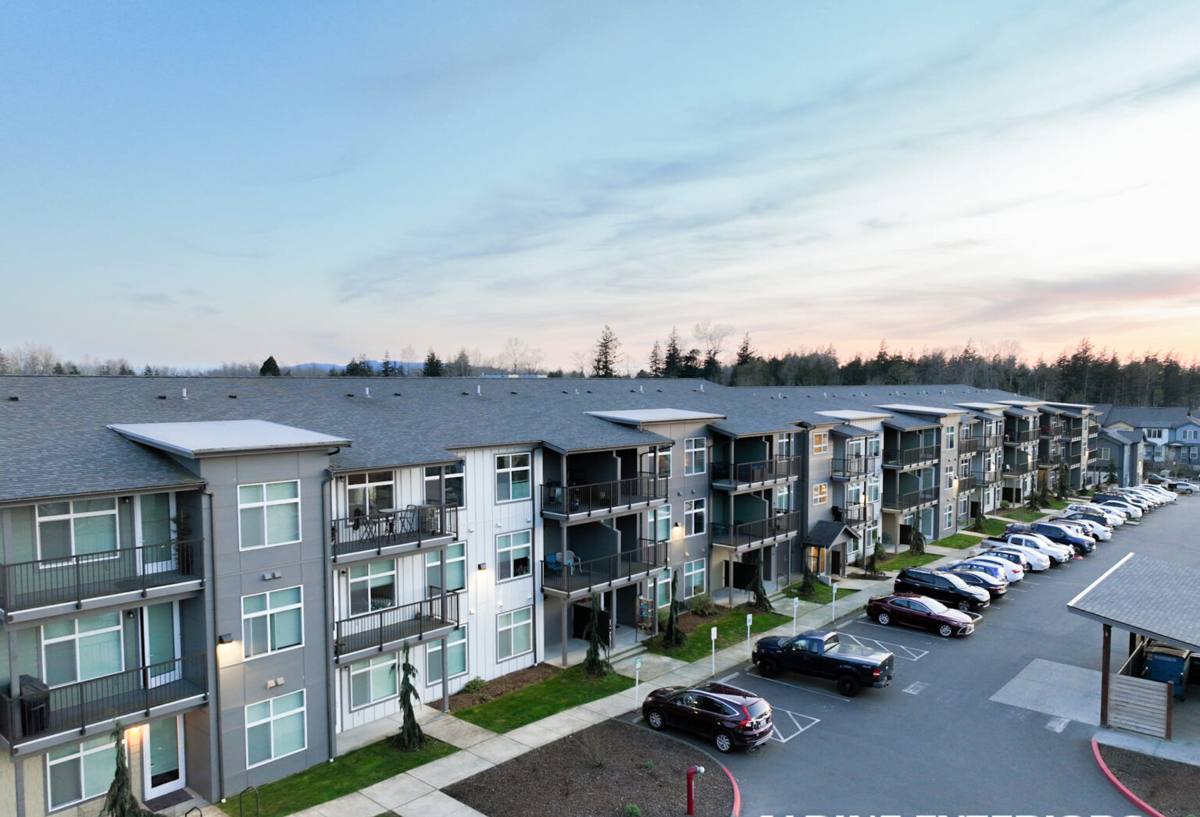
How Lynden's Weather Shapes the Installation, Not Just the Material
Picking Hardie is only half the equation. The other half is how it goes on the wall, and Lynden's climate changes several of those decisions in ways that a drier or milder region wouldn't require.
Wind-Driven Rain Changes How Water Has to Be Managed
Rain here rarely falls straight down through the fall and winter months. Wind pushes it sideways into laps, seams, and trim joints, which means the weather-resistive barrier behind the siding, the flashing at every penetration, and the way panels are lapped and caulked all have to account for water arriving from an angle, not just from above. A crew installing the same product in a calmer, drier climate can get away with looser detailing than a crew working Whatcom County winters can.
Salt Air Puts Fasteners and Trim to the Test
Marine air moving in off the Sound carries salt well inland, and over years that salt accelerates corrosion on fasteners, flashing, and lower-grade trim hardware. It's a slower process than what a home right on the water sees, but it's real enough that we spec corrosion-resistant fasteners and hardware as standard on every Lynden install, not as an upgrade someone has to ask for.
A Long Moss Season Means Drainage and Drying Matter as Much as Material
Mild temperatures and consistent moisture add up to a moss and mildew season that can run close to year-round on shaded, north-facing walls. Fiber cement itself resists that growth far better than porous or wood-based materials, but the installation still needs to let the wall assembly dry out between storms. That's why drainage detailing behind the panels isn't optional in our process, even though it takes more time on install day than nailing panels straight to the sheathing.
The James Hardie Product System We Install Here
HZ5 Fiber Cement
James Hardie manufactures its siding in climate-specific formulations, and the version we install in Lynden is the HZ5 line, engineered for regions with significant moisture exposure and freeze-thaw cycling rather than extreme heat or hurricane wind zones. That's the correct match for northern Whatcom County's weather pattern, and it's a decision we make once at the estimate stage rather than defaulting to a generic national product.
ColorPlus Factory Finish
Most of the color on a Hardie install comes from ColorPlus Technology, a finish baked onto the board under controlled factory conditions before it ever reaches the job site. That process resists fading, chipping, and moisture-driven paint failure far better than a finish rolled or brushed on site after installation, which matters in a climate that gives field-applied paint a genuinely hard time.
Choosing a Profile: Lap, Panel, or Shingle
Hardie's siding comes in several profiles, and the right one depends on the home's style and how much detail work the project involves. We walk through these options with every Lynden homeowner before finalizing a scope.
| Profile | Look | Best Fit |
|---|---|---|
| HardiePlank lap siding | Horizontal, overlapping boards — the traditional siding look | Most Lynden homes, farmhouse and traditional styles alike |
| HardiePanel vertical siding | Clean vertical lines, often with battens | Gables, accent walls, modern or barn-style exteriors |
| HardieShingle | Staggered or straight-edge shingle profile | Craftsman-style homes or shingle-style accent sections |
| HardieTrim boards | Corner boards, fascia, window and door trim | Paired with any of the above for a finished edge |
None of these profiles are wrong choices on their own — the fit comes down to the home's existing architecture and what the homeowner wants it to look like once the project is done, which is a conversation we have on site rather than off a brochure.
What Correct Installation Actually Involves
Fiber cement only performs the way it's engineered to when the install follows Hardie's published specifications. A rushed or shortcut installation can still develop moisture problems in this climate, regardless of how good the material itself is. Here's what we hold as the baseline, not an upsell, on every Lynden project:
- A continuous, properly lapped weather-resistive barrier behind the panels, with all seams and penetrations sealed
- Drainage or rain-screen detailing that lets moisture behind the cladding find its way back out instead of sitting against the sheathing
- Correct fastener type, spacing, and penetration depth, using corrosion-resistant hardware throughout
- Proper clearance from grade, roofline, and any hard or paved surfaces, per Hardie's minimum spec
- Factory-mitered corners where practical, with joints caulked and sealed to Hardie's standard where they aren't
- Flashing integrated with the siding at every window, door, and roof-to-wall transition, not treated as a separate trade's problem
Our Process, Start to Finish
Assessment and the Tear-Off Decision
We start with an on-site look at the existing exterior, checking specifically for how the current siding has handled moisture over time — soft spots, staining, or areas where water has already gotten behind the cladding. That tells us whether a straightforward install is realistic or whether sheathing repair needs to be part of the scope before new siding goes on. We'd rather find that out at the estimate stage than mid-project.
Install Week
Once material is ordered and on site, installation follows the same sequence on every job: weather barrier and drainage detailing first, then panels working from the bottom up with correct overlap and fastening, then trim, corners, and flashing integration last. We don't skip the drainage or flashing steps to move faster, even on a tight schedule — those are the details that determine whether the job is still performing well in year fifteen.
Final Walkthrough and Warranty Registration
Once the siding is up, we walk the finished exterior with the homeowner, cover care and maintenance basics, and register the installation for Hardie's manufacturer warranty. That warranty is only as good as the paperwork behind it, so we treat registration as part of finishing the job, not an afterthought.
What to Expect During Installation Week
Homeowners who haven't been through an exterior project before often have practical questions that don't come up in a sales conversation. A few things worth knowing going in:
- Tear-off and disposal of old siding generates noise and debris — we keep the work area contained and clean up daily, not just at the end of the job
- Landscaping and anything close to the walls may need to be temporarily moved or protected before work starts
- Weather can shift a schedule by a day or two during Whatcom County's wetter months, since some steps shouldn't be rushed in active rain
- Pets are usually easier to manage indoors or off-site during the loudest tear-off and nailing phases
- You'll have a chance to walk the job with us before we consider it finished, not just sign off on an invoice
Why We Only Install James Hardie
We used to install a broader range of siding products. We narrowed that down after seeing, repeatedly, what actually held up in this climate versus what looked fine on a spec sheet and struggled on a real Whatcom County wall a few winters in. Fiber cement doesn't swell, warp, or cup with repeated moisture exposure the way engineered wood products can, it carries a non-combustible core, and Hardie backs it with one of the stronger transferable warranty structures in the industry when installation follows their spec. LP SmartSide, vinyl, Cemplank, Allura, primed spruce, and cedar all have a place in the market and homeowners who are happy with them elsewhere — we've just made the call that we'd rather install one system we fully stand behind than offer a cheaper option that shifts long-term maintenance risk back onto the homeowner.
Why a Crew That Already Works in Lynden Matters
Installing Hardie correctly isn't just about following a spec sheet — it's about knowing how this specific climate behaves on real houses over a full year. A crew that works Whatcom County job sites through every season learns which wall orientations in Lynden stay wet longest, where extra flashing attention actually pays off, and which install-day details are worth the extra time so a homeowner isn't dealing with a callback two winters later. That local, repeated exposure is hard to substitute with a spec sheet alone, and it's the difference between a Hardie installation that performs the way the product is designed to and one that just looks right on the day the crew packs up.
If you're planning a siding project in Lynden and want to talk through what a correct James Hardie installation looks like for your specific home, we're glad to walk the property with you. Reach out using the form below for a free, no-pressure estimate.