 Birch Bay
 Why Ferndale Roofs Wear Differently Than Roofs Inland
Ferndale sits close enough to the water that homes here deal with a different set of stresses than roofs even twenty or thirty miles inland. The combination of salt-laden air drifting off the Strait of Georgia and Birch Bay, near-constant marine moisture, and long stretches of overcast, low-sun winter months creates conditions that shorten the working life of a roofing system if it wasn't built for them in the first place. Add in Whatcom County's reputation for moss and algae growth on north-facing slopes and shaded roof planes, and you've got a climate that punishes generic, one-size-fits-all roofing work.
A roof replacement done for a dry-climate house doesn't hold up the same way here. Fasteners, flashing metals, underlayment choices, and ventilation all need to account for near-constant humidity and salt exposure. That's not a marketing angle — it's just what the materials and the building science require in this part of Whatcom County.
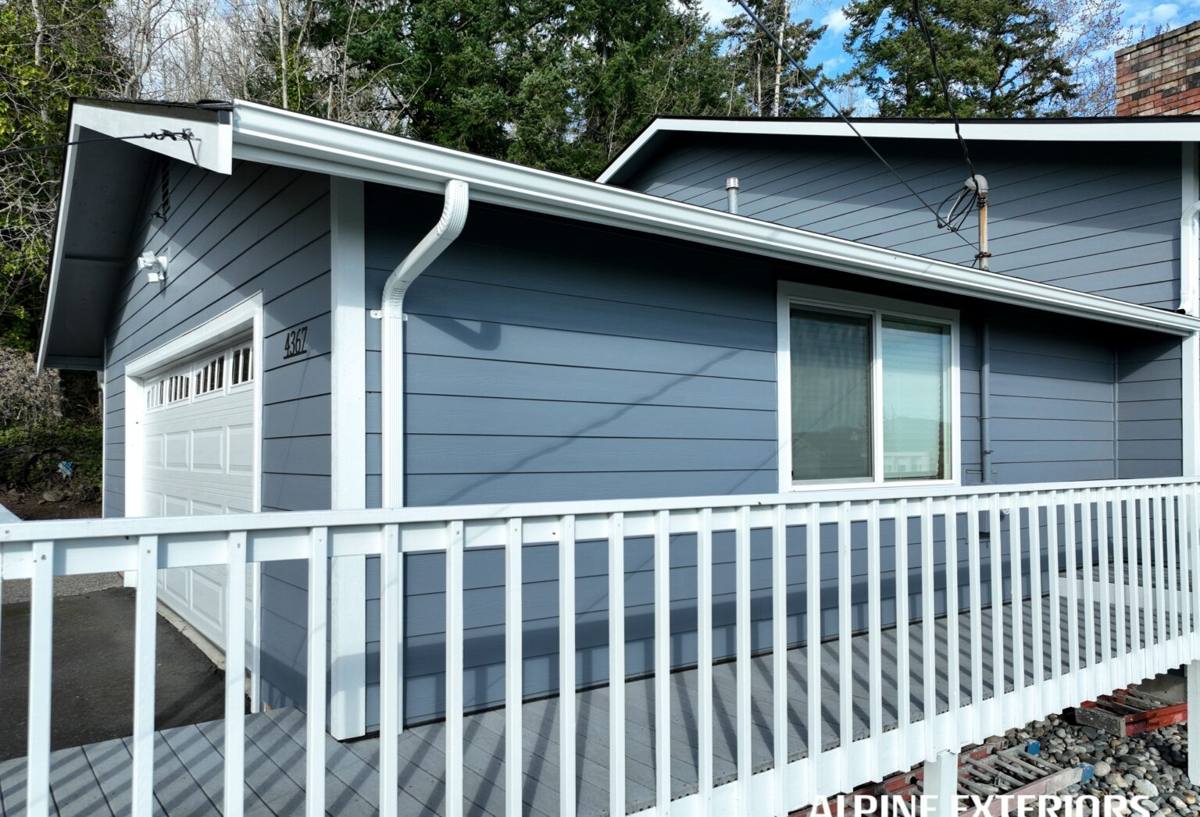
The Three Climate Factors That Drive Roof Decisions in Ferndale
Salt Air
Airborne salt accelerates corrosion on exposed metal — flashing, fasteners, vents, and gutter hardware. Standard fasteners or lower-grade flashing that might be fine in a dry inland climate can start showing rust streaks and pitting years earlier near the coast. Material selection for anything metal on the roof matters more here than it does even fifty miles east.
Driving Rain
Whatcom County storms often come in sideways off the water, not straight down. That means water finds its way into laps, seams, and flashing details that would stay dry in a calmer climate. Underlayment coverage, flashing overlap, and sealed penetrations all need to be treated as first-line defense, not backup protection.
Moss Season
Cool, damp, shaded conditions for much of the year give moss and algae a long runway to establish themselves, especially on north-facing slopes, under tree cover, and in valleys where debris collects. Left unchecked, moss holds moisture against the roofing surface and works its way under shingle edges, which shortens the life of an otherwise sound roof.
Signs a Ferndale Home Needs Replacement, Not Repair
Not every roofing issue means a full replacement. But there's a point where patching becomes a losing game, especially on a roof that's been fighting moss and moisture for years. Common signs it's time to talk replacement rather than another repair:
- Granule loss heavy enough that shingles look patchy or bald in spots, especially on south- and west-facing slopes
- Persistent moss growth that comes back within a season or two of cleaning, even after treatment
- Soft or spongy decking felt underfoot during an inspection, a sign moisture has reached the sheathing
- Curling, cracking, or cupping shingles across multiple roof planes rather than one isolated area
- Daylight visible through the roof deck from the attic, or water staining on rafters and sheathing
- A roof already past or close to the end of its expected service life for its material type
If only one or two of these show up in a small, contained area, a repair may still make sense. When several show up together, or the roof is old enough that repairs would just be delaying an inevitable full job, replacement is usually the more honest recommendation.
What a Correct Roof Replacement Involves Here
Tear-Off and Deck Inspection
A proper replacement starts with full tear-off down to the deck, not a layover. That's the only way to actually see what's underneath — soft spots, prior water damage, or ventilation problems that a layover would just bury for another 20 years. Any damaged sheathing gets replaced before anything new goes down.
Underlayment Built for Wet Climates
Given how much driving rain this area sees, underlayment coverage matters as much as the shingle or panel on top. Ice-and-water shield or comparable self-adhering membrane at eaves, valleys, and penetrations gives a second line of defense where wind-driven rain is most likely to force its way under the surface layer.
Flashing That Accounts for Salt Exposure
Step flashing, valley flashing, and vent flashing all see direct weather exposure. Choosing flashing metal and fasteners rated for coastal-adjacent conditions, rather than whatever's cheapest, is the difference between flashing that lasts as long as the roof and flashing that's corroding within a decade.
Ventilation That Matches the Home
Intake and exhaust ventilation get balanced so moist attic air actually has somewhere to go. In a climate this damp, poor ventilation doesn't just shorten shingle life — it can lead to condensation issues inside the attic space itself.
Material Options for Ferndale and Birch Bay Homes
There's no single "best" roofing material for every home — it depends on the home's exposure, roof pitch, budget, and how much upkeep the homeowner wants to take on. Here's an honest comparison of the options most common in this area:
| Material | Typical Lifespan Here | Moss/Algae Resistance | Best Fit |
|---|---|---|---|
| Architectural asphalt shingle | 20–30 years | Moderate — algae-resistant granule options recommended | Most homes; best balance of cost and performance |
| Standing seam metal | 40–50+ years | High — smooth surface sheds moss more easily | Homeowners planning to stay long-term or wanting minimal maintenance |
| Synthetic/composite shingle | 30–40 years | Moderate to high, varies by product | Homes wanting a wood or slate look without the moisture sensitivity |
| Cedar shake | 20–30 years with upkeep | Low without regular treatment | Homeowners committed to ongoing maintenance for the look |
We steer most Ferndale homeowners toward algae-resistant shingle lines or metal specifically because of how much moss and algae pressure this area gets — it's a maintenance-burden and long-term-cost conversation, not a knock on any particular product. Cedar can still be the right call for the right homeowner, but it's fair to know upfront that it asks more of you in this climate.
Our Process, Start to Finish
- On-site inspection. We walk the roof and attic, not just look from the ground, and document actual condition before recommending anything.
- Straight-forward estimate. Material options, scope, and pricing explained in plain terms — no pressure tactics, no artificial deadlines.
- Scheduling around the weather. We plan tear-off days with the forecast in mind and keep the deck protected if conditions turn.
- Tear-off and deck repair. Full removal, deck inspection, and replacement of any compromised sheathing before new material goes down.
- Underlayment, flashing, and ventilation installed to spec. Not skipped, not substituted for cheaper alternatives.
- Final walkthrough and cleanup. Magnetic sweep for debris, haul-away, and a final look together before we call it done.
After Replacement: Keeping Moss and Salt Damage at Bay
A new roof still needs some ongoing attention in this climate. Keeping gutters clear so water isn't sitting against the roof edge, trimming back overhanging branches that shade north-facing slopes, and periodic gentle moss treatment on shaded sections will all extend the life of the investment. None of this is complicated, but skipping it is how a well-installed roof ends up needing moss remediation or premature repair years earlier than it should.
Why a Crew That Already Works Ferndale Matters
Roofing crews that work across a wide, varied region tend to default to generic specs — whatever works on average, everywhere. A crew that regularly works Ferndale and the surrounding Birch Bay area already knows which slopes in this kind of terrain hold moss longest, which flashing details actually hold up against driving coastal rain, and which fastener and metal choices are worth the extra cost given the salt air. That local pattern recognition shows up in fewer callbacks and a roof that's actually built for the conditions it has to survive, not just conditions in general.
Questions Worth Asking Before You Hire
- Do they inspect the attic and deck in person, or estimate from the ground and photos alone?
- Do they specify algae-resistant materials or upgraded flashing for coastal-adjacent exposure, or use the same spec everywhere?
- Is the estimate itemized enough that you know what underlayment, flashing, and ventilation you're actually getting?
- Are they licensed, bonded, and insured in Washington State, and willing to show proof without being asked twice?
- Do they explain warranty terms — manufacturer versus workmanship — clearly, in writing?
- Can they speak specifically to how they handle moss-prone or heavily shaded roof sections?
Get a Straight Answer on Your Roof
If you're not sure whether your Ferndale roof needs repair, replacement, or just a closer look, we're happy to walk it with you and give you an honest read — no pressure, no inflated urgency. Fill out the form below for a free estimate and we'll get back to you with next steps.