 Birch Bay
 Siding Repair in Custer: A Job That Has to Account for the Whole Wall, Not Just the Damaged Board
Custer sits in the flat, open agricultural land north of Ferndale, close enough to the water that salt-laden air is a regular part of the exposure here, not an occasional event. Add wind that has nothing to slow it down on that open terrain, rain that gets pushed sideways into wall assemblies instead of falling straight down, and a moss and mildew season that runs across most of the year on shaded and north-facing walls, and you have a climate that treats a sloppy siding repair as a temporary fix at best. A patch that isn't flashed, fastened, and sealed correctly here doesn't fail in five years — it can fail in one wet winter.
That's the reason we treat siding repair as its own discipline rather than a smaller, cheaper version of a full re-side. Done right, a repair restores the wall's ability to shed water and stay dry behind the cladding. Done wrong, it can trap moisture behind a section that looks fine from the driveway while the sheathing underneath quietly rots. This page walks through what Custer's climate does to siding, how we decide between repair and replacement, and what a correct repair actually involves.
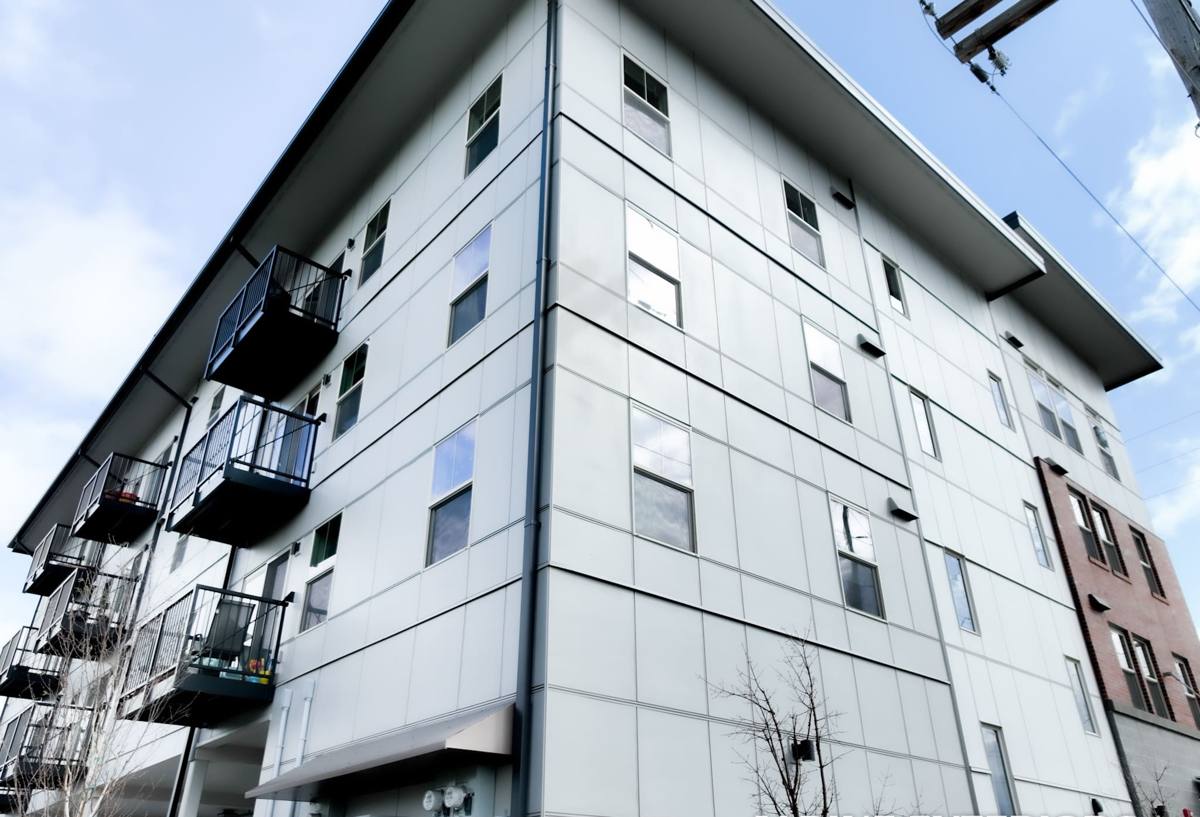
What Actually Causes Siding Damage in Custer
Wind-Driven Rain and Failed Flashing
Custer's open, flat terrain doesn't offer much of a wind break, so storms coming off the Salish Sea push rain into siding joints, trim lines, and penetrations at an angle rather than letting it run straight down and off. Most of the repair calls we take in this area trace back to a flashing or joint that was never detailed correctly in the first place, not the siding material failing on its own. Water finds the weak seam and works its way behind the cladding, and by the time it shows up as a stain or soft spot on the surface, it's usually been happening for a while.
Salt Air and Fastener Corrosion
Even set back a few miles from the shoreline, Custer properties get enough marine air carried inland to accelerate corrosion on lower-grade fasteners, trim hardware, and flashing metal. Corroded fasteners lose their holding power over time, which shows up as boards or panels that have started to loosen, shift, or pull away slightly from the wall — a problem that's structural, not cosmetic, even when it looks minor.
A Long Moss and Mildew Season
Mild temperatures and near-constant moisture give moss and mildew a growth season that stretches across most of the calendar on shaded, tree-lined lots, which describes a good share of Custer properties. Organic growth on a siding surface holds moisture against the wall behind it, and that trapped dampness is where a lot of long-term rot and finish breakdown actually starts, especially on porous or lower-grade materials.
Impact and Ordinary Wear
Not every repair call is climate-driven. Cracked boards from impact, damage from a fallen branch, settling cracks around openings, or a section that was never installed correctly to begin with are common reasons for a repair that have nothing to do with weather. The climate factors above just mean any of these smaller problems get worse faster here than they would in a drier, more sheltered market.
Signs a Custer Home Needs Siding Repair
- Cracked, split, or visibly separated boards or panels, especially at seams and corners
- Soft or spongy spots when you press on the siding, particularly near the bottom courses and around grade
- Boards or panels that have loosened, shifted, or show visible fastener pops
- Localized staining, discoloration, or persistent moss that keeps returning after cleaning in one specific area
- Gaps opening up around window and door trim, or caulk lines that have cracked and pulled away
- A section of siding that looks or feels different from the rest of the wall — often a sign it's already wetter than it should be
Any one of these on its own can be a straightforward, contained repair. Several of them together, especially if they show up in more than one area of the house, are usually a sign it's worth having someone look at the wall assembly as a whole rather than just the visible symptom.
Repair vs. Replacement: How We Make the Call
We don't default to recommending a full re-side when a repair will genuinely hold up, and we don't recommend patching something that's going to need the same attention again in a year or two. The honest answer depends on how contained the damage is and what's happening behind the siding, not just what's visible on the surface.
| Condition | Repair Usually Makes Sense | Replacement Usually Makes Sense |
|---|---|---|
| One or two damaged boards, sound sheathing behind them | Yes — targeted section repair | Not necessary on its own |
| Isolated impact damage (branch, equipment, etc.) | Yes, if surrounding material is sound | Only if it exposed a larger existing problem |
| Damage concentrated on one wall or elevation | Often, if the rest of the siding is sound | Sometimes, if that wall's exposure will just fail again |
| Soft sheathing found behind multiple sections | Rarely a lasting fix on its own | Yes |
| Widespread finish failure, warping, or moisture signs across the house | Buys limited time at best | Yes |
What a Correct Siding Repair Actually Involves
Matching Material and Profile
A repair that doesn't match the existing siding's profile, exposure, and finish stands out visually and can create its own water management problems at the transition. On James Hardie repairs, matching factory-finished ColorPlus material to the existing wall gets a close, durable match; on other siding types, finding a true match gets harder the older the original installation is, which is one of several reasons repair work on some materials becomes more disruptive over time than it needs to be.
Fixing the Cause, Not Just the Symptom
Replacing a damaged board without addressing the flashing or drainage issue that caused the damage just resets the clock on the same failure. Any repair we do starts with figuring out why that section failed — bad flashing, a fastener issue, a drainage problem, straightforward impact — and fixes that root cause as part of the repair, not as a separate conversation afterward.
Flashing, Sealing, and Fastening to the Same Standard as New Work
A repair section gets flashed, lapped, and sealed the same way it would on a full installation — water directed out and away from the wall, seams sealed with materials rated for sustained moisture exposure, and fasteners set to the manufacturer's specification for spacing and depth. Treating a repair as a lesser standard than new construction is exactly how a fixed section ends up failing again within a few seasons.
Why Repairs Hold Up Differently Depending on the Material
Repair work on James Hardie fiber cement tends to be more predictable than repair work on other common siding materials, and it's worth being specific about why. Fiber cement doesn't swell, cup, or delaminate the way wood-based products can, so a properly installed repair section isn't fighting the same substrate movement that causes repeat failures on engineered wood or cedar. The factory ColorPlus finish also gives us a durable, closely matched patch rather than a field-applied paint job that will weather differently than the surrounding wall almost immediately. That's a meaningful part of why we standardized on Hardie as the only product we install — it's not just about new installations holding up better, it's that repair and maintenance work stays simpler and more reliable for the life of the house.
Our Process for a Custer Siding Repair
We start with an on-site look at the damaged section and the surrounding wall, not just the spot that prompted the call. That includes checking for soft sheathing, tracing water paths back to their actual source, and confirming whether the damage is contained or a symptom of something larger. From there we give a straightforward recommendation — repair or replacement — along with a written scope before any work starts. If it's a repair, we match material and finish as closely as possible, correct the underlying cause, and detail the flashing and fastening to the same standard we'd use on a brand-new wall.
A Simple Checklist Before Hiring for Siding Repair in Custer
- Ask what caused the damage, not just what it will cost to patch — a real answer should address the root cause
- Confirm current Washington contractor licensing and active liability insurance
- Ask specifically how they'll match material, profile, and finish to the existing siding
- Get a written scope that covers flashing and sealing detail, not just the visible board replacement
- Ask whether they'd recommend repair or replacement for your specific situation, and why
Why a Local Crew Matters for Repair Work in Custer
A crew that already works this stretch of Whatcom County regularly has a good sense of how wind-driven rain and marine air actually behave on open, exposed land like Custer's, compared to a more sheltered inland site. That shows up in the decisions that determine whether a repair lasts — how much lap a flashing detail gets, whether the fix addresses the actual cause of the damage, which fastener grade gets used. Those aren't decisions a homeowner should have to double-check; they're what a contractor who knows this area treats as standard practice.
If you've got a section of damaged, loose, or soft-looking siding on a Custer property — or you're not sure whether it's a simple repair or something bigger — we're happy to take a look and give you an honest read. Reach out below for a free, no-pressure estimate.